A dramatic shift overnight! Trump announced late at night that a US-Iran deal was "basically agreed upon," causing panic in Israel, a collapse in oil prices, and a potential turning point in the Middle East.
2026-05-24 19:09:00
In the early hours of May 24th, Beijing time, a bombshell announcement swept the globe—US President Trump suddenly announced on social media that the US and Iran had "essentially reached an agreement," and the Strait of Hormuz would be opened accordingly. The news immediately caused international crude oil futures to plummet, with losses exceeding 10% at one point, shaking global capital markets. However, even before the agreement was finalized, reactions from various parties were already drastically different: Iran emphasized that it would continue to "manage" the strait, Israel held an emergency meeting overnight to express strong dissatisfaction, and Trump himself left the question open with a "50/50" statement—either a good agreement or an unprecedented large-scale strike.
In less than 18 hours, the situation in the Middle East has dramatically reached a crossroads. This article summarizes the latest developments from all sides.
Early morning of May 24th Beijing time (afternoon of May 23rd Eastern Time), US President Trump posted on social media that the US and Iran had essentially reached an agreement, with final details to be released soon. Trump stated that he had just spoken with the leaders of Saudi Arabia, the UAE, Qatar, Turkey, Egypt, Jordan, Bahrain, and Pakistani Army Chief of Staff Munir, primarily discussing the Iranian issue and a "memorandum of understanding for peace." He also specifically mentioned that his call with Israeli Prime Minister Netanyahu was "equally successful."
Trump has signaled positive sentiments on several occasions. Earlier that day, in a phone interview with CBS, he said the U.S. and Iran were "very close" to an agreement, and that "things are getting better every day." He expressed confidence that a final agreement would prevent Iran from acquiring nuclear weapons and ensure the "satisfactory disposal" of Iran's enriched uranium. However, in an interview with Axios, he left the outcome uncertain—the possibility of an agreement and a resumption of hostilities was "about 50/50," and he might decide on the 24th whether to restart military operations.
Trump's latest statement sends a clear signal: the US-Iran negotiations are at a critical juncture, an agreement may be just around the corner, but the war is far from over.
It is worth noting that U.S. Secretary of State Marco Rubio also confirmed during his visit to India on the same day that U.S.-Iran negotiations were "making progress," and reiterated the U.S. position: Iran must not possess nuclear weapons, must hand over highly enriched uranium, and must not charge fees to ships transiting the Strait of Hormuz. Rubio also emphasized that Trump "always prefers to resolve issues through diplomatic negotiations," but did not rule out "resolving issues through any means."
In response to Trump's claim of a "basic agreement," Iran's response was both cautious and clear. Iranian Foreign Ministry spokesman Baghae stated on the 23rd that after weeks of dialogue, "the views of both Iran and the US are moving in a more consistent direction," and the two sides are currently in the final stages of finalizing a memorandum of understanding. Baghae emphasized that the current focus of the negotiations is only to end this "imposed war," and that the nuclear issue will not be discussed in depth for the time being. Iran's core demands, such as the lifting of US sanctions and the release of frozen assets, have been clearly written into the 14 articles of the memorandum of understanding.
What truly drew international attention was Iran's stance on the Strait of Hormuz. According to Iran's Fars News Agency, Trump's statement that the Strait of Hormuz would be "open" was "incomplete." Even if an agreement is reached, the Strait of Hormuz will continue to be "managed" by Iran. While Iran has agreed to restore the number of vessels allowed to pass to pre-war levels, this does not mean the strait will return to its pre-war state of "free passage." The management of the strait, route planning, passage times, and licensing authority will remain entirely in Iran's hands.
Iranian President Peshichiyan, during a meeting with Pakistani Army Chief of Staff Munir, stated that Iran is merely seeking to restore its legitimate and just rights, but past experience negotiating with the United States serves as a warning that Iran must exercise the utmost caution. Iranian Parliament Speaker Ghalibaf adopted a more forceful tone, strongly criticizing the United States for its "lack of integrity," emphasizing that the US cannot be trusted by Iran, and warning that Iran is prepared to respond if negotiations break down.
In the chessboard of US-Iran negotiations, Israel is perhaps the most uneasy party. On the evening of May 23 local time, Israeli Prime Minister Netanyahu urgently convened a meeting with leaders of all parties in the ruling coalition and heads of security services to specifically discuss the agreement being negotiated between the US and Iran. Israel is concerned that the terms of the agreement are "very unfavorable to Israel." Local media commented that Israel has been essentially kicked out of the "cockpit" and into "economy class," leaving it with no decision-making power.
This anxiety is not unfounded. Iranian President Peshichiyan, speaking about the situation, bluntly stated that the Israeli regime is "the only force attempting to gain its own interests by provoking war." Pakistan's Army Chief of Staff, Munir, also expressed sharp criticism of Israel's position: "Israel's interests are built on the conflict and division among Muslims in the region. Israel harbors deep hostility towards anyone attempting to quell the conflict and resolve the crisis; it has absolutely no intention of seeing stability and security established in the region."
Meanwhile, the military confrontation between Iran and Israel continues on the battlefield. Israel suffered a drone attack from Lebanon on its northern border, resulting in the death of one Israeli soldier. Adding to Israel's anxiety is the rapid depletion of its air defense munitions—reports indicate that in just 16 days since the outbreak of this conflict, Israel has used over 81% of its Arrow-2 and Arrow-3 interceptor missiles to intercept Iranian long-range missiles, with remaining stockpiles expected to last only a few days. Iran has also formed a pincer movement with Hezbollah in Lebanon and the Houthi rebels in Yemen, creating a multi-pronged attack that leaves Israel overwhelmed.
The attitudes of the Gulf states in these negotiations are also noteworthy. When announcing the progress of the agreement, Trump specifically mentioned that he had spoken with leaders of several Gulf states, including Saudi Arabia, the UAE, Qatar, and Bahrain, and included these countries as parties to the "Memorandum of Understanding on Peace."
However, according to Saudi sources, Iran has submitted two proposals to Pakistani mediators, offering to open the Strait of Hormuz in exchange for US compensation, and demanding that sanctions and frozen funds be discussed before any agreement is signed. This demand has clearly touched a nerve with the Gulf states—media reports indicate that Bahrain, Kuwait, Qatar, Saudi Arabia, the UAE, and other Gulf states collectively oppose Iran's establishment of the so-called "Persian Gulf Straits Authority" and the issuance of related navigational notices. The Strait of Hormuz is both a strategic bargaining chip for Iran and a lifeline for the Gulf oil-exporting countries; the struggle over its administration is far from over.
No sooner had Trump said that a "basic agreement" had been reached than the international capital markets reacted in the most direct way.
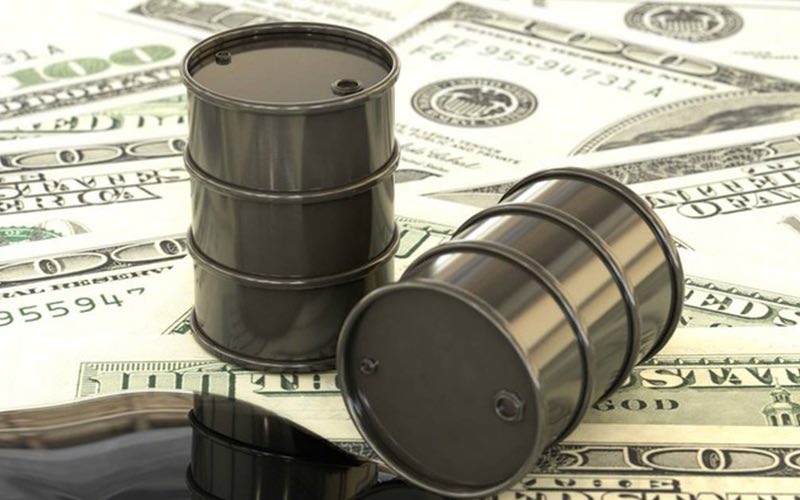
In the early hours of May 24th Beijing time, international crude oil futures prices plummeted in grey market trading. Both New York crude and Brent crude oil futures markets experienced sharp declines, with drops exceeding 10% at one point. WTI crude oil futures fell as low as $88 per barrel, while WTI crude futures closed at $97 per barrel on Friday. A significant gap down is expected at the open on Monday (May 25th). This directly reflects the market's strong expectation for the reopening of the Strait of Hormuz – after all, approximately one-fifth of global oil transportation relies on this waterway, and its blockade was one of the core reasons supporting high oil prices.
However, market optimism remains highly uncertain. As several analysts have pointed out, if Trump ultimately decides to "resume military action against Iran" rather than "sign an agreement," oil prices could see a more dramatic rebound. The volatility of geopolitics means this rollercoaster ride in the oil market may be far from over.
In addition to the power struggle at the negotiating table, the actual situation on the battlefield has added even more uncertainty to the overall situation.
According to classified intelligence assessments, despite the astonishing intensity of the US strikes, Iran's military capabilities have not been destroyed. During the brief 30-day ceasefire, approximately 90% of Iran's underground missile launch facilities have resumed operation. Of the 33 missile launch sites distributed along the Strait of Hormuz, at least 30 remain on high alert, and 70% of the mobile launchers are back in operation. The key lies in Iran's decades-long, painstakingly constructed underground "Great Wall"—underground missile bases reaching depths of 300 to 500 meters, protected by a 50 to 100-meter-thick natural granite layer, rendering even US bunker-buster bombs, which can penetrate up to 60 meters deep, largely ineffective against them.
Meanwhile, the battlefield in the Red Sea is also having a significant impact on the overall situation. Houthi attacks on Western merchant ships continue to escalate, with three successful attacks this week alone. The Houthis are using a drone costing only tens of thousands of dollars to force the US military to launch a $4 million anti-aircraft missile; this highly unbalanced war of attrition is causing the US military considerable distress, with daily operational costs approaching $1 billion. 60% of the US military's active aircraft carriers have been deployed to the Middle East, yet they still cannot contain the security crisis in the Red Sea shipping lanes—a nuclear-powered aircraft carrier worth tens of billions of dollars dares not even enter the narrow 3-kilometer-wide Bab el-Mandeb Strait.
These real-world scenes on the battlefield, in turn, profoundly influence the bargaining at the negotiating table. Iran is not sitting in a weak position begging for a ceasefire, but rather holding enough leverage to make its adversaries wary.
Based on statements from all parties, the negotiations have now entered their most crucial final stage. The mediation efforts of the Pakistani Army Chief of Staff have been described by all sides as "encouraging progress," bringing Iran and the US one step closer to reaching an understanding. Iran has stated that developments over the next three to four days will be closely monitored. Trump will make a final decision after meeting with the negotiating team on the 24th—whether to sign an agreement or resume military operations.
This nearly three-month-long Middle East conflict is at a critical crossroads. Two doors, one leading to peace and the other to war, are simultaneously open. Trump's "50/50" assessment could be either an objective description of reality or merely a calculated political performance.
The world will be watching closely in the next 72 hours.
Question 1: On the one hand, Trump said that "a basic agreement has been reached," but on the other hand, he left out the possibility of restarting military operations with the statement "50/50." What exactly is going on?
A: This is a typical Trump-style "maximum pressure" negotiation strategy. He simultaneously presents both the possibility of a "successful negotiation" and the possibility of "war," giving Iran hope for lifting sanctions and ending the conflict, while using military threats to force Iran to make maximum concessions on key terms. Currently, the core disagreement between the two sides lies in this: Iran demands the lifting of all sanctions and the release of frozen assets, while the US wants Iran to first limit its nuclear activities, hand over enriched uranium, and ensure that the Strait of Hormuz is not under Iranian control in the long term. Trump's "50/50" assessment serves both to pressure Iran and to reserve a fallback option of "war if negotiations fail."
Question 2: Iran has agreed to open the Strait of Hormuz, so why is it still emphasizing that the strait will continue to be "managed" by Iran? What is the actual difference between these two statements?
A: The difference is significant. Iran's so-called "opening" does not mean restoring the pre-war "free passage" status, but rather "restoring the number of ships allowed to pass to pre-war levels"—the right to permit passage, route planning, passage time, and methods remain entirely under Iranian control. This means that, theoretically, any ship wishing to pass through the Strait of Hormuz will still need approval from the Iranian military or report to Iran. Iran's move allows it to both secure the lifting of US sanctions by "opening the strait" and retain strategic leverage to tighten control over the chokepoint at any time in the future—a truly "two birds with one stone" approach.
Question 3: Why did Israel react so strongly to this agreement, even convening an emergency security meeting?
A: Israel's core concerns are twofold. First, once sanctions against Iran are eased, hundreds of billions of dollars could flow back annually. These funds could be used to support proxy forces around Israel, such as Hezbollah in Lebanon and the Houthis in Yemen, potentially prolonging and escalating the security threats facing Israel. Second, the current agreement does not address a deeper resolution to the nuclear issue. Iran's nuclear capabilities and ballistic missile programs have been virtually unscathed and relegated to the "subsequent phase" of discussion. Israel believes that the Iranian nuclear threat has not been truly eliminated, but merely temporarily frozen. What displeases Israel even more is that it had virtually no say throughout the negotiations, feeling "betrayed" by the United States.
Question 4: Why do the Gulf states (Saudi Arabia, the UAE, etc.) collectively oppose Iran's establishment of the "Persian Gulf Straits Authority"?
A: The Strait of Hormuz is the lifeline of global oil transportation, with approximately one-fifth of the world's crude oil consumed daily by the Gulf states passing through it. If Iran successfully establishes a "Strait Authority," it would gain legitimate control over the strait—not only could it collect tolls and implement navigation control, but it could also adjust navigation rules at its own discretion. The energy exports of Gulf states such as Saudi Arabia and the UAE would be subject to Iran's control for a long time. Therefore, the Gulf states prefer to maintain the status quo of "de facto passage" rather than see Iran institutionalize and normalize its control through international agreements.
Question 5: Will international oil prices continue to fall, or is a rebound possible?
A: In the short term, oil prices still face downward pressure, but the risk of volatility is extremely high. If Trump ultimately decides to sign the agreement on the 24th, and large-scale navigation in the Strait of Hormuz truly resumes, oil prices will continue their downward trend. However, if Trump ultimately chooses to "restart military operations," oil prices are likely to rebound rapidly in the short term, even breaking through previous highs. There is also an intermediate scenario—even if the agreement is signed, if Iran insists that shipping companies from all countries must report to it in advance, the actual navigation efficiency may be far lower than market expectations, in which case oil prices will also see a corrective rebound. The final decision in the next 72 hours will determine whether oil prices continue to collapse or turn around and surge.
In less than 18 hours, the situation in the Middle East has dramatically reached a crossroads. This article summarizes the latest developments from all sides.
I. A Glimmer of Hope for an Agreement? Trump's Bombshell Announcement Late at Night
Early morning of May 24th Beijing time (afternoon of May 23rd Eastern Time), US President Trump posted on social media that the US and Iran had essentially reached an agreement, with final details to be released soon. Trump stated that he had just spoken with the leaders of Saudi Arabia, the UAE, Qatar, Turkey, Egypt, Jordan, Bahrain, and Pakistani Army Chief of Staff Munir, primarily discussing the Iranian issue and a "memorandum of understanding for peace." He also specifically mentioned that his call with Israeli Prime Minister Netanyahu was "equally successful."
Trump has signaled positive sentiments on several occasions. Earlier that day, in a phone interview with CBS, he said the U.S. and Iran were "very close" to an agreement, and that "things are getting better every day." He expressed confidence that a final agreement would prevent Iran from acquiring nuclear weapons and ensure the "satisfactory disposal" of Iran's enriched uranium. However, in an interview with Axios, he left the outcome uncertain—the possibility of an agreement and a resumption of hostilities was "about 50/50," and he might decide on the 24th whether to restart military operations.
Trump's latest statement sends a clear signal: the US-Iran negotiations are at a critical juncture, an agreement may be just around the corner, but the war is far from over.
It is worth noting that U.S. Secretary of State Marco Rubio also confirmed during his visit to India on the same day that U.S.-Iran negotiations were "making progress," and reiterated the U.S. position: Iran must not possess nuclear weapons, must hand over highly enriched uranium, and must not charge fees to ships transiting the Strait of Hormuz. Rubio also emphasized that Trump "always prefers to resolve issues through diplomatic negotiations," but did not rule out "resolving issues through any means."
II. Iran's Response: Open Straits Does Not Equal Free Passage
In response to Trump's claim of a "basic agreement," Iran's response was both cautious and clear. Iranian Foreign Ministry spokesman Baghae stated on the 23rd that after weeks of dialogue, "the views of both Iran and the US are moving in a more consistent direction," and the two sides are currently in the final stages of finalizing a memorandum of understanding. Baghae emphasized that the current focus of the negotiations is only to end this "imposed war," and that the nuclear issue will not be discussed in depth for the time being. Iran's core demands, such as the lifting of US sanctions and the release of frozen assets, have been clearly written into the 14 articles of the memorandum of understanding.
What truly drew international attention was Iran's stance on the Strait of Hormuz. According to Iran's Fars News Agency, Trump's statement that the Strait of Hormuz would be "open" was "incomplete." Even if an agreement is reached, the Strait of Hormuz will continue to be "managed" by Iran. While Iran has agreed to restore the number of vessels allowed to pass to pre-war levels, this does not mean the strait will return to its pre-war state of "free passage." The management of the strait, route planning, passage times, and licensing authority will remain entirely in Iran's hands.
Iranian President Peshichiyan, during a meeting with Pakistani Army Chief of Staff Munir, stated that Iran is merely seeking to restore its legitimate and just rights, but past experience negotiating with the United States serves as a warning that Iran must exercise the utmost caution. Iranian Parliament Speaker Ghalibaf adopted a more forceful tone, strongly criticizing the United States for its "lack of integrity," emphasizing that the US cannot be trusted by Iran, and warning that Iran is prepared to respond if negotiations break down.
III. Israel's Anxiety: The Excluded "Ally"
In the chessboard of US-Iran negotiations, Israel is perhaps the most uneasy party. On the evening of May 23 local time, Israeli Prime Minister Netanyahu urgently convened a meeting with leaders of all parties in the ruling coalition and heads of security services to specifically discuss the agreement being negotiated between the US and Iran. Israel is concerned that the terms of the agreement are "very unfavorable to Israel." Local media commented that Israel has been essentially kicked out of the "cockpit" and into "economy class," leaving it with no decision-making power.
This anxiety is not unfounded. Iranian President Peshichiyan, speaking about the situation, bluntly stated that the Israeli regime is "the only force attempting to gain its own interests by provoking war." Pakistan's Army Chief of Staff, Munir, also expressed sharp criticism of Israel's position: "Israel's interests are built on the conflict and division among Muslims in the region. Israel harbors deep hostility towards anyone attempting to quell the conflict and resolve the crisis; it has absolutely no intention of seeing stability and security established in the region."
Meanwhile, the military confrontation between Iran and Israel continues on the battlefield. Israel suffered a drone attack from Lebanon on its northern border, resulting in the death of one Israeli soldier. Adding to Israel's anxiety is the rapid depletion of its air defense munitions—reports indicate that in just 16 days since the outbreak of this conflict, Israel has used over 81% of its Arrow-2 and Arrow-3 interceptor missiles to intercept Iranian long-range missiles, with remaining stockpiles expected to last only a few days. Iran has also formed a pincer movement with Hezbollah in Lebanon and the Houthi rebels in Yemen, creating a multi-pronged attack that leaves Israel overwhelmed.
IV. The Delicate Position of the Gulf States
The attitudes of the Gulf states in these negotiations are also noteworthy. When announcing the progress of the agreement, Trump specifically mentioned that he had spoken with leaders of several Gulf states, including Saudi Arabia, the UAE, Qatar, and Bahrain, and included these countries as parties to the "Memorandum of Understanding on Peace."
However, according to Saudi sources, Iran has submitted two proposals to Pakistani mediators, offering to open the Strait of Hormuz in exchange for US compensation, and demanding that sanctions and frozen funds be discussed before any agreement is signed. This demand has clearly touched a nerve with the Gulf states—media reports indicate that Bahrain, Kuwait, Qatar, Saudi Arabia, the UAE, and other Gulf states collectively oppose Iran's establishment of the so-called "Persian Gulf Straits Authority" and the issuance of related navigational notices. The Strait of Hormuz is both a strategic bargaining chip for Iran and a lifeline for the Gulf oil-exporting countries; the struggle over its administration is far from over.
V. Oil Price Collapse: The Market Votes with Its Feet
No sooner had Trump said that a "basic agreement" had been reached than the international capital markets reacted in the most direct way.
In the early hours of May 24th Beijing time, international crude oil futures prices plummeted in grey market trading. Both New York crude and Brent crude oil futures markets experienced sharp declines, with drops exceeding 10% at one point. WTI crude oil futures fell as low as $88 per barrel, while WTI crude futures closed at $97 per barrel on Friday. A significant gap down is expected at the open on Monday (May 25th). This directly reflects the market's strong expectation for the reopening of the Strait of Hormuz – after all, approximately one-fifth of global oil transportation relies on this waterway, and its blockade was one of the core reasons supporting high oil prices.
However, market optimism remains highly uncertain. As several analysts have pointed out, if Trump ultimately decides to "resume military action against Iran" rather than "sign an agreement," oil prices could see a more dramatic rebound. The volatility of geopolitics means this rollercoaster ride in the oil market may be far from over.
VI. Variables on the Battlefield: Iran's "Underground Wall" and the War of Attrition in the Red Sea
In addition to the power struggle at the negotiating table, the actual situation on the battlefield has added even more uncertainty to the overall situation.
According to classified intelligence assessments, despite the astonishing intensity of the US strikes, Iran's military capabilities have not been destroyed. During the brief 30-day ceasefire, approximately 90% of Iran's underground missile launch facilities have resumed operation. Of the 33 missile launch sites distributed along the Strait of Hormuz, at least 30 remain on high alert, and 70% of the mobile launchers are back in operation. The key lies in Iran's decades-long, painstakingly constructed underground "Great Wall"—underground missile bases reaching depths of 300 to 500 meters, protected by a 50 to 100-meter-thick natural granite layer, rendering even US bunker-buster bombs, which can penetrate up to 60 meters deep, largely ineffective against them.
Meanwhile, the battlefield in the Red Sea is also having a significant impact on the overall situation. Houthi attacks on Western merchant ships continue to escalate, with three successful attacks this week alone. The Houthis are using a drone costing only tens of thousands of dollars to force the US military to launch a $4 million anti-aircraft missile; this highly unbalanced war of attrition is causing the US military considerable distress, with daily operational costs approaching $1 billion. 60% of the US military's active aircraft carriers have been deployed to the Middle East, yet they still cannot contain the security crisis in the Red Sea shipping lanes—a nuclear-powered aircraft carrier worth tens of billions of dollars dares not even enter the narrow 3-kilometer-wide Bab el-Mandeb Strait.
These real-world scenes on the battlefield, in turn, profoundly influence the bargaining at the negotiating table. Iran is not sitting in a weak position begging for a ceasefire, but rather holding enough leverage to make its adversaries wary.
VII. The Uncertainty of the Situation: The Next 72 Hours Will Determine the Future
Based on statements from all parties, the negotiations have now entered their most crucial final stage. The mediation efforts of the Pakistani Army Chief of Staff have been described by all sides as "encouraging progress," bringing Iran and the US one step closer to reaching an understanding. Iran has stated that developments over the next three to four days will be closely monitored. Trump will make a final decision after meeting with the negotiating team on the 24th—whether to sign an agreement or resume military operations.
This nearly three-month-long Middle East conflict is at a critical crossroads. Two doors, one leading to peace and the other to war, are simultaneously open. Trump's "50/50" assessment could be either an objective description of reality or merely a calculated political performance.
The world will be watching closely in the next 72 hours.
Frequently Asked Questions (5 questions in total)
Question 1: On the one hand, Trump said that "a basic agreement has been reached," but on the other hand, he left out the possibility of restarting military operations with the statement "50/50." What exactly is going on?
A: This is a typical Trump-style "maximum pressure" negotiation strategy. He simultaneously presents both the possibility of a "successful negotiation" and the possibility of "war," giving Iran hope for lifting sanctions and ending the conflict, while using military threats to force Iran to make maximum concessions on key terms. Currently, the core disagreement between the two sides lies in this: Iran demands the lifting of all sanctions and the release of frozen assets, while the US wants Iran to first limit its nuclear activities, hand over enriched uranium, and ensure that the Strait of Hormuz is not under Iranian control in the long term. Trump's "50/50" assessment serves both to pressure Iran and to reserve a fallback option of "war if negotiations fail."
Question 2: Iran has agreed to open the Strait of Hormuz, so why is it still emphasizing that the strait will continue to be "managed" by Iran? What is the actual difference between these two statements?
A: The difference is significant. Iran's so-called "opening" does not mean restoring the pre-war "free passage" status, but rather "restoring the number of ships allowed to pass to pre-war levels"—the right to permit passage, route planning, passage time, and methods remain entirely under Iranian control. This means that, theoretically, any ship wishing to pass through the Strait of Hormuz will still need approval from the Iranian military or report to Iran. Iran's move allows it to both secure the lifting of US sanctions by "opening the strait" and retain strategic leverage to tighten control over the chokepoint at any time in the future—a truly "two birds with one stone" approach.
Question 3: Why did Israel react so strongly to this agreement, even convening an emergency security meeting?
A: Israel's core concerns are twofold. First, once sanctions against Iran are eased, hundreds of billions of dollars could flow back annually. These funds could be used to support proxy forces around Israel, such as Hezbollah in Lebanon and the Houthis in Yemen, potentially prolonging and escalating the security threats facing Israel. Second, the current agreement does not address a deeper resolution to the nuclear issue. Iran's nuclear capabilities and ballistic missile programs have been virtually unscathed and relegated to the "subsequent phase" of discussion. Israel believes that the Iranian nuclear threat has not been truly eliminated, but merely temporarily frozen. What displeases Israel even more is that it had virtually no say throughout the negotiations, feeling "betrayed" by the United States.
Question 4: Why do the Gulf states (Saudi Arabia, the UAE, etc.) collectively oppose Iran's establishment of the "Persian Gulf Straits Authority"?
A: The Strait of Hormuz is the lifeline of global oil transportation, with approximately one-fifth of the world's crude oil consumed daily by the Gulf states passing through it. If Iran successfully establishes a "Strait Authority," it would gain legitimate control over the strait—not only could it collect tolls and implement navigation control, but it could also adjust navigation rules at its own discretion. The energy exports of Gulf states such as Saudi Arabia and the UAE would be subject to Iran's control for a long time. Therefore, the Gulf states prefer to maintain the status quo of "de facto passage" rather than see Iran institutionalize and normalize its control through international agreements.
Question 5: Will international oil prices continue to fall, or is a rebound possible?
A: In the short term, oil prices still face downward pressure, but the risk of volatility is extremely high. If Trump ultimately decides to sign the agreement on the 24th, and large-scale navigation in the Strait of Hormuz truly resumes, oil prices will continue their downward trend. However, if Trump ultimately chooses to "restart military operations," oil prices are likely to rebound rapidly in the short term, even breaking through previous highs. There is also an intermediate scenario—even if the agreement is signed, if Iran insists that shipping companies from all countries must report to it in advance, the actual navigation efficiency may be far lower than market expectations, in which case oil prices will also see a corrective rebound. The final decision in the next 72 hours will determine whether oil prices continue to collapse or turn around and surge.
- Risk Warning and Disclaimer
- The market involves risk, and trading may not be suitable for all investors. This article is for reference only and does not constitute personal investment advice, nor does it take into account certain users’ specific investment objectives, financial situation, or other needs. Any investment decisions made based on this information are at your own risk.