Complete reversal! Goldman Sachs changes its tune: no rate cuts this year, the first cut won't happen until 2027.
2026-06-09 11:11:14
On the much-watched issue of interest rate trends in international financial markets, renowned investment bank Goldman Sachs recently made a noteworthy adjustment to its forecast. Last Friday (June 5th), Goldman Sachs officially announced that, given the exceptionally strong performance of the latest US non-farm payroll report, indicating continued strengthening of economic activity and employment growth momentum, the institution has decided to significantly postpone its expectations for the Federal Reserve's interest rate cut timetable. Specifically, Goldman Sachs believes that the Federal Reserve will maintain the current interest rate level throughout 2026, and the first rate cut will not occur until 2027.
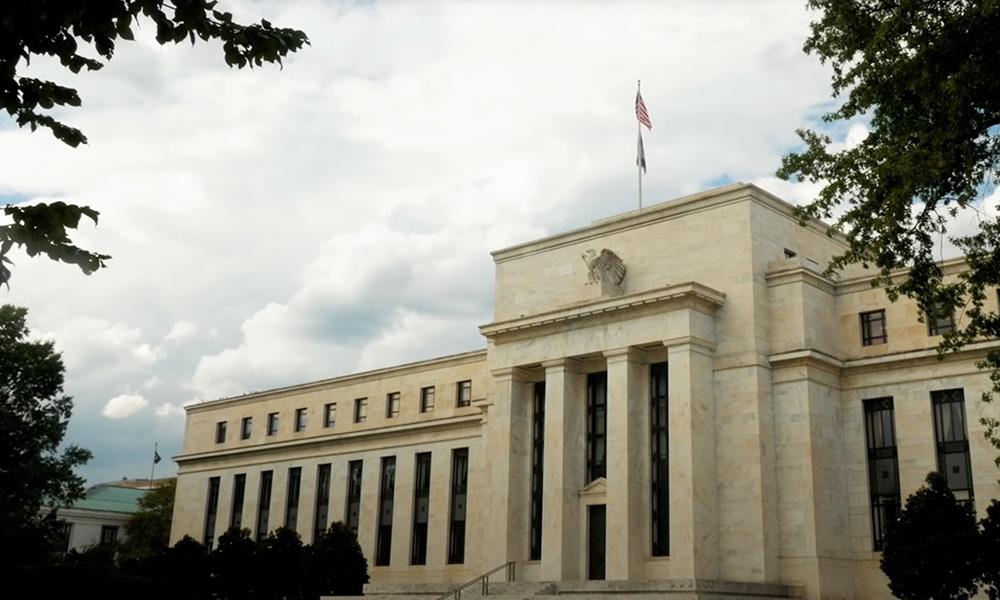
At a more precise timeline, Goldman Sachs now expects the Federal Reserve to implement two rate cuts, one in June 2027 and the other in December 2027. This assessment contrasts sharply with the institution's previous forecasts. Goldman Sachs had previously predicted that the Fed would implement its first rate cut in December 2026 and a second in March 2027, with each cut being 25 basis points. Therefore, Goldman Sachs has clearly postponed both the timing of the initial rate cuts and the overall pace of rate cuts.
The direct driver of this forecast adjustment comes from the latest U.S. jobs report, which far exceeded market expectations. The report clearly shows that the U.S. labor market is regaining strength. This resilience in economic fundamentals gives the Federal Reserve more policy maneuvering space than before in the face of inflationary pressures stemming from the Middle East conflict. In other words, given the strong economic performance, the Federal Reserve has both the ability and the reason to maintain current interest rates for a longer period without rushing to shift to an easing policy.
It's worth noting that Goldman Sachs isn't the only research firm that believes the Federal Reserve will extend the interest rate pause. In fact, a growing number of large brokerages and financial institutions are forming similar views. For example, Nomura Securities predicted last month that the Fed would keep interest rates unchanged throughout 2026. Goldman Sachs' recent adjustment suggests its view is aligning with this increasingly cautious camp in the market.
Goldman Sachs further elaborated on this logic in its research report. The report pointed out that the resilience shown by economic activity and employment data has actually lowered the threshold for the Federal Reserve to initiate future interest rate hikes. It is important to emphasize that this judgment does not stem from data indicating a clear risk of overheating, but rather from the fact that the economy is already at a stronger starting point than previously expected. From this starting point, even if the Fed chooses to raise interest rates in the future, the risk of it ultimately proving to be a "costly mistake" is relatively lower. In other words, strong economic fundamentals give the Fed more options in its policy operations.
Goldman Sachs also provided a clear assessment of the contrarian move of raising interest rates. The brokerage added that while the overall likelihood of the Federal Reserve raising rates in the near future remains low, the probability has slightly increased compared to previous expectations. This subtle shift also stems from the continued outperformance of economic data, which may force policymakers to consider a wider range of responses to inflationary pressures.
Goldman Sachs further elaborated on its assessment of the most likely policy path for the Federal Reserve. The firm believes the Fed will tend to postpone rate cuts until several key conditions are met simultaneously: the impact of tariffs gradually diminishes, oil price increases related to the Iran conflict and pressures from other wars ease, the year-on-year data for the core personal consumption expenditures (PCE) price index is closer to the 2% policy target, and Goldman Sachs believes that the currently overestimated demand driven by artificial intelligence has cooled to some extent. Only when these multiple factors converge and ease will the Fed likely take concrete steps towards rate cuts.
According to the latest data from the CME FedWatch tool, traders in the current interest rate futures market generally expect a 72.6% probability that the Federal Reserve will raise interest rates before the end of 2026. This market pricing reflects an expectation that is even more aggressive than the assessments of institutions such as Goldman Sachs, indicating that some market participants have begun to position themselves for a potential rate hike scenario.
In conclusion, Goldman Sachs' significant adjustment based on strong US employment data signifies that market expectations for a shift in the Federal Reserve's monetary policy have been pushed further into the future. The resilience of economic activity, the strength of the labor market, and geopolitical inflationary pressures collectively constitute multiple reasons for the Fed to maintain current interest rates. Although a rate hike is not the baseline scenario, its probability has quietly increased. For global investors, this means that a "higher and longer" interest rate environment may persist until 2027, and related asset allocation strategies will need to be reassessed accordingly.
Question 1: Why would strong employment data lead the Federal Reserve to postpone interest rate cuts or even increase the likelihood of interest rate hikes ?
A: Strong employment data typically indicates an overheated or near-overheated labor market, with businesses having high demand for workers and employees facing upward pressure on wages. Wage increases often pass through cost-push mechanisms to the prices of goods and services, thus exacerbating inflation. One of the Federal Reserve's core missions is to control inflation. When the job market is strong, the Fed doesn't need to lower interest rates to stimulate the economy; instead, it has room to maintain high interest rates to suppress inflation. If employment data continues to exceed expectations, it may even prompt the Fed to raise interest rates further to prevent the economy from overheating and inflation from spiraling out of control. Therefore, there is a direct logical link between strong employment data and a delay in interest rate cuts.
Question 2: Goldman Sachs predicts that the Federal Reserve will cut interest rates by 25 basis points each in June and December 2027. How did it arrive at this timeline?
A: Goldman Sachs' timeline forecast takes into account multiple factors. First, the evolution of economic data; Goldman Sachs believes the current economic resilience will continue at least throughout 2026. Second, the assessment of inflation decline; Goldman Sachs expects the year-on-year increase in the core personal consumption expenditure price index to reliably approach the 2% policy target only by mid-2027. Third, the assessment of geopolitical risks, including oil price increases due to the Middle East conflict, the negative impact of tariff policies, and war pressure related to Iran; Goldman Sachs believes these factors are unlikely to completely subside by 2026. Fourth, the assessment of structural factors such as demand driven by artificial intelligence; Goldman Sachs believes this demand is currently overestimated and its cooling will take time. Considering all these factors, mid-2027 appears to be a reasonable window for policy shift in Goldman Sachs' view.
Question 3: Besides employment data, what other specific factors support the Federal Reserve in maintaining high interest rates?
A: According to Goldman Sachs' report, there are at least four other key factors. First, there is the continued inflationary pressure from the Middle East conflict, especially the potential rise in oil prices due to the confrontation with Iran. Second, tariffs push up the prices of imported goods, directly increasing the consumer price index. Third, there are war-related geopolitical risks, which often lead to supply chain disruptions and risk aversion, indirectly pushing up prices. Fourth, the core personal consumption expenditures price index remains above the target level, requiring a longer period of policy tightening to bring it back to the 2% target range. These factors collectively constitute a real constraint preventing the Federal Reserve from easily shifting to an easing policy.
Question 4: Market traders currently expect a 72.6% probability of the Federal Reserve raising interest rates before the end of the year. Why does this differ from Goldman Sachs' assessment that "the possibility of a rate hike is still not high"?
A: This divergence mainly stems from the different weights and reaction speeds of various stakeholders in interpreting data. Traders in the interest rate futures market focus more on the immediate reaction to short-term data and market sentiment. Seeing consistently better-than-expected employment data, they tend to bet on a more aggressive policy direction, including interest rate hikes. Goldman Sachs, as a large research institution, conducts a more systematic medium-term analysis, believing that despite strong data, the economy does not show clear signs of overheating, and raising interest rates could still be a "costly mistake." Furthermore, traders' expectations often have a certain emotional amplification effect and risk-on impulse, while institutional research reports focus more on the rationality of the baseline scenario. The difference between the two is actually a normal discrepancy between short-term market sentiment and institutional medium-term judgments.
Question 5: Nomura Securities and other institutions have made similar judgments before. Does this mean that the market has reached a consensus? How should investors view this?
A: The convergence of judgments from mainstream institutions like Goldman Sachs and Nomura does indeed indicate a considerable consensus in the market that the Federal Reserve will maintain high interest rates for a longer period. However, "consensus" is not the same as "certainty." Investors should recognize that economic forecasts are inherently highly uncertain, especially those involving interest rate paths over a year. Changes in any factor, such as geopolitical conflicts, oil price fluctuations, the outcome of the US election, or unexpected changes in inflation data, could lead to a collective revision of forecasts by these institutions. Therefore, while investors can use these institutional judgments as important references, they also need to remain flexible, closely monitor the actual performance of key data such as monthly non-farm payrolls and the Consumer Price Index, and dynamically adjust their asset allocation strategies based on the latest information.
Latest Interest Rate Cut Timing: Specific Arrangements for the Two Rate Cuts
At a more precise timeline, Goldman Sachs now expects the Federal Reserve to implement two rate cuts, one in June 2027 and the other in December 2027. This assessment contrasts sharply with the institution's previous forecasts. Goldman Sachs had previously predicted that the Fed would implement its first rate cut in December 2026 and a second in March 2027, with each cut being 25 basis points. Therefore, Goldman Sachs has clearly postponed both the timing of the initial rate cuts and the overall pace of rate cuts.
Adjustment driver: Employment data stronger than expected.
The direct driver of this forecast adjustment comes from the latest U.S. jobs report, which far exceeded market expectations. The report clearly shows that the U.S. labor market is regaining strength. This resilience in economic fundamentals gives the Federal Reserve more policy maneuvering space than before in the face of inflationary pressures stemming from the Middle East conflict. In other words, given the strong economic performance, the Federal Reserve has both the ability and the reason to maintain current interest rates for a longer period without rushing to shift to an easing policy.
Market consensus: Multiple institutions share similar views
It's worth noting that Goldman Sachs isn't the only research firm that believes the Federal Reserve will extend the interest rate pause. In fact, a growing number of large brokerages and financial institutions are forming similar views. For example, Nomura Securities predicted last month that the Fed would keep interest rates unchanged throughout 2026. Goldman Sachs' recent adjustment suggests its view is aligning with this increasingly cautious camp in the market.
Analysis of economic resilience: The threshold for interest rate hikes has been lowered.
Goldman Sachs further elaborated on this logic in its research report. The report pointed out that the resilience shown by economic activity and employment data has actually lowered the threshold for the Federal Reserve to initiate future interest rate hikes. It is important to emphasize that this judgment does not stem from data indicating a clear risk of overheating, but rather from the fact that the economy is already at a stronger starting point than previously expected. From this starting point, even if the Fed chooses to raise interest rates in the future, the risk of it ultimately proving to be a "costly mistake" is relatively lower. In other words, strong economic fundamentals give the Fed more options in its policy operations.
Likelihood of interest rate hike: The probability is small but has increased slightly.
Goldman Sachs also provided a clear assessment of the contrarian move of raising interest rates. The brokerage added that while the overall likelihood of the Federal Reserve raising rates in the near future remains low, the probability has slightly increased compared to previous expectations. This subtle shift also stems from the continued outperformance of economic data, which may force policymakers to consider a wider range of responses to inflationary pressures.
Future Outlook: Multiple Factors Influencing Policy Path
Goldman Sachs further elaborated on its assessment of the most likely policy path for the Federal Reserve. The firm believes the Fed will tend to postpone rate cuts until several key conditions are met simultaneously: the impact of tariffs gradually diminishes, oil price increases related to the Iran conflict and pressures from other wars ease, the year-on-year data for the core personal consumption expenditures (PCE) price index is closer to the 2% policy target, and Goldman Sachs believes that the currently overestimated demand driven by artificial intelligence has cooled to some extent. Only when these multiple factors converge and ease will the Fed likely take concrete steps towards rate cuts.
Market traders expect a high probability of an interest rate hike.
According to the latest data from the CME FedWatch tool, traders in the current interest rate futures market generally expect a 72.6% probability that the Federal Reserve will raise interest rates before the end of 2026. This market pricing reflects an expectation that is even more aggressive than the assessments of institutions such as Goldman Sachs, indicating that some market participants have begun to position themselves for a potential rate hike scenario.
Summary: The policy turning point has been further delayed.
In conclusion, Goldman Sachs' significant adjustment based on strong US employment data signifies that market expectations for a shift in the Federal Reserve's monetary policy have been pushed further into the future. The resilience of economic activity, the strength of the labor market, and geopolitical inflationary pressures collectively constitute multiple reasons for the Fed to maintain current interest rates. Although a rate hike is not the baseline scenario, its probability has quietly increased. For global investors, this means that a "higher and longer" interest rate environment may persist until 2027, and related asset allocation strategies will need to be reassessed accordingly.
Frequently Asked Questions
Question 1: Why would strong employment data lead the Federal Reserve to postpone interest rate cuts or even increase the likelihood of interest rate hikes ?
A: Strong employment data typically indicates an overheated or near-overheated labor market, with businesses having high demand for workers and employees facing upward pressure on wages. Wage increases often pass through cost-push mechanisms to the prices of goods and services, thus exacerbating inflation. One of the Federal Reserve's core missions is to control inflation. When the job market is strong, the Fed doesn't need to lower interest rates to stimulate the economy; instead, it has room to maintain high interest rates to suppress inflation. If employment data continues to exceed expectations, it may even prompt the Fed to raise interest rates further to prevent the economy from overheating and inflation from spiraling out of control. Therefore, there is a direct logical link between strong employment data and a delay in interest rate cuts.
Question 2: Goldman Sachs predicts that the Federal Reserve will cut interest rates by 25 basis points each in June and December 2027. How did it arrive at this timeline?
A: Goldman Sachs' timeline forecast takes into account multiple factors. First, the evolution of economic data; Goldman Sachs believes the current economic resilience will continue at least throughout 2026. Second, the assessment of inflation decline; Goldman Sachs expects the year-on-year increase in the core personal consumption expenditure price index to reliably approach the 2% policy target only by mid-2027. Third, the assessment of geopolitical risks, including oil price increases due to the Middle East conflict, the negative impact of tariff policies, and war pressure related to Iran; Goldman Sachs believes these factors are unlikely to completely subside by 2026. Fourth, the assessment of structural factors such as demand driven by artificial intelligence; Goldman Sachs believes this demand is currently overestimated and its cooling will take time. Considering all these factors, mid-2027 appears to be a reasonable window for policy shift in Goldman Sachs' view.
Question 3: Besides employment data, what other specific factors support the Federal Reserve in maintaining high interest rates?
A: According to Goldman Sachs' report, there are at least four other key factors. First, there is the continued inflationary pressure from the Middle East conflict, especially the potential rise in oil prices due to the confrontation with Iran. Second, tariffs push up the prices of imported goods, directly increasing the consumer price index. Third, there are war-related geopolitical risks, which often lead to supply chain disruptions and risk aversion, indirectly pushing up prices. Fourth, the core personal consumption expenditures price index remains above the target level, requiring a longer period of policy tightening to bring it back to the 2% target range. These factors collectively constitute a real constraint preventing the Federal Reserve from easily shifting to an easing policy.
Question 4: Market traders currently expect a 72.6% probability of the Federal Reserve raising interest rates before the end of the year. Why does this differ from Goldman Sachs' assessment that "the possibility of a rate hike is still not high"?
A: This divergence mainly stems from the different weights and reaction speeds of various stakeholders in interpreting data. Traders in the interest rate futures market focus more on the immediate reaction to short-term data and market sentiment. Seeing consistently better-than-expected employment data, they tend to bet on a more aggressive policy direction, including interest rate hikes. Goldman Sachs, as a large research institution, conducts a more systematic medium-term analysis, believing that despite strong data, the economy does not show clear signs of overheating, and raising interest rates could still be a "costly mistake." Furthermore, traders' expectations often have a certain emotional amplification effect and risk-on impulse, while institutional research reports focus more on the rationality of the baseline scenario. The difference between the two is actually a normal discrepancy between short-term market sentiment and institutional medium-term judgments.
Question 5: Nomura Securities and other institutions have made similar judgments before. Does this mean that the market has reached a consensus? How should investors view this?
A: The convergence of judgments from mainstream institutions like Goldman Sachs and Nomura does indeed indicate a considerable consensus in the market that the Federal Reserve will maintain high interest rates for a longer period. However, "consensus" is not the same as "certainty." Investors should recognize that economic forecasts are inherently highly uncertain, especially those involving interest rate paths over a year. Changes in any factor, such as geopolitical conflicts, oil price fluctuations, the outcome of the US election, or unexpected changes in inflation data, could lead to a collective revision of forecasts by these institutions. Therefore, while investors can use these institutional judgments as important references, they also need to remain flexible, closely monitor the actual performance of key data such as monthly non-farm payrolls and the Consumer Price Index, and dynamically adjust their asset allocation strategies based on the latest information.
- Risk Warning and Disclaimer
- The market involves risk, and trading may not be suitable for all investors. This article is for reference only and does not constitute personal investment advice, nor does it take into account certain users’ specific investment objectives, financial situation, or other needs. Any investment decisions made based on this information are at your own risk.