Silver rebounded slightly, but the correction continues.
2026-06-09 15:27:44
Spot silver (XAG/USD) rebounded slightly in Asian trading on Tuesday, trading around $68.30. Despite lingering tensions in the Middle East, signs of easing risk aversion, coupled with rising market expectations of further monetary tightening by the Federal Reserve, put downward pressure on silver prices.
The recent situation in the Middle East remains a significant factor influencing the precious metals market. Previously, Iran and Israel agreed to a truce in their attacks at the urging of US President Trump, easing market concerns about further escalation of the regional conflict. This improved risk appetite led to some safe-haven funds flowing out of the precious metals market, putting pressure on silver prices.
However, the situation has not fully stabilized. Israeli Prime Minister Netanyahu stated that the military operation against Iran and its allies "is not over," and although the strength of these forces has been weakened, uncertainty remains. Meanwhile, while the Iranian military confirmed it had ceased its military operations, it warned that it would take a stronger response if Israel continued its attacks.
Market analysts believe that while risks in the Middle East have eased somewhat in the short term, they have not been completely eliminated. Therefore, although safe-haven demand has temporarily weakened, it still provides potential support for the silver market. If the situation deteriorates again, the precious metals market could quickly find buying support.
Besides geopolitical factors, expectations regarding US monetary policy have become the core driver influencing silver prices recently. The latest strong US employment data has further reinforced market expectations that the Federal Reserve will maintain its high-interest-rate policy. A strong job market implies that consumer demand and wage growth remain resilient, thereby increasing the likelihood of persistent inflation.
According to the CME Group's FedWatch tool, the market now expects a 42% probability of a 25-basis-point rate hike by the Federal Reserve in December, significantly higher than the approximately 14% level a month ago. This reflects a significant shift in investors' expectations regarding the future path of interest rates.
As silver, like gold, is a non-yielding asset, the opportunity cost of holding precious metals increases when interest rates rise, often weakening investors' willingness to allocate to it. With the US dollar and US Treasury yields remaining high, silver's short-term upside potential is somewhat limited.
Meanwhile, the market is awaiting the release of key economic data this week. The US Consumer Price Index (CPI) will be released on Wednesday, followed by the Producer Price Index (PPI) on Thursday. If inflation data continues to exceed market expectations, expectations of a Federal Reserve rate hike may intensify further, putting pressure on silver; conversely, a significant slowdown in inflation could provide an opportunity for a silver rebound.
Market sentiment is currently cautious. Investors are reducing directional bets ahead of major data releases, causing silver prices to remain in a high-level consolidation pattern. Short-term market focus will be on US inflation figures and developments in the Middle East.
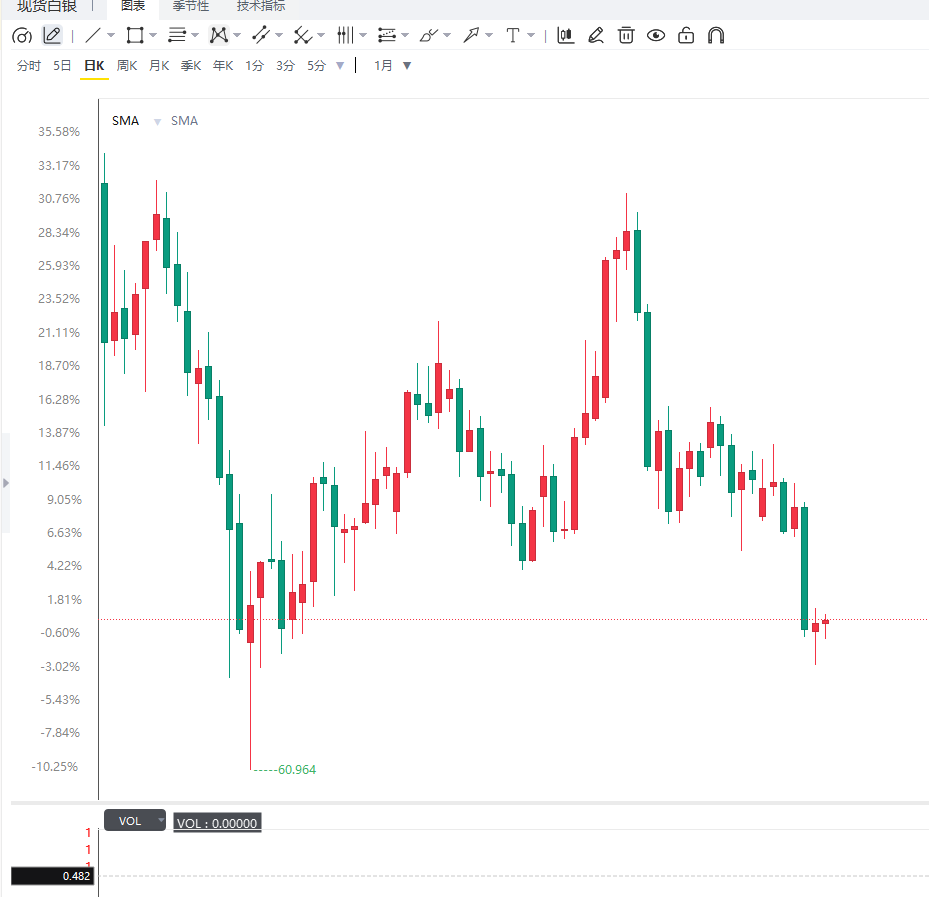
From a daily chart perspective, silver continued its downward trend after breaking below the consolidation range. Although a slight rebound has occurred recently, the overall correction structure remains unchanged. Currently, the price has not yet retested the previous low area, indicating that bearish pressure has not been fully released. The MACD indicator, after falling from its high, remains in the weak zone, reflecting a cooling of medium-term momentum; the RSI indicator is fluctuating near neutral, indicating that the market is in a correction phase. The key resistance level to watch is around $70.00; if this level cannot be effectively broken, the price still faces the risk of further decline. The key support level to watch is $66.00; if this level is breached, a further test of the previous low area cannot be ruled out.
From a 4-hour chart perspective, silver has entered a consolidation phase after breaking below the converging pattern, with the short-term rebound primarily reflecting technical correction. While the MACD indicator shows signs of recovery from low levels, it has not yet formed a clear trend reversal signal. The RSI indicator has risen to around 50, indicating some easing of short-term selling pressure, but bullish momentum remains insufficient. If the price rebounds to around $70.00 and encounters resistance, the market may turn downwards again and test the $66.00 support level; however, if it can effectively hold above $70.00, it could potentially drive a larger correction. Overall, silver is currently still in a correction phase, and the short-term rebound has not yet changed the overall weak trend.
Editor's Summary : The silver market is currently facing the dual impact of cooling safe-haven demand and rising interest rate expectations. The temporary easing of the conflict between Iran and Israel has weakened the safe-haven appeal of precious metals, while strong US economic data has increased market expectations that the Federal Reserve will continue its high-interest-rate policy. In the short term, US CPI and PPI data will be crucial catalysts for silver's price movement. If inflationary pressures remain stubborn, expectations of a Fed rate hike may continue to rise, further suppressing silver prices; conversely, if inflation shows signs of cooling, silver is expected to regain investor attention. In the medium to long term, the risk of a global economic slowdown, inflationary uncertainty, and geopolitical changes will continue to provide potential support for silver, and market volatility may remain at a high level in the future.
The recent situation in the Middle East remains a significant factor influencing the precious metals market. Previously, Iran and Israel agreed to a truce in their attacks at the urging of US President Trump, easing market concerns about further escalation of the regional conflict. This improved risk appetite led to some safe-haven funds flowing out of the precious metals market, putting pressure on silver prices.
However, the situation has not fully stabilized. Israeli Prime Minister Netanyahu stated that the military operation against Iran and its allies "is not over," and although the strength of these forces has been weakened, uncertainty remains. Meanwhile, while the Iranian military confirmed it had ceased its military operations, it warned that it would take a stronger response if Israel continued its attacks.
Market analysts believe that while risks in the Middle East have eased somewhat in the short term, they have not been completely eliminated. Therefore, although safe-haven demand has temporarily weakened, it still provides potential support for the silver market. If the situation deteriorates again, the precious metals market could quickly find buying support.
Besides geopolitical factors, expectations regarding US monetary policy have become the core driver influencing silver prices recently. The latest strong US employment data has further reinforced market expectations that the Federal Reserve will maintain its high-interest-rate policy. A strong job market implies that consumer demand and wage growth remain resilient, thereby increasing the likelihood of persistent inflation.
According to the CME Group's FedWatch tool, the market now expects a 42% probability of a 25-basis-point rate hike by the Federal Reserve in December, significantly higher than the approximately 14% level a month ago. This reflects a significant shift in investors' expectations regarding the future path of interest rates.
As silver, like gold, is a non-yielding asset, the opportunity cost of holding precious metals increases when interest rates rise, often weakening investors' willingness to allocate to it. With the US dollar and US Treasury yields remaining high, silver's short-term upside potential is somewhat limited.
Meanwhile, the market is awaiting the release of key economic data this week. The US Consumer Price Index (CPI) will be released on Wednesday, followed by the Producer Price Index (PPI) on Thursday. If inflation data continues to exceed market expectations, expectations of a Federal Reserve rate hike may intensify further, putting pressure on silver; conversely, a significant slowdown in inflation could provide an opportunity for a silver rebound.
Market sentiment is currently cautious. Investors are reducing directional bets ahead of major data releases, causing silver prices to remain in a high-level consolidation pattern. Short-term market focus will be on US inflation figures and developments in the Middle East.
From a daily chart perspective, silver continued its downward trend after breaking below the consolidation range. Although a slight rebound has occurred recently, the overall correction structure remains unchanged. Currently, the price has not yet retested the previous low area, indicating that bearish pressure has not been fully released. The MACD indicator, after falling from its high, remains in the weak zone, reflecting a cooling of medium-term momentum; the RSI indicator is fluctuating near neutral, indicating that the market is in a correction phase. The key resistance level to watch is around $70.00; if this level cannot be effectively broken, the price still faces the risk of further decline. The key support level to watch is $66.00; if this level is breached, a further test of the previous low area cannot be ruled out.
From a 4-hour chart perspective, silver has entered a consolidation phase after breaking below the converging pattern, with the short-term rebound primarily reflecting technical correction. While the MACD indicator shows signs of recovery from low levels, it has not yet formed a clear trend reversal signal. The RSI indicator has risen to around 50, indicating some easing of short-term selling pressure, but bullish momentum remains insufficient. If the price rebounds to around $70.00 and encounters resistance, the market may turn downwards again and test the $66.00 support level; however, if it can effectively hold above $70.00, it could potentially drive a larger correction. Overall, silver is currently still in a correction phase, and the short-term rebound has not yet changed the overall weak trend.
Editor's Summary : The silver market is currently facing the dual impact of cooling safe-haven demand and rising interest rate expectations. The temporary easing of the conflict between Iran and Israel has weakened the safe-haven appeal of precious metals, while strong US economic data has increased market expectations that the Federal Reserve will continue its high-interest-rate policy. In the short term, US CPI and PPI data will be crucial catalysts for silver's price movement. If inflationary pressures remain stubborn, expectations of a Fed rate hike may continue to rise, further suppressing silver prices; conversely, if inflation shows signs of cooling, silver is expected to regain investor attention. In the medium to long term, the risk of a global economic slowdown, inflationary uncertainty, and geopolitical changes will continue to provide potential support for silver, and market volatility may remain at a high level in the future.
- Risk Warning and Disclaimer
- The market involves risk, and trading may not be suitable for all investors. This article is for reference only and does not constitute personal investment advice, nor does it take into account certain users’ specific investment objectives, financial situation, or other needs. Any investment decisions made based on this information are at your own risk.