Unveiling the Truth Behind US Treasury Bond Price Fluctuations: Short-Term Fluctuations Depend on Data, Long-Term Trends Depend on Fiscal Policy
2026-06-09 21:35:00
Anyone with home-buying experience knows the warning signs of a house: flickering lights, unusual noises from doors and windows, and fine cracks in the walls.
While these problems may not cause the building to collapse instantly, if the foundation continues to weaken, every storm will exacerbate the risks and significantly increase repair costs.
The same logic applies to the operation of the government bond market. As a "safe anchor" for the global financial market, the yield on US Treasury bonds often fluctuates with short-term news—inflation data exceeding expectations, a shift in the Federal Reserve's policy, rising recession fears, or the outbreak of geopolitical risks can all directly trigger market anomalies.
But behind these short-term fluctuations lies a more crucial core variable: market confidence in the fundamentals of US fiscal policy, that is, fiscal credibility.
As previous analyses have shown, the size of the debt is not a direct factor that dominates the yield of government bonds in the short term.
As long as investors recognize a country's economic resilience and institutional stability, the market can absorb a large volume of government bonds in the long term.
However, once the fiscal situation weakens and public credibility is damaged, the market's sensitivity to external shocks will increase significantly, and investors' risk pricing of government bonds will adjust accordingly, ultimately driving up interest rates and eroding the "safe asset" attribute of government bonds.

The yield on government bonds is a core indicator for investors to track the market; it is essentially the risk-reward ratio required to hold government bonds.
When funds flow into the government bond market, the supply and demand relationship drives yields down;
If a risk event occurs, high-quality investment targets are diverted, or the supply of Treasury bonds surges, market allocation intentions will cool down, and yields will rise accordingly. Since 2020, the supply of US Treasury bonds has expanded significantly, becoming one of the important drivers of rising yields.
In the short term, significant fluctuations in government bond yields are primarily driven by macroeconomic and monetary policies.
Inflation data, Federal Reserve policy decisions, recession expectations, financial crises, and geopolitical black swan events can all quickly shake up the market—these events can directly rewrite investors' judgments on economic growth, inflation levels, and interest rate paths.
When market uncertainty intensifies, funds flow into government bonds seeking refuge, driving down yields. This phenomenon is known as "safe-haven buying" and is a direct manifestation of the core function of government bonds.
Since the 1990s, the performance of government bonds has closely followed the implementation of Federal Reserve policies and market forecasts.
First, the Federal Reserve adjusts its policy tools, including quantitative easing and unexpected interest rate hikes;
Second, inflation data deviated significantly from expectations, reversing market judgments on medium- and long-term interest rates;
Third, the financial crisis and global risk events triggered collective risk aversion, leading to a concentrated influx of funds into US Treasury bonds.
There are numerous typical examples: In 2009, the Federal Reserve increased quantitative easing, and Treasury yields fell sharply;
Inflation data for 2022 exceeded expectations, leading to a rebound in yields;
The market experienced severe turmoil in the early stages of the COVID-19 outbreak, and government bond yields also fluctuated significantly.
These cases confirm the key conclusion: short-term market movements in the Treasury bond market are largely driven by immediate economic data and expectations of Federal Reserve policy, while the impact of fiscal policy is entirely different—it does not dominate intraday fluctuations, but it forms the underlying framework of investor confidence and profoundly influences the intensity and direction of the market's reaction to various news.
Fiscal policy is by no means a secondary variable in the Treasury bond market; it has a real impact on trends in a unique way, distinct from inflation data, Federal Reserve decisions, and the direct impact of financial crises.
Short-term market movements are often driven by immediate economic news, while the core role of fiscal policy is to change market expectations—including predictions of economic growth, inflation levels, future supply of Treasury bonds, and confidence in the U.S. fiscal policy's ability to fulfill its obligations.
These types of effects have a longer duration, typically lasting weeks or even months, rather than just a few trading days. Specifically, fiscal measures primarily affect Treasury yields through three main pathways:
First, the expected path of economic growth: large-scale fiscal stimulus will directly raise market expectations for economic growth, increase investors' risk appetite, reduce demand for government bonds, and thus push up yields.
Secondly, regarding the inflation expectation path, if fiscal policy is deemed to cause economic overheating, market inflation expectations will rise accordingly. To hedge against inflation risks, investors will demand higher risk compensation, driving up government bond yields.
Third, debt supply and issuance path: the expected expansion of the fiscal deficit means that the issuance of government bonds will increase accordingly. Once the market's absorption capacity is insufficient, the supply-demand imbalance will directly put upward pressure on yields.
Multiple major fiscal events in the United States have fully demonstrated the aforementioned transmission mechanism.
The multiple rounds of economic stimulus packages launched in 2009 caused a significant increase in government bond yields by altering expectations of economic activity.
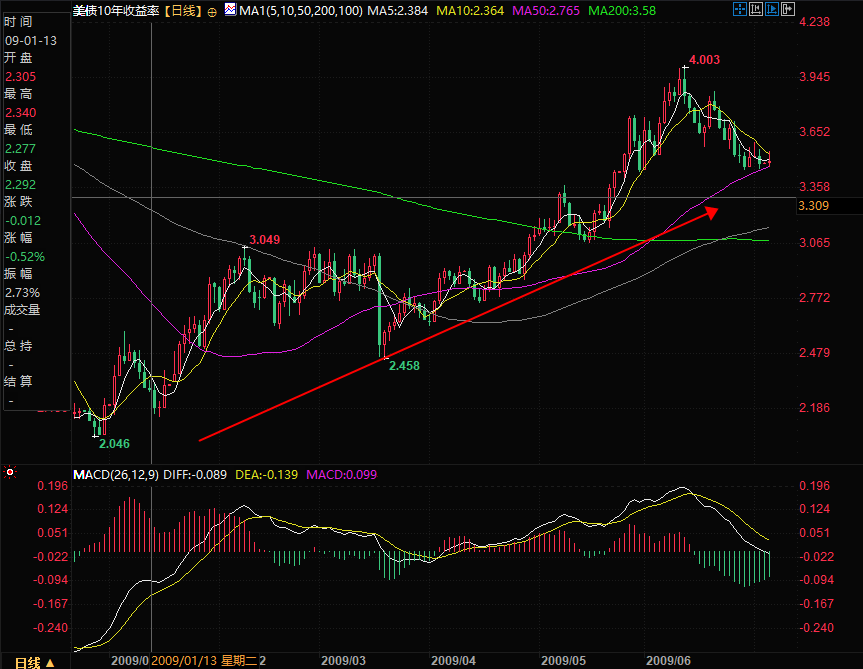
(Chart of 10-year US Treasury yield, source: EasyTrade)
Following the passage of the U.S. Relief Plan Act in 2021, the market anticipated a faster economic recovery and increased inflationary pressures in the post-pandemic era, leading to a corresponding rise in U.S. Treasury yields.
In other phases, the root cause of market volatility triggered by fiscal policy was not the stimulus policy itself, but rather the market's doubts about the government's governance capabilities and fiscal credibility.
Events such as the debt ceiling debate and sovereign credit rating downgrades can periodically undermine investor confidence in the U.S. policy system.
Even during periods of market weakness, long-term government bonds still attract capital due to their safe-haven characteristics, creating a market contrast. The debt ceiling crisis in 2011 is a typical example.
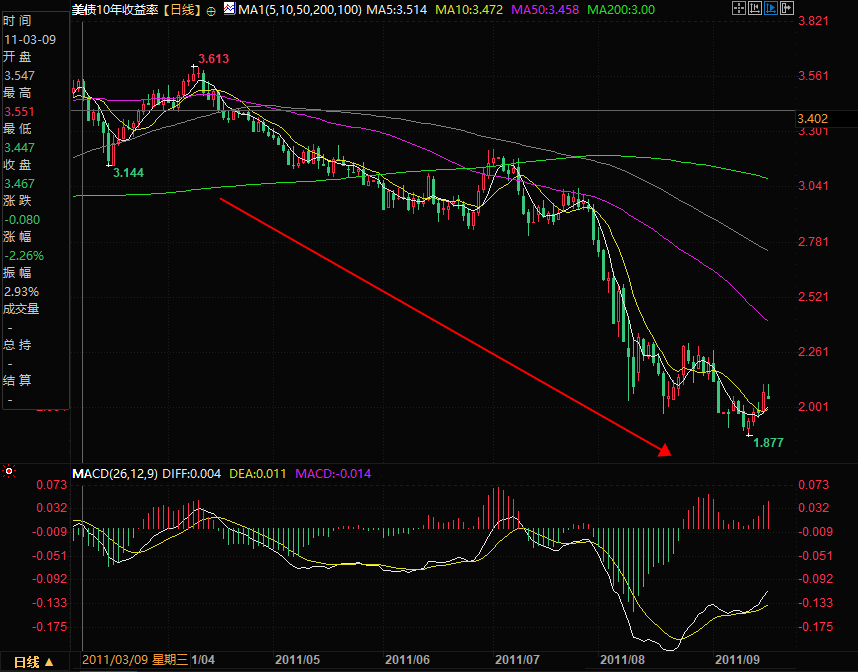
(Chart of 10-year US Treasury yield, source: EasyTrade)
At that time, political maneuvering caused market concerns about the US fiscal governance capabilities, leading to a downgrade of its sovereign credit rating. However, influenced by expectations of global financial instability, funds flowed into long-term government bonds as a safe haven, causing yields to decline.
During the COVID-19 crisis in 2020, multiple market logics emerged simultaneously: in the early stages of the crisis, funds flocked to government bonds, causing yields to fall rapidly, which was a typical safe-haven market; however, the situation quickly evolved into a liquidity crisis, and yields rebounded again, ultimately requiring intervention from the Federal Reserve to stabilize the situation.
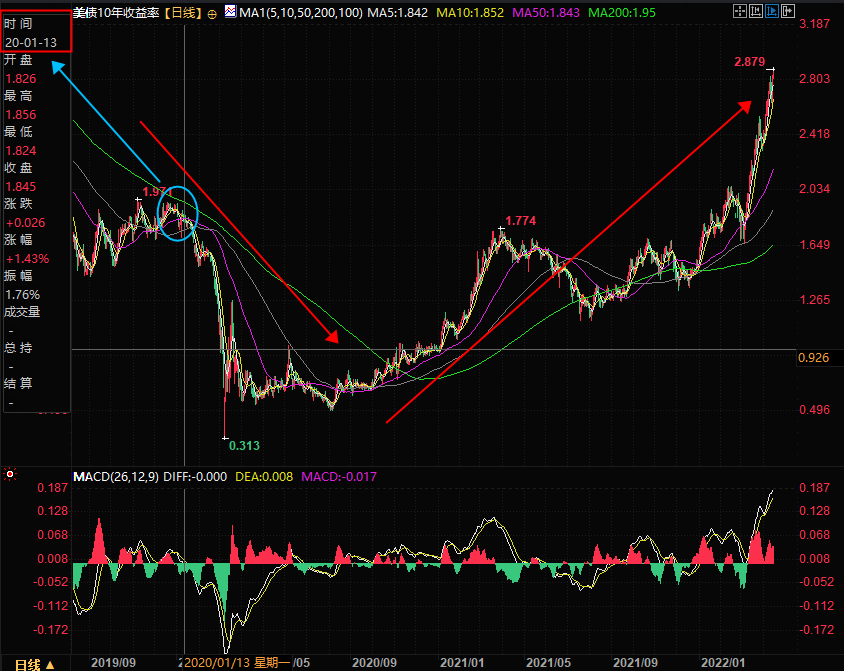
(Chart of 10-year US Treasury yield, source: EasyTrade)
Even though the United States relied on a deficit model to introduce trillions of dollars in fiscal relief measures through the Coronavirus Aid Act, the market still prioritized safe-haven assets due to global risks, and Treasury yields continued to decline.
The government bond market will not experience mechanical fluctuations due to rising debt levels. In the short term, inflation data, Federal Reserve decisions, recession risks, and unforeseen global events will remain the core forces driving yields.
This reality also makes many market participants prone to underestimating the risks hidden in the long-term fiscal outlook of the United States.
However, the value of fiscal credibility should never be ignored. It is the "invisible foundation" of the government bond market and determines the underlying logic for investors to interpret various risks.
When the market recognizes that the United States has the fiscal capacity to fulfill its obligations, even if the economy is in trouble, US Treasury bonds remain a globally recognized core safe-haven asset.
Once this underlying confidence is eroded, market resilience will weaken significantly, market volatility will increase, and subsequent risk events will be more difficult to resolve.
For the government bond market, the strength of fiscal credibility ultimately determines whether this "financial house" can withstand various storms and shocks.
While these problems may not cause the building to collapse instantly, if the foundation continues to weaken, every storm will exacerbate the risks and significantly increase repair costs.
The same logic applies to the operation of the government bond market. As a "safe anchor" for the global financial market, the yield on US Treasury bonds often fluctuates with short-term news—inflation data exceeding expectations, a shift in the Federal Reserve's policy, rising recession fears, or the outbreak of geopolitical risks can all directly trigger market anomalies.
But behind these short-term fluctuations lies a more crucial core variable: market confidence in the fundamentals of US fiscal policy, that is, fiscal credibility.
As previous analyses have shown, the size of the debt is not a direct factor that dominates the yield of government bonds in the short term.
As long as investors recognize a country's economic resilience and institutional stability, the market can absorb a large volume of government bonds in the long term.
However, once the fiscal situation weakens and public credibility is damaged, the market's sensitivity to external shocks will increase significantly, and investors' risk pricing of government bonds will adjust accordingly, ultimately driving up interest rates and eroding the "safe asset" attribute of government bonds.
Short-term market trend: Two core forces dominate the trend of treasury bonds
The yield on government bonds is a core indicator for investors to track the market; it is essentially the risk-reward ratio required to hold government bonds.
When funds flow into the government bond market, the supply and demand relationship drives yields down;
If a risk event occurs, high-quality investment targets are diverted, or the supply of Treasury bonds surges, market allocation intentions will cool down, and yields will rise accordingly. Since 2020, the supply of US Treasury bonds has expanded significantly, becoming one of the important drivers of rising yields.
In the short term, significant fluctuations in government bond yields are primarily driven by macroeconomic and monetary policies.
Inflation data, Federal Reserve policy decisions, recession expectations, financial crises, and geopolitical black swan events can all quickly shake up the market—these events can directly rewrite investors' judgments on economic growth, inflation levels, and interest rate paths.
When market uncertainty intensifies, funds flow into government bonds seeking refuge, driving down yields. This phenomenon is known as "safe-haven buying" and is a direct manifestation of the core function of government bonds.
Since the 1990s, the performance of government bonds has closely followed the implementation of Federal Reserve policies and market forecasts.
Over the past few decades, the core triggers for several major market fluctuations have focused on three types of events:
First, the Federal Reserve adjusts its policy tools, including quantitative easing and unexpected interest rate hikes;
Second, inflation data deviated significantly from expectations, reversing market judgments on medium- and long-term interest rates;
Third, the financial crisis and global risk events triggered collective risk aversion, leading to a concentrated influx of funds into US Treasury bonds.
There are numerous typical examples: In 2009, the Federal Reserve increased quantitative easing, and Treasury yields fell sharply;
Inflation data for 2022 exceeded expectations, leading to a rebound in yields;
The market experienced severe turmoil in the early stages of the COVID-19 outbreak, and government bond yields also fluctuated significantly.
These cases confirm the key conclusion: short-term market movements in the Treasury bond market are largely driven by immediate economic data and expectations of Federal Reserve policy, while the impact of fiscal policy is entirely different—it does not dominate intraday fluctuations, but it forms the underlying framework of investor confidence and profoundly influences the intensity and direction of the market's reaction to various news.
Transmission Logic: Three Paths Through which Fiscal Policy Affects the Bond Market
Fiscal policy is by no means a secondary variable in the Treasury bond market; it has a real impact on trends in a unique way, distinct from inflation data, Federal Reserve decisions, and the direct impact of financial crises.
Short-term market movements are often driven by immediate economic news, while the core role of fiscal policy is to change market expectations—including predictions of economic growth, inflation levels, future supply of Treasury bonds, and confidence in the U.S. fiscal policy's ability to fulfill its obligations.
These types of effects have a longer duration, typically lasting weeks or even months, rather than just a few trading days. Specifically, fiscal measures primarily affect Treasury yields through three main pathways:
First, the expected path of economic growth: large-scale fiscal stimulus will directly raise market expectations for economic growth, increase investors' risk appetite, reduce demand for government bonds, and thus push up yields.
Secondly, regarding the inflation expectation path, if fiscal policy is deemed to cause economic overheating, market inflation expectations will rise accordingly. To hedge against inflation risks, investors will demand higher risk compensation, driving up government bond yields.
Third, debt supply and issuance path: the expected expansion of the fiscal deficit means that the issuance of government bonds will increase accordingly. Once the market's absorption capacity is insufficient, the supply-demand imbalance will directly put upward pressure on yields.
Real-world case study: How fiscal events change the bond market landscape
Multiple major fiscal events in the United States have fully demonstrated the aforementioned transmission mechanism.
The multiple rounds of economic stimulus packages launched in 2009 caused a significant increase in government bond yields by altering expectations of economic activity.
(Chart of 10-year US Treasury yield, source: EasyTrade)
Following the passage of the U.S. Relief Plan Act in 2021, the market anticipated a faster economic recovery and increased inflationary pressures in the post-pandemic era, leading to a corresponding rise in U.S. Treasury yields.
In other phases, the root cause of market volatility triggered by fiscal policy was not the stimulus policy itself, but rather the market's doubts about the government's governance capabilities and fiscal credibility.
Events such as the debt ceiling debate and sovereign credit rating downgrades can periodically undermine investor confidence in the U.S. policy system.
Even during periods of market weakness, long-term government bonds still attract capital due to their safe-haven characteristics, creating a market contrast. The debt ceiling crisis in 2011 is a typical example.
(Chart of 10-year US Treasury yield, source: EasyTrade)
At that time, political maneuvering caused market concerns about the US fiscal governance capabilities, leading to a downgrade of its sovereign credit rating. However, influenced by expectations of global financial instability, funds flowed into long-term government bonds as a safe haven, causing yields to decline.
During the COVID-19 crisis in 2020, multiple market logics emerged simultaneously: in the early stages of the crisis, funds flocked to government bonds, causing yields to fall rapidly, which was a typical safe-haven market; however, the situation quickly evolved into a liquidity crisis, and yields rebounded again, ultimately requiring intervention from the Federal Reserve to stabilize the situation.
(Chart of 10-year US Treasury yield, source: EasyTrade)
Even though the United States relied on a deficit model to introduce trillions of dollars in fiscal relief measures through the Coronavirus Aid Act, the market still prioritized safe-haven assets due to global risks, and Treasury yields continued to decline.
In conclusion, fiscal credibility is the implicit foundation of the bond market.
The government bond market will not experience mechanical fluctuations due to rising debt levels. In the short term, inflation data, Federal Reserve decisions, recession risks, and unforeseen global events will remain the core forces driving yields.
This reality also makes many market participants prone to underestimating the risks hidden in the long-term fiscal outlook of the United States.
However, the value of fiscal credibility should never be ignored. It is the "invisible foundation" of the government bond market and determines the underlying logic for investors to interpret various risks.
When the market recognizes that the United States has the fiscal capacity to fulfill its obligations, even if the economy is in trouble, US Treasury bonds remain a globally recognized core safe-haven asset.
Once this underlying confidence is eroded, market resilience will weaken significantly, market volatility will increase, and subsequent risk events will be more difficult to resolve.
For the government bond market, the strength of fiscal credibility ultimately determines whether this "financial house" can withstand various storms and shocks.
- Risk Warning and Disclaimer
- The market involves risk, and trading may not be suitable for all investors. This article is for reference only and does not constitute personal investment advice, nor does it take into account certain users’ specific investment objectives, financial situation, or other needs. Any investment decisions made based on this information are at your own risk.