Is it a case of the snipe and the clam fighting, while the fisherman profits? Soaring oil prices are providing Russia with much-needed financial support, but Russia is finding itself in a strategic predicament?
2026-03-30 12:18:50
As the war with Iran continues, Brent crude oil prices fluctuated upwards during Asian trading hours on Monday (March 30). The most active June futures contract was trading around $107.70 per barrel, up about 2.8% from the previous trading day's settlement price. Brent crude oil prices have risen by more than 50% since the outbreak of the conflict. This surge in oil prices has injected a strong boost into the Russian economy. Coupled with the Trump administration's easing of restrictions on Russian oil exports, Russia has become one of the early winners of the war. High oil prices have significantly increased Russia's energy export revenue, alleviating its financial pressure in the Russia-Ukraine conflict.
In recent weeks, Russia has significantly increased its support for Iran, including providing satellite imagery and improved drone technology to help Iran more accurately strike U.S. targets in the region. This cooperation draws on tactical experience from the Russia-Ukraine conflict, covering guidance on drone swarm deployment and strike radar systems.
Russia's move aims to enhance Iran's strike capabilities and uses its support for Iran as a potential bargaining chip in negotiations with Washington. Reports indicate that Russia proposed ceasing to share similar intelligence with Iran if the US stopped providing targeting information to Ukraine.
Despite the significant short-term benefits from high oil prices, the war with Iran poses a greater strategic threat to Russia. Russia's former partner in Syria, Assad, has gone into exile in Moscow, and Russia is negotiating the future of its military bases with the new government. Iran is a key link in militia networks such as Hezbollah in Lebanon, which provide Russia with arms technology trafficking routes and a foothold in the Middle East.
If Iran's influence is severely weakened, Russia's overall influence in the Middle East will shrink further, and its Southern Border Partnership system will face long-term instability.
Moscow's move is partly aimed at salvaging its shrinking network of partnerships that once helped Russia become the world's second-largest arms exporter, spanning regimes from Latin America to the Middle East.
In January of this year, the US military captured Venezuelan President Maduro, establishing US dominance over Venezuela; Trump also hinted at possible further actions against the Cuban regime, directly threatening Russia's traditional partners in the Western Hemisphere. Russia is attempting to solidify its overall "anti-Western" camp by supporting Iran.
Russia is increasingly frustrated by the United States' continued encroachment on its sphere of influence. The US military's seizure of several oil tankers linked to Russia has squeezed Russian companies' operations in Venezuela; and Russia sent oil tankers to Cuba as a sign of its unease following the US's tightening of the embargo.
In Africa, Russian mercenaries have failed to effectively stop the expansion of jihadist groups, and countries like Mali have quietly resumed contact with the United States. Trump even intervened in South Caucasus affairs, inviting the leaders of Armenia and Azerbaijan to the US in an attempt to mediate the dispute, a move described by RAND Corporation experts as "deliberately provoking Russia."
Calls for a tougher response have emerged within Russia. Nationalist Alexander Dugin warned, "Our partners will fall one by one," urging Russia to take a firmer stance in response to US actions.
This voice reflects the anxiety of the Russian elite about the continued shrinking of their sphere of influence, as well as their dissatisfaction with the Trump administration's multi-pronged pressure strategy.
While high oil prices provided Russia with short-term economic benefits, the war with Iran exposed and amplified its global strategic vulnerabilities. Russia increased its support for Iran through satellite imagery, drone technology, and tactical guidance, aiming to salvage its shrinking network of partners and as leverage in negotiations with the United States.
However, US actions in the Western Hemisphere, Africa, and the South Caucasus continue to diminish Russia's influence, forcing Moscow to confront long-term strategic anxieties. The strength of Russia's future response will directly impact the trajectory of the Middle East conflict and the global geopolitical landscape.
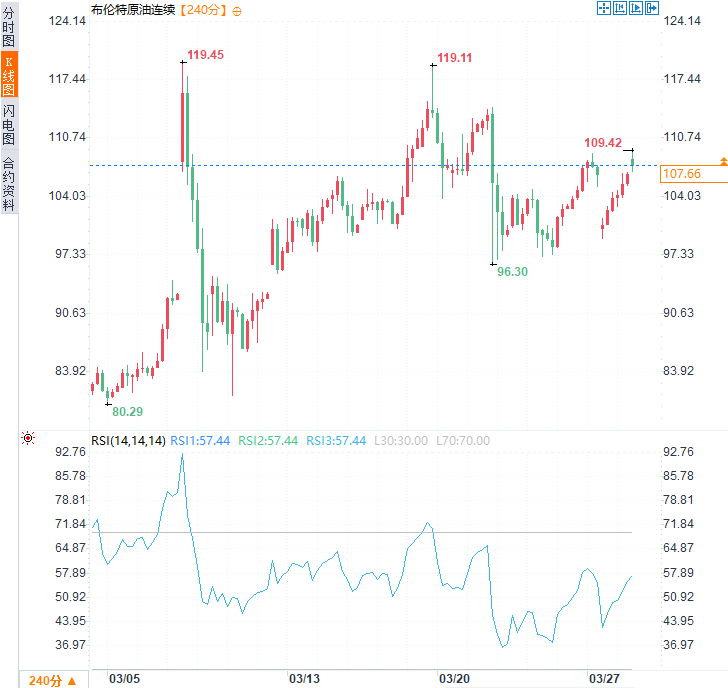
(Brent crude oil 4-hour chart, source: FX678)
At 12:18 Beijing time, Brent crude oil futures were trading at $107.70 per barrel.
Russia increases military support for Iran
In recent weeks, Russia has significantly increased its support for Iran, including providing satellite imagery and improved drone technology to help Iran more accurately strike U.S. targets in the region. This cooperation draws on tactical experience from the Russia-Ukraine conflict, covering guidance on drone swarm deployment and strike radar systems.
Russia's move aims to enhance Iran's strike capabilities and uses its support for Iran as a potential bargaining chip in negotiations with Washington. Reports indicate that Russia proposed ceasing to share similar intelligence with Iran if the US stopped providing targeting information to Ukraine.
The long-term strategic threat of conflict to Russia
Despite the significant short-term benefits from high oil prices, the war with Iran poses a greater strategic threat to Russia. Russia's former partner in Syria, Assad, has gone into exile in Moscow, and Russia is negotiating the future of its military bases with the new government. Iran is a key link in militia networks such as Hezbollah in Lebanon, which provide Russia with arms technology trafficking routes and a foothold in the Middle East.
If Iran's influence is severely weakened, Russia's overall influence in the Middle East will shrink further, and its Southern Border Partnership system will face long-term instability.
Saving the shrinking partnership network
Moscow's move is partly aimed at salvaging its shrinking network of partnerships that once helped Russia become the world's second-largest arms exporter, spanning regimes from Latin America to the Middle East.
In January of this year, the US military captured Venezuelan President Maduro, establishing US dominance over Venezuela; Trump also hinted at possible further actions against the Cuban regime, directly threatening Russia's traditional partners in the Western Hemisphere. Russia is attempting to solidify its overall "anti-Western" camp by supporting Iran.
Disappointment with the United States encroaching on its sphere of influence
Russia is increasingly frustrated by the United States' continued encroachment on its sphere of influence. The US military's seizure of several oil tankers linked to Russia has squeezed Russian companies' operations in Venezuela; and Russia sent oil tankers to Cuba as a sign of its unease following the US's tightening of the embargo.
In Africa, Russian mercenaries have failed to effectively stop the expansion of jihadist groups, and countries like Mali have quietly resumed contact with the United States. Trump even intervened in South Caucasus affairs, inviting the leaders of Armenia and Azerbaijan to the US in an attempt to mediate the dispute, a move described by RAND Corporation experts as "deliberately provoking Russia."
Calls for a tough response from within Russia
Calls for a tougher response have emerged within Russia. Nationalist Alexander Dugin warned, "Our partners will fall one by one," urging Russia to take a firmer stance in response to US actions.
This voice reflects the anxiety of the Russian elite about the continued shrinking of their sphere of influence, as well as their dissatisfaction with the Trump administration's multi-pronged pressure strategy.
Editor's Summary
While high oil prices provided Russia with short-term economic benefits, the war with Iran exposed and amplified its global strategic vulnerabilities. Russia increased its support for Iran through satellite imagery, drone technology, and tactical guidance, aiming to salvage its shrinking network of partners and as leverage in negotiations with the United States.
However, US actions in the Western Hemisphere, Africa, and the South Caucasus continue to diminish Russia's influence, forcing Moscow to confront long-term strategic anxieties. The strength of Russia's future response will directly impact the trajectory of the Middle East conflict and the global geopolitical landscape.
(Brent crude oil 4-hour chart, source: FX678)
At 12:18 Beijing time, Brent crude oil futures were trading at $107.70 per barrel.
- Risk Warning and Disclaimer
- The market involves risk, and trading may not be suitable for all investors. This article is for reference only and does not constitute personal investment advice, nor does it take into account certain users’ specific investment objectives, financial situation, or other needs. Any investment decisions made based on this information are at your own risk.