Trump suddenly changes his stance: Will there be a ceasefire even if the Strait isn't cleared? Oil prices surge and then fall.
2026-03-31 10:43:12
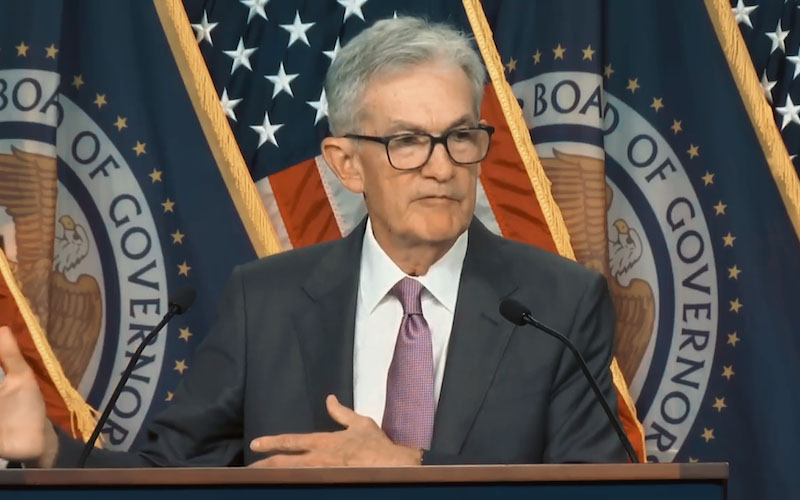
US President Trump has made it clear to his staff that he is willing to end US military action against Iran even if the Strait of Hormuz remains largely closed. This decision could prolong Tehran's influence in the crucial waterway and postpone the complex task of reopening the strait to a later stage.
According to a recent report by The Wall Street Journal, Trump and his team assessed that forcibly reopening this vital global shipping route would prolong the conflict beyond the originally planned four to six weeks. Therefore, having largely achieved its primary military objectives—weakening Iran's naval power and missile stockpile—the US has chosen to gradually de-escalate the current conflict.
On Tuesday (March 31) during Asian trading hours, US crude oil prices rose and then fell back, currently trading around $102.50 per barrel, down about 0.3% on the day. It initially touched $106.86, a new high since March 9, but subsequently retreated as Trump's latest remarks eased market concerns about prolonged energy disruptions. Previously, US crude oil surged 3% on Monday, with US crude oil futures settling above $100 per barrel for the first time since 2022.
The Strait of Hormuz is a vital waterway for global oil transportation, normally handling about 20% of the world's crude oil shipments. The current conflict has severely disrupted shipping through the strait, causing a daily shortage of approximately 10 to 12 million barrels of international crude oil supply, directly driving up global oil prices.
Although Iran recently allowed some oil tankers to pass (such as 20 tankers as a gesture of goodwill), overall navigation remains restricted. US officials have pointed out that Iran may be attempting to establish long-term influence by controlling the strait, and may even be considering a toll system, which directly conflicts with the freedom of navigation principles upheld by the US and its allies.
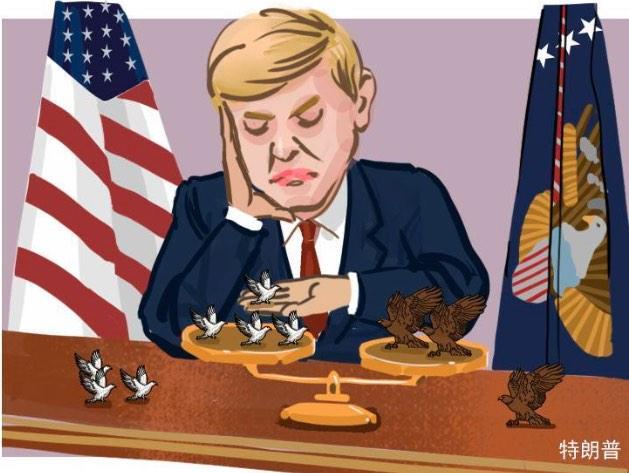
Trump's policy shift reflects the pragmatic considerations of the United States in the Iran conflict. While military action has achieved some initial success, further escalation will face high costs and uncertainties. Experts believe that the US priority has shifted from full-scale confrontation to restoring normal trade order through diplomatic means .
The following is a comparison table of major U.S. targets:

In a recent interview, U.S. Secretary of State Marco Rubio emphasized, "Trump favors a diplomatic approach. These negotiations are still in their early stages, but we must also be prepared for the possibility that they might fail. We will never allow Iran to permanently control the Strait of Hormuz or establish a toll system." This statement highlights the balance the U.S. is striking between diplomatic and military options .
If diplomatic efforts fail to yield immediate results, the United States plans to push its European and Gulf allies to lead the reopening of the Straits. While a military solution remains a backup option, it is not currently a priority. This strategy aims to reduce direct U.S. military involvement while maintaining pressure on Iran.
Trump stated on social media that the U.S. is in serious consultations with Iran and has made significant progress. He also warned that if an agreement cannot be reached in the short term and navigation in the Strait of Hormuz is not immediately restored, the U.S. reserves the right to take strong measures against Iranian energy facilities.
The ongoing instability in the Strait of Hormuz has significantly impacted global energy markets. Oil price volatility has intensified, and supply chains are under pressure. In the long term, if the issue of control over the strait is not properly resolved, it could lead to increased energy security risks and affect global economic growth.
Analysts believe that while the US decision to end military operations may shorten the conflict, it also adds uncertainty to the regional situation and may temporarily alleviate oil price pressures. How to restore the normal functioning of the Taiwan Strait through multilateral coordination will be a key test of the wisdom of the international community.
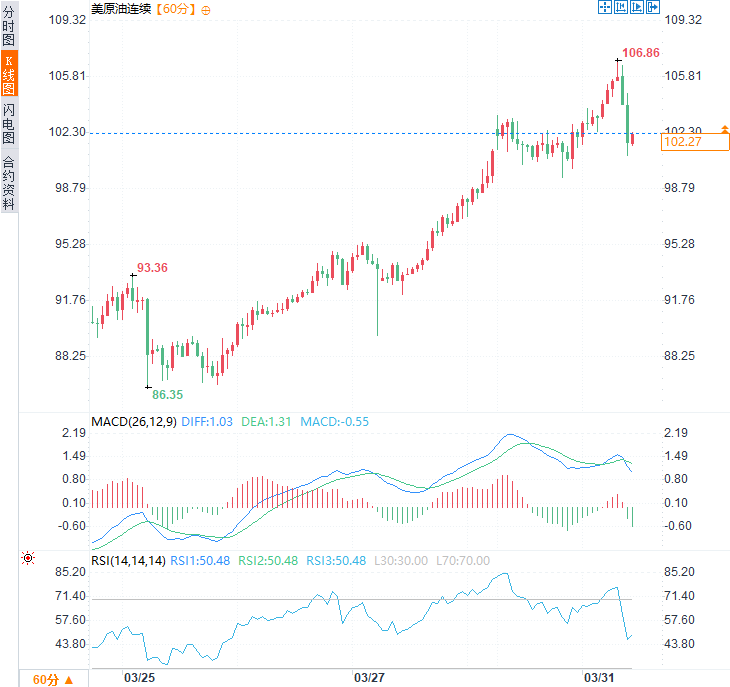
(US crude oil hourly chart, source: FX678)
In summary , the Trump administration's shift from military dominance to a diplomatic priority in the Iran conflict reflects a realistic adjustment after achieving core military objectives. This shift may shorten the duration of the conflict, but the long-term issue of control over the Strait of Hormuz remains unresolved. International energy markets and regional stability will continue to be affected, and future developments will depend on the outcome of negotiations and the effectiveness of coordination among allies.
At 10:42 Beijing time, US crude oil futures were trading at $102.32 per barrel.
According to a recent report by The Wall Street Journal, Trump and his team assessed that forcibly reopening this vital global shipping route would prolong the conflict beyond the originally planned four to six weeks. Therefore, having largely achieved its primary military objectives—weakening Iran's naval power and missile stockpile—the US has chosen to gradually de-escalate the current conflict.
On Tuesday (March 31) during Asian trading hours, US crude oil prices rose and then fell back, currently trading around $102.50 per barrel, down about 0.3% on the day. It initially touched $106.86, a new high since March 9, but subsequently retreated as Trump's latest remarks eased market concerns about prolonged energy disruptions. Previously, US crude oil surged 3% on Monday, with US crude oil futures settling above $100 per barrel for the first time since 2022.
Current situation in the Strait of Hormuz
The Strait of Hormuz is a vital waterway for global oil transportation, normally handling about 20% of the world's crude oil shipments. The current conflict has severely disrupted shipping through the strait, causing a daily shortage of approximately 10 to 12 million barrels of international crude oil supply, directly driving up global oil prices.
Although Iran recently allowed some oil tankers to pass (such as 20 tankers as a gesture of goodwill), overall navigation remains restricted. US officials have pointed out that Iran may be attempting to establish long-term influence by controlling the strait, and may even be considering a toll system, which directly conflicts with the freedom of navigation principles upheld by the US and its allies.
Analysis of US Strategic Adjustment
Trump's policy shift reflects the pragmatic considerations of the United States in the Iran conflict. While military action has achieved some initial success, further escalation will face high costs and uncertainties. Experts believe that the US priority has shifted from full-scale confrontation to restoring normal trade order through diplomatic means .
The following is a comparison table of major U.S. targets:
In a recent interview, U.S. Secretary of State Marco Rubio emphasized, "Trump favors a diplomatic approach. These negotiations are still in their early stages, but we must also be prepared for the possibility that they might fail. We will never allow Iran to permanently control the Strait of Hormuz or establish a toll system." This statement highlights the balance the U.S. is striking between diplomatic and military options .
Diplomatic pressure and the role of allies
If diplomatic efforts fail to yield immediate results, the United States plans to push its European and Gulf allies to lead the reopening of the Straits. While a military solution remains a backup option, it is not currently a priority. This strategy aims to reduce direct U.S. military involvement while maintaining pressure on Iran.
Trump stated on social media that the U.S. is in serious consultations with Iran and has made significant progress. He also warned that if an agreement cannot be reached in the short term and navigation in the Strait of Hormuz is not immediately restored, the U.S. reserves the right to take strong measures against Iranian energy facilities.
Impact on global energy markets
The ongoing instability in the Strait of Hormuz has significantly impacted global energy markets. Oil price volatility has intensified, and supply chains are under pressure. In the long term, if the issue of control over the strait is not properly resolved, it could lead to increased energy security risks and affect global economic growth.
Analysts believe that while the US decision to end military operations may shorten the conflict, it also adds uncertainty to the regional situation and may temporarily alleviate oil price pressures. How to restore the normal functioning of the Taiwan Strait through multilateral coordination will be a key test of the wisdom of the international community.
(US crude oil hourly chart, source: FX678)
In summary , the Trump administration's shift from military dominance to a diplomatic priority in the Iran conflict reflects a realistic adjustment after achieving core military objectives. This shift may shorten the duration of the conflict, but the long-term issue of control over the Strait of Hormuz remains unresolved. International energy markets and regional stability will continue to be affected, and future developments will depend on the outcome of negotiations and the effectiveness of coordination among allies.
At 10:42 Beijing time, US crude oil futures were trading at $102.32 per barrel.
- Risk Warning and Disclaimer
- The market involves risk, and trading may not be suitable for all investors. This article is for reference only and does not constitute personal investment advice, nor does it take into account certain users’ specific investment objectives, financial situation, or other needs. Any investment decisions made based on this information are at your own risk.