Iran's strong denials quell panic and oil price increases mask underlying concerns about future negotiations.
2026-04-24 16:25:12
On Friday (April 24) , international oil prices, gold prices, and equity markets generally fluctuated and consolidated during the Asian and European sessions. The market was digesting the huge volatility of the previous night. On Thursday night, there were multiple negative news events, including a reversal, which caused international oil prices to surge by more than 5% and even break through the swing high of the previous morning. Equity markets and gold prices also experienced a huge volatility with a sharp bottoming out and rebound.
The first ceasefire agreement expired on April 22, 2026, leaving the meeting place in Islamabad empty, and US-Iran relations once again entered a suffocating "extreme game" period.
In this power struggle interwoven with disinformation, diplomatic rhetoric, and military deterrence, every development is affecting the nerves of global markets.

On April 23, US President Trump made a startling statement at the White House.
Instead of ordering the firing, he unexpectedly stated that Washington had decided to extend the ceasefire agreement in the Persian Gulf indefinitely due to a "serious split" within the Iranian government between "moderates" and "hardliners."
Trump's move has been interpreted by outsiders as a typical "divide and conquer" tactic.
He claimed that the US was under "no pressure" at all, and that the real pressure came from Iran, which was blockaded at sea and unable to export oil. He attempted to undermine Tehran's willingness to negotiate from within by openly instigating infighting within Iran.
Following Trump's statement, Israeli media quickly released a "major news" report, stating that the head of the Iranian negotiating team and Speaker of Parliament Ghalibaf had resigned and withdrawn from the negotiating team due to irreconcilable differences with the Revolutionary Guard (IRGC) on the bottom line of negotiations.
This news instantly triggered panic in global markets, with a surge in risk aversion.
Investors are concerned that if Ghalibaf, who represents the interests of the military, withdraws, it means that the pro-war faction within Iran has gained the upper hand, and the prospects for negotiations will be affected.
In response to the divisive tactics, Iranian officials issued a rare "collective statement" to clarify the situation.
Clarification and Confirmation: On the 23rd, the Iranian Foreign Ministry officially confirmed that Ghalibaf has not only not resigned, but remains the key figure in the delegation.
The spokesperson emphasized that, as the negotiations have shifted from the nuclear issue to "completely ending the war," Kalibaf's war background and political coordination capabilities are currently the "optimal configuration" for Iran.
President Pezechzian and Ghalibaf issued a joint statement saying: Iranian officials are united, the Iranian people are full of pride and patriotism, and the soldiers of the Iranian armed forces have sacrificed their lives for the country, which is "a nightmare for the losers".
Supreme Leader's advisor, Moheber, went even further, writing, "Faced with 90 million Iranian revolutionaries, Trump has no choice but to incite division." Earlier on the 23rd, US President Trump posted on social media that Iran's "hardliners" and "moderates" were "fighting amongst themselves."
This clarification, as positive news, instantly offset market doubts. Of course, another force that contributed to the market rebound was the release of a new version of chat-GPT.
Looking back at the first round of negotiations on April 11, the reason why the Iranian delegation dared to send the "ace combination" of Ghalibaf (speaker of parliament) and Araghchi (foreign minister) was inseparable from the strong protection of the host country, Pakistan.
To guard against possible precision air strikes by Israel, the Pakistan Air Force scrambled J-10CE fighter jets to escort the aircraft throughout the mission.
The special plane did not land at a civilian airport, but went directly to the heavily guarded Noor Khan Air Force Base.
Within 24 hours of the negotiations, more than 20,000 police officers were deployed in the core area of Islamabad, and even anti-drone electronic jamming systems were deployed on rooftops, creating an "absolutely safe zone" for the US and Iran amidst the chaos in the Middle East.
According to the latest intelligence from Xinhua News Agency, citing sources, the US and Iran are expected to make a breakthrough in preparations in Islamabad tonight or tomorrow (24-25).
With Iran having completed a unified statement in its public relations campaign, Ghalibaf and Araghchi will most likely return to the negotiating table with the Supreme Leader's latest instructions.
The international community is holding its breath, as the weekend could very well be a turning point in determining whether the Middle East moves toward peace or plunges into an abyss.
As a former US diplomat put it, the resilience of the US and Iran is completely different. The US thinks it can withdraw at any time, but Iran is fighting a "battle for survival".
Ghalibaf's involvement signifies that Iran is using its military strength to secure long-term political security.
Despite the heated rhetoric, the current "indefinite ceasefire" and "return to negotiations" indicate that neither side is willing to bear the cost of a full-scale war.
As long as Ghalibaf remains at the negotiating table, it means that Tehran's "gun" and "diplomatic pen" are still in sync. Although the process will be extremely difficult, this "tough guy" combination is actually the most likely candidate to bring back a ceasefire agreement that can be accepted by all factions in Iran.
While the rise in international oil prices is understandable given the positive technical factors, it is worth noting that oil prices continued to rise and even reached new highs after Iran's subsequent clarification led to a rebound in gold and equity prices.
As mentioned in yesterday's article, although oil prices rose and then fell back, they effectively broke through multiple resistance levels, and subsequently broke through the downtrend line to reach new highs.
Brent crude oil is currently supported in the 98-99 range, and we should also observe whether it can hold the downtrend line that has already been broken.
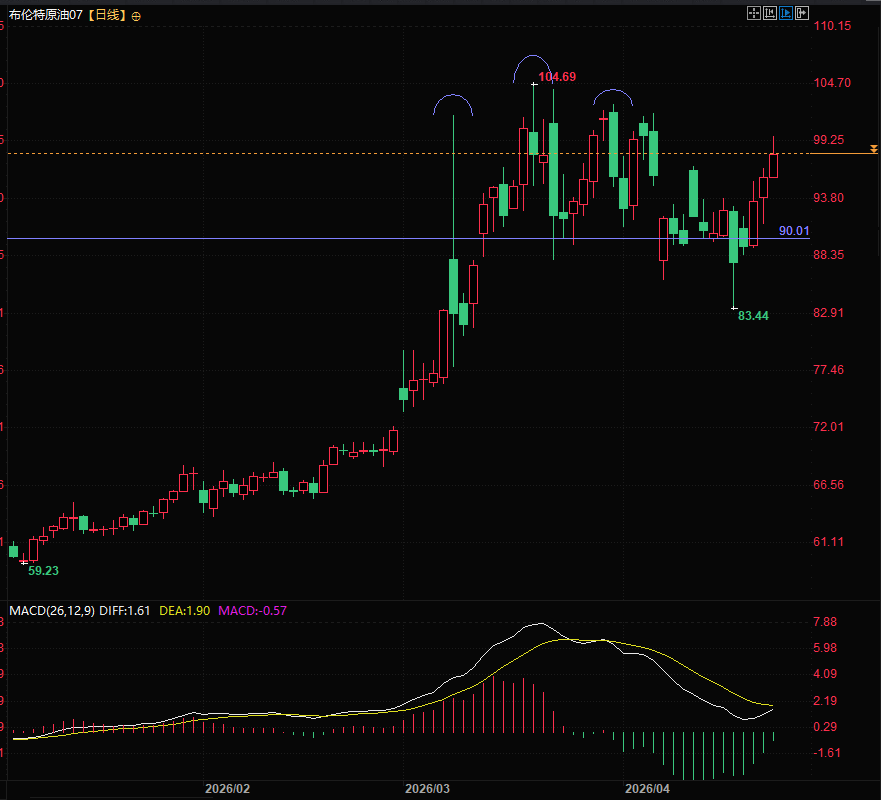
(Brent crude oil July contract daily chart, source: EasyForex)
At 16:22 Beijing time, the Brent crude oil July contract was trading at $4079.90 per barrel.
The first ceasefire agreement expired on April 22, 2026, leaving the meeting place in Islamabad empty, and US-Iran relations once again entered a suffocating "extreme game" period.
In this power struggle interwoven with disinformation, diplomatic rhetoric, and military deterrence, every development is affecting the nerves of global markets.
Trump's "divide and conquer" tactic: Indefinitely extending the ceasefire
On April 23, US President Trump made a startling statement at the White House.
Instead of ordering the firing, he unexpectedly stated that Washington had decided to extend the ceasefire agreement in the Persian Gulf indefinitely due to a "serious split" within the Iranian government between "moderates" and "hardliners."
Trump's move has been interpreted by outsiders as a typical "divide and conquer" tactic.
He claimed that the US was under "no pressure" at all, and that the real pressure came from Iran, which was blockaded at sea and unable to export oil. He attempted to undermine Tehran's willingness to negotiate from within by openly instigating infighting within Iran.
Kalibaf's "resignation" blunder: Israel's intelligence offensive
Following Trump's statement, Israeli media quickly released a "major news" report, stating that the head of the Iranian negotiating team and Speaker of Parliament Ghalibaf had resigned and withdrawn from the negotiating team due to irreconcilable differences with the Revolutionary Guard (IRGC) on the bottom line of negotiations.
This news instantly triggered panic in global markets, with a surge in risk aversion.
Investors are concerned that if Ghalibaf, who represents the interests of the military, withdraws, it means that the pro-war faction within Iran has gained the upper hand, and the prospects for negotiations will be affected.
Iran's "Ironclad Retaliation": A Full-Scale Offensive at Home and Abroad
In response to the divisive tactics, Iranian officials issued a rare "collective statement" to clarify the situation.
Clarification and Confirmation: On the 23rd, the Iranian Foreign Ministry officially confirmed that Ghalibaf has not only not resigned, but remains the key figure in the delegation.
The spokesperson emphasized that, as the negotiations have shifted from the nuclear issue to "completely ending the war," Kalibaf's war background and political coordination capabilities are currently the "optimal configuration" for Iran.
President Pezechzian and Ghalibaf issued a joint statement saying: Iranian officials are united, the Iranian people are full of pride and patriotism, and the soldiers of the Iranian armed forces have sacrificed their lives for the country, which is "a nightmare for the losers".
Supreme Leader's advisor, Moheber, went even further, writing, "Faced with 90 million Iranian revolutionaries, Trump has no choice but to incite division." Earlier on the 23rd, US President Trump posted on social media that Iran's "hardliners" and "moderates" were "fighting amongst themselves."
This clarification, as positive news, instantly offset market doubts. Of course, another force that contributed to the market rebound was the release of a new version of chat-GPT.
A Retrospective of My Islamabad Trip: Pakistan's "Air Shield"
Looking back at the first round of negotiations on April 11, the reason why the Iranian delegation dared to send the "ace combination" of Ghalibaf (speaker of parliament) and Araghchi (foreign minister) was inseparable from the strong protection of the host country, Pakistan.
To guard against possible precision air strikes by Israel, the Pakistan Air Force scrambled J-10CE fighter jets to escort the aircraft throughout the mission.
The special plane did not land at a civilian airport, but went directly to the heavily guarded Noor Khan Air Force Base.
Within 24 hours of the negotiations, more than 20,000 police officers were deployed in the core area of Islamabad, and even anti-drone electronic jamming systems were deployed on rooftops, creating an "absolutely safe zone" for the US and Iran amidst the chaos in the Middle East.
A Glimmer of Hope: A Second Chance This Weekend
According to the latest intelligence from Xinhua News Agency, citing sources, the US and Iran are expected to make a breakthrough in preparations in Islamabad tonight or tomorrow (24-25).
With Iran having completed a unified statement in its public relations campaign, Ghalibaf and Araghchi will most likely return to the negotiating table with the Supreme Leader's latest instructions.
The international community is holding its breath, as the weekend could very well be a turning point in determining whether the Middle East moves toward peace or plunges into an abyss.
Summary and Technical Analysis:
As a former US diplomat put it, the resilience of the US and Iran is completely different. The US thinks it can withdraw at any time, but Iran is fighting a "battle for survival".
Ghalibaf's involvement signifies that Iran is using its military strength to secure long-term political security.
Despite the heated rhetoric, the current "indefinite ceasefire" and "return to negotiations" indicate that neither side is willing to bear the cost of a full-scale war.
As long as Ghalibaf remains at the negotiating table, it means that Tehran's "gun" and "diplomatic pen" are still in sync. Although the process will be extremely difficult, this "tough guy" combination is actually the most likely candidate to bring back a ceasefire agreement that can be accepted by all factions in Iran.
While the rise in international oil prices is understandable given the positive technical factors, it is worth noting that oil prices continued to rise and even reached new highs after Iran's subsequent clarification led to a rebound in gold and equity prices.
As mentioned in yesterday's article, although oil prices rose and then fell back, they effectively broke through multiple resistance levels, and subsequently broke through the downtrend line to reach new highs.
Brent crude oil is currently supported in the 98-99 range, and we should also observe whether it can hold the downtrend line that has already been broken.
(Brent crude oil July contract daily chart, source: EasyForex)
At 16:22 Beijing time, the Brent crude oil July contract was trading at $4079.90 per barrel.
- Risk Warning and Disclaimer
- The market involves risk, and trading may not be suitable for all investors. This article is for reference only and does not constitute personal investment advice, nor does it take into account certain users’ specific investment objectives, financial situation, or other needs. Any investment decisions made based on this information are at your own risk.