Hawkish expectations from the Federal Reserve and a decline in oil prices are jointly supporting the USD/CAD exchange rate; the market is focused on Canadian inflation data.
2026-05-19 11:25:06
On Tuesday during Asian trading hours, the USD/CAD pair maintained a slightly bullish trend, trading around 1.3750, close to the one-month high of 1.3765 reached last week. Despite the overall relative strength of the US dollar, the pair lacked further upward momentum in the short term due to market caution ahead of key Canadian inflation data releases.

Global market sentiment remains cautious, with the situation in the Middle East remaining a key factor influencing market volatility. Tensions between the US and Iran over the Strait of Hormuz have not fully eased, and negotiations on the Iranian nuclear issue continue to lack substantial progress. The Strait of Hormuz handles approximately 20% of global seaborne crude oil transport, and the market remains highly vigilant about the risk of energy supply disruptions.
Against this backdrop, the US dollar continues to be supported by both safe-haven flows and rising US yields. Recently, US Treasury yields have risen significantly, and market expectations for the Federal Reserve to maintain high interest rates continue to intensify. Analysts believe that persistently high international energy prices may reignite inflationary pressures in the US, thereby forcing the Federal Reserve to maintain a hawkish stance for an extended period.
Meanwhile, US President Trump stated that, at the request of Gulf states such as Saudi Arabia, Qatar, and the UAE, the US would postpone its planned military action against Iran and allow two to three days for diplomatic negotiations. Trump also indicated that a nuclear agreement with Iran was still possible. Market risk sentiment improved temporarily as a result, and international oil prices retreated somewhat from recent highs.
International oil prices failed to maintain their previous strong upward trend, putting some pressure on the commodity currency, the Canadian dollar. As the Canadian economy is highly dependent on energy exports, crude oil prices typically move in close tandem with the Canadian dollar. When oil prices rise, the Canadian dollar usually finds support; conversely, when oil prices fall, the Canadian dollar's performance may weaken. However, the market remains cautious about further appreciation of the US dollar against the Canadian dollar. On the one hand, international oil prices remain relatively high overall, meaning the Canadian dollar has not completely lost support from the energy market; on the other hand, the upcoming Canadian consumer inflation data is also an important variable influencing the exchange rate.
The market generally expects Canadian inflation data to remain relatively stubborn. If the data shows core inflation in Canada is higher than market expectations, expectations for the Bank of Canada to maintain a hawkish policy stance may rise, thus supporting the Canadian dollar. Conversely, if inflation data shows a significant decline, it could strengthen market expectations for future interest rate cuts by the Bank of Canada and push the USD/CAD exchange rate higher. Currently, the market is reassessing the policy differences between the Bank of Canada and the Federal Reserve, which is a key factor influencing the USD/CAD exchange rate. In contrast, the US economy remains relatively robust, while the Canadian economy faces pressure from a slowing housing market and weakening consumer demand, making the Canadian dollar relatively cautious overall.
From a global capital flow perspective, the US dollar has maintained its overall advantage recently. The high-yield environment in the United States continues to attract international capital inflows into dollar assets, while the Canadian market is affected by expectations of a global economic slowdown, with some funds inclined to reduce risk exposure.
From a technical perspective, the USD/CAD pair maintains a bullish bias on the daily chart. After breaking through the key resistance level of 1.3700, market sentiment has strengthened, and the overall trend remains upward. On the daily chart, 1.3700 has become a key short-term support level, while the 1.3765-1.3800 area above forms a significant resistance zone. If subsequent Canadian inflation data is weak, and the US dollar continues to be supported by yields, the pair may further test the 1.3800 level.
In terms of technical indicators, the daily MACD maintains a golden cross structure, but the growth rate of the red bars has begun to slow down, indicating that the short-term upward momentum has weakened. The RSI indicator is in the neutral to strong zone, and the market has not yet shown obvious overbought signals, which means that the exchange rate still has room for further upward movement.
From a 4-hour chart perspective, the USD/CAD pair has entered a high-level consolidation phase. The 4-hour MACD shows a slight divergence, indicating that short-term upward momentum is weakening. Short-term support has formed around 1.3720, while the area around 1.3770 has become a significant short-term resistance zone. If Canadian inflation data is stronger than expected, the Canadian dollar may experience a temporary rebound; if the data is weak, the USD/CAD pair is likely to continue to reach new highs.
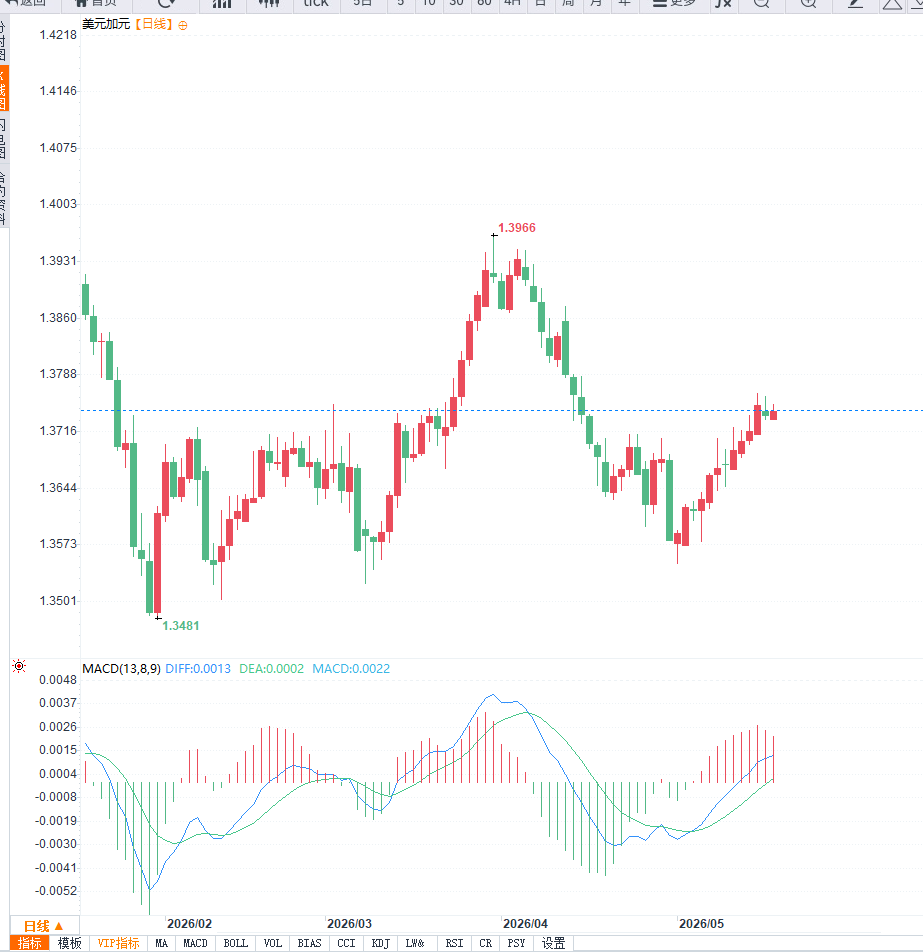
Overall, the core drivers of the USD/CAD market are currently primarily changes in US yields, international oil price movements, and Canadian inflation data. Given the continued instability in global risk sentiment, the exchange rate is expected to remain highly volatile in the short term.
Editor's Summary : The current USD/CAD exchange rate is influenced by multiple factors. Rising US yields and hawkish expectations from the Federal Reserve continue to provide core support for the US dollar; while the decline in international oil prices from their highs has weakened the Canadian dollar's advantage as a commodity currency. However, Canadian inflation data will be a crucial variable in determining the short-term direction. If core inflation in Canada remains resilient, the Bank of Canada's future policy may lean towards caution, thus providing some support for the Canadian dollar. The market will also need to pay close attention to the situation in the Middle East, international oil prices, and changes in the differences in North American monetary policy, as these factors will determine the future direction of the USD/CAD exchange rate.
Global market sentiment remains cautious, with the situation in the Middle East remaining a key factor influencing market volatility. Tensions between the US and Iran over the Strait of Hormuz have not fully eased, and negotiations on the Iranian nuclear issue continue to lack substantial progress. The Strait of Hormuz handles approximately 20% of global seaborne crude oil transport, and the market remains highly vigilant about the risk of energy supply disruptions.
Against this backdrop, the US dollar continues to be supported by both safe-haven flows and rising US yields. Recently, US Treasury yields have risen significantly, and market expectations for the Federal Reserve to maintain high interest rates continue to intensify. Analysts believe that persistently high international energy prices may reignite inflationary pressures in the US, thereby forcing the Federal Reserve to maintain a hawkish stance for an extended period.
Meanwhile, US President Trump stated that, at the request of Gulf states such as Saudi Arabia, Qatar, and the UAE, the US would postpone its planned military action against Iran and allow two to three days for diplomatic negotiations. Trump also indicated that a nuclear agreement with Iran was still possible. Market risk sentiment improved temporarily as a result, and international oil prices retreated somewhat from recent highs.
International oil prices failed to maintain their previous strong upward trend, putting some pressure on the commodity currency, the Canadian dollar. As the Canadian economy is highly dependent on energy exports, crude oil prices typically move in close tandem with the Canadian dollar. When oil prices rise, the Canadian dollar usually finds support; conversely, when oil prices fall, the Canadian dollar's performance may weaken. However, the market remains cautious about further appreciation of the US dollar against the Canadian dollar. On the one hand, international oil prices remain relatively high overall, meaning the Canadian dollar has not completely lost support from the energy market; on the other hand, the upcoming Canadian consumer inflation data is also an important variable influencing the exchange rate.
The market generally expects Canadian inflation data to remain relatively stubborn. If the data shows core inflation in Canada is higher than market expectations, expectations for the Bank of Canada to maintain a hawkish policy stance may rise, thus supporting the Canadian dollar. Conversely, if inflation data shows a significant decline, it could strengthen market expectations for future interest rate cuts by the Bank of Canada and push the USD/CAD exchange rate higher. Currently, the market is reassessing the policy differences between the Bank of Canada and the Federal Reserve, which is a key factor influencing the USD/CAD exchange rate. In contrast, the US economy remains relatively robust, while the Canadian economy faces pressure from a slowing housing market and weakening consumer demand, making the Canadian dollar relatively cautious overall.
From a global capital flow perspective, the US dollar has maintained its overall advantage recently. The high-yield environment in the United States continues to attract international capital inflows into dollar assets, while the Canadian market is affected by expectations of a global economic slowdown, with some funds inclined to reduce risk exposure.
From a technical perspective, the USD/CAD pair maintains a bullish bias on the daily chart. After breaking through the key resistance level of 1.3700, market sentiment has strengthened, and the overall trend remains upward. On the daily chart, 1.3700 has become a key short-term support level, while the 1.3765-1.3800 area above forms a significant resistance zone. If subsequent Canadian inflation data is weak, and the US dollar continues to be supported by yields, the pair may further test the 1.3800 level.
In terms of technical indicators, the daily MACD maintains a golden cross structure, but the growth rate of the red bars has begun to slow down, indicating that the short-term upward momentum has weakened. The RSI indicator is in the neutral to strong zone, and the market has not yet shown obvious overbought signals, which means that the exchange rate still has room for further upward movement.
From a 4-hour chart perspective, the USD/CAD pair has entered a high-level consolidation phase. The 4-hour MACD shows a slight divergence, indicating that short-term upward momentum is weakening. Short-term support has formed around 1.3720, while the area around 1.3770 has become a significant short-term resistance zone. If Canadian inflation data is stronger than expected, the Canadian dollar may experience a temporary rebound; if the data is weak, the USD/CAD pair is likely to continue to reach new highs.
Overall, the core drivers of the USD/CAD market are currently primarily changes in US yields, international oil price movements, and Canadian inflation data. Given the continued instability in global risk sentiment, the exchange rate is expected to remain highly volatile in the short term.
Editor's Summary : The current USD/CAD exchange rate is influenced by multiple factors. Rising US yields and hawkish expectations from the Federal Reserve continue to provide core support for the US dollar; while the decline in international oil prices from their highs has weakened the Canadian dollar's advantage as a commodity currency. However, Canadian inflation data will be a crucial variable in determining the short-term direction. If core inflation in Canada remains resilient, the Bank of Canada's future policy may lean towards caution, thus providing some support for the Canadian dollar. The market will also need to pay close attention to the situation in the Middle East, international oil prices, and changes in the differences in North American monetary policy, as these factors will determine the future direction of the USD/CAD exchange rate.
- Risk Warning and Disclaimer
- The market involves risk, and trading may not be suitable for all investors. This article is for reference only and does not constitute personal investment advice, nor does it take into account certain users’ specific investment objectives, financial situation, or other needs. Any investment decisions made based on this information are at your own risk.