July 17th Financial Breakfast: Iran's threat to close the Bab el-Mandeb Strait sparks inflation concerns, gold prices fall below $4,000, and crude oil is under pressure due to "still room for dialogue."
2026-07-17 06:52:12
On Friday (July 17, Beijing time) in early Asian trading, spot gold fell, trading around $3,973.60 per ounce, hitting a two-week low. Iran's threat to close the Bab el-Mandeb Strait further escalated geopolitical tensions, exacerbated inflation concerns, and boosted expectations of interest rate hikes. US crude oil traded around $78.98 per barrel, falling back below $80 per barrel. Despite the continued tensions between the US and Iran, the White House stated that Iran is still in dialogue with the US and has released an American citizen, indicating that there is still room for both sides to avoid a full-scale war. 
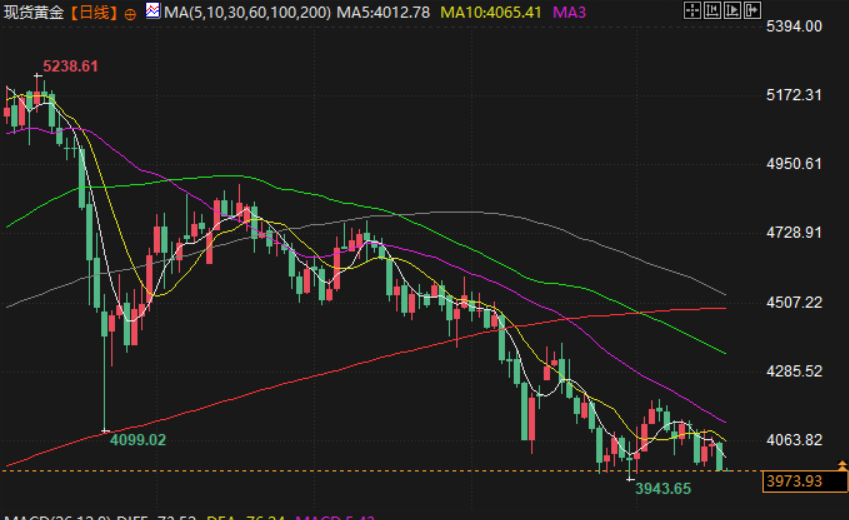 Meanwhile, a rise in the US dollar index and a slight increase in the 10-year US Treasury yield diminished gold's appeal as a non-interest-bearing asset and strengthened market expectations that the Federal Reserve would maintain high interest rates. The CME FedWatch tool showed traders expecting a roughly 53% probability of a rate hike in September. Other precious metals also fell, with spot silver down 3.9% to $55.48, platinum down 3.1% to $1621.83, and palladium down 4.1% to $1260.70.
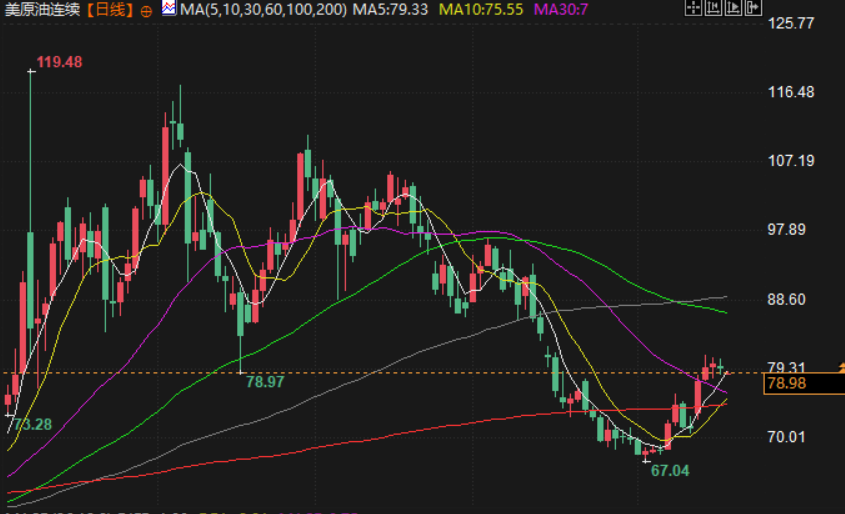 Kpler data shows that approximately 7.4 million barrels per day of oil (7% of global production) were transported via the Bab el-Mandeb Strait in June. A simultaneous disruption to both shipping routes would significantly increase insurance and transportation costs. Meanwhile, the US struck Iranian coastal defense facilities on Wednesday, prompting Iran to declare a "fight for survival." However, on Thursday, Iran released a US citizen, indicating that there is still room for both sides to avoid a full-blown war. On the supply side, Iraqi crude oil shipments more than doubled in the first half of July to approximately 1.2 million barrels per day, with exports accelerating significantly, putting some pressure on oil prices.
 The euro fell 0.23% to $1.1437, ending a two-day winning streak, as European natural gas futures rose to their highest level since March, exacerbating concerns that energy costs would drag down the economy, although the European Central Bank was more hawkish (markets are betting on two more rate hikes before 2027). The pound retreated from a near two-month high to $1.3469, a drop of 0.52%, as investors focused on the appointment of a conservative Chancellor of the Exchequer by the UK's prime minister-designate; the dollar rose 0.13% against the yen to 162.38, nearing a multi-decade high of 162.83 reached this month, as markets focused on potential portfolio adjustments by Japan's Government Pension Investment Fund.
Key Focus Today
stock market
U.S. stocks closed lower on Thursday, with weakness in chip stocks overshadowing strong corporate earnings and economic data. The Dow Jones Industrial Average fell 0.20% to close at 52,553.32; the S&P 500 fell 0.51% to 7,533.77; and the Nasdaq Composite plunged 1.47% to close at 25,881.95. The technology sector fell 1.8%, with semiconductor stocks plummeting 4.3%. Memory chip makers SanDisk, Western Digital, Seagate Technology, and Intel fell between 5.8% and 12.6%. Market expectations for chip stocks are extremely high (they have risen nearly 70% this year), and their weighting in the S&P 500 has risen from 8% three or four years ago to over 20%, dominating the market's performance. However, non-technology sectors showed mixed performance. UnitedHealth Group rose 1.2% due to better-than-expected earnings and an upward revision of its 2026 forecast; the healthcare sector rose 2.2%; United Airlines fell 1.8% due to a surge in oil prices; and GE Aviation, despite raising its earnings forecast, still fell 4.1%. On the economic data front, core retail sales were solid in June, initial jobless claims declined, and manufacturing activity in the Northeast surged. However, pending home sales fell more than expected, and homebuilder confidence deteriorated. Geopolitically, the US-Iran conflict continues, but Iran released a US citizen, leaving open the possibility of avoiding a full-blown war. Analysts expect S&P 500 second-quarter earnings to increase by 24.8% year-over-year, with technology stocks rising by 65.5%.Gold Market
Gold prices fell more than 2% to a two-week low on Thursday, with spot gold settling at $3,976.26 an ounce, after hitting its lowest level since July 1. The main reason was escalating tensions in the Middle East, with Iran warning the Houthis that it would block Red Sea oil shipping routes if the United States attacked its power grid, pushing oil prices near a one-month high and exacerbating inflation concerns. Meanwhile, a rise in the US dollar index and a slight increase in the 10-year US Treasury yield diminished gold's appeal as a non-interest-bearing asset and strengthened market expectations that the Federal Reserve would maintain high interest rates. The CME FedWatch tool showed traders expecting a roughly 53% probability of a rate hike in September. Other precious metals also fell, with spot silver down 3.9% to $55.48, platinum down 3.1% to $1621.83, and palladium down 4.1% to $1260.70.oil market
Oil prices fell about 1% on Thursday, with Brent crude down 0.88% to settle at $84.86 a barrel and WTI crude down 0.82% to settle at $79.58 a barrel, but still near a one-month high since mid-June, as traders adjusted positions after a sharp rise earlier in the week, and Iran's demand that the Houthi rebels in Yemen prepare to block Red Sea oil shipping routes should the U.S. attack its power infrastructure further exacerbated concerns about disruptions to Middle Eastern energy supplies. Kpler data shows that approximately 7.4 million barrels per day of oil (7% of global production) were transported via the Bab el-Mandeb Strait in June. A simultaneous disruption to both shipping routes would significantly increase insurance and transportation costs. Meanwhile, the US struck Iranian coastal defense facilities on Wednesday, prompting Iran to declare a "fight for survival." However, on Thursday, Iran released a US citizen, indicating that there is still room for both sides to avoid a full-blown war. On the supply side, Iraqi crude oil shipments more than doubled in the first half of July to approximately 1.2 million barrels per day, with exports accelerating significantly, putting some pressure on oil prices.Foreign exchange market
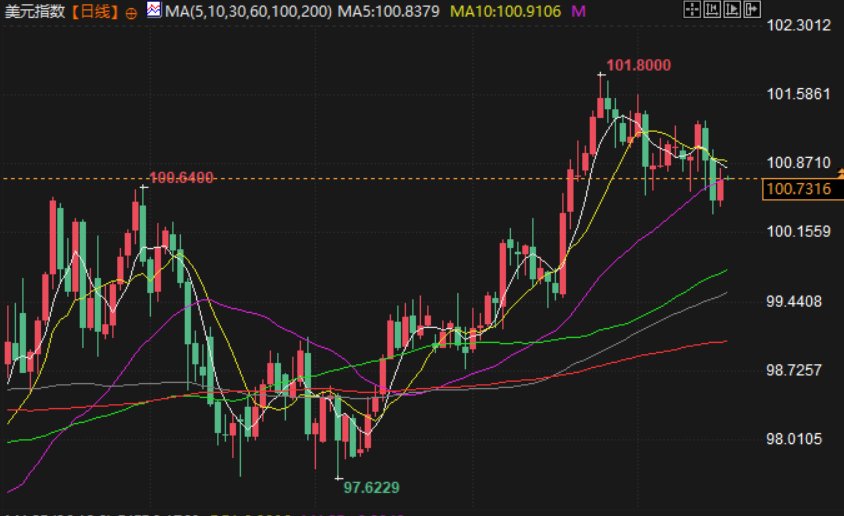
The dollar maintained its gains against major currencies on Thursday, rebounding from a near one-month low. The dollar index rose 0.21% to 100.71, supported by expectations of a resilient US economy (a decline in initial jobless claims last week, a slight increase in June retail sales but a solid core), an increased probability that the Federal Reserve would keep interest rates unchanged this month (only a 10% probability of a rate hike in July, and a 48% probability in September), and safe-haven inflows triggered by US-Iran tensions. However, the impact of falling oil prices and geopolitical factors was relatively limited. The euro fell 0.23% to $1.1437, ending a two-day winning streak, as European natural gas futures rose to their highest level since March, exacerbating concerns that energy costs would drag down the economy, although the European Central Bank was more hawkish (markets are betting on two more rate hikes before 2027). The pound retreated from a near two-month high to $1.3469, a drop of 0.52%, as investors focused on the appointment of a conservative Chancellor of the Exchequer by the UK's prime minister-designate; the dollar rose 0.13% against the yen to 162.38, nearing a multi-decade high of 162.83 reached this month, as markets focused on potential portfolio adjustments by Japan's Government Pension Investment Fund.International News
The probability of the Federal Reserve keeping interest rates unchanged in July is nearly 90%, while the probability of a rate hike this year has slightly increased to 73.3%. According to CME's "FedWatch": the probability of the Fed keeping interest rates unchanged in July is 88.8%, and the probability of a cumulative 25 basis point rate hike is 11.2%. The probability of the Fed keeping interest rates unchanged by September is 48.8%, the probability of a cumulative 25 basis point rate hike is 46.2%, and the probability of a cumulative 50 basis point rate hike is 5.1%. The probability of the Fed keeping interest rates unchanged by December is 26.7%, the probability of a cumulative 25 basis point rate hike is 44.3%, and the probability of at least a 50 basis point rate hike is 29%. Iran secretly orders Houthi rebels to close the Bab el-Mandeb Strait if the US attacks Iranian power infrastructure. Three sources revealed that Iran has asked the Houthi rebels in Yemen to prepare to immediately close the Bab el-Mandeb Strait if the US attacks Iranian power infrastructure—a move that would pose a new and significant threat to global energy supplies. This plan has been discussed within the Iranian leadership, and the relevant instructions have been conveyed to the Houthi rebels; the Houthis have recently been informed of Tehran's request. Sources did not specify how the request was conveyed, nor did they confirm whether it was made after Trump's threat on Tuesday to attack Iranian power facilities. The White House stated that Iran is still in dialogue with the United States . On July 16th local time, White House Press Secretary Levitt stated that Iran is still in dialogue with the United States and expressed its desire to reach an agreement because they are suffering "devastating blows." Furthermore, Levitt stated that the recent US strikes stemmed from Iran's violation of the memorandum of understanding. (CCTV News) South Korea tightens financial regulations: Listing of leveraged ETFs suspended, margin raised to 30 million won, trading rules comprehensively tightened. The South Korean Financial Services Commission announced the suspension of new product listings and advertising for leveraged ETFs; simultaneously, it raised the basic margin from the current 10 million won to 30 million won, and only cash deposits are accepted; alternative collateral securities such as government bonds will no longer be accepted. These measures are planned to be implemented in August. Tightening trading regulations: The ETF premium/discount rate management standard will be reduced from 3% to 2%, and the minimum trading unit will be temporarily increased from 1 unit to 20 units. Strengthening investor protection: The investor education time required for investing in leveraged stock products will be extended from 2 hours to 3 hours. Iranian military: If hostilities continue, conflict will expand to new areas On the 16th local time, Iranian military spokesman Mohammad Akraminia stated that countries outside the region should engage with Iran on the basis of mutual respect, and that the Iranian armed forces are fully prepared to safeguard national security and interests. Akraminia stated that Iran has always advocated developing cooperative and fraternal relations with its regional neighbors and Islamic countries, and has no intention of confrontation. Akraminia also stated that a considerable portion of the Iranian armed forces' capabilities have not yet been demonstrated. If hostilities against Iran continue, Iran will respond according to the actual situation, and the response will exceed the opponent's expectations, and the conflict will expand to new areas. (CCTV) US imposes 25% tariffs on some Brazilian goods, beef and coffee exempted The Office of the United States Trade Representative imposed a 25% tariff on some Brazilian goods under Section 301 of the Trade Act of 1974, a final action based on a year-long investigation. The investigation concluded that Brazil engaged in "unreasonable practices" in areas such as digital trade and electronic payments, unfair preferential tariffs, anti-corruption enforcement interference, intellectual property protection, ethanol market access, and illegal deforestation, which burdened or restricted U.S. business activities. Trade Representative Greer stated that despite a year of extensive negotiations between the U.S. and Brazil, the issues remain unresolved; the U.S. remains willing to continue negotiations to address these long-standing issues. Meanwhile, the U.S. will exempt Brazilian beef and coffee from the new tariffs. Meanwhile, Europe's "excess deaths" reached 12,000 in June due to persistent high temperatures . In June, approximately 10 European countries recorded at least 12,000 excess deaths. This figure is still preliminary, and the death toll is expected to rise further as more statistics are released by various countries. "Excess deaths" refers to the difference between the estimated total number of deaths at a specific location and period and the estimated number of deaths without a health crisis. In June, many European countries experienced persistent high temperatures, with temperatures exceeding 40 degrees Celsius in parts of Western and Southern Europe, prompting many countries to issue heat warnings. The high temperatures also triggered forest fires, power shortages, and increased public health pressures. (CCTV News) Iran Reiterates No Hostile Relations with Gulf Neighbors On the 16th local time, the Iranian Foreign Ministry issued a statement calling on its southern Gulf neighbors to take immediate measures to prevent their land, sea, and airspace from being used for military operations against Iran, in order to avoid further escalation of regional conflict. The statement indicated that Iran does not want the United States and Israel to use this as an opportunity to exacerbate confrontation and suspicion among regional countries. Furthermore, Iran emphasized that it has no hostile relations with its neighboring countries and maintains that the only way to achieve lasting regional security is for regional countries to strengthen dialogue and cooperation and jointly maintain regional stability in the absence of external military presence and interference. (CCTV News)Domestic News
Ministry of Commerce: Export Management Will Be Adjusted in a Timely Manner Based on Changes in Domestic and International Helium Supply and Demand At a regular press conference held on the 16th, He Yadong, spokesperson for the Ministry of Commerce, responded to questions regarding China's temporary export ban on helium, stating that China is a major importer of helium. To ensure domestic supply, the Ministry of Commerce and the General Administration of Customs jointly issued an announcement deciding to implement a temporary export ban on helium. This measure complies with the relevant provisions of the "Foreign Trade Law of the People's Republic of China" and WTO rules. Subsequently, we will adjust export management policies in a timely manner based on changes in domestic and international helium supply and demand. (Xinhua News Agency) National Bureau of Statistics: Total Retail Sales of Goods and Services Increased by 2.7% Year-on-Year in the First Half of 2026 Data from the National Bureau of Statistics shows that total retail sales of goods and services increased by 2.7% year-on-year in the first half of 2026, with residents' consumption expenditure improving accordingly. In the first half of the year, per capita consumption expenditure of residents nationwide was 14,836 yuan, a nominal year-on-year increase of 3.7%. Among the major categories of retail sales, such as home appliances, mobile phones, automobiles, and home renovation, the government provides special consumption subsidies. Asking "Is there a government subsidy?" before shopping has become a common phrase among Chinese consumers. (CCTV News) A Breakthrough: Chinese Company Releases Kimi K3, World's Largest Open-Source Model. Ahead of the 2026 World Artificial Intelligence Conference and the High-Level Meeting on Global Governance of Artificial Intelligence, the new generation model Kimi K3 was released on the 16th, boasting 2.8 trillion parameters. This is currently the world's largest open-source model in terms of parameters, marking a new step forward in the development of artificial intelligence models in China. Beijing Lunar Dark Side Technology Co., Ltd., the company that released the model, explained that Kimi K3 natively supports visual understanding, has a 1 million-word context window, and is optimized for complex tasks such as software engineering, knowledge work, deep research, and multimodal understanding, further enhancing the model's ability to handle complex tasks. "The larger the parameters, the higher the upper limit of capabilities, and the more intelligent the model performance can be," said a representative from Lunar Dark Side. "Parameters are like neural connections in the human brain; nearly 3 trillion parameters mean that this model can store more knowledge and rules in its 'brain,' understanding more, thinking more deeply, and answering more accurately." (Xinhua News Agency)- Risk Warning and Disclaimer
- The market involves risk, and trading may not be suitable for all investors. This article is for reference only and does not constitute personal investment advice, nor does it take into account certain users’ specific investment objectives, financial situation, or other needs. Any investment decisions made based on this information are at your own risk.