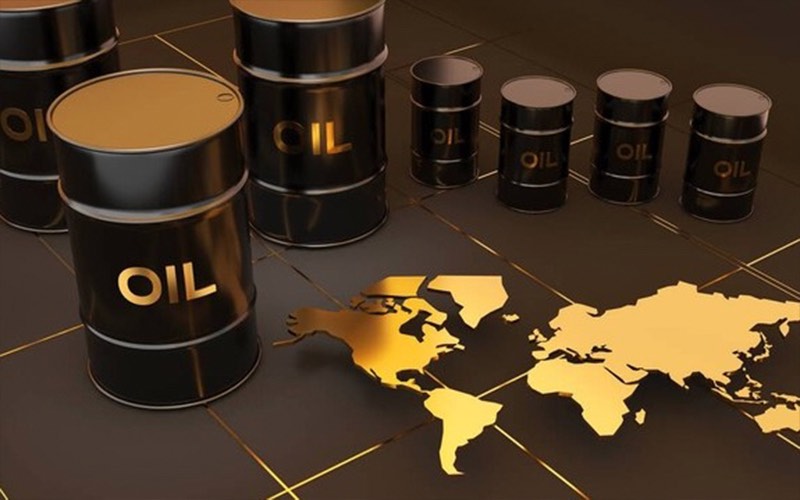
The oil market takes another hit: supply panic clashes with Fed hawks, what will happen to gold?
2026-09-01 20:14:03
On Tuesday (September 1st), the oil market suffered another blow from the supply side: an attack on oil tankers in the Strait of Hormuz nearly halved the daily volume of transit, coupled with Russia lowering its 2017 production forecast to a 17-year low, rapidly escalating supply panic. Meanwhile, the probability of a Fed rate hike in September rose above 66%, and US Treasury yields and the dollar strengthened in tandem. Gold was caught between safe-haven demand and rising real interest rates, its short-term direction unclear. Crude oil remained highly volatile, and non-US currencies were generally under pressure. The key word for the market today was "collision." On one hand, oil tankers were hit in the Strait of Hormuz, drastically reducing the number of transit vessels, turning the oil supply risk from expectation into reality; on the other hand, traders significantly increased the probability of a Fed rate hike in September, with hawkish expectations pushing up US Treasury yields and the dollar. This blow to the oil market is not only pushing up oil prices but also strengthening inflation stickiness, which in turn gives the Fed more reason to maintain tightening. This puts gold in an awkward position: geopolitical risks want to give it a boost, but real interest rates are pushing it down. 
Core Analysis
Oil market hit by a slump: Hormuz transits sharply reduced, escalating supply panic.
Latest developments show that the number of oil tankers confirmed to be transiting the Strait of Hormuz has plummeted to five in a single day, half the number from the previous day. More importantly, at least one supertanker carrying approximately 2 million barrels was hit by a projectile while exiting the strait. Although there was no leak, shipping insurance and freight rates have already begun to reflect the risk premium. This is not just a paper threat, but a real logistical disruption. For crude oil, a war premium has been quickly priced in; for the US dollar, safe-haven demand provides support; for US Treasury bonds, the supply shock strengthens inflation expectations, pushing up yields; for gold, safe-haven buying exists, but is suppressed by interest rates. In the short term, this shot in the oil market has hit the most sensitive pricing point.Russian production revised downwards: Supply gap shifts from medium-term to long-term.
Major overseas institutions, citing a government draft, reported that Russia has lowered its 2026 oil production forecast to approximately 9.88 million barrels per day, the lowest since 2009. Export restrictions, sanctions, and refinery attacks have collectively depressed production expectations. This is not a short-term fluctuation, but rather a downward shift in the overall supply curve for the next few years. Combined with the Hormuz event, this has tilted global crude oil supply from a "tight balance" to a "structurally tight" one. For oil prices, this adds a layer of medium-term cost support on top of short-term geopolitical premiums; for inflation expectations, it signals increased stickiness; and for the Federal Reserve, it makes the "higher for longer" argument more convincing. Gold, therefore, faces greater pressure on real interest rates.Fed hawkish stance intensifies: US Treasuries and dollar strengthen in tandem
Traders' pricing in a 25 basis point rate hike in September has risen from less than 40% a week ago to over 66%. Rising US Treasury yields, with the 10-year yield remaining high, are driving the dollar index in two ways: safe-haven demand and widening interest rate differentials. Non-US currencies are generally under pressure, with the yen and euro experiencing increased volatility. The key issue here isn't whether a rate hike will occur, but rather that the market is already pricing in a hawkish surprise. If oil prices continue to rise and inflation expectations intensify, the Fed may even be forced to release a more hawkish signal. In this environment, gold faces direct pressure from rising real interest rates, and even with geopolitical support, it's unlikely to experience a one-sided trend.What to do with gold: A tug-of-war between safe-haven demand and interest rates
Gold is currently facing two opposing forces. When geopolitical risks escalate, funds seek refuge in gold; however, the simultaneous rise in US Treasury yields and the US dollar increases the opportunity cost of holding gold. Recent performance shows that gold has not followed the surge in oil prices, indicating that the interest rate logic is temporarily prevailing. However, traders should be aware that if the Hormuz conflict escalates further or new attacks occur, safe-haven flows could temporarily override interest rate pressures, causing a rapid price increase. Conversely, if reconciliation progresses, oil prices fall, and inflation expectations cool, gold may continue to be dragged down by real interest rates. Therefore, in the short term, gold is more like an "event-driven" asset than a trend-following one.Trend Outlook
In the short term, crude oil remains the most direct beneficiary, supported by the Hormuz risk and downward revisions in Russian production. However, volatility will be extremely high, and any adjustment signal could squeeze out premiums. The US dollar is relatively strong, and US Treasury yields are likely to rise rather than fall. Gold is likely to maintain high-level fluctuations, with its direction depending on the relative strength of geopolitical news and interest rate data. In the foreign exchange market, commodity currencies may receive some support due to oil prices, while the yen and euro continue to be under pressure. Looking ahead to the next few months, the structurally tight supply and sticky inflation will reinforce each other, potentially raising the central level of US Treasury yields. If gold cannot break through the suppression of real interest rates through safe-haven demand, it may enter a period of weakness. However, if the geopolitical situation spirals out of control, gold's safe-haven attributes will once again dominate pricing. Traders should pay close attention to subsequent attacks and adjustments in the oil market, as well as the latest statements from Federal Reserve officials regarding inflation and interest rates.Frequently Asked Questions
Why didn't the oil market attack directly trigger a surge in gold prices? Because the simultaneous strengthening of US Treasury yields and the US dollar, with rising real interest rates, offset the safe-haven demand for gold. Gold only experiences a rapid rise when risks escalate dramatically and safe-haven sentiment outweighs the interest rate logic. Will the impact of the Hormuz attack on oil prices subside quickly? It depends on the progress of the mediation and whether there are new attacks. Current border crossings have already substantially decreased, insurance costs have increased, and the premium is unlikely to disappear completely in the short term; if another attack occurs, risk will be repriced. What does the Russian production cut mean for the market? It transforms the supply gap from a short-term fluctuation into a multi-year trend, reinforcing expectations of an upward shift in the oil price center and making inflation more persistent, indirectly supporting the Fed's continued tightening. With the probability of a Fed rate hike in September increasing, will gold necessarily fall? Not necessarily. Rate hike expectations pushing up real interest rates are a headwind for gold; however, if rising oil prices lead to inflation panic, the market may focus more on stagflation risks, and gold may actually attract buying. What are the most noteworthy risk signals now? First, whether there will be new attacks or escalation of the blockade in Hormuz; second, the statements made by Federal Reserve officials regarding oil prices and inflation; and third, whether rising oil prices will begin to significantly suppress demand. All three factors will directly affect the short-term direction of gold and exchange rates.- Risk Warning and Disclaimer
- The market involves risk, and trading may not be suitable for all investors. This article is for reference only and does not constitute personal investment advice, nor does it take into account certain users’ specific investment objectives, financial situation, or other needs. Any investment decisions made based on this information are at your own risk.