ADP employment report shows a mere 38,000 increase! The weakest employment figure since January has arrived! Institutional investors were prepared, while retail investors are still waiting for a gold price surge?
2026-09-02 20:25:04
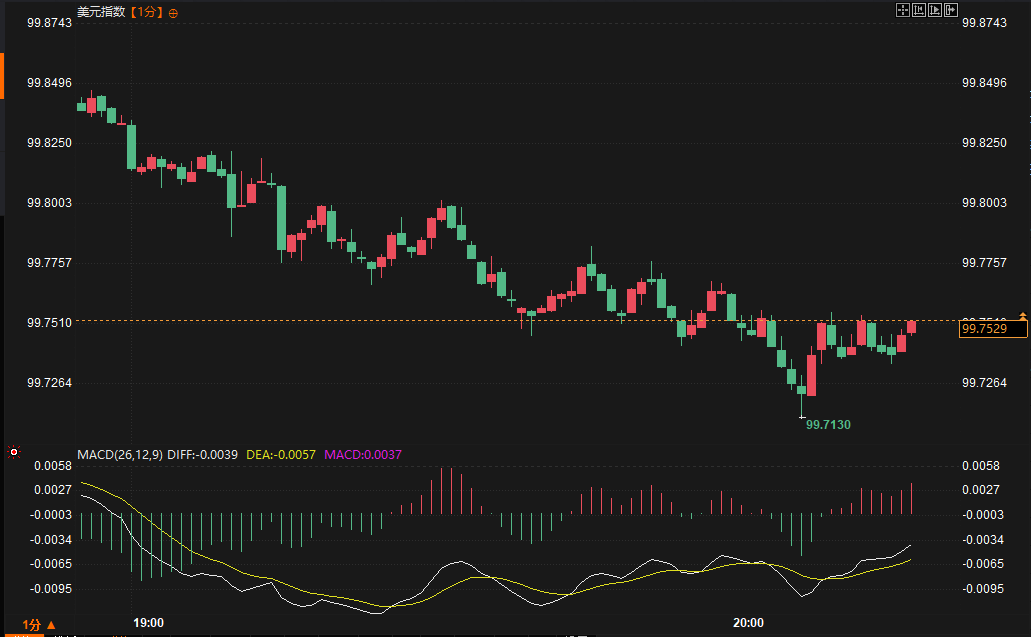
On Wednesday (September 2nd) at 8:15 PM Beijing time, ADP released the August U.S. private sector employment data. The result showed an increase of 38,000 jobs, lower than the market expectation of 48,000 and also lower than the revised 46,000 for the previous month, marking the smallest increase since January.  Prior to the data release, the market generally expected job growth to remain moderate, and spot gold had already risen by about $20, indicating that some funds were prepared for a weaker-than-expected result. The US dollar index, meanwhile, consolidated narrowly around 99.70. After the release, gold traded around 4330, with a gain of only about 0.05%, without a significant upward surge; the US dollar index fluctuated limitedly, closing at 99.74. Overall, the market reaction was restrained, without any significant one-sided volatility.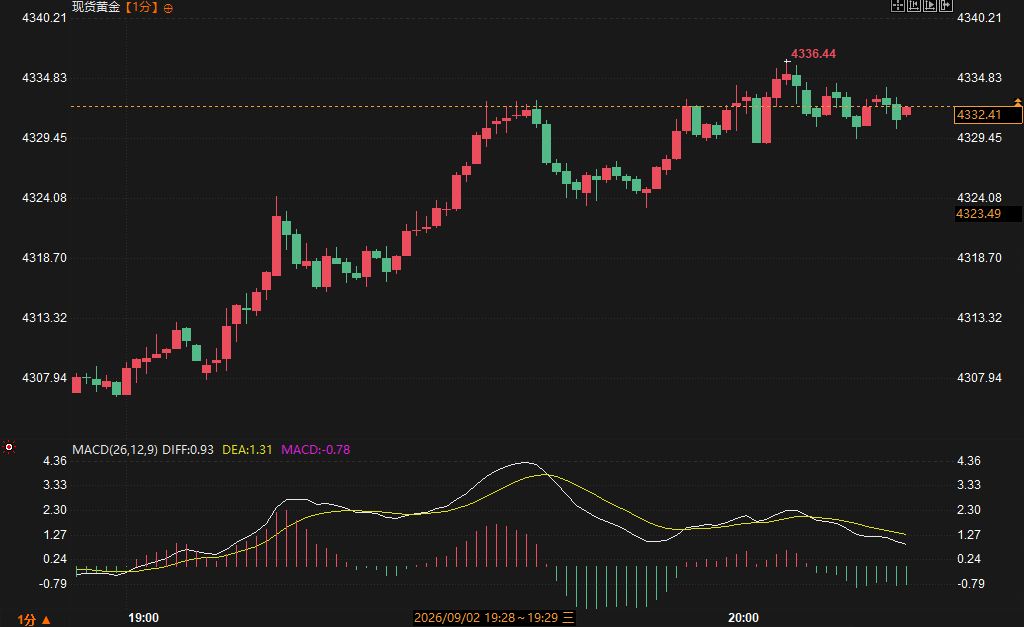
 Historically, ADP's growth rate has clearly slowed in recent months. July's figure was 46,000, a decline from June's high, with the current 38,000 further confirming the slowdown in private sector hiring. Manufacturing saw a decrease of 17,000, professional and business services a decrease of 16,000, and the information industry also contracted; education and healthcare increased by 45,000, construction by 12,000, and leisure and hospitality by 16,000, becoming the main drivers of growth. Regionally, the Northeast contributed the most, while the West saw a net decrease. Large enterprises (500+ employees) added 34,000, while SMEs contributed less. Regarding compensation, base pay for all employees increased by 3.2% year-on-year, and total compensation increased by 4.7%. Base pay for those remaining in their positions increased by 3.0%, while those changing jobs increased by 4.7%. ADP Chief Economist Nela Richardson pointed out that wage growth is no longer as predictable as it used to be. Demographic changes, inflation stickiness, and the impact of artificial intelligence on jobs have collectively shaped the current "volatile" hiring landscape. The Compensation Insights report shows that overall wage growth has slowed over the past four years, with base pay growth for low-wage groups showing a particularly significant loss of momentum.
Prior to the data release, the market generally expected job growth to remain moderate, and spot gold had already risen by about $20, indicating that some funds were prepared for a weaker-than-expected result. The US dollar index, meanwhile, consolidated narrowly around 99.70. After the release, gold traded around 4330, with a gain of only about 0.05%, without a significant upward surge; the US dollar index fluctuated limitedly, closing at 99.74. Overall, the market reaction was restrained, without any significant one-sided volatility. Historically, ADP's growth rate has clearly slowed in recent months. July's figure was 46,000, a decline from June's high, with the current 38,000 further confirming the slowdown in private sector hiring. Manufacturing saw a decrease of 17,000, professional and business services a decrease of 16,000, and the information industry also contracted; education and healthcare increased by 45,000, construction by 12,000, and leisure and hospitality by 16,000, becoming the main drivers of growth. Regionally, the Northeast contributed the most, while the West saw a net decrease. Large enterprises (500+ employees) added 34,000, while SMEs contributed less. Regarding compensation, base pay for all employees increased by 3.2% year-on-year, and total compensation increased by 4.7%. Base pay for those remaining in their positions increased by 3.0%, while those changing jobs increased by 4.7%. ADP Chief Economist Nela Richardson pointed out that wage growth is no longer as predictable as it used to be. Demographic changes, inflation stickiness, and the impact of artificial intelligence on jobs have collectively shaped the current "volatile" hiring landscape. The Compensation Insights report shows that overall wage growth has slowed over the past four years, with base pay growth for low-wage groups showing a particularly significant loss of momentum.Deep interconnect analysis
The fundamentals and the immediate market movements present a clear contrast. Weaker-than-expected employment figures should have reinforced the narrative of a "cooling labor market," thus benefiting gold and suppressing the dollar. However, actual market movements show that funds had already partially priced in the data before its release, and after the announcement, many adopted a wait-and-see approach, either accepting the negative news or awaiting official confirmation from the non-farm payrolls data. Gold failed to continue its pre-release rally, and the dollar index remained almost unchanged, indicating that the market's sensitivity to a single ADP data point has decreased, with greater focus on its cross-validation with subsequent non-farm payrolls, unemployment rate, and wage growth. The long-term and short-term logics remain consistent: in the short term, slower employment growth reduces the risk of short-term overheating; in the medium term, continued slowdown in wage growth (especially base pay) suggests further balance in labor supply and demand, weakening the transmission of inflationary pressures through employment channels. Compared to historical trends, the current growth rate has returned to the low levels of early 2026, but has not yet turned negative, indicating resilience in service consumption-related industries. The contraction in manufacturing and professional services suggests that adjustments in some cyclical and knowledge-intensive jobs are still underway. Institutional and retail investor views are sharply contrasting. Before the data release, institutional accounts emphasized the "expected moderate slowdown," with some analysts suggesting gold had already reacted and advising attention to whether a false breakout would occur after the release. Retail investor discussions were more emotional, with many expecting weak data to drive gold prices higher, some directly linking ADP to non-farm payroll expectations, believing "the weaker the better." After the release, institutions quickly shifted to a structured interpretation: pointing to the supporting role of education, healthcare, and leisure and hospitality, the drag from manufacturing, and the continued expansion of hiring by large companies, emphasizing that wage data has a greater signaling significance than the single employment figure. Retail investor sentiment was divided, with some feeling "disappointed that gold didn't rise," while others turned their attention to Friday's non-farm payroll, believing ADP was just a prelude. The expectation discrepancy mainly manifested in an overestimation of the immediate price impact—institutions valued trend confirmation more, while retail investors expected volatility driven by a single data point. Overall, ADP aligned with recent high-frequency indicators (including previous weekly pulse data), pointing to a moderate decline in private sector hiring momentum, rather than a sudden deterioration.Trend Outlook
Extrapolating from market trends, gold and the US dollar index are likely to maintain a range-bound trading pattern in the short term, awaiting more significant data such as the non-farm payrolls report for direction. The combination of simultaneous slowdowns in employment and wages helps stabilize market expectations regarding policy path, but the lack of new extreme signals makes a one-sided market movement unlikely to be solely ignited by the ADP report. If subsequent official data continues to confirm the slowdown while wages fail to rebound, gold is expected to find higher support above its current level; if the non-farm payrolls report is significantly better than the ADP report, some of the previous pricing may be reversed. Regional and industry differentiation will remain a key focus, with the resilience of large enterprises and healthcare/education sectors potentially continuing to offset adjustments in manufacturing and some service sectors. The overall logic is consistent: data confirms a slowdown but not out of control, the market is mainly in a wait-and-see mode, and volatility is likely to remain at a moderate level.Frequently Asked Questions
Q: Why did gold and the US dollar react so calmly after the ADP report was weaker than expected? Gold had already risen by about $20 before the data release, and some of the weaker expectations had been priced in. The market is currently more focused on the cross-validation of official data such as non-farm payrolls, and the impact of a single private sector indicator has decreased, resulting in a narrow consolidation in a "sell the news" manner. Q: Where does the 38,000 increase rank historically? This is the smallest increase since January, significantly lower than the levels of previous months and also lower than market expectations. Combined with the low levels of weekly pulse data, it confirms that the pace of hiring has entered a slowdown phase, but there has not yet been a full contraction. Q: Is wage data more important than employment figures? ADP specifically emphasizes the distinction between base wages and total wages. The slowdown in base wage growth is more structurally significant, reflecting changes in the balance of labor supply and demand and potential inflationary pressures; total wages reflect more short-term incentives. The simultaneous slowdown of both reinforces the cooling signal. Q: Where do the differences in views between institutional and retail investors mainly lie? Institutions pay more attention to industry structure, company size, and wage details, viewing the data as confirmation of trends; retail investors focus more on immediate price reactions and were surprised that gold did not rise sharply. The discrepancy between expectations before and after the release was mainly due to an overestimation of the volatility. Q: What implications does this data have for the subsequent market trend? It supports the assessment of a moderate cooling in the labor market and helps stabilize policy expectations, but the true direction still depends on data such as non-farm payrolls. The market is likely to trade within a range in the short term, with industry and regional differentiation continuing to dominate the observation of structural opportunities.- Risk Warning and Disclaimer
- The market involves risk, and trading may not be suitable for all investors. This article is for reference only and does not constitute personal investment advice, nor does it take into account certain users’ specific investment objectives, financial situation, or other needs. Any investment decisions made based on this information are at your own risk.