The race between 5% US Treasury yield and $100 oil price: If both thresholds are breached, which assets will be most vulnerable?
2026-09-08 20:18:05
On Tuesday (September 8th), escalating tensions in the Middle East pushed Brent crude near $99, while WTI crude also strengthened. The 10-year US Treasury yield approached the psychological threshold of 5%, with rising real interest rates dominating the market. Traffic in the Strait of Hormuz fell to a multi-month low, US refined product inventories were tight, and market pricing in supply disruptions intensified. A mix of risk aversion and inflation expectations put pressure on risk assets, and traders should be wary of increased volatility.  This week, market focus has been on two main themes: the bond market and the oil market. On one hand, the situation in the Middle East is driving up the risk premium for crude oil, while on the other hand, long-term US Treasury yields are approaching 5%, impacting global asset pricing. If you trade crude oil, US Treasuries, gold, or forex, what you need to understand now is not individual news items, but how these variables reinforce or hedge against each other. This article translates public information into language that traders care about most, highlighting sentiment turning points and risk boundaries, helping you filter out noise and see the underlying funding logic behind contradictory signals.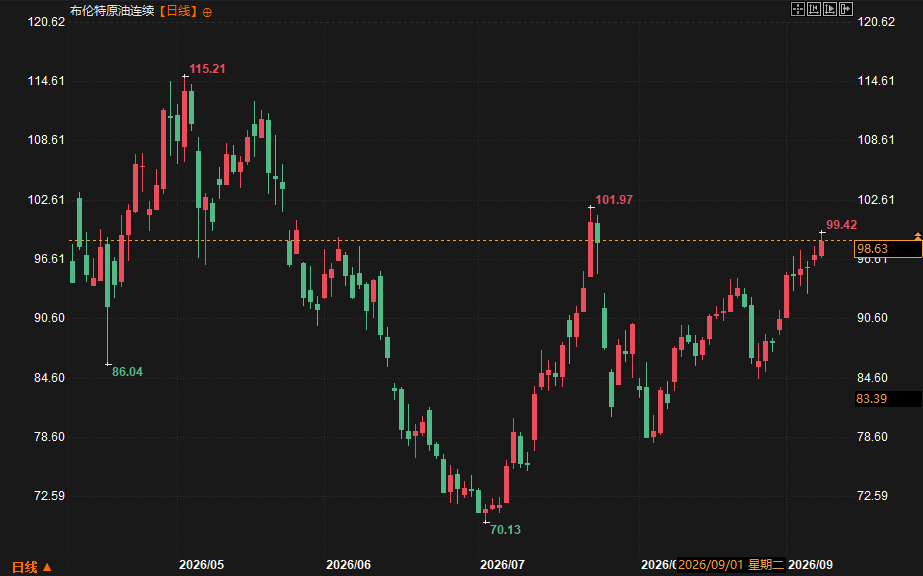
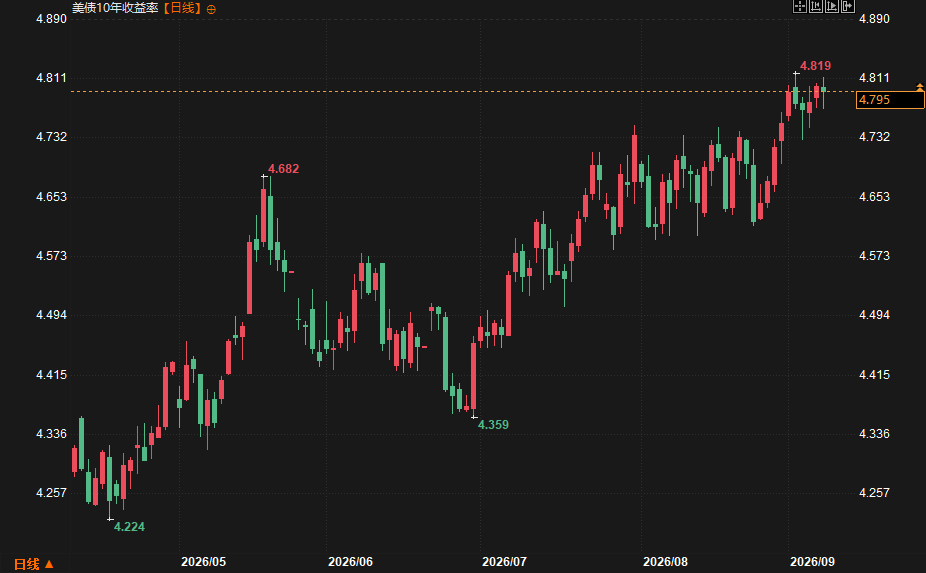
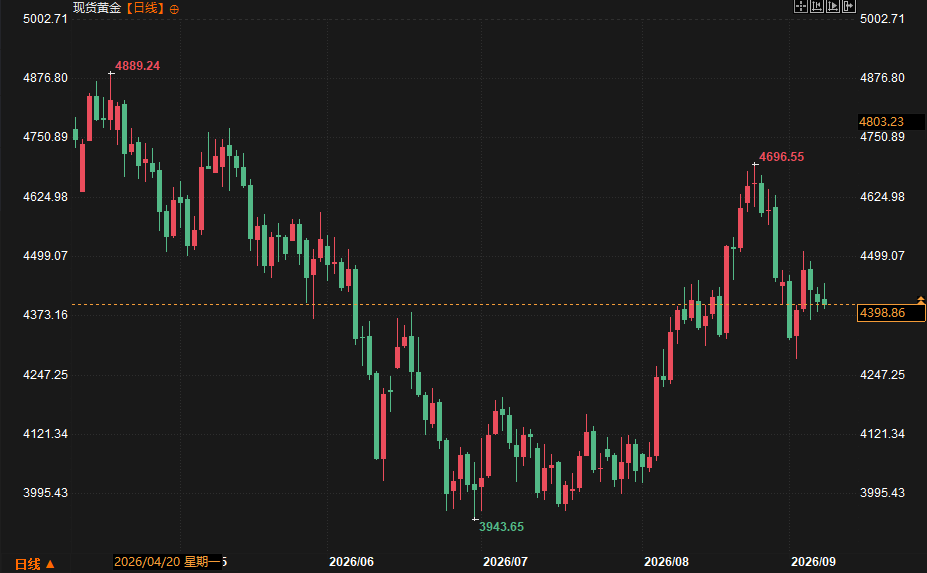 In the short term, Brent crude oil is likely to fluctuate within the $95-$100 range. A substantial break above $100 would require further deterioration of the Strait of Hormuz flow or a US military escalation against Iran. US Treasury yields may repeatedly test the 5% level; a break above this level could trigger a stock market valuation adjustment and a widening of credit spreads. Gold is expected to maintain a slightly bullish bias, but its upward slope is constrained by real interest rates. In the long term, if the conflict continues into winter, high oil prices coupled with low European natural gas inventories could lead to energy inflation, potentially forcing central banks to adopt a more hawkish stance, causing US Treasury yields to rise and risk asset volatility to increase. However, any substantial progress in US-Iran negotiations could reverse this logic, rapidly diminishing the oil price premium and causing long-term interest rates to fall. At that point, Goldman Sachs' benchmark forecast of $85 may once again become the market anchor.
This week, market focus has been on two main themes: the bond market and the oil market. On one hand, the situation in the Middle East is driving up the risk premium for crude oil, while on the other hand, long-term US Treasury yields are approaching 5%, impacting global asset pricing. If you trade crude oil, US Treasuries, gold, or forex, what you need to understand now is not individual news items, but how these variables reinforce or hedge against each other. This article translates public information into language that traders care about most, highlighting sentiment turning points and risk boundaries, helping you filter out noise and see the underlying funding logic behind contradictory signals.Hormuz's "physical tightening" pushes up oil prices: Ship numbers are more real than headlines.
Ship tracking data showed that only seven merchant ships passed through the Strait of Hormuz on Monday, down from an average of about ten per day over the previous ten days, the lowest since May. While some ships have turned off their tracking systems, the traffic constraints are a reality. Houthi attacks on Saudi energy facilities and Iranian threats to strike Gulf energy infrastructure have made supply disruptions no longer a hypothetical scenario. Simultaneously, US EIA data showed that crude oil, gasoline, and distillate fuel inventories were all below their five-year averages, with gasoline down about 6% and distillate fuels down about 14%. Asian demand provided additional support. Brent crude approached $99, and WTI rose in tandem. Short-term oil prices are being driven by physical tensions and geopolitical premiums, rather than simply headline sentiment.US Treasury yields approach 5%: A tug-of-war between real interest rates and fiscal deficits
The 10-year US Treasury yield rose above 4.8%, approaching 5%. This upward movement is primarily driven by real interest rates, with the long-term average real interest rate rising from 2.55% at the end of last year to 2.92%. Nominal GDP growth remains higher than yields, providing a buffer for fiscal expansion, but this buffer is narrowing. Government debt has surpassed $40 trillion, and against the backdrop of widening deficits, traders are beginning to repric “risk-free” assets. Corporate borrowing costs are rising, and investment-grade credit spreads are at historically low levels, leaving very little room for a deterioration in credit conditions. Stock market valuations face competition from bonds, with the ratio of long-term Treasury yields to stock dividend yields rising to its highest level since the dot-com bubble of 2000. Highly valued markets are more vulnerable to bad news.Investment bank forecasts conflict: the gap between short-term premiums and long-term benchmark expectations.
Significant disagreements exist among major overseas investment banks. UBS raised its year-end Brent crude oil forecast to $95, while Goldman Sachs offered seemingly contradictory signals: on the one hand, it warned that if Gulf production continues to fall below pre-war levels, Brent crude could break $120; on the other hand, its benchmark forecast only raised its December Brent crude by $5 to $85, far below the current price. This indicates that the market is trading on geopolitical premiums in the short term, while long-term pricing remains anchored to supply substitution and non-OPEC production increases. Trump's social media post stating that oil prices will fall sharply, with gasoline prices dropping from $4.15 to $3 or even $2, contrasts sharply with the investment banks' warnings. Traders need to distinguish between risk scenarios and benchmark scenarios to avoid being swayed by a single narrative.Cross-asset transmission: repricing of gold, US dollar, and foreign exchange
Oil prices are pushing up inflation expectations, and rising interest rates are putting downward pressure on gold. However, geopolitical safe-haven demand is offsetting this, suggesting that gold prices are likely to fluctuate at high levels rather than experience a one-sided decline. The US dollar is supported by both interest rate expectations and safe-haven demand, but high oil prices are putting pressure on the currencies of importing countries, making safe-haven currencies such as the Japanese yen relatively strong. Commodity currencies benefit from oil prices but are dragged down by risk sentiment, limiting directional opportunities. If US Treasury yields break through 5% and hold, risk assets may experience a wave of deleveraging; if there is progress in negotiations regarding the conflict, the oil price premium will be quickly reversed, easing inflation anxiety and benefiting equities and emerging market currencies. In the short term, Brent crude oil is likely to fluctuate within the $95-$100 range. A substantial break above $100 would require further deterioration of the Strait of Hormuz flow or a US military escalation against Iran. US Treasury yields may repeatedly test the 5% level; a break above this level could trigger a stock market valuation adjustment and a widening of credit spreads. Gold is expected to maintain a slightly bullish bias, but its upward slope is constrained by real interest rates. In the long term, if the conflict continues into winter, high oil prices coupled with low European natural gas inventories could lead to energy inflation, potentially forcing central banks to adopt a more hawkish stance, causing US Treasury yields to rise and risk asset volatility to increase. However, any substantial progress in US-Iran negotiations could reverse this logic, rapidly diminishing the oil price premium and causing long-term interest rates to fall. At that point, Goldman Sachs' benchmark forecast of $85 may once again become the market anchor.Frequently Asked Questions
Why haven't oil prices broken $100 despite the rise? Because the market is pricing in a risk premium, not an actual supply disruption. While the flow through the Hormuz is low, approximately 11 million barrels per day of West Asian crude oil is still flowing out via alternative routes, and non-OPEC supply is also increasing, causing Brent crude to encounter resistance around $99. What does the approaching 5% yield on US Treasury bonds mean for the stock market? Rising corporate borrowing costs mean stock valuations face competition from bonds. Currently, the ratio of stock dividend yields to long-term Treasury yields is at a historical extreme, making highly valued sectors more vulnerable to negative news. If yields stabilize above 5%, a temporary correction may occur. Why hasn't gold surged due to safe-haven demand? Oil prices are pushing up inflation expectations, and rising real interest rates are suppressing gold prices. Safe-haven demand provides support, but the two forces offset each other, making gold more likely to fluctuate at high levels rather than trend unilaterally. Will the US dollar strengthen or weaken now? Short-term, it's likely to strengthen, as interest rate expectations and safe-haven demand are supporting the dollar. However, high oil prices are dragging down domestic consumption and import costs in the US; if economic data weakens, the dollar's gains may be limited. The performance of rival currencies such as the euro and yen depends on the attitudes of their respective central banks. Where lies the biggest risk? A substantial blockade of the Strait of Hormuz, or a complete breakdown in US-Iran negotiations leading to an escalation of the conflict. The former would cause oil prices to instantly break through $120, while the latter could trigger a simultaneous drop in both stocks and bonds. Currently, the probability of either scenario is moderate, but close monitoring of ship numbers and diplomatic signals is necessary.- Risk Warning and Disclaimer
- The market involves risk, and trading may not be suitable for all investors. This article is for reference only and does not constitute personal investment advice, nor does it take into account certain users’ specific investment objectives, financial situation, or other needs. Any investment decisions made based on this information are at your own risk.