UK August inflation data was released on the same day as the Fed's decision, and the pound/dollar pair remained range-bound, awaiting directional guidance.
2026-09-16 14:34:10
The pound/dollar pair came under pressure in early Asian trading on Wednesday, falling back to around 1.3470. The market is awaiting the UK's August Consumer Price Index (CPI) and the Federal Reserve's interest rate decision; the simultaneous release of these two important data points and policy events on the same day has created significant short-term uncertainty for the pound/dollar.  Recent energy price increases have fueled inflationary pressures in the US, significantly strengthening market expectations for a 25-basis-point rate hike by the Federal Reserve at its September meeting. While the market has largely priced in this rate hike, investors are focusing not only on the rate decision itself, but also on the Fed's latest economic projections, the dot plot, and Chairman Kevin Warsh's policy statements at the post-meeting press conference. If the Fed continues to emphasize the impact of rising energy prices on inflation and signals a continued need for tightening policies, the dollar may receive further support, while the pound/dollar exchange rate may continue to face pressure. Conversely, if the policy rhetoric is cautious, the recent dollar rally may see some profit-taking. In the UK, the August CPI is one of the most important short-term data catalysts for the pound. The market expects the UK's August CPI to rise 3.1% year-on-year, higher than July's 2.9%; core CPI is expected to rise 2.6% year-on-year, unchanged from the previous value. If the actual data is significantly higher than expected, it may strengthen market expectations that the Bank of England will continue to tighten policy, providing some support for the pound; if inflation is lower than expected, it may weaken the pound's interest rate advantage. The Bank of England will announce its interest rate decision on Thursday. The market currently expects the rate to remain unchanged at 3.75% in September, but with renewed inflationary pressures, the market is still focused on the possibility of further rate adjustments before the end of the year. Therefore, the UK CPI will not only affect the short-term trend of the pound but will also be an important basis for the market to assess the Bank of England's subsequent policy path. From a short-term perspective, GBP/USD is currently influenced by two factors: firstly, US inflation and energy prices are strengthening expectations for the Federal Reserve's policy, keeping the dollar relatively strong; secondly, if UK inflation continues to exceed the target, expectations for the Bank of England's subsequent policy may provide some support for the pound. Before the announcement of these two central bank policy events, the exchange rate is likely to remain highly volatile. From a daily chart perspective, GBP/USD is currently trading around 1.3470, still above the support zone formed by the 100-day moving average and the lower Bollinger Band, but below the middle Bollinger Band, indicating that the short-term rebound potential is still limited. The 14-day RSI is around 42, significantly below the neutral level, indicating that the recent upward momentum has weakened, and the short-term trend is biased towards a weak and volatile movement. The first support level to watch is the 100-day moving average around 1.3445, while the lower Bollinger Band around 1.3440 provides significant support. The 1.3440-1.3445 area is currently a key defensive zone for GBP/USD. A break below this support cluster could open up further downside potential, with support levels at 1.3400 and the previous lows. Initial resistance is located near the middle Bollinger Band around 1.3550. A retest of 1.3550 could alleviate the short-term weakness, with further resistance at the upper Bollinger Band around 1.3660. If the rebound fails to break through 1.3550, a pullback should be anticipated. On the 4-hour chart, GBP/USD is in a pullback phase after a rebound. The 1.3440-1.3450 area is a key level for short-term bulls to hold, while 1.3500 is a significant psychological level. A break above 1.3550 would be necessary for a further improvement in the short-term structure; a breach of 1.3440 would likely increase downward pressure. Volatility is expected to increase during the release of UK CPI and the Fed's policy decision; a rapid rise or fall after the data release should be closely monitored.
 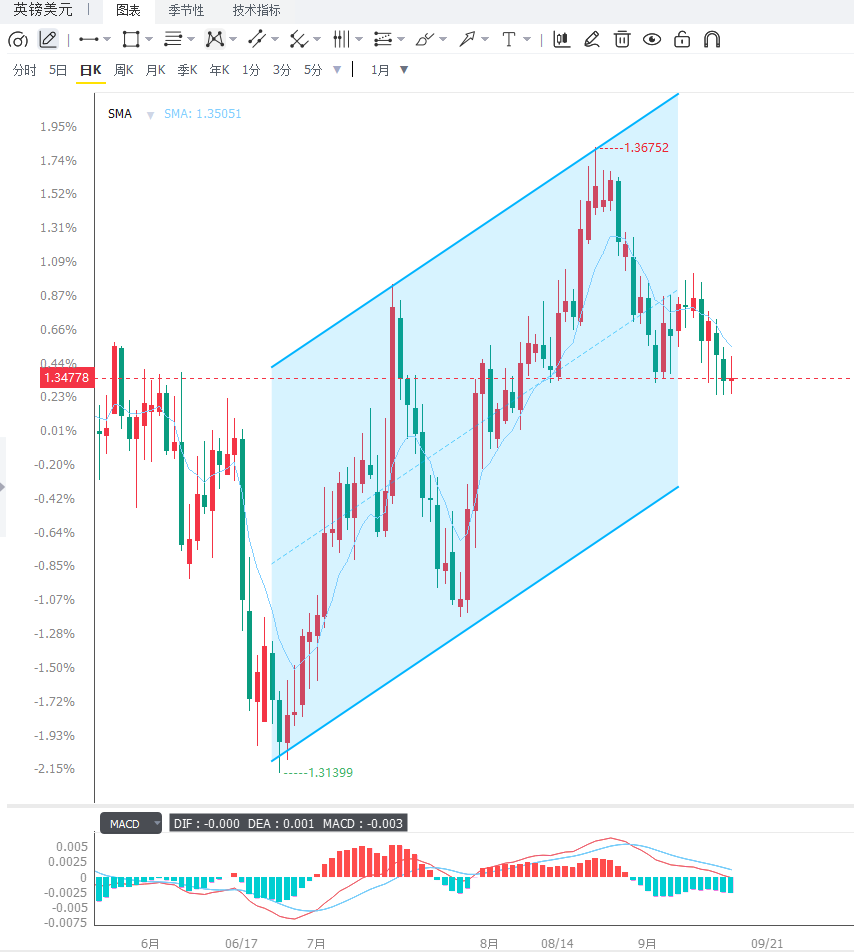 Editor's Summary: The GBP/USD pair is currently in a period of significant data releases and central bank policy announcements. The UK's August CPI will influence market expectations regarding the Bank of England's future policies, while the Federal Reserve's interest rate decision and policy guidance will directly determine the short-term strength of the US dollar. Technically, 1.3440 to 1.3445 constitutes key support, while 1.3550 is the first resistance level that a rebound needs to break through. Short-term price movements will continue to be judged based on inflation data and changes in the policy expectations of the two major central banks.
Recent energy price increases have fueled inflationary pressures in the US, significantly strengthening market expectations for a 25-basis-point rate hike by the Federal Reserve at its September meeting. While the market has largely priced in this rate hike, investors are focusing not only on the rate decision itself, but also on the Fed's latest economic projections, the dot plot, and Chairman Kevin Warsh's policy statements at the post-meeting press conference. If the Fed continues to emphasize the impact of rising energy prices on inflation and signals a continued need for tightening policies, the dollar may receive further support, while the pound/dollar exchange rate may continue to face pressure. Conversely, if the policy rhetoric is cautious, the recent dollar rally may see some profit-taking. In the UK, the August CPI is one of the most important short-term data catalysts for the pound. The market expects the UK's August CPI to rise 3.1% year-on-year, higher than July's 2.9%; core CPI is expected to rise 2.6% year-on-year, unchanged from the previous value. If the actual data is significantly higher than expected, it may strengthen market expectations that the Bank of England will continue to tighten policy, providing some support for the pound; if inflation is lower than expected, it may weaken the pound's interest rate advantage. The Bank of England will announce its interest rate decision on Thursday. The market currently expects the rate to remain unchanged at 3.75% in September, but with renewed inflationary pressures, the market is still focused on the possibility of further rate adjustments before the end of the year. Therefore, the UK CPI will not only affect the short-term trend of the pound but will also be an important basis for the market to assess the Bank of England's subsequent policy path. From a short-term perspective, GBP/USD is currently influenced by two factors: firstly, US inflation and energy prices are strengthening expectations for the Federal Reserve's policy, keeping the dollar relatively strong; secondly, if UK inflation continues to exceed the target, expectations for the Bank of England's subsequent policy may provide some support for the pound. Before the announcement of these two central bank policy events, the exchange rate is likely to remain highly volatile. From a daily chart perspective, GBP/USD is currently trading around 1.3470, still above the support zone formed by the 100-day moving average and the lower Bollinger Band, but below the middle Bollinger Band, indicating that the short-term rebound potential is still limited. The 14-day RSI is around 42, significantly below the neutral level, indicating that the recent upward momentum has weakened, and the short-term trend is biased towards a weak and volatile movement. The first support level to watch is the 100-day moving average around 1.3445, while the lower Bollinger Band around 1.3440 provides significant support. The 1.3440-1.3445 area is currently a key defensive zone for GBP/USD. A break below this support cluster could open up further downside potential, with support levels at 1.3400 and the previous lows. Initial resistance is located near the middle Bollinger Band around 1.3550. A retest of 1.3550 could alleviate the short-term weakness, with further resistance at the upper Bollinger Band around 1.3660. If the rebound fails to break through 1.3550, a pullback should be anticipated. On the 4-hour chart, GBP/USD is in a pullback phase after a rebound. The 1.3440-1.3450 area is a key level for short-term bulls to hold, while 1.3500 is a significant psychological level. A break above 1.3550 would be necessary for a further improvement in the short-term structure; a breach of 1.3440 would likely increase downward pressure. Volatility is expected to increase during the release of UK CPI and the Fed's policy decision; a rapid rise or fall after the data release should be closely monitored. Editor's Summary: The GBP/USD pair is currently in a period of significant data releases and central bank policy announcements. The UK's August CPI will influence market expectations regarding the Bank of England's future policies, while the Federal Reserve's interest rate decision and policy guidance will directly determine the short-term strength of the US dollar. Technically, 1.3440 to 1.3445 constitutes key support, while 1.3550 is the first resistance level that a rebound needs to break through. Short-term price movements will continue to be judged based on inflation data and changes in the policy expectations of the two major central banks.
- Risk Warning and Disclaimer
- The market involves risk, and trading may not be suitable for all investors. This article is for reference only and does not constitute personal investment advice, nor does it take into account certain users’ specific investment objectives, financial situation, or other needs. Any investment decisions made based on this information are at your own risk.