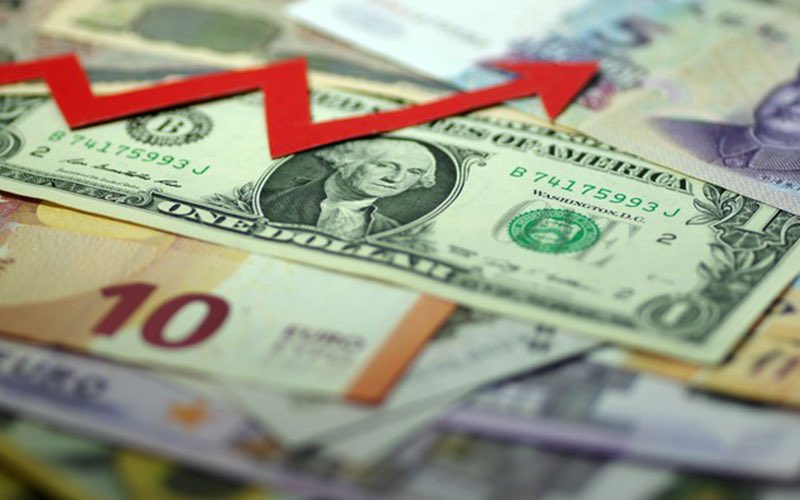
The US dollar index fluctuated at high levels. Hammark's remarks reinforced the Fed's hawkish stance.
2026-10-13 07:34:20
On Tuesday (October 13) during Asian trading hours, the US dollar index fluctuated near a one-and-a-half-year high, currently trading around 102.55. The latest hawkish signals from within the Federal Reserve have provided new support for the dollar's high levels. Cleveland Fed President Beth Hammark stated on Monday that she believes US interest rates need to rise further to curb demand supported by AI investments and the market-driven wealth effect, but she remains open to the possibility of another rate hike at the October 27-28 meeting. 
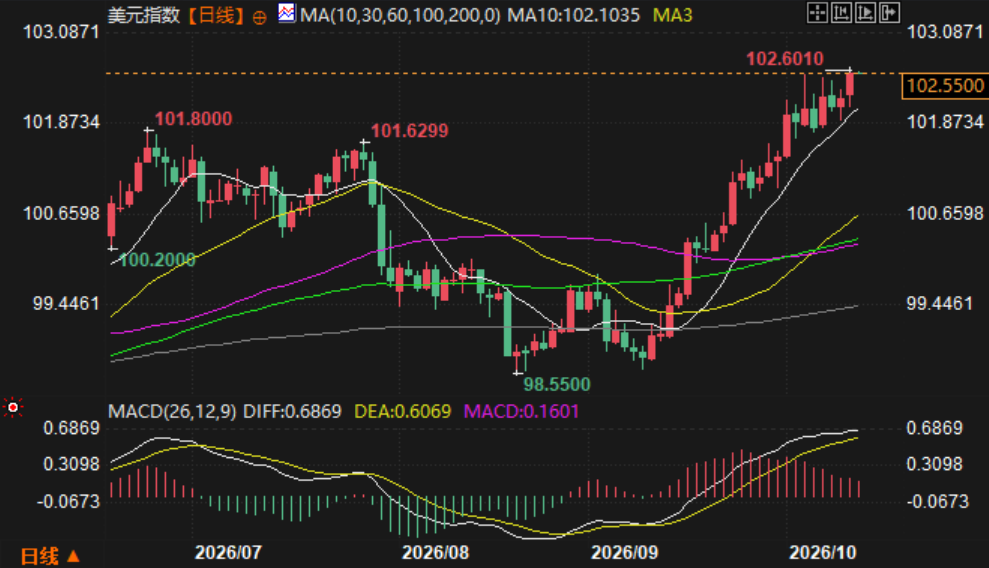 (US Dollar Index Daily Chart, Source: FX678) At 7:19 Beijing time, the US Dollar Index was at 102.55.
Key takeaway: Interest rates need to rise further to curb demand.
Hammark explicitly stated that US interest rates need to rise further to curb demand. She believes demand is driven by two factors: rapid business investment and market-driven wealth gains supporting consumer spending. These factors keep inflation in the 2.5% to 3.0% range. She argues that restrictive monetary policy can cool these forces, allowing inflation to fall without pushing unemployment above the current 4.2%. At the heart of this judgment is that Hammark wants to cool demand through tightening policy, not by weakening the labor market. She stated that she doesn't want to stifle growth, but rather slow it to a pace that eases price pressures. A slowdown in business investment or consumption would be helpful, and restraint in capital spending could mean less burden on consumers.The October meeting will be open to further restrictions, but the timing is a matter of openness.
Hammark indicated she is open to the possibility of another rate hike at the Federal Reserve's October 27-28 meeting. She believes more restrictions are needed, but considers the timing an open question. Hammark is a voting member on interest rate policy this year and voted against a rate hike in July. Investors currently expect the Fed to hold rates steady in October. Her comments are one of the clearest statements from Fed officials regarding the use of restrictive policy to directly cool demand. This implies that while the market expects rates to remain unchanged in October, there are still voices within the Fed supporting further rate hikes, and the uncertainty surrounding the timing means the outcome of the October meeting is not a foregone conclusion. If other voting members agree with Hammark's view, market pricing in an October rate hike could rise again.Inflation stickiness: In the 2.5% to 3.0% range, inflationary sentiment may have already taken root.
Hammark believes inflation will remain in the 2.5% to 3.0% range. She worries that an inflationary mindset may have already taken root among companies vying for resources—the continued investment by AI hyperscale companies has made costs a secondary concern. She states that executives are planning for high inflation and expect prices to rise faster than input costs. In her view, the pressures that began with data centers are now spreading more broadly. At the heart of this assessment is that the drivers of inflation are shifting from the labor market to the demand side, particularly AI investment and the wealth effect. Hammark explicitly lists AI-driven capital expenditure and the wealth effect as policy targets, meaning that soaring tech stocks may be under policy scrutiny, as austerity measures aimed at curbing investment and asset-driven spending work in part through valuations.Market Implications: The US dollar and US Treasury yields were supported, while gold came under pressure.
Hammark's comments should support the dollar and front-end Treasury yields, while putting pressure on gold—gold tends to fall when rate hike expectations rise. Her remarks reinforced the hawkish leanings within the Fed and preserved the possibility of continued rate hikes. Traders will be watching whether other voting members agree with her view that the inflation battle is now directly targeting demand, not the labor market. The core market implication is: if Hammark's views gain more support, market pricing in a more hawkish Fed policy path could shift, potentially pushing the dollar and Treasury yields higher, and putting downward pressure on gold. Conversely, if other officials downplay the need for further rate hikes, the market may maintain its current dovish pricing.Summarize
Hammark's remarks delivered three key signals: interest rates need to rise further to curb demand fueled by AI investment and the wealth effect; she remains open to a rate hike at the October meeting, despite market expectations of no change; and inflationary sentiment may have taken root, with pressures originating in data centers spreading more broadly. Her comments reinforced the hawkish bias within the Fed, supporting the dollar and front-end Treasury yields while weighing on gold. Hammark described monetary policy as a single, blunt tool that she intends to use prudently, at the right amount and pace, while insisting on further constraints. Her stance places the October decision in a delicate balance between market expectations of a pause and the hawkish core of policymakers. Traders will be watching to see if other voting members agree with her view that the inflation battle is now directly targeting demand, not the labor market. (US Dollar Index Daily Chart, Source: FX678) At 7:19 Beijing time, the US Dollar Index was at 102.55.- Risk Warning and Disclaimer
- The market involves risk, and trading may not be suitable for all investors. This article is for reference only and does not constitute personal investment advice, nor does it take into account certain users’ specific investment objectives, financial situation, or other needs. Any investment decisions made based on this information are at your own risk.