Why is the pound repeatedly testing the 1.32 level after the UK Chancellor of the Exchequer pledged to continue deficit reduction?
2026-10-15 18:56:18
On Thursday, October 15th, the UK Office for National Statistics released data showing that August GDP grew by 0.1% month-on-month, higher than the market expectation of a 0.1% contraction, compared to 0.4% in July. During the same period, the pound fluctuated around 1.32 against the dollar. UK Chancellor of the Exchequer John Healy stated that the UK would follow the advice of international institutions and continue its deficit reduction path in the October 28th budget. This statement comes against the backdrop of Middle East conflict pushing up energy prices, raising inflation and borrowing costs, with the market focusing on the balance between fiscal discipline and growth resilience. 
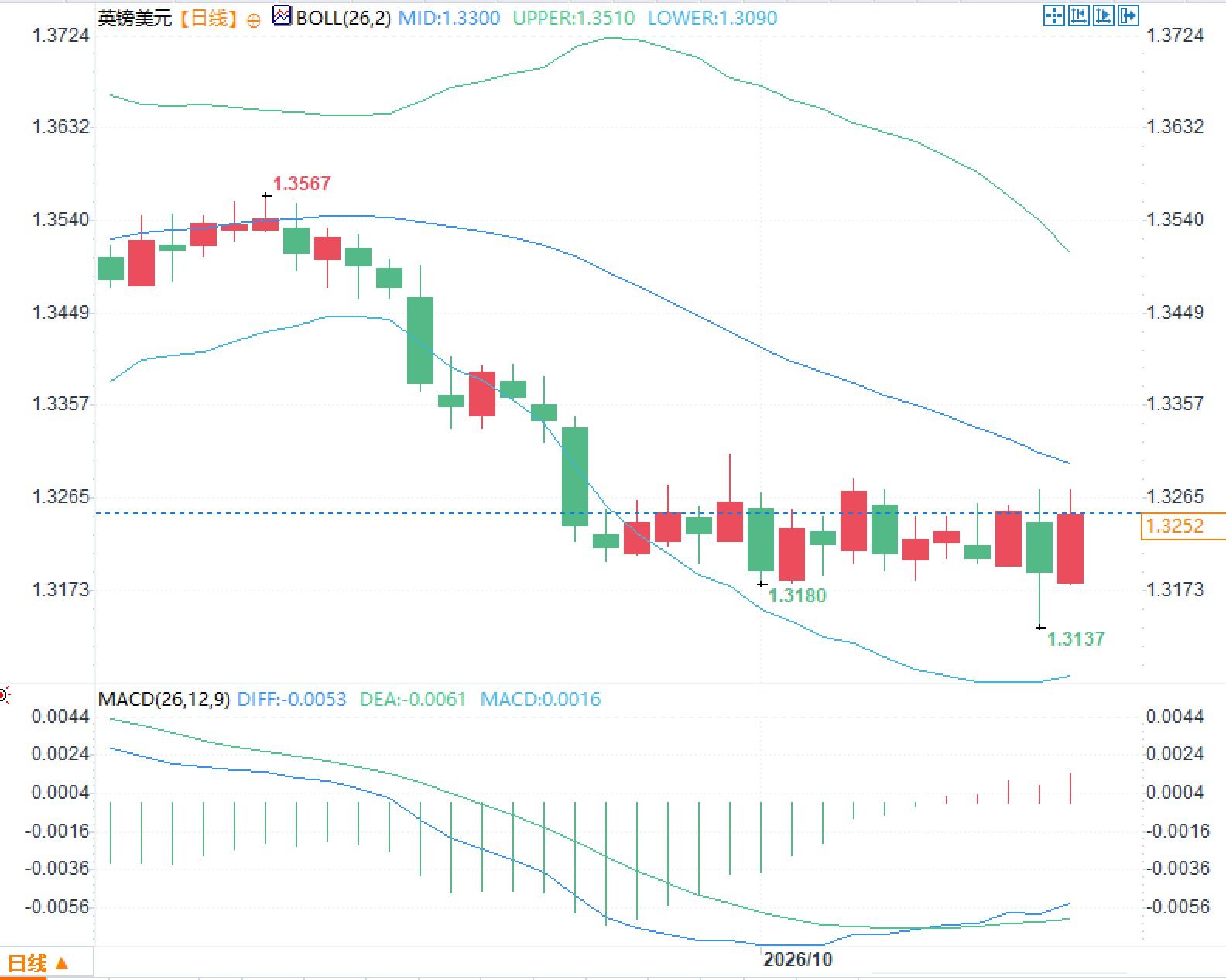 The interaction between fiscal and monetary policies has become a key variable: if inflation persists above target, the interest rate path could affect government bond yields and fiscal space. Healy emphasized the need to demonstrate to investors that "Britain is a place to support, and businesses have confidence in investing in the future." This objective requires the budget to provide short-term relief while maintaining medium-term fiscal credibility. Former Chancellor Hunt's call points to more proactive structural adjustments to boost potential growth. Overall, the core challenge of the UK budget lies in finding a viable path between external shocks, fiscal rules, and growth targets, while avoiding triggering a repricing of debt sustainability in the market.
Fiscal discipline recognized by the International Monetary Fund
Healy stated that the International Monetary Fund (IMF) supports his economic plan and emphasized that "the UK has performed exceptionally well in terms of growth, despite the deep economic shocks facing the world." He added that international institutions believe it is "important to stick to the path," and he will follow this advice in preparing the budget. IMF Managing Director Kristalina Georgieva previously noted that "the UK is actually one of the few countries that has taken decisive action to reduce debt and deficits, and therefore enjoys a slightly better growth outlook." This assessment echoes the UK's relatively clear medium-term fiscal consolidation plan among major developed economies. Fiscal rules require the recurrent budget to be balanced by the end of Parliament's term, with a decrease in the debt-to-GDP ratio. The Middle East conflict has led to high energy prices, pushing up inflation expectations and government bond yields, thus narrowing fiscal space. Market analysts believe that the budget needs to provide "breathing room" for households and businesses while ensuring that new measures are self-funded through tax or spending adjustments, avoiding additional borrowing, in order to maintain investor confidence in the sustainability of public finances. Healy emphasized that the financial sector is a crucial component of economic growth, and regarding concerns about potential adjustments to bank taxes, he stated that banks are "deeply embedded in the national economic structure and future prospects." Conservative leader Kemi Badenoch expressed concern about a potential increase in bank taxes. This interaction reflects the tension between fiscal consolidation and support for key industries.Growth data shows resilience but momentum is slowing.
UK GDP grew 0.1% month-on-month in August, with the production sector contributing 0.8% growth, particularly manufacturing; services remained flat, while construction declined 0.2%. Cumulative growth for the three months to August was 0.7%, reaching 2.1% year-on-year. This result was better than market expectations of contraction, continuing the expansionary trend of June and July, demonstrating the relative stability of economic activity amid energy shocks. Healy stated that the recent growth data "is a sign of the resilience of the UK economy, which some had not anticipated," and plans to take measures to strengthen this resilience in the budget. The International Monetary Fund raised its 2026 UK growth forecast to 1.3%, higher than some other major economies, while projecting a slowdown to 1.2% in 2027, mainly due to rising energy prices and long-term interest rates. Former Chancellor Jeremy Hunt believes that "a flat budget would be a mistake," suggesting measures to boost long-term growth through adjustments to the welfare system, including arrangements related to youth employment. Data indicates that the divergence between the service and production sectors continues, with short-term growth relying more on a rebound in specific sectors than on a broad recovery in demand. This pattern increases the uncertainty of fiscal forecasts, as the pace of tax base expansion may be constrained by inflation and energy costs.The initial contribution of artificial intelligence to productivity
Healy points out that "the impact of artificial intelligence on the economy and productivity is only just beginning to emerge," and believes it has provided some support to the UK economy amid global shocks. Recent investment data shows increased spending on AI-related software, hardware, and infrastructure, as well as expanded output in areas such as professional services and programming. The International Monetary Fund (IMF) analysis suggests that the UK's relatively strong performance in AI-related investment and exports helps explain part of the upward revision of growth forecasts. However, this contribution is still in its early stages, and the magnitude and sustainability of its overall productivity gains remain to be seen. Sustained productivity improvements could alleviate fiscal pressures, as higher potential growth rates help broaden the tax base and reduce debt ratios. At the same time, volatile energy prices and rising financing costs may dampen businesses' willingness to invest further. Policymakers need to strike a balance between short-term support and medium-term structural reforms to ensure that AI-related investments translate into broader productivity gains, rather than being limited to specific sectors.Multiple constraints facing the budget
Healy stated that the budget will provide some "breathing room" for households and businesses, but will not completely eliminate current pressures. The Middle East conflict has driven up energy costs, placing an additional burden on public finances, including higher debt interest payments and potential support spending. The market expects the budget to maintain a "positive scorecard," meaning that new measures will be fully covered by income or expenditure adjustments to avoid expanding the deficit. The Bank of England currently maintains its policy rate at 3.75%, with the latest inflation reading at 3.1%. The market is focused on whether the Bank of England will adjust interest rates at its November meeting. The interaction between fiscal and monetary policies has become a key variable: if inflation persists above target, the interest rate path could affect government bond yields and fiscal space. Healy emphasized the need to demonstrate to investors that "Britain is a place to support, and businesses have confidence in investing in the future." This objective requires the budget to provide short-term relief while maintaining medium-term fiscal credibility. Former Chancellor Hunt's call points to more proactive structural adjustments to boost potential growth. Overall, the core challenge of the UK budget lies in finding a viable path between external shocks, fiscal rules, and growth targets, while avoiding triggering a repricing of debt sustainability in the market.
- Risk Warning and Disclaimer
- The market involves risk, and trading may not be suitable for all investors. This article is for reference only and does not constitute personal investment advice, nor does it take into account certain users’ specific investment objectives, financial situation, or other needs. Any investment decisions made based on this information are at your own risk.