With the Taiwan Strait standoff compounded by border tensions, how will Iran cope with this dual pressure?
2026-11-19 15:16:30
Armed attacks along Iran's southeastern and northwestern borders continue to escalate, with Balochistan and Kurdish armed groups frequently ambushing security forces and attacking personnel associated with local governments. The number of attacks this year has reached a ten-year high. While these localized conflicts do not yet possess the capacity to overthrow the regime, they occur at a critical juncture for Iran, which is currently facing a standoff with the United States in the Strait of Hormuz and enduring external blockade and military pressure. This continued border instability further depletes Iran's security resources, becoming a new internal variable that Tehran must address. Whether external forces continue to intervene in border armed activities has also become a focus of attention. 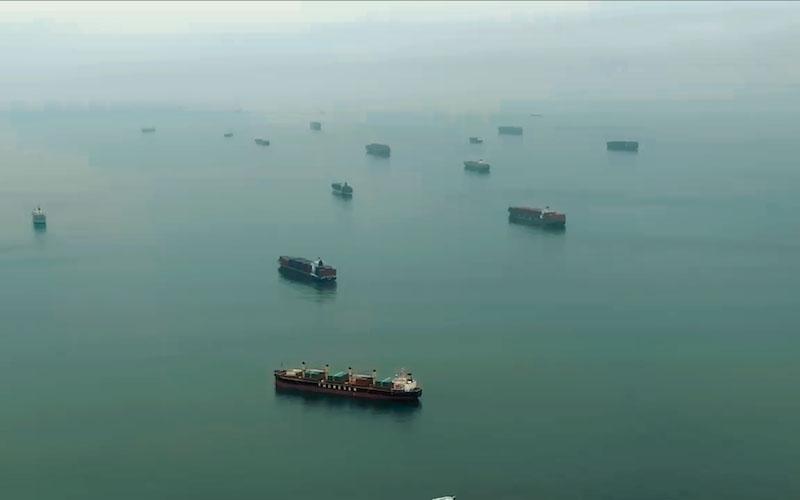
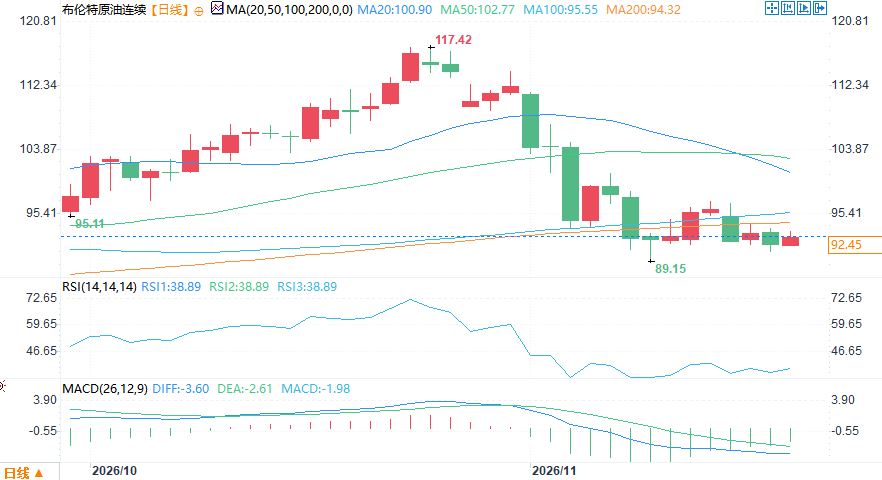 (Brent crude oil futures daily chart, source: FX678)
Multiple explosions have occurred along the border, with the intensity and frequency of attacks increasing significantly.
The unrest is concentrated in Iran's southeastern Sistan-Baluchistan province and northwestern Kurdish-populated areas. In the southeastern border region adjacent to Pakistan, militants have used rocket-propelled grenades and heavy machine guns to ambush patrols and launch attacks on intelligence and police offices. Data from conflict monitoring agencies shows that there have been over 70 armed attacks in the region this year, the highest level in at least a decade. Conflict continues along the northwestern Kurdish border, with Kurdish forces accused of attacking high-ranking Basij militia members and associated clerics. The targets of these attacks have also shifted significantly, no longer limited to regular military and police forces. Grassroots clerics, militia leaders, and local police personnel have been targeted, with some attacks occurring near strategic locations such as the port of Chabahar and the Konarak naval base, disrupting key points along Iran's border.The landscape of armed groups is changing, with demands shifting from secession to the overthrow of the regime.
The issue of armed groups representing ethnic minorities along Iran's borders is long-standing. Since the establishment of the Islamic Republic in 1979, Baloch, Kurdish, and Arab separatist armed groups have been active in the border region. This year's developments lie in the consolidation of these armed forces and a shift in their objectives. The Baloch armed group "Justice Army" has united with several smaller factions to form the "People's Fighters Front," claiming responsibility for the vast majority of attacks in the area. New armed groups such as the "Kurdistan Patriotic Youth" and the "Kurdistan Martyrs' Revenge Team" have also emerged in the Kurdish region. Some armed groups have adjusted their narratives: they no longer prioritize independence and separatism, instead proposing to unite the people within Iran and overthrow the existing regime. Their motivations are increasingly driven by a desire for revenge against victims of domestic protests.Iran launched a strong counterattack, with simultaneous cross-border strikes.
In response to the border offensive, Iran's Islamic Revolutionary Guard Corps (IRGC) rapidly escalated its deployment, sending additional troops and heavy equipment to the Kurdish region and launching cross-border attacks on Kurdish armed strongholds entrenched in Iraq. Iranian intelligence also conducted raids in Sistan-Baluchistan province, dismantling several armed groups and accusing their members of receiving specialized training in demolition and assassination from US and Israeli agents abroad. Iranian leaders have repeatedly attributed the border unrest to sabotage plots orchestrated by the US and Israel, and the IRGC leadership has publicly held pro-government clerics and militia commanders accountable for their attacks, signaling a desire for revenge.External power struggles are intertwined, and border instability is compounded by external confrontational pressures.
At the beginning of this year, when the conflict between the US, Israel, and Iran first broke out, it was predicted that large-scale internal strife would erupt among ethnic minority armed groups along the border, but this did not materialize. However, US and Israeli officials admitted that they had hoped to support border armed groups to contain Iran; Trump also publicly mentioned attempting to supply weapons to Iranian protest groups through Kurdish channels, a claim denied by the Kurds. Currently, Iran continues to maneuver in the Strait of Hormuz while simultaneously enduring US economic sanctions; border ethnic conflicts continue to deplete its security forces, weakening its ability to project influence outwards. Several think tanks analyze that such border disturbances are unlikely to shake Tehran's core rule in the short term, but they will continue to crowd out Iran's security resources, becoming a persistent internal risk beyond the US-Iran rivalry. Overall, Iranian border armed activities have entered a new active cycle, with new characteristics in the scope, targets, and organizational forms of attacks. In the short term, localized conflicts are unlikely to lead to widespread unrest, but under the combined pressure of internal and external factors, border governance and ethnic conflicts will continue to constrain Iran, adding new variables to the geopolitical game between the US and Iran.The spillover risks of border unrest inject geopolitical premium into oil prices.
Continued border instability has added a new geopolitical premium to international oil prices. Iran is a major oil producer in the Middle East and controls the Strait of Hormuz, through which a large volume of global crude oil is transported. Although the current border conflict is concentrated in the southeast and northwest inland areas and has not yet directly impacted oil-producing regions or the strait's shipping lanes, the market is concerned about the spillover effects of the conflict. If the situation deteriorates further, the possibility of Iran tightening passage through the strait and disrupting crude oil exports cannot be ruled out. Against the backdrop of already tight global crude oil supply, escalating internal security risks in Iran will cause trading funds to pre-price geopolitical risks, supporting the resilience of oil prices. However, at this stage, the conflict remains localized, and its impact on oil prices is only impulsive, making a sustained surge unlikely in the short term. (Brent crude oil futures daily chart, source: FX678)Editor's Summary
Armed activity along Iran's border has entered a period of increased activity, with new characteristics emerging in the frequency of attacks, the scope of targets, and the organizational structure. Against the backdrop of combined external pressure and internal ethnic tensions, the pressure on border governance will persist. While a nationwide upheaval is unlikely in the short term, the resource consumption effect cannot be ignored, and it may indirectly impact Iran's maneuverability in broader geopolitical games.Frequently Asked Questions
Q: Why did armed attacks on the Iranian border increase significantly in 2026? A: Conflict monitoring data shows that there have been over 70 attacks in Sistan-Baluchistan province this year, the highest in a decade. The main reasons include the consolidation of armed groups (such as the "Justice Army" forming the People's Fighting Front), a shift in objectives from separatism to a broader narrative of regime challenge, and vengeful motives following domestic protests. Simultaneously, the dispersion of security forces under external pressure has also provided space for attacks. Attacks often employ ambush and targeted strikes, targeting patrols and personnel associated with local regimes. Q: What are the main armed groups? What changes have occurred in their demands? A: In the southeast, the Balochistan "Justice Army" and its alliance, the "People's Fighting Front," are the main groups; in the northwest, there are the PJAK and several newly formed Kurdish armed groups. Traditionally, their main demand has been ethnic separatism, but this year some groups have adjusted their narratives, emphasizing the unity of the people within the country and the overthrow of the existing regime, linking their actions to revenge for victims of protests. This shift makes the conflict more political than simply ethnic separatism. Q: How is the Iranian government responding to these attacks? A: The Revolutionary Guard has deployed additional troops and heavy equipment to the Kurdish region and conducted cross-border strikes; intelligence agencies have carried out arrests and dismantled several groups in the southeast. Iranian leaders attribute the unrest to external forces orchestrated by the US and Israel and have publicly demanded accountability for the attacks. The focus of the operation is on rapid clearing and deterrence, while strengthening border control to prevent attacks from spreading to strategic nodes. Q: Is it possible that these conflicts could escalate into large-scale internal unrest? A: Currently, these are still localized conflicts. Although the frequency of attacks has increased and the targets have expanded, they have not yet formed a coordinated nationwide challenge. The size and equipment of the armed forces are limited, making it difficult to overthrow the core leadership in the short term. However, the continued depletion of security resources, coupled with external blockade and the Hormuz standoff, could further squeeze Iran's ability to cope with broader pressure. Q: What role do external forces play in the border unrest? A: Iranian officials have repeatedly accused US and Israeli agents of providing training and support, and some US and Israeli officials have previously admitted to considering using border armed forces to contain Iran. The Kurdish side denies any related arms shipments. While the actual evidence largely relies on statements from various parties, and the extent of external intervention is difficult to fully verify, the border unrest has objectively distracted Iran's security forces, becoming an additional variable in the US-Iran rivalry. At 15:15 Beijing time, Brent crude oil futures were trading at $92.47 per barrel.- Risk Warning and Disclaimer
- The market involves risk, and trading may not be suitable for all investors. This article is for reference only and does not constitute personal investment advice, nor does it take into account certain users’ specific investment objectives, financial situation, or other needs. Any investment decisions made based on this information are at your own risk.