Don't be pessimistic about the sharp drop in gold prices; the expansion of the US debt ceiling to $5 trillion may trigger a major market move.
2026-11-23 12:18:31
Last week's sharp decline in gold and silver prices dealt a significant blow to precious metals investors. However, this does not signify the end of gold's long-term upward trend. The market is brewing a major positive catalyst: the nearly $5 trillion debt ceiling expansion is expected to become a core driver of gold price increases in the near future. Rising US Treasury yields and expectations of continued Fed rate hikes are currently the main obstacles suppressing gold prices. However, looking at the longer term, the underlying logic of gold as a hedge against sovereign debt risk remains solid.
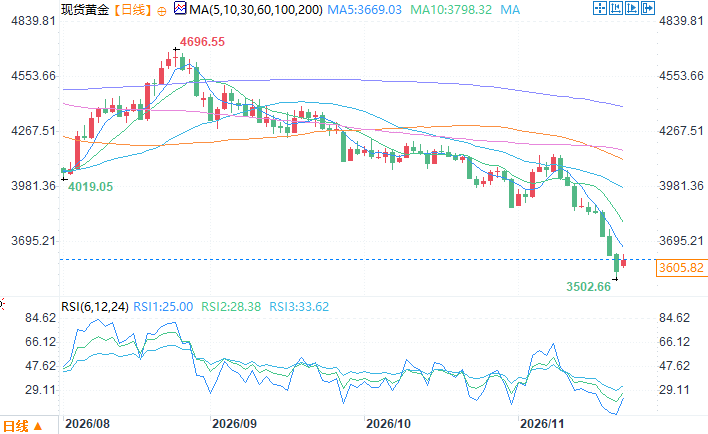 Spot gold daily chart source: FX678. At 12:17 Beijing time on November 23, spot gold was trading at $3609.82 per ounce.
Debt ceiling warnings sound, massive expansion expectations emerge.
On Friday, as gold prices tested the $3,500 support level, CIBC Capital Markets released a research report warning that the US government could reach its $41.1 trillion debt ceiling as early as the end of February next year , potentially triggering another fierce debt ceiling battle in Washington. The bank estimates that to ensure the federal government can continue issuing debt and maintain funding until around the 2028 election, Congress would ultimately need to raise the debt ceiling by nearly $5 trillion . Even against the backdrop of continued expansion in US fiscal spending, this figure remains staggering. The core impact of this expectation lies in shaking market confidence in US Treasuries and dollar assets. A similar market reaction occurred in August this year when the US Treasury announced an expanded debt repurchase program, which led to a simultaneous rise in gold prices. While the policy's initial intention was to maintain liquidity in the Treasury market, it also made the market acutely aware of the numerous challenges of managing the massive US debt. This nearly $5 trillion increase in the debt ceiling will once again bring the risks to fiscal sustainability to the forefront.Foreign institutions are positioning themselves in advance, optimistic about the upside potential of gold prices.
Société Générale has adjusted its asset allocation strategy based on this scenario. In its latest asset class outlook report, the bank views the approaching debt ceiling issue as a potential catalyst for a weaker dollar and a rebound in gold prices. Société Générale maintains a 10% gold allocation in its portfolios, continuing to recommend investors buy gold on dips, and predicts that gold prices could reach $5,000 per ounce by the end of 2027. The institution also warns of short-term risks: in the initial stages of the debt ceiling tug-of-war, the market is prone to liquidity shortages, with investors passively selling assets to raise cash, potentially putting further pressure on gold in the short term. However, this short-term disturbance will not undermine the long-term investment logic of gold . While the Federal Reserve's interest rate hikes can combat inflation, they cannot solve the deep-seated structural fiscal debt problem in the United States; monetary policy adjustments are merely treating the symptoms, not the root cause.Gold prices don't need a crisis to rise; the doubts themselves are enough to support the market.
The upward trend in gold prices doesn't necessarily have to wait for a sovereign debt crisis. The real core driver is the market's growing skepticism about the sustainability of the current US fiscal expansion path. As market confidence in the long-term value of US Treasuries weakens, funds naturally shift to safe-haven assets like gold. The implementation of the $5 trillion in new debt will further intensify market concerns about fiscal vulnerabilities, a question that won't disappear with short-term market fluctuations. A stark contrast exists between the short-term negative impact of interest rate hike expectations and the long-term positive impact of fiscal vulnerabilities. In the short term, US Treasury yields and Fed policy will remain the dominant forces suppressing gold prices, and the boost from debt issues may be delayed. However, as debt ceiling negotiations progress, the market will reprice the long-term risks of the dollar and US Treasuries, and gold's hedging value will regain attention.Conclusion
While the recent decline in gold and silver prices has dampened market confidence, the long-term underlying logic remains intact. The anticipated expansion of the $5 trillion debt ceiling provides a long-term boost to gold. Precious metal investors need to distinguish between short-term liquidity shocks and underlying fiscal risks, seizing medium- to long-term allocation opportunities arising from US fiscal issues amidst market volatility. Spot gold daily chart source: FX678. At 12:17 Beijing time on November 23, spot gold was trading at $3609.82 per ounce.
- Risk Warning and Disclaimer
- The market involves risk, and trading may not be suitable for all investors. This article is for reference only and does not constitute personal investment advice, nor does it take into account certain users’ specific investment objectives, financial situation, or other needs. Any investment decisions made based on this information are at your own risk.