A liquidity crunch triggered a sharp drop in gold and silver prices, but deep overselling may present an opportunity for stabilization.
2026-11-23 13:28:31
Global stock market volatility and a surge in demand for liquidity fueled a sharp sell-off in gold and silver, resulting in their largest weekly declines since March. Spot gold fell nearly 9% last week, testing the key support level of $3,500; spot silver fell over 15%, touching around $41, both reaching 14-month lows. Rising concerns about the AI sector and stalled data center expansion prompted investors to prioritize selling highly liquid precious metals for cash. Analysts from various institutions have offered their assessments, noting that while short-term selling pressure is intense, many believe this decline is a correction from oversold conditions and the long-term fundamentals remain intact.
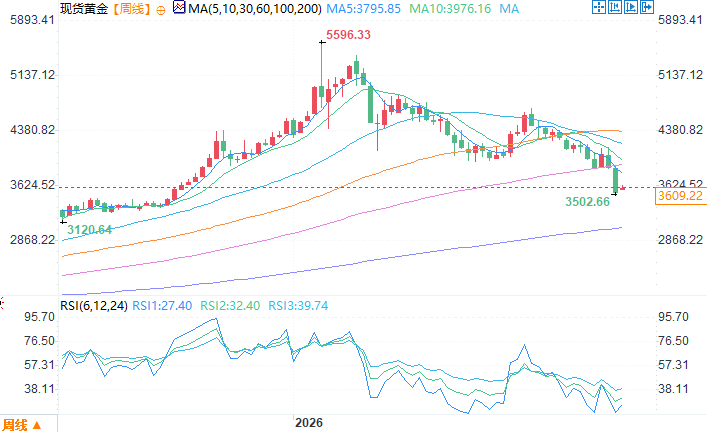 Spot gold weekly chart source: FX678. As of 13:26 Beijing time on November 23, spot gold was trading at $3615.52 per ounce.
Passive deleveraging dominated the market, while expectations of interest rate hikes continued to suppress prices.
Carsten Fritsch, a commodities analyst at Commerzbank, stated that while the slight decline in US Treasury yields and the stabilization of the dollar have eased conventional negative factors, the gold price decline has accelerated. The core driver behind this is the forced selling triggered by the sharp drop in tech stocks. Continued sticky inflation and the market pricing in a prolonged tightening cycle by global central banks, coupled with the fact that gold itself does not generate interest, increase the opportunity cost of holding it, further suppressing buying. Ole Hansen, head of commodities strategy at Saxo Bank, noted that cash hoarding, a stronger dollar, negative factors in the AI sector, and bearish momentum have combined to outweigh other positive factors in the short term. However, he believes the market has overpriced the subsequent interest rate hike path. The fundamentals of the US, excluding the AI investment boom, are not strong, and the decline in oil prices and stock market volatility may make the Federal Reserve hesitate in its December interest rate decision.Multiple indicators have entered oversold territory, and institutional disagreements are gradually emerging.
David Morrison, senior market analyst at TradeNation, points out that the MACD indicator shows gold and silver have entered oversold territory, showing signs of nearing a bottom, but the end of the correction has not yet been confirmed. The US dollar, remaining near a 19-month high, remains the biggest drag on precious metals; a weaker dollar would allow gold and silver room to stabilize. Carsten Frisch also observes that the RSI indicators for gold and silver are deeply oversold; historically, such states are rarely sustained and are prone to subsequent corrections. TD Securities analysts believe that this round of decline does not signify the end of the gold bull market. Declining risk appetite, concerns about interest rate burdens, stagflation, and fiscal risks remain supportive of the long-term upward trend in gold prices. Gold ETF holdings are relatively resilient, and increased volatility may prompt CTA commodity trading advisors to cover short positions, providing a short-term buffer.Key data and holiday liquidity become the watershed for short-term market trends.
GivTrade technical analyst Waleed Said suggests that gold stabilization doesn't necessarily require a Fed rate cut; as long as the market believes the rate hike cycle is nearing its end, sentiment will improve. Next week's upcoming PCE inflation data is a key focus; signals of peak inflation could boost gold prices. Meanwhile, the US Thanksgiving holiday will reduce market liquidity, potentially amplifying volatility. He emphasizes that $3500 is a crucial support level for gold, a significant consolidation platform in 2025 with strong buying interest; weekly closing prices should be used as a benchmark. Holding this level maintains the long-term bull market structure; however, a weekly close below $3400 would shift the market logic. He believes the current situation is merely a cyclical correction within a structural bull market, not a market peak. Lacking a weakening dollar and a policy shift, gold prices are likely to fluctuate between $3400 and $4000. Besides PCE, manufacturing PMI, consumer confidence, and the second revision of Q3 GDP are also worth monitoring.Conclusion
The recent plunge in gold and silver prices stemmed from a liquidity crunch and a chain reaction of selling off risky assets, creating significant short-term pressure. However, multiple technical indicators have entered deep oversold territory. Institutions generally believe the long-term bullish logic remains intact. Going forward, the focus will be on PCE inflation data and policy signals from the Federal Reserve. Whether gold can maintain its bullish structure will depend on whether the $3,500 support level holds. Spot gold weekly chart source: FX678. As of 13:26 Beijing time on November 23, spot gold was trading at $3615.52 per ounce.
- Risk Warning and Disclaimer
- The market involves risk, and trading may not be suitable for all investors. This article is for reference only and does not constitute personal investment advice, nor does it take into account certain users’ specific investment objectives, financial situation, or other needs. Any investment decisions made based on this information are at your own risk.