Sydney:12/24 22:26:56

Tokyo:12/24 22:26:56

Hong Kong:12/24 22:26:56

Singapore:12/24 22:26:56

Dubai:12/24 22:26:56

London:12/24 22:26:56

New York:12/24 22:26:56

Real-Time Popular Commodities

Instrument Current Price Change

XAU

4834.02

43.36

(0.91%)

XAG

80.955

2.554

(3.26%)

CONC

84.00

-7.17

(-7.86%)

OILC

91.95

-6.01

(-6.14%)

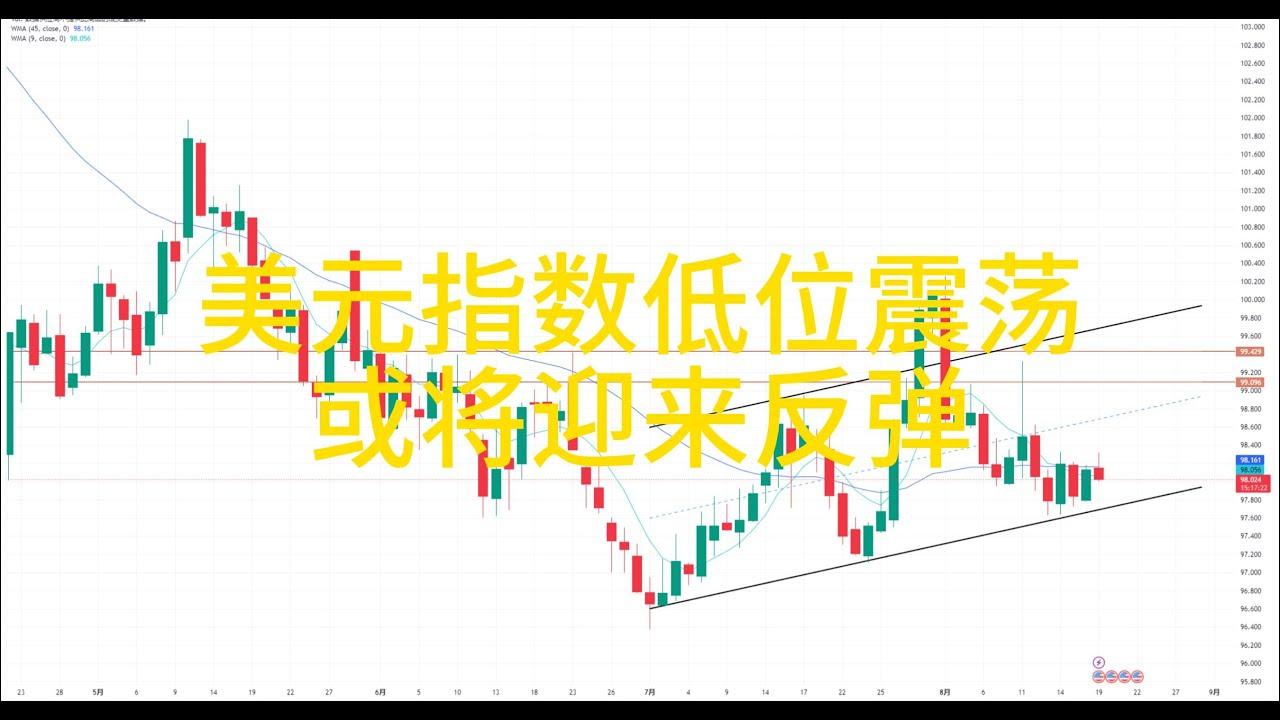
USD

98.222

0.023

(0.02%)

EURUSD

1.1763

0.0000

(0.00%)

GBPUSD

1.3518

0.0003

(0.02%)

USDCNH

6.8146

-0.0004

(-0.01%)

Live Updates

View More>

2026-04-18Saturday

16:43:39

Ukrainian drone commander: Ukraine attacked two oil terminals in the Krasnodar region of Russia and the port of Vysotsk in the Leningrad region of Russia.

16:37:00

[Foreigners Rush to Become Zhangxue Motorcycle Agents; Global Orders Soar] At the motorcycle exhibition area of the 139th Canton Fair, buyers from all over the world crowded in. Many came specifically to see Zhangxue Motorcycles, the Chinese brand that achieved legendary success at the WSBK World Superbike Championship just two weeks prior. Huang Qin, Minister of Foreign Trade at Zhangxue Motorcycles, stated, "The scene has been incredibly lively these past two days. Over 5,000 customers came specifically for our brand, all requesting to become local agents and placing orders directly. We've received orders for over a thousand units." Data released by the General Administration of Customs shows that in the first quarter, my country exported 4.63 million internal combustion engine motorcycles, valued at 21.14 billion yuan, representing year-on-year increases of 13.5% and 14.2%, respectively. In the first quarter, my country exported 11.14 million motorcycles, valued at 34.445 billion yuan, representing year-on-year increases of 18.8% and 18.4%, respectively. From winning championships on the racetrack to showcasing its motorcycles at the Canton Fair, Zhang Xue Motorcycles not only attracted the attention of global merchants with its solid strength, but also boosted the popularity and sales of the entire domestic motorcycle industry with its outstanding performance. (CCTV Finance)

16:28:48

[Eight Tankers Bravely Enter Strait of Hormuz, VLCCs First to Test Passage Limits] ⑴ Real-time data from ship tracking agency MarineTraffic on Saturday showed a convoy of eight tankers transiting Iranian waters in the Strait of Hormuz. The convoy consisted of a Very Large Crude Carrier (VLCC), several product and chemical tankers, and liquefied petroleum gas (LPG) carriers. ⑵ This is the first time a VLCC has been detected in a transit convoy since Iran announced the conditional opening of the strait, indicating that shipowners' assessments of channel safety are shifting from testing small and medium-sized vessels to focusing on their main shipping capacity. ⑶ Some anonymous shipowners told agencies that they are attempting to use the brief window of opportunity created by the Lebanon-Israel ceasefire to evacuate the Persian Gulf, but all requested anonymity to avoid the potential sensitivity risks of passage approvals and geopolitical alignment. ⑷ A spokesperson for the Iranian Revolutionary Guard issued a statement on Saturday morning stating that, based on existing consensus reached in negotiations, Iran, in good faith, agreed to allow a limited number of tankers and merchant ships to pass through the controlled channel of the Strait of Hormuz. (5) Since the US-Israel military strikes against Iraq in late February and Tehran's retaliatory blockade of the Strait of Hormuz, hundreds of ships of various types have been stranded in the Persian Gulf. The International Energy Agency (IEA) assesses that this event has resulted in the largest oil supply loss in history. (6) The IEA estimates that the blockade has caused a disruption of over ten million barrels of oil supply per day globally and a sharp drop of 20% in liquefied natural gas exports. Gulf oil giants such as Saudi Arabia, the UAE, Iraq, and Kuwait have all emphasized that free two-way traffic for oil tankers is an absolute prerequisite for restoring stable export operations. (7) Although some tanker convoys have successfully passed through, tracking data also shows that since Friday afternoon, some ships have been turning back after approaching the strait, indicating that passage remains restricted and the stability of the window of opportunity is highly dependent on the outcome of diplomatic maneuvering before the ceasefire expires on Wednesday.

16:28:32

Iranian media reports that Iran has reopened six airports, including Tehran's Imam Khomeini International Airport, Mashhad Airport, Birjand Airport, Gorgan Airport, and Zahedan Airport.

16:28:11

[Tunisian Corn Tender Fails, High Global Feed Grain Prices Deter North African Buyers] ⑴ European traders revealed on Saturday that the Tunisian National Grain Agency reportedly rejected all offers and failed to secure any purchases in an international tender for approximately 25,000 metric tons of animal feed corn that closed on Friday. ⑵ Traders generally attributed the failed tender to excessively high bids. The lowest known CIF price was $266.65 per tonne including freight, submitted by trader Ameropa, but this still failed to meet Tunisia's target price. ⑶ The corn was originally scheduled for shipment in May. Tunisia's decision to abandon the purchase amidst high freight costs and absolute grain prices reflects strong resistance from North African importers to the current cost level of feed grains. ⑷ Despite a relatively stable geopolitical situation in the Black Sea region and the Argentine corn harvest season, global benchmark corn prices remain supported by sticky energy prices and high shipping insurance rates, suppressing the purchasing impulse of price-sensitive buyers. (5) The failure of this Tunisian tender may force the country to turn to alternative feed grains such as barley to fill the formula gap, while also indirectly confirming that the profits of the livestock industry in the Middle East and North Africa are being continuously crushed by raw material costs. (6) If major buyers in the region, such as Egypt and Algeria, follow suit in the coming weeks by showing a wait-and-see attitude or lowering prices, the pricing sensitivity of Chicago corn futures contracts for the far-month months to the collapse in demand will significantly increase.

16:27:48

[Atlantic Trade Cold Wave Intensifies, EU Exports to the US Plunge by Over a Quarter for Two Consecutive Months] ⑴ Eurostat released the latest trade balance data on the 17th, showing that EU goods exports to the US plummeted to €38.3 billion in February, a year-on-year drop of 26.4%, continuing the precipitous decline of 27.8% year-on-year in January. ⑵ Directly dragged down by the sharp contraction in exports to the US, the EU's goods trade surplus in February was only €9.1 billion, a sharp decrease of €13.8 billion compared to the same period last year, with the overall surplus plummeting by 60% year-on-year, a rare drop in recent years. ⑶ The situation is equally chilling with major trading partners. In February, EU goods exports to China were only €14.2 billion, a year-on-year decrease of 16.1%; exports to Switzerland also contracted by 9.3%, with only exports to the UK barely remaining flat, recording a slight positive growth of 0.1%. ⑷ Transatlantic freight flows have maintained a decline of over a quarter for two consecutive months, coinciding with the period of intense discussion surrounding Trump's tariff rhetoric and the US's threat to renegotiate the EU-US trade agreement, clearly demonstrating the suppressive effect of trade policy uncertainty on physical orders. (5) With exports plummeting and import substitution adjustments slowing, the EU's manufacturing capacity utilization and industrial electricity consumption are expected to face continued pressure, and the most resilient external demand engine in the Eurozone's economic recovery is showing clear signs of slowing down. (6) If the US threat to impose tariffs on EU automobiles and agricultural products remains suspended before the July negotiation window, European exporters' proactive reduction of their exposure to the US to mitigate risk may further amplify the downward slope of trade data.