January 5th Financial Breakfast: US government attacks on Venezuela boost safe-haven demand, supporting higher gold prices; OPEC+ suspends crude oil production increases in the first quarter.
2026-01-05 07:16:13
Gold prices rose in early Asian trading on Monday (January 5, Beijing time), trading around $4,370 per ounce. Safe-haven demand supported prices as the Trump administration's unilateral military attack on Venezuela on Saturday, which resulted in the capture of President Maduro, escalated geopolitical tensions. US crude oil traded around $57 per barrel, as OPEC+ members reached an agreement to maintain a halt to production increases in the first quarter of 2026, while the market was also influenced by further developments in the Venezuelan situation.

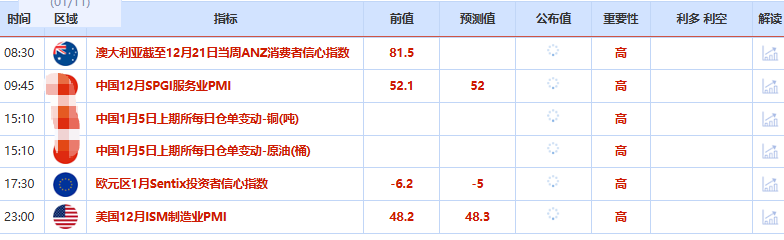
U.S. stocks traded mixed on the first trading day of 2026. The Dow Jones Industrial Average rose 0.66%, the S&P 500 edged up 0.19%, while the Nasdaq was virtually flat, failing to deliver the "Santa Claus rally" the market had been anticipating.
Market trends diverged. Shares of chipmakers Nvidia and Intel, as well as industrial giants Boeing and Caterpillar, rose, collectively boosting the Dow Jones and S&P 500 indices. The Trump administration's decision to postpone some furniture tariffs also lifted related retail stocks. However, shares of technology and consumer giants such as Apple, Microsoft, and Amazon fell, dragging down the Nasdaq index. Tesla's stock closed down 2.6% after reporting its second consecutive year of declining sales.
Market analysis indicates that investors are adopting a short-term "buy low, sell high" trading strategy and are beginning to more cautiously assess the valuation levels of popular sectors such as artificial intelligence. Looking ahead, the Federal Reserve's monetary policy path, particularly the expectation that the next chairman may be more dovish and push for interest rate cuts, will be a core factor influencing the market's direction throughout the year. The labor market data to be released this week will be a key indicator for observing policy direction.
On the first trading day of 2026, prices of major precious metals such as gold, silver, and platinum generally rose on Friday, driven by both geopolitical tensions and expectations of a Federal Reserve interest rate cut.
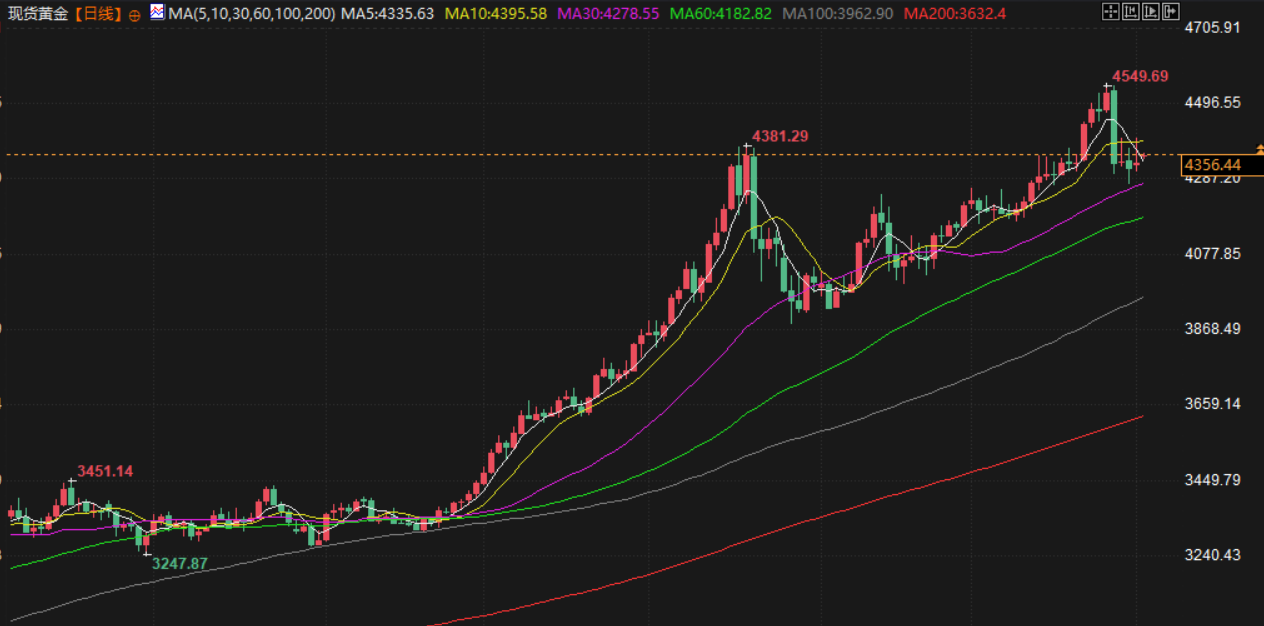
Spot gold prices rose to $4,402.06 at one point. Bart Melek, global head of commodities strategy at TD Securities, analyzed, "The market continues to discuss the prospect of a March rate cut and the possibility of another rate cut later this year… This, combined with related rhetoric about potential tariffs and ongoing risks to US debt, has driven up gold, silver, platinum, and palladium." The market widely expects the Federal Reserve to implement at least two rate cuts of 25 basis points each this year, making non-interest-bearing gold more attractive to investors.
Meanwhile, as a traditional safe-haven asset, gold has also benefited from geopolitical risks such as the turmoil in Iran, the situation in Venezuela, the unresolved Russia-Ukraine peace agreement, and the Gaza Strip. Furthermore, the physical gold markets in India and China have seen their first premium in nearly two months, indicating a recovery in physical demand.
Other precious metals also performed strongly. Spot silver rose 0.7% on Friday to $71.77 per ounce; spot platinum jumped 3.5% to $2,125.80 per ounce. Both metals outperformed gold in 2025, with silver rising over 147% and platinum rising 127% for the year. Spot palladium rose nearly 2% to $1,636.43 per ounce, with a 76% increase for the year, marking its biggest annual gain in 15 years.
Despite a strong start to the new year, all precious metals likely recorded weekly declines last week after a significant surge at the end of last year, indicating a potential short-term consolidation after reaching new highs. However, geopolitical tensions in the Middle East this week could drive precious metals higher.
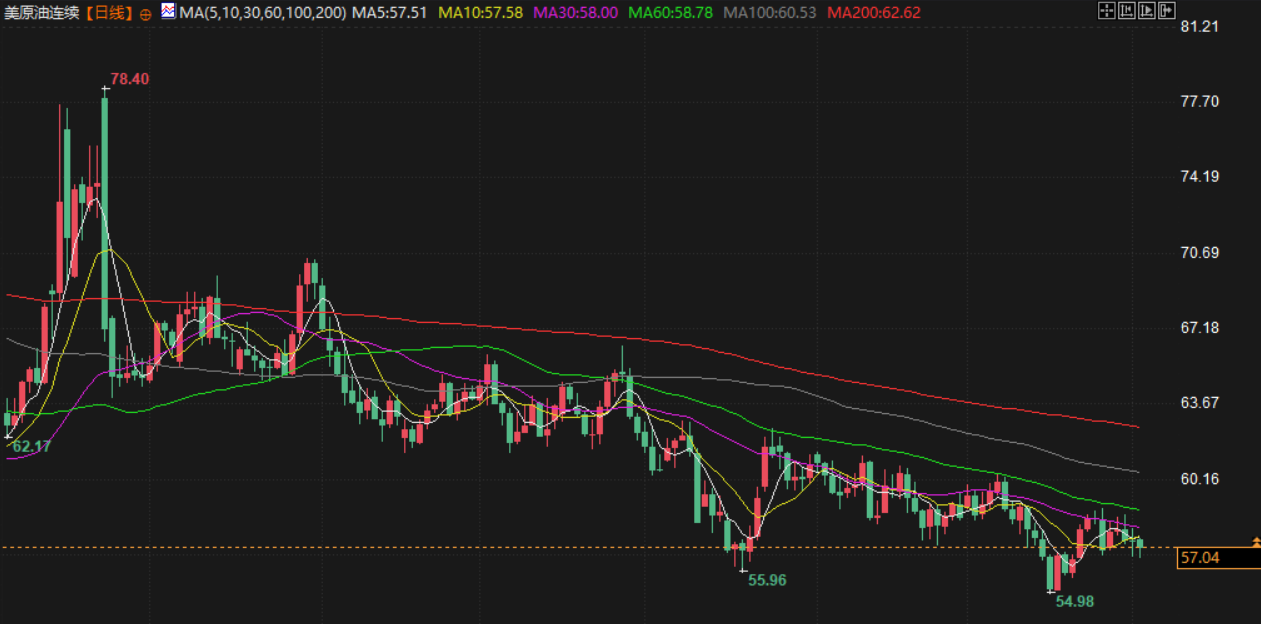
Oil prices edged lower on Friday, the first trading day of 2026, extending weakness following last year's biggest annual drop since 2020. Investors are weighing persistent concerns about oversupply against complex geopolitical risks.
Geopolitical tensions remain high. Despite US-sponsored peace talks, Russia and Ukraine continued to accuse each other of attacks on civilians on New Year's Day, with Ukraine continuing its attacks on Russian energy facilities. Furthermore, the Trump administration's unilateral military strike on Venezuela on Saturday, which resulted in the capture of President Maduro, exacerbated geopolitical tensions, following last week's increased pressure on Iran.
Meanwhile, the market is focused on the OPEC+ meeting. Sources on Sunday indicated that the eight OPEC+ members reached an agreement in principle to maintain the suspension of crude oil production increases in the first quarter of 2026. Analysts believe that 2026 will be a crucial year for assessing OPEC+'s ability to balance market supply, and the expectation that major Asian countries will replenish their strategic crude oil inventories in the first half of the year may provide some support for oil prices.
The US dollar strengthened on the first trading day of 2026, reversing last year's weakness that resulted in its biggest annual drop in eight years. Investors are focusing on a series of key economic data releases coming soon, hoping for clues about the Federal Reserve's future policy direction.
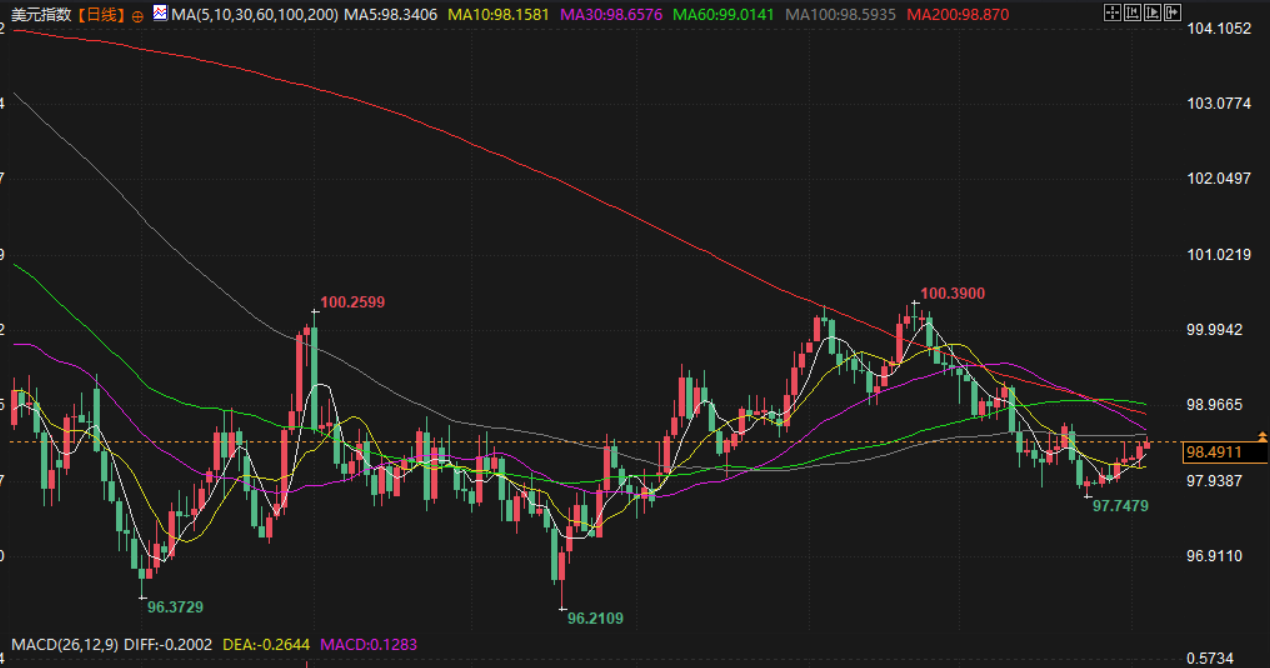
On Friday, the dollar index rose 0.24% to 98.48. This rebound occurred against the backdrop of a cumulative decline of more than 9% in the dollar index by 2025. Last year's decline was mainly due to narrowing interest rate differentials with other economies, as well as ongoing concerns about US fiscal policy, global trade tensions, and the independence of the Federal Reserve.
This week, the market will see a large volume of data releases, including the non-farm payroll report. Traders have largely priced in the expectation of two Federal Reserve rate cuts in 2026, while internal Fed projections indicate only one cut, creating a divergence of opinion. Furthermore, the longest government shutdown in US history has impacted recent data collection and accuracy, adding uncertainty to assessments. Investors will also be closely watching President Trump's nomination of the next Federal Reserve Chairman, whose term expires in May.
Among major currencies, the euro fell 0.25% to $1.1716, despite a projected annual gain of up to 2025, its largest since 2017. The pound fell 0.18% to $1.3445. The yen fell 0.16% to 156.91, remaining near multi-month lows as markets remained wary of potential intervention by the Bank of Japan.
US military action against Venezuela leads to mass flight cancellations and stranded American tourists.
The US military action against Venezuela on January 3rd led to the cancellation of hundreds of flights in the Caribbean. As it was peak tourist season, many tourists, especially American tourists, were unable to return home and were forced to stay. The US Federal Aviation Administration (FAA) issued a notice on January 3rd prohibiting US airlines from flying in certain Caribbean airspace, resulting in the cancellation of hundreds of flights that day, affecting travel to approximately 20 Caribbean islands. Some airlines warned passengers that the flight disruptions could last for several days. Data from a 24-hour flight radar website showed no flights passing over Venezuela on January 3rd. (CCTV)
Venezuela's Supreme Court appoints acting president without initiating a 30-day election process.
Venezuela's Supreme Court ordered on March 3rd the appointment of Vice President and Oil Minister Delcy Rodriguez as acting president. According to the country's constitution, in the event of a presidential "absolute absence," power transfers to the vice president, and a general election must be held within 30 days. Notably, the Supreme Court did not declare President Maduro "absolutely absent" this time. Some media analysts suggest that this legal ruling means that, procedurally, the requirement to hold a general election within 30 days will not be invoked for the time being.
Demonstrations and protests against attacks in Venezuelan cities in more than 100 US cities
Demonstrations were held in more than 100 U.S. cities on March 3 to protest the U.S. attack on Venezuela and oppose the use of force to overthrow a foreign government. These demonstrations, organized by the anti-war group "Act Now to Stop the War and Eliminate Racism," took place in 105 cities including Washington, Los Angeles, Boston, Atlanta, Chicago, Denver, Dallas, and Miami. The organizers issued a statement saying that the war launched by the United States will bring death and destruction to the Venezuelan people. The U.S. war machine consumes vast amounts of taxpayer money, while working families struggle to make ends meet. The American people do not want another war and say "no" to the U.S. war against Venezuela. (Xinhua)
ConocoPhillips responds to speculation about its Venezuela project: It's "too early" to speculate at this stage.
ConocoPhillips, one of the three largest U.S. oil companies, responded to speculation about its potential involvement in Venezuela's expanded oil production projects in the evening, stating that such speculation was "premature." This response followed comments made by U.S. President Trump at a press conference on Saturday. Trump stated his plan to encourage major U.S. oil companies to invest billions of dollars in Venezuela to repair the country's infrastructure and generate revenue. A ConocoPhillips spokesperson said the company is "closely monitoring developments in Venezuela and their potential impact on global energy supplies and stability," but emphasized that "it is too early to speculate on any future business activities or investments."
Iran's Supreme Leader stated regarding the US military action against Venezuela: "We will never yield to our enemies."
Iran's Supreme Leader Ayatollah Khamenei addressed the nation on March 3 regarding the US military action against Venezuela, stating that Iran "will never yield to the enemy." Khamenei said, "It is crucial that when people realize that the enemy is arrogantly attempting to impose its will on the country, its officials, its government, and even its entire nation, they must stand firmly against the enemy and resist with their heads held high. We will never yield to the enemy." (Xinhua)
The Trump administration's military action against Venezuela has sparked a backlash from Democrats, with several lawmakers proposing to initiate recall proceedings.
The Trump administration's unilateral military attack on Venezuela and the subsequent arrest of President Maduro have sparked a strong political reaction in the United States, angering many Democrats. Some members of Congress have publicly called for the initiation of impeachment proceedings against Trump. Illinois Democratic Representative Delia Ramirez issued a statement declaring that "Trump must be impeached," and simultaneously called on Congress to pass legislation to limit the president's war powers. California Democratic Representative Jared Huffman criticized Trump's plan as "simply insane" and "disastrous," telling the media that the current situation falls under the purview of the 25th Amendment to the U.S. Constitution, which provides for the removal of a president from office if he is unable to perform his duties. Although Democrats have not formally initiated impeachment proceedings against Trump in 2025, according to U.S. media reports, the internal party debate on impeachment is intensifying as more members of Congress call for a tougher approach. The Trump administration's military action against Venezuela appears to have further fueled this political sentiment demanding accountability from the president.
Reports indicate that political turmoil has paralyzed Venezuela's oil exports.
Sources indicate that Venezuela's oil exports have been effectively paralyzed due to the current political turmoil. Monitoring data shows that several crude oil and fuel tankers scheduled to depart for the United States and Asia have failed to set sail as planned, and other vessels waiting to load have left port empty. Data from the ship tracking website TankerTrackers confirmed on Saturday that no tankers were loading cargo at Venezuela's main oil export port, José. According to informed sources and internal documents from Venezuela's state-owned oil company, PDVSA, the export suspension is widespread, even affecting tankers chartered by its main partner, Chevron. Industry analysts suggest that the complete halt in exports may force the country to accelerate production cuts at its oil fields. In recent weeks, its onshore storage tanks and vessels used for floating storage have rapidly approached full capacity, and the continued export disruptions will put enormous pressure on the oil production system.
South Korea's semiconductor exports are projected to reach $173.4 billion by 2025.
According to data from South Korea's Ministry of Trade, Industry and Energy, South Korea's exports are projected to grow by 3.8% to reach $709.7 billion by 2025. Semiconductor exports are expected to reach a record $173.4 billion, a 22.2% increase year-on-year; automobile exports will also grow by 1.7% to $72 billion.
Russia announces it will develop a prototype nuclear-powered space engine by 2030.
Russian State Atomic Energy Corporation (Rosatoburo) CEO Likhachev said on March 3 that the company plans to develop a prototype megawatt-class nuclear-powered space engine by 2030. Likhachev told Russian media that Rosatoburo and Roscosmos are cooperating on lunar orbital station and megawatt-class rocket engine projects, representing nuclear energy's contribution to near-Earth and deep space exploration. The prototype engine should be successfully developed by 2030. Likhachev said that in recent years, Rosatoburo has made progress in research and development in more than 100 new high-tech fields, developing many new projects in nuclear medicine and nuclear fusion. By 2025, the company's total overseas orders will increase to $200 billion, with revenue from overseas projects reaching $16.5 billion. He also said that two battery plants built by Rosatoburo in the Kaliningrad Oblast and Novomoskov region will begin commercial operation in 2026, capable of supplying rechargeable batteries for 100,000 vehicles annually. (Xinhua)
142 million domestic trips were made during the 2026 New Year's Day holiday.
During the 2026 New Year's Day holiday, the national cultural and tourism market remained generally stable and orderly, with continued release of consumer vitality. According to data from the Ministry of Culture and Tourism, during the three-day holiday, 142 million domestic trips were made nationwide, with total domestic tourism spending reaching 84.789 billion yuan.
During the New Year's Day holiday, 6.615 million inbound and outbound trips were made, a 28.6% increase compared to the same period last year.
According to the National Immigration Administration, during the New Year's Day holiday this year, border inspection authorities nationwide handled a total of 6.615 million inbound and outbound passengers, averaging 2.205 million passengers per day, a 28.6% increase compared to the same period last year. The peak day for inbound and outbound passenger traffic occurred on January 1st, reaching 2.265 million passengers. Among them, 3.365 million were mainland residents, a 39.1% increase compared to the same period last year; 2.422 million were residents of Hong Kong, Macao, and Taiwan, a 15.9% increase; and 828,000 were foreigners, a 29.8% increase. Of the foreigners entering the country, 292,000 were eligible for visa-free entry, a 35.8% increase.
Key Focus Today
stock market
U.S. stocks traded mixed on the first trading day of 2026. The Dow Jones Industrial Average rose 0.66%, the S&P 500 edged up 0.19%, while the Nasdaq was virtually flat, failing to deliver the "Santa Claus rally" the market had been anticipating.
Market trends diverged. Shares of chipmakers Nvidia and Intel, as well as industrial giants Boeing and Caterpillar, rose, collectively boosting the Dow Jones and S&P 500 indices. The Trump administration's decision to postpone some furniture tariffs also lifted related retail stocks. However, shares of technology and consumer giants such as Apple, Microsoft, and Amazon fell, dragging down the Nasdaq index. Tesla's stock closed down 2.6% after reporting its second consecutive year of declining sales.
Market analysis indicates that investors are adopting a short-term "buy low, sell high" trading strategy and are beginning to more cautiously assess the valuation levels of popular sectors such as artificial intelligence. Looking ahead, the Federal Reserve's monetary policy path, particularly the expectation that the next chairman may be more dovish and push for interest rate cuts, will be a core factor influencing the market's direction throughout the year. The labor market data to be released this week will be a key indicator for observing policy direction.
Gold Market
On the first trading day of 2026, prices of major precious metals such as gold, silver, and platinum generally rose on Friday, driven by both geopolitical tensions and expectations of a Federal Reserve interest rate cut.
Spot gold prices rose to $4,402.06 at one point. Bart Melek, global head of commodities strategy at TD Securities, analyzed, "The market continues to discuss the prospect of a March rate cut and the possibility of another rate cut later this year… This, combined with related rhetoric about potential tariffs and ongoing risks to US debt, has driven up gold, silver, platinum, and palladium." The market widely expects the Federal Reserve to implement at least two rate cuts of 25 basis points each this year, making non-interest-bearing gold more attractive to investors.
Meanwhile, as a traditional safe-haven asset, gold has also benefited from geopolitical risks such as the turmoil in Iran, the situation in Venezuela, the unresolved Russia-Ukraine peace agreement, and the Gaza Strip. Furthermore, the physical gold markets in India and China have seen their first premium in nearly two months, indicating a recovery in physical demand.
Other precious metals also performed strongly. Spot silver rose 0.7% on Friday to $71.77 per ounce; spot platinum jumped 3.5% to $2,125.80 per ounce. Both metals outperformed gold in 2025, with silver rising over 147% and platinum rising 127% for the year. Spot palladium rose nearly 2% to $1,636.43 per ounce, with a 76% increase for the year, marking its biggest annual gain in 15 years.
Despite a strong start to the new year, all precious metals likely recorded weekly declines last week after a significant surge at the end of last year, indicating a potential short-term consolidation after reaching new highs. However, geopolitical tensions in the Middle East this week could drive precious metals higher.
oil market
Oil prices edged lower on Friday, the first trading day of 2026, extending weakness following last year's biggest annual drop since 2020. Investors are weighing persistent concerns about oversupply against complex geopolitical risks.
Geopolitical tensions remain high. Despite US-sponsored peace talks, Russia and Ukraine continued to accuse each other of attacks on civilians on New Year's Day, with Ukraine continuing its attacks on Russian energy facilities. Furthermore, the Trump administration's unilateral military strike on Venezuela on Saturday, which resulted in the capture of President Maduro, exacerbated geopolitical tensions, following last week's increased pressure on Iran.
Meanwhile, the market is focused on the OPEC+ meeting. Sources on Sunday indicated that the eight OPEC+ members reached an agreement in principle to maintain the suspension of crude oil production increases in the first quarter of 2026. Analysts believe that 2026 will be a crucial year for assessing OPEC+'s ability to balance market supply, and the expectation that major Asian countries will replenish their strategic crude oil inventories in the first half of the year may provide some support for oil prices.
Foreign exchange market
The US dollar strengthened on the first trading day of 2026, reversing last year's weakness that resulted in its biggest annual drop in eight years. Investors are focusing on a series of key economic data releases coming soon, hoping for clues about the Federal Reserve's future policy direction.
On Friday, the dollar index rose 0.24% to 98.48. This rebound occurred against the backdrop of a cumulative decline of more than 9% in the dollar index by 2025. Last year's decline was mainly due to narrowing interest rate differentials with other economies, as well as ongoing concerns about US fiscal policy, global trade tensions, and the independence of the Federal Reserve.
This week, the market will see a large volume of data releases, including the non-farm payroll report. Traders have largely priced in the expectation of two Federal Reserve rate cuts in 2026, while internal Fed projections indicate only one cut, creating a divergence of opinion. Furthermore, the longest government shutdown in US history has impacted recent data collection and accuracy, adding uncertainty to assessments. Investors will also be closely watching President Trump's nomination of the next Federal Reserve Chairman, whose term expires in May.
Among major currencies, the euro fell 0.25% to $1.1716, despite a projected annual gain of up to 2025, its largest since 2017. The pound fell 0.18% to $1.3445. The yen fell 0.16% to 156.91, remaining near multi-month lows as markets remained wary of potential intervention by the Bank of Japan.
International News
US military action against Venezuela leads to mass flight cancellations and stranded American tourists.
The US military action against Venezuela on January 3rd led to the cancellation of hundreds of flights in the Caribbean. As it was peak tourist season, many tourists, especially American tourists, were unable to return home and were forced to stay. The US Federal Aviation Administration (FAA) issued a notice on January 3rd prohibiting US airlines from flying in certain Caribbean airspace, resulting in the cancellation of hundreds of flights that day, affecting travel to approximately 20 Caribbean islands. Some airlines warned passengers that the flight disruptions could last for several days. Data from a 24-hour flight radar website showed no flights passing over Venezuela on January 3rd. (CCTV)
Venezuela's Supreme Court appoints acting president without initiating a 30-day election process.
Venezuela's Supreme Court ordered on March 3rd the appointment of Vice President and Oil Minister Delcy Rodriguez as acting president. According to the country's constitution, in the event of a presidential "absolute absence," power transfers to the vice president, and a general election must be held within 30 days. Notably, the Supreme Court did not declare President Maduro "absolutely absent" this time. Some media analysts suggest that this legal ruling means that, procedurally, the requirement to hold a general election within 30 days will not be invoked for the time being.
Demonstrations and protests against attacks in Venezuelan cities in more than 100 US cities
Demonstrations were held in more than 100 U.S. cities on March 3 to protest the U.S. attack on Venezuela and oppose the use of force to overthrow a foreign government. These demonstrations, organized by the anti-war group "Act Now to Stop the War and Eliminate Racism," took place in 105 cities including Washington, Los Angeles, Boston, Atlanta, Chicago, Denver, Dallas, and Miami. The organizers issued a statement saying that the war launched by the United States will bring death and destruction to the Venezuelan people. The U.S. war machine consumes vast amounts of taxpayer money, while working families struggle to make ends meet. The American people do not want another war and say "no" to the U.S. war against Venezuela. (Xinhua)
ConocoPhillips responds to speculation about its Venezuela project: It's "too early" to speculate at this stage.
ConocoPhillips, one of the three largest U.S. oil companies, responded to speculation about its potential involvement in Venezuela's expanded oil production projects in the evening, stating that such speculation was "premature." This response followed comments made by U.S. President Trump at a press conference on Saturday. Trump stated his plan to encourage major U.S. oil companies to invest billions of dollars in Venezuela to repair the country's infrastructure and generate revenue. A ConocoPhillips spokesperson said the company is "closely monitoring developments in Venezuela and their potential impact on global energy supplies and stability," but emphasized that "it is too early to speculate on any future business activities or investments."
Iran's Supreme Leader stated regarding the US military action against Venezuela: "We will never yield to our enemies."
Iran's Supreme Leader Ayatollah Khamenei addressed the nation on March 3 regarding the US military action against Venezuela, stating that Iran "will never yield to the enemy." Khamenei said, "It is crucial that when people realize that the enemy is arrogantly attempting to impose its will on the country, its officials, its government, and even its entire nation, they must stand firmly against the enemy and resist with their heads held high. We will never yield to the enemy." (Xinhua)
The Trump administration's military action against Venezuela has sparked a backlash from Democrats, with several lawmakers proposing to initiate recall proceedings.
The Trump administration's unilateral military attack on Venezuela and the subsequent arrest of President Maduro have sparked a strong political reaction in the United States, angering many Democrats. Some members of Congress have publicly called for the initiation of impeachment proceedings against Trump. Illinois Democratic Representative Delia Ramirez issued a statement declaring that "Trump must be impeached," and simultaneously called on Congress to pass legislation to limit the president's war powers. California Democratic Representative Jared Huffman criticized Trump's plan as "simply insane" and "disastrous," telling the media that the current situation falls under the purview of the 25th Amendment to the U.S. Constitution, which provides for the removal of a president from office if he is unable to perform his duties. Although Democrats have not formally initiated impeachment proceedings against Trump in 2025, according to U.S. media reports, the internal party debate on impeachment is intensifying as more members of Congress call for a tougher approach. The Trump administration's military action against Venezuela appears to have further fueled this political sentiment demanding accountability from the president.
Reports indicate that political turmoil has paralyzed Venezuela's oil exports.
Sources indicate that Venezuela's oil exports have been effectively paralyzed due to the current political turmoil. Monitoring data shows that several crude oil and fuel tankers scheduled to depart for the United States and Asia have failed to set sail as planned, and other vessels waiting to load have left port empty. Data from the ship tracking website TankerTrackers confirmed on Saturday that no tankers were loading cargo at Venezuela's main oil export port, José. According to informed sources and internal documents from Venezuela's state-owned oil company, PDVSA, the export suspension is widespread, even affecting tankers chartered by its main partner, Chevron. Industry analysts suggest that the complete halt in exports may force the country to accelerate production cuts at its oil fields. In recent weeks, its onshore storage tanks and vessels used for floating storage have rapidly approached full capacity, and the continued export disruptions will put enormous pressure on the oil production system.
South Korea's semiconductor exports are projected to reach $173.4 billion by 2025.
According to data from South Korea's Ministry of Trade, Industry and Energy, South Korea's exports are projected to grow by 3.8% to reach $709.7 billion by 2025. Semiconductor exports are expected to reach a record $173.4 billion, a 22.2% increase year-on-year; automobile exports will also grow by 1.7% to $72 billion.
Russia announces it will develop a prototype nuclear-powered space engine by 2030.
Russian State Atomic Energy Corporation (Rosatoburo) CEO Likhachev said on March 3 that the company plans to develop a prototype megawatt-class nuclear-powered space engine by 2030. Likhachev told Russian media that Rosatoburo and Roscosmos are cooperating on lunar orbital station and megawatt-class rocket engine projects, representing nuclear energy's contribution to near-Earth and deep space exploration. The prototype engine should be successfully developed by 2030. Likhachev said that in recent years, Rosatoburo has made progress in research and development in more than 100 new high-tech fields, developing many new projects in nuclear medicine and nuclear fusion. By 2025, the company's total overseas orders will increase to $200 billion, with revenue from overseas projects reaching $16.5 billion. He also said that two battery plants built by Rosatoburo in the Kaliningrad Oblast and Novomoskov region will begin commercial operation in 2026, capable of supplying rechargeable batteries for 100,000 vehicles annually. (Xinhua)
Domestic News
142 million domestic trips were made during the 2026 New Year's Day holiday.
During the 2026 New Year's Day holiday, the national cultural and tourism market remained generally stable and orderly, with continued release of consumer vitality. According to data from the Ministry of Culture and Tourism, during the three-day holiday, 142 million domestic trips were made nationwide, with total domestic tourism spending reaching 84.789 billion yuan.
During the New Year's Day holiday, 6.615 million inbound and outbound trips were made, a 28.6% increase compared to the same period last year.
According to the National Immigration Administration, during the New Year's Day holiday this year, border inspection authorities nationwide handled a total of 6.615 million inbound and outbound passengers, averaging 2.205 million passengers per day, a 28.6% increase compared to the same period last year. The peak day for inbound and outbound passenger traffic occurred on January 1st, reaching 2.265 million passengers. Among them, 3.365 million were mainland residents, a 39.1% increase compared to the same period last year; 2.422 million were residents of Hong Kong, Macao, and Taiwan, a 15.9% increase; and 828,000 were foreigners, a 29.8% increase. Of the foreigners entering the country, 292,000 were eligible for visa-free entry, a 35.8% increase.
- Risk Warning and Disclaimer
- The market involves risk, and trading may not be suitable for all investors. This article is for reference only and does not constitute personal investment advice, nor does it take into account certain users’ specific investment objectives, financial situation, or other needs. Any investment decisions made based on this information are at your own risk.