Tariff ruling imminent? Analysts warn: Don't wait, the US trade war will never end.
2026-01-08 10:09:19
In a new analysis, Morgan Stanley points out that the U.S. Supreme Court's impending ruling on President Donald Trump's power to impose tariffs is unlikely to trigger a dramatic shift in U.S. trade policy or the economy.
The bank predicts that the most likely outcome will be in a "grey area," avoiding a complete victory for either side while controlling the economic consequences while maintaining transaction restrictions .
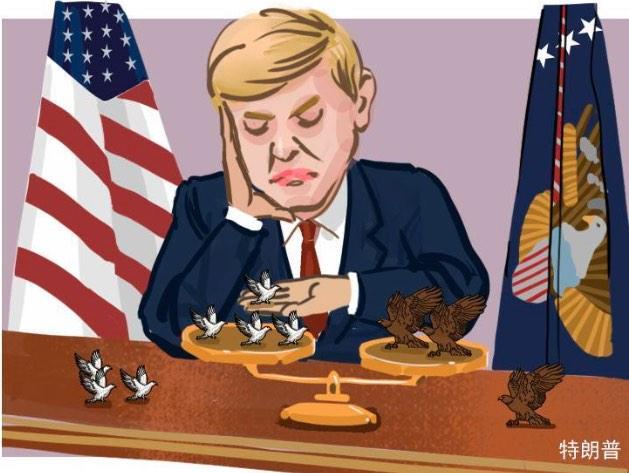
In a recent report, Morgan Stanley analysts stated that while the Supreme Court may either completely overturn or uphold the president's use of the International Emergency Economic Powers Act (IEEPA), a more nuanced ruling is expected. The analysts noted, "We explored the gray area between these two scenarios and updated our expectations for economic and market outcomes."
Morgan Stanley believes this lawsuit will not fundamentally alter its outlook on U.S. trade policy. The core reason is that the president possesses extensive other legal authority to quickly replace or re-implement existing tariff levels.
The bank emphasized that alternative tools such as Sections 232 and 301 are effective safeguards that would allow governments to maintain their trading positions even if courts impose new restrictions on the International Emergency Economic Powers Act framework.
The most likely scenario is that the Supreme Court will narrow the scope of the International Emergency Economic Powers Act (IEEPA) without completely repealing it. According to the report, the court has "broad discretion" to make rulings, such as restricting the application of future tariffs or narrowing the scope of existing tariffs, without ordering their complete elimination.
In these "intermediate" outcomes, governments can still rely on their other legal powers to maintain tariffs. Furthermore, Morgan Stanley warns that the likelihood of companies receiving refunds for already paid tariffs may "narrow," trending towards a "limited/minimum refund" situation.
Morgan Stanley's base case assumption is that current tariff levels will remain unchanged following the court ruling, thus limiting the impact on the economy . The bank expects the real tariff rate to remain at around 16% by the end of 2025. This is projected to contribute a total of about 70 basis points to core PCE inflation, with most of the impact already absorbed by the economy.
Even if the courts force partial tariff reductions, the boost to domestic economic growth appears to be quite limited.
Limited refunds: A scenario in which 40% of the tariff revenue under the International Emergency Economic Powers Act is refunded starting in 2027 would only boost GDP by 8 basis points. This would also bring the deficit to approximately 6.2% of GDP in 2027.
Larger-scale refunds: A faster, larger-scale tax refund program could boost GDP by 17 basis points. However, according to the bank, even then, U.S. trade policy will still be "more restrictive than under the previous administration."
For bond market investors, the key takeaway is that even if the White House loses the ruling, it is not expected to lead to significant changes in the supply of Treasury bonds .
Morgan Stanley strategists wrote that if tariffs are removed, "the impact on Treasury issuance will be limited to short-term notes." With limited tax refunds, they expect "no substantial change in short-term note issuance." Even with a faster, larger-scale tax refund program, the adjustments are likely to be limited to a slight increase in short-term note auctions or temporary cash management note issuance; the bank's expectations for interest-bearing Treasury bond issuance remain unchanged.
The upcoming ruling by the US Supreme Court on President Trump's tariff powers is expected to have a neutral to slightly bearish impact on the US dollar. It may slightly reduce the dollar's trade policy risk premium and slightly increase expectations of fiscal easing.
The US dollar index is more likely to continue to fluctuate within its current range. On Thursday (January 8) during the Asian session, the US dollar index fluctuated narrowly around 98.75.
The market needs to pay attention to subsequent economic data (such as Friday's non-farm payrolls) and guidance from the Federal Reserve.
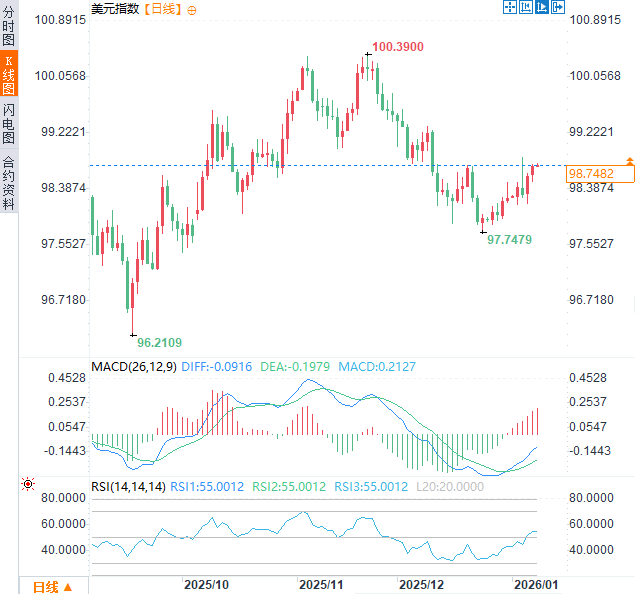
(US Dollar Index Daily Chart, Source: FX678)
At 10:08 Beijing time, the US dollar index is currently at 98.75.
The bank predicts that the most likely outcome will be in a "grey area," avoiding a complete victory for either side while controlling the economic consequences while maintaining transaction restrictions .
In a recent report, Morgan Stanley analysts stated that while the Supreme Court may either completely overturn or uphold the president's use of the International Emergency Economic Powers Act (IEEPA), a more nuanced ruling is expected. The analysts noted, "We explored the gray area between these two scenarios and updated our expectations for economic and market outcomes."
Why US transaction policy is unlikely to change
Morgan Stanley believes this lawsuit will not fundamentally alter its outlook on U.S. trade policy. The core reason is that the president possesses extensive other legal authority to quickly replace or re-implement existing tariff levels.
The bank emphasized that alternative tools such as Sections 232 and 301 are effective safeguards that would allow governments to maintain their trading positions even if courts impose new restrictions on the International Emergency Economic Powers Act framework.
Possible outcome: Limited rulings, rather than complete repeal.
The most likely scenario is that the Supreme Court will narrow the scope of the International Emergency Economic Powers Act (IEEPA) without completely repealing it. According to the report, the court has "broad discretion" to make rulings, such as restricting the application of future tariffs or narrowing the scope of existing tariffs, without ordering their complete elimination.
In these "intermediate" outcomes, governments can still rely on their other legal powers to maintain tariffs. Furthermore, Morgan Stanley warns that the likelihood of companies receiving refunds for already paid tariffs may "narrow," trending towards a "limited/minimum refund" situation.
Assessing the economic impact: Moderate GDP and inflation effects
Morgan Stanley's base case assumption is that current tariff levels will remain unchanged following the court ruling, thus limiting the impact on the economy . The bank expects the real tariff rate to remain at around 16% by the end of 2025. This is projected to contribute a total of about 70 basis points to core PCE inflation, with most of the impact already absorbed by the economy.
Even if the courts force partial tariff reductions, the boost to domestic economic growth appears to be quite limited.
Limited refunds: A scenario in which 40% of the tariff revenue under the International Emergency Economic Powers Act is refunded starting in 2027 would only boost GDP by 8 basis points. This would also bring the deficit to approximately 6.2% of GDP in 2027.
Larger-scale refunds: A faster, larger-scale tax refund program could boost GDP by 17 basis points. However, according to the bank, even then, U.S. trade policy will still be "more restrictive than under the previous administration."
The bond market reacted tepidly to potential tariff adjustments.
For bond market investors, the key takeaway is that even if the White House loses the ruling, it is not expected to lead to significant changes in the supply of Treasury bonds .
Morgan Stanley strategists wrote that if tariffs are removed, "the impact on Treasury issuance will be limited to short-term notes." With limited tax refunds, they expect "no substantial change in short-term note issuance." Even with a faster, larger-scale tax refund program, the adjustments are likely to be limited to a slight increase in short-term note auctions or temporary cash management note issuance; the bank's expectations for interest-bearing Treasury bond issuance remain unchanged.
Neutral impact analysis on the US dollar
The upcoming ruling by the US Supreme Court on President Trump's tariff powers is expected to have a neutral to slightly bearish impact on the US dollar. It may slightly reduce the dollar's trade policy risk premium and slightly increase expectations of fiscal easing.
The US dollar index is more likely to continue to fluctuate within its current range. On Thursday (January 8) during the Asian session, the US dollar index fluctuated narrowly around 98.75.
The market needs to pay attention to subsequent economic data (such as Friday's non-farm payrolls) and guidance from the Federal Reserve.
(US Dollar Index Daily Chart, Source: FX678)
At 10:08 Beijing time, the US dollar index is currently at 98.75.
- Risk Warning and Disclaimer
- The market involves risk, and trading may not be suitable for all investors. This article is for reference only and does not constitute personal investment advice, nor does it take into account certain users’ specific investment objectives, financial situation, or other needs. Any investment decisions made based on this information are at your own risk.