Trump hints at willingness to escalate intervention in Venezuela; has gold bulls locked in the next "engine"?
2026-01-05 14:43:45
The US arrest of Venezuelan President Nicolás Maduro has triggered an ongoing political crisis. The US has stated that it may launch a second strike if Maduro's remaining forces do not cooperate, and will expand its operations to Colombia and Mexico, signifying a more assertive military intervention posture in Latin America. This crisis has directly increased geopolitical risk premiums in the short term, attracting safe-haven funds into gold. On Monday (January 5th), spot gold prices fluctuated upwards during the Asian and European sessions, rising approximately 2% on the day, and are currently trading around $4420 per ounce.

US President Donald Trump stated that a second military strike against Venezuela remains a possibility if the remaining members of the Maduro government refuse to cooperate with the United States. Speaking aboard Air Force One, Trump said the operation was not yet complete, implying that Washington's next move depends on the actions of officials who still control the country's institutions. This statement suggests a direct link between the level of cooperation within the current power structure and the possibility of additional military pressure.
Trump also broadened the scope of potential action, stating that Colombia and Mexico could face similar measures if they fail to reduce the flow of illicit drugs into the United States. These remarks point to a broader regional security concept that uses military force as a tool to compel countries to comply with U.S. demands on transnational crime and immigration.
Venezuelan President Nicolás Maduro remains in U.S. custody in New York, awaiting trial on drug charges first brought in 2020. His arrest has sparked deep political uncertainty in Venezuela—senior officials loyal to Maduro remain in power. Vice President Delcy Rodriguez, who also serves as oil minister, has temporarily assumed office with the support of the Supreme Court, while insisting that Maduro remains the legitimate president.
This institutional continuity demonstrates that the removal of a single leader does not automatically dismantle the ruling machine. The continued presence of Maduro's faction of officials proves that the regime's resilience depends on control over the security forces, the judiciary, and the oil sector, rather than solely on individual leadership.
Trump claimed that Rodriguez could face serious consequences if she refused to cooperate with the United States, despite Rodriguez's public denials of any intention to cooperate with Washington. Venezuelan authorities, including Interior Minister Diosdado Cabello, characterized the detention of Maduro and his wife Celia Flores as a kidnapping, further reinforcing the narrative of foreign aggression.
These conflicting statements reveal a breakdown in diplomatic messaging. Washington framed engagement as conditional cooperation, while Caracas presented the same action as a violation of sovereignty, increasing the likelihood of a protracted confrontation rather than a negotiated solution.
The US government stated that Maduro's arrest was a law enforcement action aimed at bringing criminal charges. However, Trump also stated that US oil companies need full access to Venezuela's vast oil reserves and linked the intervention to immigration pressures, accusing Venezuelan authorities of allowing criminals to enter the United States.
The US links its actions to oil control, immigration, and transnational crime, highlighting its complex strategic objectives. Control of oil infrastructure is closely linked to Venezuela's economic recovery prospects, while the influx of migrants influences domestic political priorities in the US. The overlap of these factors suggests a mutually reinforcing relationship, rather than a mere coincidence.
Venezuela's defense minister reported casualties among soldiers, civilians, and Maduro's security personnel in the raid, while Cuba announced the deaths of 32 of its citizens. If these claims are true, they would be a serious violation of international norms regarding proportionality and legality of action. The UN Security Council has convened an emergency meeting to discuss countermeasures.
Life in Venezuela continues amid an atmosphere of tension. The streets of Caracas are relatively quiet, security is limited, and daily activities proceed cautiously. Some residents are stockpiling necessities, reflecting panic behavior common during periods of political turmoil. This reaction demonstrates how uncertainty surrounding leadership translates into everyday economic anxieties.
Trump dismissed the possibility of opposition leader Maria Collina Machado taking power, citing insufficient approval ratings, despite opposition claims that Edmundo González won the contested 2024 election. This stance suggests that Washington's current priority is security and control, rather than a rapid democratic transition.
Senate Majority Leader Chuck Schumer warned that the administration's lack of clarity regarding the duration or scale of U.S. involvement has raised concerns about an endless conflict. Lawmakers are considering measures to limit further military action, although Republican control of Congress complicates oversight efforts.
Venezuela's economic collapse, which led to the exile of about one-fifth of its population, laid the groundwork for the current situation. The decline of this once-richest country in Latin America under Chavez and his successor Maduro highlights how political centralization and oil dependence are intertwined with long-term economic vulnerability.
Trump's remarks suggest that future developments will depend on compliance, oil industry restructuring, and regional security cooperation. Whether these pressures will bring stability or deepen resistance remains to be seen, but the current trajectory indicates that the Venezuelan crisis is evolving into a broader test of U.S. influence in Latin America, rather than a limited intervention.
The Venezuelan crisis triggered by the US arrest of Maduro has become a powerful multi-pronged engine driving up gold prices: in the short term, it directly stimulates geopolitical panic premiums and regional safe-haven buying; in the medium term, it weakens global trust in the dollar system, strengthening the demand for gold as an asset substitute; and in the long term, it suppresses real interest rates by exacerbating US fiscal pressure and monetary policy dilemmas, creating a fertile macroeconomic environment for gold . If the crisis continues, the upward momentum in gold prices will be sustainable.
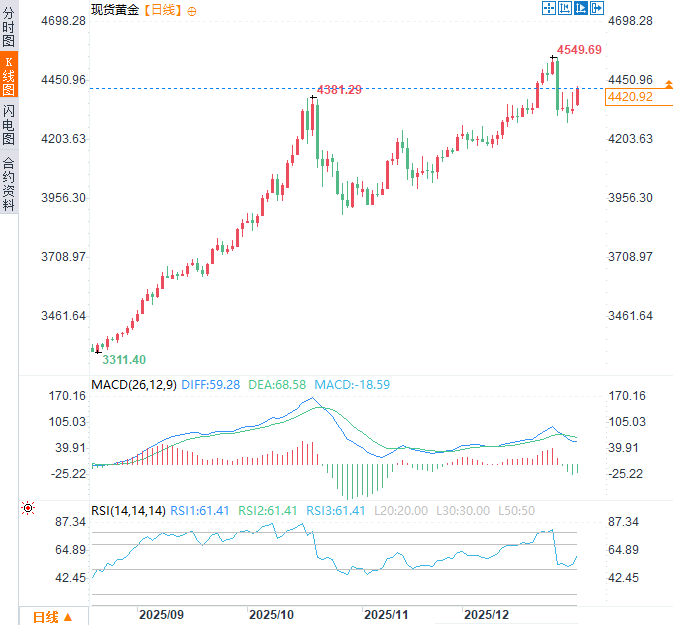
(Spot gold daily chart, source: FX678)
At 14:43 Beijing time, spot gold was trading at $4423.33 per ounce.
escalation signals from Washington
US President Donald Trump stated that a second military strike against Venezuela remains a possibility if the remaining members of the Maduro government refuse to cooperate with the United States. Speaking aboard Air Force One, Trump said the operation was not yet complete, implying that Washington's next move depends on the actions of officials who still control the country's institutions. This statement suggests a direct link between the level of cooperation within the current power structure and the possibility of additional military pressure.
Trump also broadened the scope of potential action, stating that Colombia and Mexico could face similar measures if they fail to reduce the flow of illicit drugs into the United States. These remarks point to a broader regional security concept that uses military force as a tool to compel countries to comply with U.S. demands on transnational crime and immigration.
Maduro's arrest and power vacuum
Venezuelan President Nicolás Maduro remains in U.S. custody in New York, awaiting trial on drug charges first brought in 2020. His arrest has sparked deep political uncertainty in Venezuela—senior officials loyal to Maduro remain in power. Vice President Delcy Rodriguez, who also serves as oil minister, has temporarily assumed office with the support of the Supreme Court, while insisting that Maduro remains the legitimate president.
This institutional continuity demonstrates that the removal of a single leader does not automatically dismantle the ruling machine. The continued presence of Maduro's faction of officials proves that the regime's resilience depends on control over the security forces, the judiciary, and the oil sector, rather than solely on individual leadership.
Opposing narratives about cooperation
Trump claimed that Rodriguez could face serious consequences if she refused to cooperate with the United States, despite Rodriguez's public denials of any intention to cooperate with Washington. Venezuelan authorities, including Interior Minister Diosdado Cabello, characterized the detention of Maduro and his wife Celia Flores as a kidnapping, further reinforcing the narrative of foreign aggression.
These conflicting statements reveal a breakdown in diplomatic messaging. Washington framed engagement as conditional cooperation, while Caracas presented the same action as a violation of sovereignty, increasing the likelihood of a protracted confrontation rather than a negotiated solution.
Oil, immigration and strategic motivations
The US government stated that Maduro's arrest was a law enforcement action aimed at bringing criminal charges. However, Trump also stated that US oil companies need full access to Venezuela's vast oil reserves and linked the intervention to immigration pressures, accusing Venezuelan authorities of allowing criminals to enter the United States.
The US links its actions to oil control, immigration, and transnational crime, highlighting its complex strategic objectives. Control of oil infrastructure is closely linked to Venezuela's economic recovery prospects, while the influx of migrants influences domestic political priorities in the US. The overlap of these factors suggests a mutually reinforcing relationship, rather than a mere coincidence.
Casualties and Regional Impact
Venezuela's defense minister reported casualties among soldiers, civilians, and Maduro's security personnel in the raid, while Cuba announced the deaths of 32 of its citizens. If these claims are true, they would be a serious violation of international norms regarding proportionality and legality of action. The UN Security Council has convened an emergency meeting to discuss countermeasures.
Life in Venezuela continues amid an atmosphere of tension. The streets of Caracas are relatively quiet, security is limited, and daily activities proceed cautiously. Some residents are stockpiling necessities, reflecting panic behavior common during periods of political turmoil. This reaction demonstrates how uncertainty surrounding leadership translates into everyday economic anxieties.
Political Prospects and the Limitations of Democracy
Trump dismissed the possibility of opposition leader Maria Collina Machado taking power, citing insufficient approval ratings, despite opposition claims that Edmundo González won the contested 2024 election. This stance suggests that Washington's current priority is security and control, rather than a rapid democratic transition.
Senate Majority Leader Chuck Schumer warned that the administration's lack of clarity regarding the duration or scale of U.S. involvement has raised concerns about an endless conflict. Lawmakers are considering measures to limit further military action, although Republican control of Congress complicates oversight efforts.
A region that may be entering a long period of uncertainty
Venezuela's economic collapse, which led to the exile of about one-fifth of its population, laid the groundwork for the current situation. The decline of this once-richest country in Latin America under Chavez and his successor Maduro highlights how political centralization and oil dependence are intertwined with long-term economic vulnerability.
Trump's remarks suggest that future developments will depend on compliance, oil industry restructuring, and regional security cooperation. Whether these pressures will bring stability or deepen resistance remains to be seen, but the current trajectory indicates that the Venezuelan crisis is evolving into a broader test of U.S. influence in Latin America, rather than a limited intervention.
Triggers for Gold Rally
The Venezuelan crisis triggered by the US arrest of Maduro has become a powerful multi-pronged engine driving up gold prices: in the short term, it directly stimulates geopolitical panic premiums and regional safe-haven buying; in the medium term, it weakens global trust in the dollar system, strengthening the demand for gold as an asset substitute; and in the long term, it suppresses real interest rates by exacerbating US fiscal pressure and monetary policy dilemmas, creating a fertile macroeconomic environment for gold . If the crisis continues, the upward momentum in gold prices will be sustainable.
(Spot gold daily chart, source: FX678)
At 14:43 Beijing time, spot gold was trading at $4423.33 per ounce.
- Risk Warning and Disclaimer
- The market involves risk, and trading may not be suitable for all investors. This article is for reference only and does not constitute personal investment advice, nor does it take into account certain users’ specific investment objectives, financial situation, or other needs. Any investment decisions made based on this information are at your own risk.