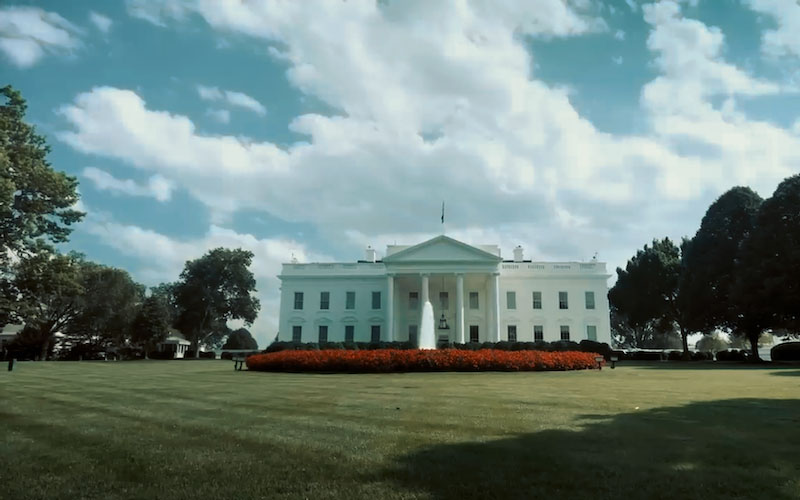
A Review and Assessment of Trump's First Year of Economic Policies (2025)
2026-01-09 15:58:56
A year ago, he entered the White House with the core principle of "America First," promising a series of commitments, including reducing the cost of living, expanding employment opportunities, strictly controlling illegal immigration at the border, and promoting large-scale corporate and individual tax cuts.
Looking back now, how well have these campaign promises been fulfilled? The following article will examine key economic indicators to provide a comprehensive overview of the complex and mixed state of the current US economy.
What is particularly alarming is that pessimistic expectations for the economic outlook are continuing to fester in the market, and the anxiety of ordinary people is intensifying.
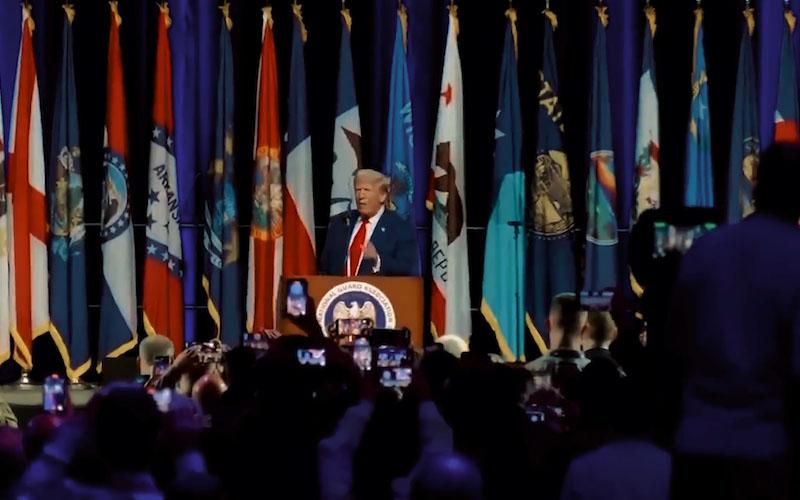
Trump previously stated that Venezuela might not be the last country the United States would intervene in.
He also claimed, "We must take Greenland, and Cuba will have to be taken out sooner or later," and even issued a warning to Colombian President Petro.
According to statistics from some American media, Trump has already used force in seven countries, including Venezuela and Yemen, in less than a year since taking office. This number is equal to the total number of times Obama served for eight years.
Even more outrageous is that since his second term, the US military has carried out more than 620 airstrikes abroad, surpassing Biden's 555 airstrikes during his four-year term.
The hope is that these events will convey a strong image of America to the people in the midterm elections, while simultaneously directing major oil companies to seize resources from other countries to expand the national treasury.
The US economy is projected to grow at an annualized rate of 4.3% in the third quarter of 2025, which appears to be a two-year high. However, a closer examination reveals that this impressive performance is attributable to increased consumption by the wealthy and a sharp decline in government spending and imports.
Before Trump took office, the average U.S. tariff rate was only 2.4%, but it has now soared to 16.8%, the highest since 1935.
While the increase in tariff barriers will generate approximately $200 billion in additional federal revenue by 2025, becoming a new and important source of government funds to offset the surge in federal debt caused by tax cuts under the Greatness Act, it will also severely impact trade relations between the United States and its global allies and competitors.
It needs to be made clear that this fiscal "dividend" is actually paid for by consumers: according to calculations, the price level pushed up by tariffs causes each American family to bear an additional cost of about $1,600 per year. The contradiction between the increase in government revenue and the pressure on residents' cost of living is vividly reflected here.
The inflationary pressures induced by tariffs have not been as severe as previously warned by academics.
However, the reference value of inflation data is questionable—the longest government shutdown in U.S. history disrupted the regular data collection process, making it difficult to accurately assess the full picture of inflation, and the lagged effects of tariffs on people's livelihoods may not have been fully realized yet.
After the sharp fluctuations in the spring, US stocks reached a record high at the end of 2025, with the S&P 500 index rising by more than 17% for the year. However, this bull market did not benefit the general public. The top 10% of high-net-worth individuals in the United States hold 93% of the nation's stock holdings, and the vast majority of people did not benefit from it. This also explains why the wealthy in the United States contributed 50% of the consumption growth and boosted GDP growth, because the wealth effect of stocks is obvious.
Artificial Intelligence Investment: Engine of Economic Growth or Potential Risk Trigger?
According to multiple authoritative estimates, investment in the field of artificial intelligence—encompassing the construction of large data centers and the research and development of cutting-edge technologies—has become a core engine driving US economic growth, contributing as much as 50%-90% to GDP growth in 2025.
Meanwhile, the increasing use of artificial intelligence has also highlighted the industrial applications of precious metals, leading to a surge in prices driven by demand.
However, once the investment bubble in the field of artificial intelligence bursts, the chain reaction it will trigger will be unimaginable. It is foreseeable that during the remainder of Trump's term, whether investment in artificial intelligence will help the economy to move steadily forward or create systemic risks will become the number one focus of the financial market.
Meanwhile, some articles argue that artificial intelligence is squeezing the labor market, causing economic data to become disconnected from the current state of the labor market.
The U.S. Immigration and Customs Enforcement (ICE) has intensified street patrols and adopted increasingly stringent enforcement measures, even leading to controversial incidents of violent detention of U.S. citizens and green card holders.
Under intense policy pressure, the number of illegal border crossings intercepted has dropped to a multi-decade low. As of November, the average monthly number of interceptions was 15,400, a significant decrease from 137,200 in 2024.
However, on the other hand, the White House has significantly tightened legal immigration channels, which has further exacerbated the existing labor shortage in the United States, especially for high-skilled positions in the medical, technological, and scientific research fields, where the talent gap has become increasingly prominent.
Furthermore, the U.S. government has imposed a hefty fee of $100,000 on newly applied H-1B visas, a visa that is precisely the key channel for filling the talent gap in rural areas of the United States.
The U.S. unemployment rate climbed to 4.6% in November, a new high in more than four years. The unemployment rate among young people and African Americans rose far more sharply than that of other groups. This structural imbalance has become an early warning signal of a weak job market.
The job creation growth is also not optimistic. In the 11 months before Trump took office, the United States added an average of only 55,000 jobs per month, a sharp decline compared to the average of 192,000 jobs per month at the end of the Biden administration. The number of jobs in the manufacturing sector, which is the core of the US employment strategy, has also shrunk.
Although inflation did not surge significantly during Trump's presidency, the "affordability gap" problem that plagued the Biden administration continues to erode the sense of well-being of ordinary people. From daily consumer goods and fresh groceries to utility costs such as water, electricity, and gas, and housing costs, all are at high levels compared to 2024, and the pressure on people's livelihoods is self-evident.
The United States has also seen the emergence of a "cutoff line" narrative, which suggests that there is a gap between the homeless and the middle class, with the proportion of people in the transitional strata from the middle class to the homeless being very low.
Trump's "Greatness Act" focuses on providing significant benefits to high-income groups. Its implementation will lead to an increase of at least $3 trillion in the federal fiscal deficit over the next decade and push the US debt-to-GDP ratio from less than 100% to nearly 130%, similar to Greece's.
The alarm bells of fiscal risk have already been sounded: the U.S. federal fiscal deficit will reach $1.8 trillion in 2025, and debt interest payments will exceed $1 trillion for the first time, posing a severe challenge to fiscal sustainability.
At the same time, the implementation of the Greatness Act is forcing tens of millions of Americans out of health insurance coverage, and about 10 million people from the poor and disabled population will be squeezed out of Medicaid, at which point they will have to rely on emergency rooms to maintain their basic medical needs.
Since January 1, due to the US government's failure to continue related subsidy policies, health insurance premium subsidies for 24 million Americans have been canceled, and premiums have nearly doubled. Healthcare services have become a "luxury" for this group, and the achievements of the Obama administration in promoting universal healthcare through the Affordable Care Act are being gradually eroded.
High prices for core goods and services have fueled public discontent in the United States to near historical lows, with the consumer confidence index falling to its second-lowest level since records began in 1952, only higher than during the COVID-19 pandemic in June 2022.
The optimistic expectations of businesses have also been severely impacted. From industry giants with market capitalizations of tens of billions to small and medium-sized businesses with mom-and-pop stores, bankruptcies across all industries in the United States have exploded. Affected by high tariff policies, businesses that rely on imports are struggling to operate, and the number of bankruptcies of large enterprises has broken the 15-year record.
Mark Twain famously said, "There are three kinds of lies: lies, outright lies, and statistics." On economic issues, different parties have always held differing opinions. One point that Biden and Harris failed to grasp during their administrations was that while economic statistics depict the overall picture, they may not accurately reflect the real-life experiences of ordinary people.
Trump still insists that the United States has the "best economy in the world" and that "inflation is nonexistent," but public opinion data gives a completely different answer: 74% of the public believe that the state of the US economy is far from optimistic, at best only barely satisfactory; more than half of the public believe that the US government's economic policies have made the situation worse.
Against this backdrop, as Trump enters 2026, his approval rating has plummeted to an all-time low—only 36% of Americans approve of his performance in office. This figure not only marks the lowest record for a president's first year in office in the past fifty years, but is even lower than Biden's 40% approval rating when he left office.
In order to forcefully advance his struggling economic agenda, Trump even went so far as to marginalize the Republican-controlled Congress. In less than a year, he signed a total of 225 executive orders, which not only far exceeded the total number of executive orders signed in his first term, but also nearly three times the number of executive orders signed in the first year of any president in the past forty years. Many of these executive orders have already stepped on the edge of the red lines stipulated by the Constitution.
In contrast, Congress, a legislative body criticized by the public as "ineffective," passed only 61 bills, a stark contrast to the average number of bills passed annually between 1975 and 2005.
The United States' military actions, the Great Beauty Act, tariffs, immigration, and repeal of healthcare have exacerbated the inequality and worsened the US labor market, but in the long run, they may improve the government deficit situation because the extra foreign exchange and energy obtained through plundering have been acquired, while geopolitical risks will lead to a safe-haven dollar repatriation.
Furthermore, immigration policies combined with the crowding-out effect of AI on the job market may force ordinary Americans to begin living a hard life, and data will show a continued sluggish contraction of the job market.
As government-backed AI continues to expand capital expenditures to maintain the positive performance of the US stock market, coupled with the Great Beauty Act increasing the wealth of the rich and US imports remaining low, the US GDP growth rate is expected to continue to maintain high growth through a combination of wealthy consumer spending, government spending, and reduced imports.
In conclusion, under geopolitical disturbances, the US dollar has the potential to continue to strengthen. However, if the non-farm payroll data and unemployment rate released tonight fall short of expectations, it will increase expectations of interest rate cuts and weaken the dollar. The correlation between the performance of US stocks and GDP growth rate will become higher.
Precious metals, on the other hand, focus on the combined performance of the US dollar index, geopolitics, and the US stock market, moving negatively towards the US dollar index and in the same direction as geopolitics and the US stock market.
Looking back now, how well have these campaign promises been fulfilled? The following article will examine key economic indicators to provide a comprehensive overview of the complex and mixed state of the current US economy.
What is particularly alarming is that pessimistic expectations for the economic outlook are continuing to fester in the market, and the anxiety of ordinary people is intensifying.
The United States is diverting public attention and exploiting geopolitical risks for its own benefit.
Trump previously stated that Venezuela might not be the last country the United States would intervene in.
He also claimed, "We must take Greenland, and Cuba will have to be taken out sooner or later," and even issued a warning to Colombian President Petro.
According to statistics from some American media, Trump has already used force in seven countries, including Venezuela and Yemen, in less than a year since taking office. This number is equal to the total number of times Obama served for eight years.
Even more outrageous is that since his second term, the US military has carried out more than 620 airstrikes abroad, surpassing Biden's 555 airstrikes during his four-year term.
The hope is that these events will convey a strong image of America to the people in the midterm elections, while simultaneously directing major oil companies to seize resources from other countries to expand the national treasury.
The apparent benefits and hidden dangers of the GDP data that the White House boasts to everyone
The US economy is projected to grow at an annualized rate of 4.3% in the third quarter of 2025, which appears to be a two-year high. However, a closer examination reveals that this impressive performance is attributable to increased consumption by the wealthy and a sharp decline in government spending and imports.
Before Trump took office, the average U.S. tariff rate was only 2.4%, but it has now soared to 16.8%, the highest since 1935.
While the increase in tariff barriers will generate approximately $200 billion in additional federal revenue by 2025, becoming a new and important source of government funds to offset the surge in federal debt caused by tax cuts under the Greatness Act, it will also severely impact trade relations between the United States and its global allies and competitors.
It needs to be made clear that this fiscal "dividend" is actually paid for by consumers: according to calculations, the price level pushed up by tariffs causes each American family to bear an additional cost of about $1,600 per year. The contradiction between the increase in government revenue and the pressure on residents' cost of living is vividly reflected here.
Unresolved challenges: Distorted inflation data and concerns about a stock market bubble
The inflationary pressures induced by tariffs have not been as severe as previously warned by academics.
However, the reference value of inflation data is questionable—the longest government shutdown in U.S. history disrupted the regular data collection process, making it difficult to accurately assess the full picture of inflation, and the lagged effects of tariffs on people's livelihoods may not have been fully realized yet.
After the sharp fluctuations in the spring, US stocks reached a record high at the end of 2025, with the S&P 500 index rising by more than 17% for the year. However, this bull market did not benefit the general public. The top 10% of high-net-worth individuals in the United States hold 93% of the nation's stock holdings, and the vast majority of people did not benefit from it. This also explains why the wealthy in the United States contributed 50% of the consumption growth and boosted GDP growth, because the wealth effect of stocks is obvious.
Artificial Intelligence Investment: Engine of Economic Growth or Potential Risk Trigger?
According to multiple authoritative estimates, investment in the field of artificial intelligence—encompassing the construction of large data centers and the research and development of cutting-edge technologies—has become a core engine driving US economic growth, contributing as much as 50%-90% to GDP growth in 2025.
Meanwhile, the increasing use of artificial intelligence has also highlighted the industrial applications of precious metals, leading to a surge in prices driven by demand.
However, once the investment bubble in the field of artificial intelligence bursts, the chain reaction it will trigger will be unimaginable. It is foreseeable that during the remainder of Trump's term, whether investment in artificial intelligence will help the economy to move steadily forward or create systemic risks will become the number one focus of the financial market.
Meanwhile, some articles argue that artificial intelligence is squeezing the labor market, causing economic data to become disconnected from the current state of the labor market.
A double-edged sword of policy: the labor shortage dilemma under immigration control
The U.S. Immigration and Customs Enforcement (ICE) has intensified street patrols and adopted increasingly stringent enforcement measures, even leading to controversial incidents of violent detention of U.S. citizens and green card holders.
Under intense policy pressure, the number of illegal border crossings intercepted has dropped to a multi-decade low. As of November, the average monthly number of interceptions was 15,400, a significant decrease from 137,200 in 2024.
However, on the other hand, the White House has significantly tightened legal immigration channels, which has further exacerbated the existing labor shortage in the United States, especially for high-skilled positions in the medical, technological, and scientific research fields, where the talent gap has become increasingly prominent.
Furthermore, the U.S. government has imposed a hefty fee of $100,000 on newly applied H-1B visas, a visa that is precisely the key channel for filling the talent gap in rural areas of the United States.
A looming gloom: rising unemployment and increasing burdens on people's livelihoods.
The U.S. unemployment rate climbed to 4.6% in November, a new high in more than four years. The unemployment rate among young people and African Americans rose far more sharply than that of other groups. This structural imbalance has become an early warning signal of a weak job market.
The job creation growth is also not optimistic. In the 11 months before Trump took office, the United States added an average of only 55,000 jobs per month, a sharp decline compared to the average of 192,000 jobs per month at the end of the Biden administration. The number of jobs in the manufacturing sector, which is the core of the US employment strategy, has also shrunk.
Although inflation did not surge significantly during Trump's presidency, the "affordability gap" problem that plagued the Biden administration continues to erode the sense of well-being of ordinary people. From daily consumer goods and fresh groceries to utility costs such as water, electricity, and gas, and housing costs, all are at high levels compared to 2024, and the pressure on people's livelihoods is self-evident.
The United States has also seen the emergence of a "cutoff line" narrative, which suggests that there is a gap between the homeless and the middle class, with the proportion of people in the transitional strata from the middle class to the homeless being very low.
Fiscal alarm bells are ringing: high deficits and pressure on the healthcare system.
Trump's "Greatness Act" focuses on providing significant benefits to high-income groups. Its implementation will lead to an increase of at least $3 trillion in the federal fiscal deficit over the next decade and push the US debt-to-GDP ratio from less than 100% to nearly 130%, similar to Greece's.
The alarm bells of fiscal risk have already been sounded: the U.S. federal fiscal deficit will reach $1.8 trillion in 2025, and debt interest payments will exceed $1 trillion for the first time, posing a severe challenge to fiscal sustainability.
At the same time, the implementation of the Greatness Act is forcing tens of millions of Americans out of health insurance coverage, and about 10 million people from the poor and disabled population will be squeezed out of Medicaid, at which point they will have to rely on emergency rooms to maintain their basic medical needs.
Since January 1, due to the US government's failure to continue related subsidy policies, health insurance premium subsidies for 24 million Americans have been canceled, and premiums have nearly doubled. Healthcare services have become a "luxury" for this group, and the achievements of the Obama administration in promoting universal healthcare through the Affordable Care Act are being gradually eroded.
Confidence Plunges: Market Sentiment Depressed and Growsing Approval Ratings
High prices for core goods and services have fueled public discontent in the United States to near historical lows, with the consumer confidence index falling to its second-lowest level since records began in 1952, only higher than during the COVID-19 pandemic in June 2022.
The optimistic expectations of businesses have also been severely impacted. From industry giants with market capitalizations of tens of billions to small and medium-sized businesses with mom-and-pop stores, bankruptcies across all industries in the United States have exploded. Affected by high tariff policies, businesses that rely on imports are struggling to operate, and the number of bankruptcies of large enterprises has broken the 15-year record.
Mark Twain famously said, "There are three kinds of lies: lies, outright lies, and statistics." On economic issues, different parties have always held differing opinions. One point that Biden and Harris failed to grasp during their administrations was that while economic statistics depict the overall picture, they may not accurately reflect the real-life experiences of ordinary people.
Governing by Executive Orders: The Marginalization of Congress and Increased Policy Controversy
Trump still insists that the United States has the "best economy in the world" and that "inflation is nonexistent," but public opinion data gives a completely different answer: 74% of the public believe that the state of the US economy is far from optimistic, at best only barely satisfactory; more than half of the public believe that the US government's economic policies have made the situation worse.
Against this backdrop, as Trump enters 2026, his approval rating has plummeted to an all-time low—only 36% of Americans approve of his performance in office. This figure not only marks the lowest record for a president's first year in office in the past fifty years, but is even lower than Biden's 40% approval rating when he left office.
In order to forcefully advance his struggling economic agenda, Trump even went so far as to marginalize the Republican-controlled Congress. In less than a year, he signed a total of 225 executive orders, which not only far exceeded the total number of executive orders signed in his first term, but also nearly three times the number of executive orders signed in the first year of any president in the past forty years. Many of these executive orders have already stepped on the edge of the red lines stipulated by the Constitution.
In contrast, Congress, a legislative body criticized by the public as "ineffective," passed only 61 bills, a stark contrast to the average number of bills passed annually between 1975 and 2005.
Summarize:
The United States' military actions, the Great Beauty Act, tariffs, immigration, and repeal of healthcare have exacerbated the inequality and worsened the US labor market, but in the long run, they may improve the government deficit situation because the extra foreign exchange and energy obtained through plundering have been acquired, while geopolitical risks will lead to a safe-haven dollar repatriation.
Furthermore, immigration policies combined with the crowding-out effect of AI on the job market may force ordinary Americans to begin living a hard life, and data will show a continued sluggish contraction of the job market.
As government-backed AI continues to expand capital expenditures to maintain the positive performance of the US stock market, coupled with the Great Beauty Act increasing the wealth of the rich and US imports remaining low, the US GDP growth rate is expected to continue to maintain high growth through a combination of wealthy consumer spending, government spending, and reduced imports.
In conclusion, under geopolitical disturbances, the US dollar has the potential to continue to strengthen. However, if the non-farm payroll data and unemployment rate released tonight fall short of expectations, it will increase expectations of interest rate cuts and weaken the dollar. The correlation between the performance of US stocks and GDP growth rate will become higher.
Precious metals, on the other hand, focus on the combined performance of the US dollar index, geopolitics, and the US stock market, moving negatively towards the US dollar index and in the same direction as geopolitics and the US stock market.
- Risk Warning and Disclaimer
- The market involves risk, and trading may not be suitable for all investors. This article is for reference only and does not constitute personal investment advice, nor does it take into account certain users’ specific investment objectives, financial situation, or other needs. Any investment decisions made based on this information are at your own risk.