Iran's internet shutdown and crackdown, coupled with geopolitical risks and fund inflows, are providing dual impetus for US oil prices to potentially challenge the $60 mark next week.
2026-01-10 07:26:38
Oil prices rose nearly 2% on Friday, mainly driven by escalating protests in oil-producing Iran and the escalating war between Russia and Ukraine, fueling concerns about potential supply disruptions.
Brent crude rose 0.44% to settle at $62.98 a barrel, while WTI crude rose 1.77% to settle at $58.78 a barrel. Both major crude futures contracts rose this week, reversing two consecutive days of losses. Meanwhile, protests in Iran, initially stemming from discontent over currency devaluation and high prices, have quickly evolved into questions about the current political system.
In an effort to curb the further escalation of protests, Iranian authorities took drastic measures on January 9th—completely shutting down internet access and all communication with the outside world, effectively cutting off Iran's connection with the outside world. Phone calls went unanswered, flights were canceled, and Iranian online news websites were only updated intermittently. EU High Representative for Foreign Affairs and Security Policy Josep Borrell stated that shutting down the internet while violently suppressing protests exposed a regime that fears its own people.
In response to the escalating unrest, Iranian officials quickly pointed the finger at external forces. The Islamic Republic of Iran Broadcasting (IRNA), citing a statement from the Supreme National Security Council, claimed that recent remarks by US President Trump indicated that the US and Israel "co-orchestrated these events." Iran's Supreme Leader Ayatollah Khamenei called the protesters "mercenaries of foreigners," accusing them of acting on behalf of Trump. He stated, "If he (Trump) can, let him do his job of governing his own country." Previously, Trump had threatened Iran with a strong US strike should any protesters die in the unrest. According to Iran's Tasnim News Agency, several police officers from Tehran's criminal investigation department were killed by armed protesters overnight.
Analysts point out that the ongoing protests in Iran are a key risk factor for the market. With the country implementing measures such as a nationwide internet shutdown to quell the unrest, the market is concerned that its oil production and exports may be disrupted. However, Iranian Foreign Minister Abbas Araqchi stated that he ruled out the possibility of a second attack on Iran by the United States or Israel.
Meanwhile, Russia's escalation of its attacks in the Ukraine war has also exacerbated geopolitical risks. The Russian Defense Ministry stated on Friday that, in response to Ukraine's December attack on Russian President Vladimir Putin's residence in the Novgorod region, Russia launched a large-scale strike against key targets in Ukraine, including the use of Hazel missile systems. The Russian Defense Ministry noted that the strikes against the targets had been completed.
Rising global inventories and a supply glut are limiting the upside potential for oil prices. Haitong Futures analysts believe that unless the situation in Iran escalates significantly, the sustainability and extent of this rebound are likely to be limited. The market will subsequently focus on the outcome of the meeting between the White House and oil companies regarding Venezuelan oil export arrangements.
The U.S. Energy Secretary stated that Venezuela's daily oil production is expected to reach 3 million barrels within the next 8 to 12 years, and Chevron's project timeline in Venezuela is 18 to 24 months. The U.S. intends to promote the transformation of Venezuela's governance system and has recognized "significant interest" from numerous oil companies (related to investment in Venezuela).
Sparta Commodities analyst Neil Crosby said the start of this year is largely similar to the end of 2025: "A lot of long positions are brewing in the background, but considerable supply/geopolitical risks are emerging in the foreground. If many of these risks materialize at the same time, the talk of oversupply will quickly disappear."
In addition, the 2026 Bloomberg Commodity Index (BCOM) rebalancing adjustment will officially take place from January 9th to 15th. According to Bloomberg's target weights for 2026: Brent crude oil's weight will be increased from 8.03% to 8.36%, which will bring in $3.6 billion in funds; WTI crude oil's weight will be reduced from 6.97% to 6.64%, which is expected to receive $2.4 billion in buying support, which will also provide impetus for rising oil prices.
US nonfarm payrolls for December, released on Friday, showed a weaker-than-expected increase of only 50,000 jobs, while the unemployment rate unexpectedly fell to 4.4%. US employment is projected to increase by 584,000 jobs in 2025 (an average of 49,000 per month), down from 2 million in 2024 (an average of 168,000 per month). This is the weakest increase since 2020, when the COVID-19 pandemic caused a sharp drop of 9.2 million jobs. Looking back to the pre-pandemic period, from 2010 to 2019, the annual increase never fell below 584,000. The decline in the unemployment rate dashed the Federal Reserve's plans for a January rate cut; interest rate swap contracts currently consider the probability of a January rate cut to be zero, but market traders still expect the Fed to cut rates by about 50 basis points in 2026. Next week, oil prices will be focused on the uncertainty of the Middle East geopolitical situation over the weekend. If geopolitical tensions escalate, US oil may test the $60/barrel resistance level next week.
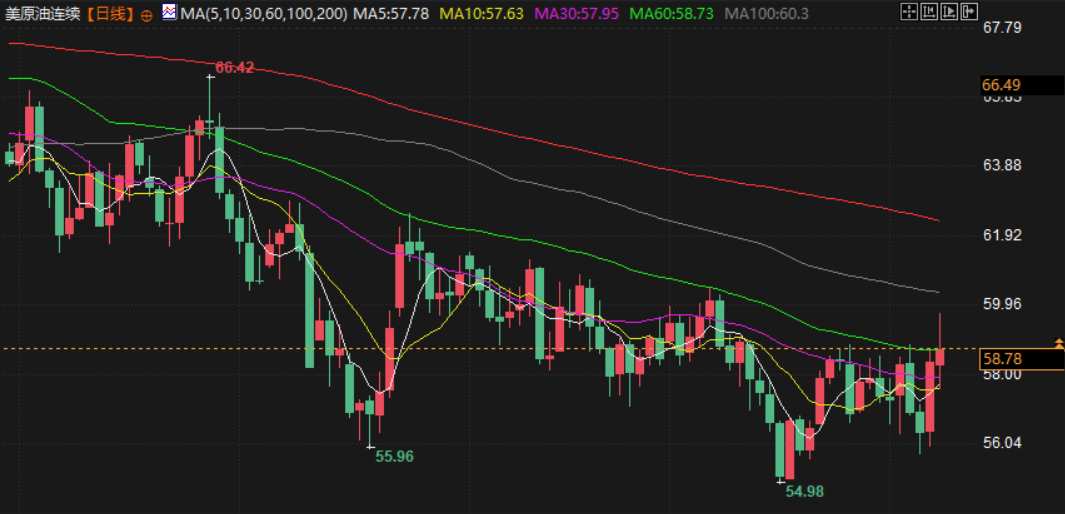
Brent crude rose 0.44% to settle at $62.98 a barrel, while WTI crude rose 1.77% to settle at $58.78 a barrel. Both major crude futures contracts rose this week, reversing two consecutive days of losses. Meanwhile, protests in Iran, initially stemming from discontent over currency devaluation and high prices, have quickly evolved into questions about the current political system.
In an effort to curb the further escalation of protests, Iranian authorities took drastic measures on January 9th—completely shutting down internet access and all communication with the outside world, effectively cutting off Iran's connection with the outside world. Phone calls went unanswered, flights were canceled, and Iranian online news websites were only updated intermittently. EU High Representative for Foreign Affairs and Security Policy Josep Borrell stated that shutting down the internet while violently suppressing protests exposed a regime that fears its own people.
In response to the escalating unrest, Iranian officials quickly pointed the finger at external forces. The Islamic Republic of Iran Broadcasting (IRNA), citing a statement from the Supreme National Security Council, claimed that recent remarks by US President Trump indicated that the US and Israel "co-orchestrated these events." Iran's Supreme Leader Ayatollah Khamenei called the protesters "mercenaries of foreigners," accusing them of acting on behalf of Trump. He stated, "If he (Trump) can, let him do his job of governing his own country." Previously, Trump had threatened Iran with a strong US strike should any protesters die in the unrest. According to Iran's Tasnim News Agency, several police officers from Tehran's criminal investigation department were killed by armed protesters overnight.
Analysts point out that the ongoing protests in Iran are a key risk factor for the market. With the country implementing measures such as a nationwide internet shutdown to quell the unrest, the market is concerned that its oil production and exports may be disrupted. However, Iranian Foreign Minister Abbas Araqchi stated that he ruled out the possibility of a second attack on Iran by the United States or Israel.
Meanwhile, Russia's escalation of its attacks in the Ukraine war has also exacerbated geopolitical risks. The Russian Defense Ministry stated on Friday that, in response to Ukraine's December attack on Russian President Vladimir Putin's residence in the Novgorod region, Russia launched a large-scale strike against key targets in Ukraine, including the use of Hazel missile systems. The Russian Defense Ministry noted that the strikes against the targets had been completed.
Rising global inventories and a supply glut are limiting the upside potential for oil prices. Haitong Futures analysts believe that unless the situation in Iran escalates significantly, the sustainability and extent of this rebound are likely to be limited. The market will subsequently focus on the outcome of the meeting between the White House and oil companies regarding Venezuelan oil export arrangements.
The U.S. Energy Secretary stated that Venezuela's daily oil production is expected to reach 3 million barrels within the next 8 to 12 years, and Chevron's project timeline in Venezuela is 18 to 24 months. The U.S. intends to promote the transformation of Venezuela's governance system and has recognized "significant interest" from numerous oil companies (related to investment in Venezuela).
Sparta Commodities analyst Neil Crosby said the start of this year is largely similar to the end of 2025: "A lot of long positions are brewing in the background, but considerable supply/geopolitical risks are emerging in the foreground. If many of these risks materialize at the same time, the talk of oversupply will quickly disappear."
In addition, the 2026 Bloomberg Commodity Index (BCOM) rebalancing adjustment will officially take place from January 9th to 15th. According to Bloomberg's target weights for 2026: Brent crude oil's weight will be increased from 8.03% to 8.36%, which will bring in $3.6 billion in funds; WTI crude oil's weight will be reduced from 6.97% to 6.64%, which is expected to receive $2.4 billion in buying support, which will also provide impetus for rising oil prices.
US nonfarm payrolls for December, released on Friday, showed a weaker-than-expected increase of only 50,000 jobs, while the unemployment rate unexpectedly fell to 4.4%. US employment is projected to increase by 584,000 jobs in 2025 (an average of 49,000 per month), down from 2 million in 2024 (an average of 168,000 per month). This is the weakest increase since 2020, when the COVID-19 pandemic caused a sharp drop of 9.2 million jobs. Looking back to the pre-pandemic period, from 2010 to 2019, the annual increase never fell below 584,000. The decline in the unemployment rate dashed the Federal Reserve's plans for a January rate cut; interest rate swap contracts currently consider the probability of a January rate cut to be zero, but market traders still expect the Fed to cut rates by about 50 basis points in 2026. Next week, oil prices will be focused on the uncertainty of the Middle East geopolitical situation over the weekend. If geopolitical tensions escalate, US oil may test the $60/barrel resistance level next week.
- Risk Warning and Disclaimer
- The market involves risk, and trading may not be suitable for all investors. This article is for reference only and does not constitute personal investment advice, nor does it take into account certain users’ specific investment objectives, financial situation, or other needs. Any investment decisions made based on this information are at your own risk.