Will the Canadian dollar stage a comeback in 2026?
2026-01-09 17:56:23
Canada in 2026 doesn't sound like a peaceful place. Frequent media reports of escalating US-Canada trade tensions, continued falling house prices, and high household debt easily lead to the conclusion that the Canadian dollar is due for a fall. But reality is often far more complex than emotions suggest. The foreign exchange market doesn't simply reflect the quality of the news; it prices "all possible future scenarios." In other words, it's not concerned with who said what, but with what will ultimately happen and how uncertain the process is.
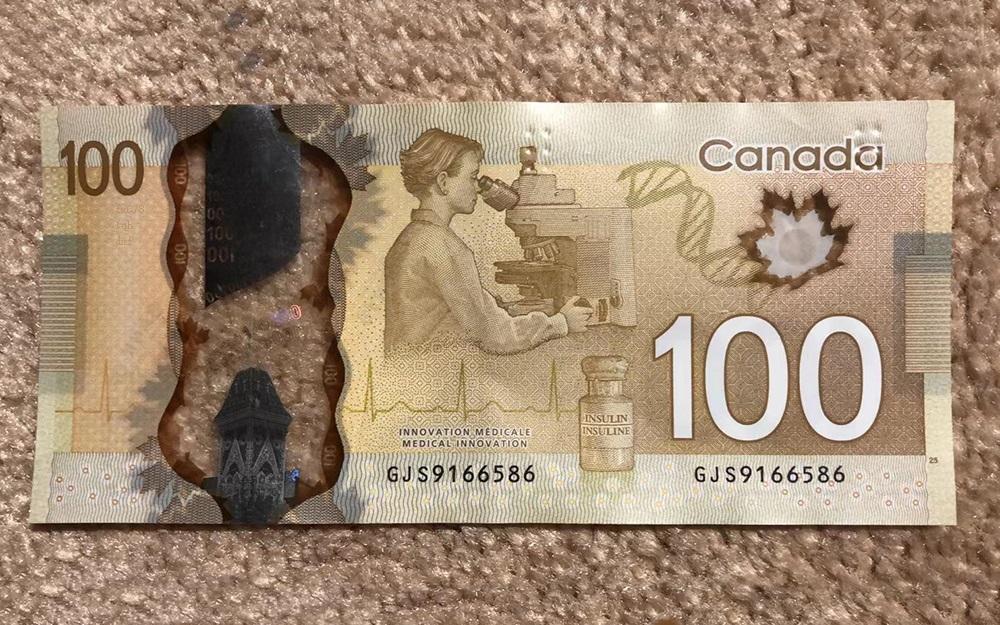
For example, US politicians have frequently threatened to impose tariffs on Canadian goods, which sounds very inflammatory. However, analysts observe that the US actually prefers to resolve issues within the framework of existing trade agreements rather than completely overturning and rebuilding them. This means that despite the intense verbal exchanges, the actual impact may be limited. What the market fears most is never the challenge itself, but rather the ambiguity of the rules—when uncertainty is high, businesses are hesitant to invest, capital chooses to wait and see, and exchange rates naturally come under pressure. But once the boundaries are clear, even if the outcome is imperfect, the market may rebound quickly. This is because "certain bad news" is often easier to digest than "unresolved threats."
This is precisely the key reason why the Canadian dollar may be undervalued in 2026: many negative narratives remain at the "possible" stage, while funds have already begun to anticipate the "most likely outcome." When sentiment subsides, the market may move in the opposite direction.
Another point of misunderstanding is real estate. In 2025, house prices in some Canadian cities fell by 10% to 20%. Logically, this should have led to a contraction in consumption, increased banking risks, and an economic slowdown. However, in reality, consumer spending on travel, dining, and services remained resilient, and overall retail sales did not experience a precipitous decline. This indicates that while falling house prices affected the perception of wealth, they did not break through the cash flow bottom line for ordinary families.
This is crucial for exchange rates. What the foreign exchange market is truly worried about is never slower growth, but rather the systemic risk of a "sudden slowdown." If household incomes remain stable, the job market is still healthy, and consumption slows only moderately rather than contracting across the board, then the probability of a "hard landing" will be significantly reduced. And once the market confirms that the risk of recession is manageable, the "risk discount" initially imposed on the Canadian dollar due to panic is expected to gradually recede.
Meanwhile, the performance of Canada's financial system provides further evidence. In the second half of 2025, the share prices of major Canadian banks rose instead of falling, and bond spreads remained stable. The interconnected signals from the stock, bond, and currency markets all point in the same direction: pressure exists, but the system is resilient. This underlying stability is precisely a crucial support for the long-term strengthening of the currency.
Many people believe that exchange rates are solely determined by interest rate levels, but there's another hidden variable: trust. Especially against the backdrop of increasing global instability, countries with consistent policies are increasingly becoming safe havens for long-term capital. Canada has a unique advantage in this regard; this "boring stability," which may not make headlines in foreign media, is extremely valuable in global asset allocation.
Long-term investors like pension funds, sovereign wealth funds, and insurance funds are not primarily concerned with next quarter's data surprises, but rather with whether the rules will suddenly change over the next decade. As long as the institutional risk is low, they are willing to hold the country's assets at a lower risk premium. This effect will not be immediately reflected in the exchange rate, but it will continuously attract capital inflows, lower financing costs, promote the implementation of cross-border projects, and ultimately form a mild but lasting support for the local currency.
One of the most noteworthy potential turning points in 2026 will not occur in Canada, but in the United States—the Supreme Court is about to hear a case concerning the president's tariff powers. The issue appears legal: can the president unilaterally impose tariffs without congressional approval? However, its actual impact extends far beyond the legal realm, directly affecting global investors' assessment of "policy predictability."
If courts restrict the president's tariff authority, it means that US policy will be more balanced, the market will perceive a lower probability of future trade shocks, and global risk appetite may rebound. In this environment, medium-risk currencies like the Canadian dollar will benefit from capital reallocation, and cross-border investment activity may also recover.
Conversely, if the courts support expanding executive power, the market will worry that policy tools can be used quickly and unilaterally, increasing uncertainty premiums. In this case, capital may not simply flee the US, but rather increase the overall pricing of "institutional stability." This means that some capital may actually increase its allocation to economies with sound governance and clear rules, such as Canada, as a hedging option.
Regardless of the outcome, this ruling could reshape the "background noise" of global capital flows in 2026. It may not be in the news every day, but it will influence how much investors are willing to pay for uncertainty, thereby altering the relative attractiveness of various currencies.
The Canadian dollar appreciated by about 5% in 2025, and analysts believe that a similar level of volatility in 2026 is not impossible. This judgment is supported not by a single positive factor, but by several overlooked structural factors quietly taking effect: the limited actual impact of trade disputes, the resilience of the household sector, manageable pressure on the financial system, and the potential for a global capital rebalancing triggered by external factors.
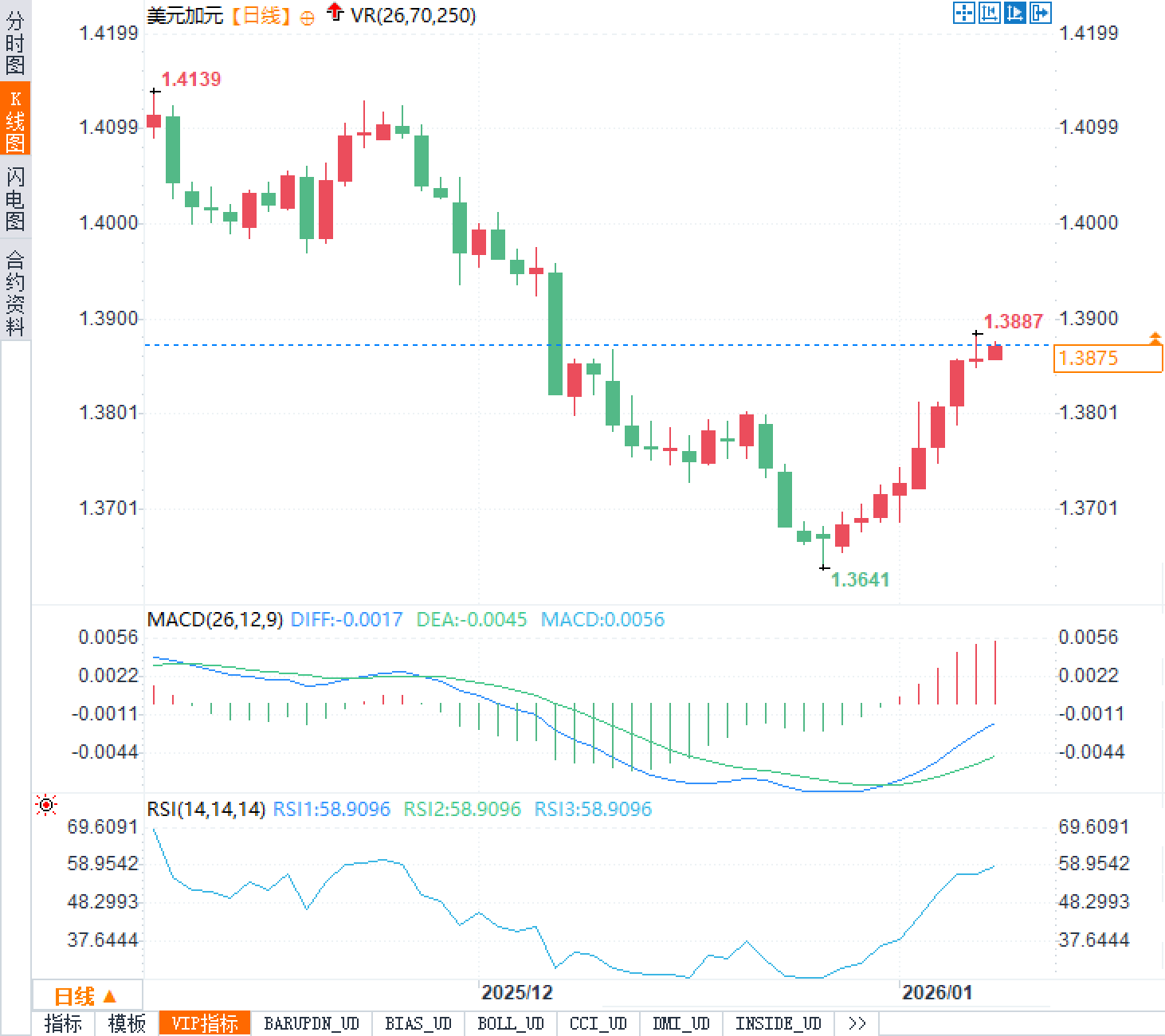
The real driving logic is that the market first assesses probabilities and risk premiums, then determines capital flows, and finally reflects this in exchange rates. Information that appears bearish may not represent the true direction of capital flows. Conversely, while most people are still worried about "what if something goes wrong," smart money may already be positioning itself for the moment "things are finally settled." The Canadian dollar story in 2026 may not be a sensational reversal, but rather a quiet, profound revaluation.
For example, US politicians have frequently threatened to impose tariffs on Canadian goods, which sounds very inflammatory. However, analysts observe that the US actually prefers to resolve issues within the framework of existing trade agreements rather than completely overturning and rebuilding them. This means that despite the intense verbal exchanges, the actual impact may be limited. What the market fears most is never the challenge itself, but rather the ambiguity of the rules—when uncertainty is high, businesses are hesitant to invest, capital chooses to wait and see, and exchange rates naturally come under pressure. But once the boundaries are clear, even if the outcome is imperfect, the market may rebound quickly. This is because "certain bad news" is often easier to digest than "unresolved threats."
This is precisely the key reason why the Canadian dollar may be undervalued in 2026: many negative narratives remain at the "possible" stage, while funds have already begun to anticipate the "most likely outcome." When sentiment subsides, the market may move in the opposite direction.
Why hasn't the economy collapsed despite falling housing prices?
Another point of misunderstanding is real estate. In 2025, house prices in some Canadian cities fell by 10% to 20%. Logically, this should have led to a contraction in consumption, increased banking risks, and an economic slowdown. However, in reality, consumer spending on travel, dining, and services remained resilient, and overall retail sales did not experience a precipitous decline. This indicates that while falling house prices affected the perception of wealth, they did not break through the cash flow bottom line for ordinary families.
This is crucial for exchange rates. What the foreign exchange market is truly worried about is never slower growth, but rather the systemic risk of a "sudden slowdown." If household incomes remain stable, the job market is still healthy, and consumption slows only moderately rather than contracting across the board, then the probability of a "hard landing" will be significantly reduced. And once the market confirms that the risk of recession is manageable, the "risk discount" initially imposed on the Canadian dollar due to panic is expected to gradually recede.
Meanwhile, the performance of Canada's financial system provides further evidence. In the second half of 2025, the share prices of major Canadian banks rose instead of falling, and bond spreads remained stable. The interconnected signals from the stock, bond, and currency markets all point in the same direction: pressure exists, but the system is resilient. This underlying stability is precisely a crucial support for the long-term strengthening of the currency.
"Boring" countries are more likely to attract investment.
Many people believe that exchange rates are solely determined by interest rate levels, but there's another hidden variable: trust. Especially against the backdrop of increasing global instability, countries with consistent policies are increasingly becoming safe havens for long-term capital. Canada has a unique advantage in this regard; this "boring stability," which may not make headlines in foreign media, is extremely valuable in global asset allocation.
Long-term investors like pension funds, sovereign wealth funds, and insurance funds are not primarily concerned with next quarter's data surprises, but rather with whether the rules will suddenly change over the next decade. As long as the institutional risk is low, they are willing to hold the country's assets at a lower risk premium. This effect will not be immediately reflected in the exchange rate, but it will continuously attract capital inflows, lower financing costs, promote the implementation of cross-border projects, and ultimately form a mild but lasting support for the local currency.
A court ruling could reshape the flow of global funds.
One of the most noteworthy potential turning points in 2026 will not occur in Canada, but in the United States—the Supreme Court is about to hear a case concerning the president's tariff powers. The issue appears legal: can the president unilaterally impose tariffs without congressional approval? However, its actual impact extends far beyond the legal realm, directly affecting global investors' assessment of "policy predictability."
If courts restrict the president's tariff authority, it means that US policy will be more balanced, the market will perceive a lower probability of future trade shocks, and global risk appetite may rebound. In this environment, medium-risk currencies like the Canadian dollar will benefit from capital reallocation, and cross-border investment activity may also recover.
Conversely, if the courts support expanding executive power, the market will worry that policy tools can be used quickly and unilaterally, increasing uncertainty premiums. In this case, capital may not simply flee the US, but rather increase the overall pricing of "institutional stability." This means that some capital may actually increase its allocation to economies with sound governance and clear rules, such as Canada, as a hedging option.
Regardless of the outcome, this ruling could reshape the "background noise" of global capital flows in 2026. It may not be in the news every day, but it will influence how much investors are willing to pay for uncertainty, thereby altering the relative attractiveness of various currencies.
Conclusion: Understanding the flow of funds is key to navigating the noise of the news.
The Canadian dollar appreciated by about 5% in 2025, and analysts believe that a similar level of volatility in 2026 is not impossible. This judgment is supported not by a single positive factor, but by several overlooked structural factors quietly taking effect: the limited actual impact of trade disputes, the resilience of the household sector, manageable pressure on the financial system, and the potential for a global capital rebalancing triggered by external factors.
The real driving logic is that the market first assesses probabilities and risk premiums, then determines capital flows, and finally reflects this in exchange rates. Information that appears bearish may not represent the true direction of capital flows. Conversely, while most people are still worried about "what if something goes wrong," smart money may already be positioning itself for the moment "things are finally settled." The Canadian dollar story in 2026 may not be a sensational reversal, but rather a quiet, profound revaluation.
- Risk Warning and Disclaimer
- The market involves risk, and trading may not be suitable for all investors. This article is for reference only and does not constitute personal investment advice, nor does it take into account certain users’ specific investment objectives, financial situation, or other needs. Any investment decisions made based on this information are at your own risk.