













The US-India "tariffs-for-oil" agreement has been finalized! This could cut off Russia's oil lifeline, putting downward pressure on oil prices.
2026-02-03 11:20:34
US President Donald Trump announced a major shift in US trade policy toward India, stating that he would reduce tariffs on Indian goods to 18% after reaching an agreement with Indian Prime Minister Narendra Modi to stop buying Russian oil.
On Monday (February 2), Trump posted on social media detailing that the tariff reduction from 25% was decided after a phone call with Modi. He emphasized that India's reduced purchases of Russian oil would help the United States participate in ending the Russia-Ukraine conflict. According to officials familiar with the talks, this move also canceled the additional 25% tariff that Trump had previously imposed specifically on India's crude oil imports from Russia.
The agreement also includes significant commitments from New Delhi. Trump stated that India will "take action to reduce its tariffs and non-tariff barriers against the United States to zero" and pledged to purchase "more than $500 billion worth of U.S. energy, technology, agricultural products, coal, and many other products."
The direct impact of this agreement on the crude oil market is the creation of new uncertainty and a tendency for short-term price pressure, as it aims to artificially remove a large and stable source of demand. During Tuesday's Asian trading session, US crude oil prices fluctuated downwards, continuing the previous trading day's decline, currently trading around $61.70 per barrel, a daily drop of approximately 0.7%.
Prime Minister Modi confirmed the agreement, posting on social media: "Tariffs on Indian-made products will be reduced to 18%." However, his post did not mention the commitment to stop buying Russian oil.
This part of the agreement aims to address a significant shift in global energy flows following the outbreak of the Russia-Ukraine conflict that began in 2022, when India became a major destination for Russian discounted crude oil. While previous efforts by the Trump administration had slowed these shipments, they had not completely halted them.
Earlier in October, Trump issued a statement claiming that Modi had agreed to stop buying Russian oil, but Indian refiners continued to import oil from Moscow. Later that month, US sanctions against Russia's largest oil producers, Rosneft and Lukoil, proved more effective in curbing Indian demand.
The tariff reduction has brought significant relief to New Delhi. The overall tariff rate on many Indian goods will drop from 50% to 18%, which is a major benefit for textiles, machinery, and other exports.
India exports nearly one-fifth of its goods to the United States, and the country has been negotiating for months to reduce its tariffs by 50%—the highest rate the U.S. has ever imposed on any major trading partner. The high tariffs affect about 55% of India's exports to the U.S., threatening its ambitions to become a manufacturing powerhouse.
General Manager Nilesh Shah said, "While details matter, this removes the sword of Damocles hanging over the rupee, stock market, and interest rate markets. Let's hope this is a win-win deal for both countries, as both can benefit greatly from the cooperation."
The latest trade data highlights economic pressures, with India's exports falling nearly 12% year-on-year in October and its trade deficit hitting a record high.
Just last week, an agreement seemed a long way off. U.S. Trade Representative Jamison Greer noted that while India had made “significant progress” in curbing its purchases of Russian oil, “there is still much work to be done on this point.”
Relations between the two countries had previously been strained. India was one of the first countries to begin trade negotiations with the Trump administration, but relations deteriorated after the US president repeatedly attributed the ceasefire with him, displeasing officials in New Delhi. The tariff issue further exacerbated tensions.
Signs of thawing began in September when Trump called to congratulate Modi on his birthday, a gesture that helped ease tensions and facilitated the resumption of stalled deal negotiations. In November, at Modi's invitation, Trump indicated he might visit India in 2026.
As part of efforts to appease the Trump administration, India has taken steps to diversify its energy sources. India's oil minister recently announced that state-owned refiners have signed their first long-term contract to import liquefied petroleum gas (LPG) from the United States.
In the tweet, Trump also mentioned that Modi had agreed to potentially increase oil purchases from Venezuela. Executives at Indian Oil Corporation, the country's largest refiner, said last week that the company might include Venezuelan crude in its import portfolio. The state-owned company also plans to purchase at least 24 million barrels of Brazilian crude in 2026 and 2027 to further diversify its supply sources.
The "tariff-for-oil" agreement reached between the Trump administration and India has a multi-layered and contradictory impact on the crude oil market. Its core lies in reshaping the global oil trade flow and creating tension between short-term supply and demand and long-term geopolitical dynamics.
The short-term removal of a large and stable source of demand (India's demand for Russian oil) has a deeper impact on accelerating the geopolitical restructuring of global energy trade flows. This is a powerful geopolitical intervention in the flow of global commodities, and its success or failure will profoundly affect the crude oil market landscape for many years to come.
For traders, the following should be closely monitored going forward: actual purchase order data from Indian refiners; the discount of Urals crude oil to benchmark prices; and utilization rates and shipping data for crude oil export facilities along the US Gulf Coast.
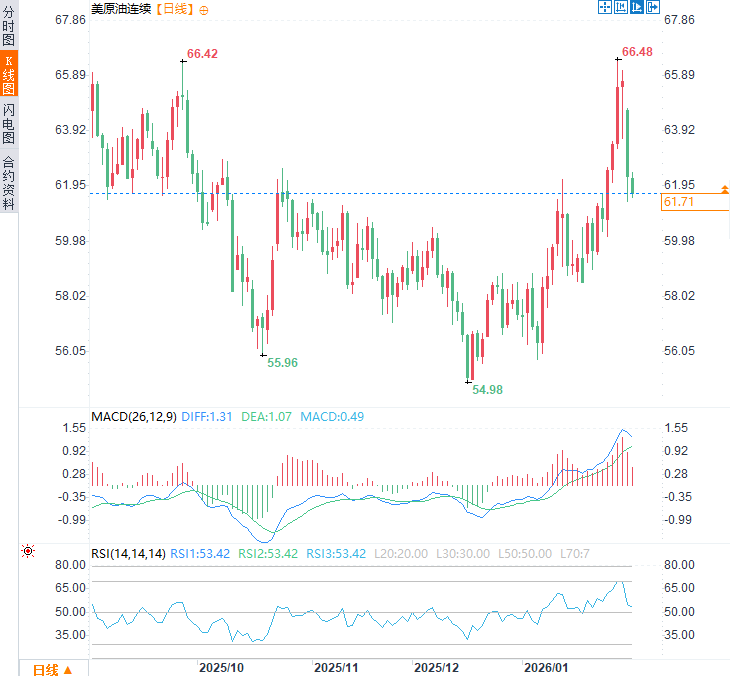
(US crude oil daily chart, source: FX678)
At 11:20 Beijing time, US crude oil futures were trading at $61.74 per barrel.
On Monday (February 2), Trump posted on social media detailing that the tariff reduction from 25% was decided after a phone call with Modi. He emphasized that India's reduced purchases of Russian oil would help the United States participate in ending the Russia-Ukraine conflict. According to officials familiar with the talks, this move also canceled the additional 25% tariff that Trump had previously imposed specifically on India's crude oil imports from Russia.
The agreement also includes significant commitments from New Delhi. Trump stated that India will "take action to reduce its tariffs and non-tariff barriers against the United States to zero" and pledged to purchase "more than $500 billion worth of U.S. energy, technology, agricultural products, coal, and many other products."
The direct impact of this agreement on the crude oil market is the creation of new uncertainty and a tendency for short-term price pressure, as it aims to artificially remove a large and stable source of demand. During Tuesday's Asian trading session, US crude oil prices fluctuated downwards, continuing the previous trading day's decline, currently trading around $61.70 per barrel, a daily drop of approximately 0.7%.
Confirmation and key omissions
Prime Minister Modi confirmed the agreement, posting on social media: "Tariffs on Indian-made products will be reduced to 18%." However, his post did not mention the commitment to stop buying Russian oil.
This part of the agreement aims to address a significant shift in global energy flows following the outbreak of the Russia-Ukraine conflict that began in 2022, when India became a major destination for Russian discounted crude oil. While previous efforts by the Trump administration had slowed these shipments, they had not completely halted them.
Earlier in October, Trump issued a statement claiming that Modi had agreed to stop buying Russian oil, but Indian refiners continued to import oil from Moscow. Later that month, US sanctions against Russia's largest oil producers, Rosneft and Lukoil, proved more effective in curbing Indian demand.
India's economy receives positive news
The tariff reduction has brought significant relief to New Delhi. The overall tariff rate on many Indian goods will drop from 50% to 18%, which is a major benefit for textiles, machinery, and other exports.
India exports nearly one-fifth of its goods to the United States, and the country has been negotiating for months to reduce its tariffs by 50%—the highest rate the U.S. has ever imposed on any major trading partner. The high tariffs affect about 55% of India's exports to the U.S., threatening its ambitions to become a manufacturing powerhouse.
General Manager Nilesh Shah said, "While details matter, this removes the sword of Damocles hanging over the rupee, stock market, and interest rate markets. Let's hope this is a win-win deal for both countries, as both can benefit greatly from the cooperation."
The latest trade data highlights economic pressures, with India's exports falling nearly 12% year-on-year in October and its trade deficit hitting a record high.
The bumpy road to reaching an agreement
Just last week, an agreement seemed a long way off. U.S. Trade Representative Jamison Greer noted that while India had made “significant progress” in curbing its purchases of Russian oil, “there is still much work to be done on this point.”
Relations between the two countries had previously been strained. India was one of the first countries to begin trade negotiations with the Trump administration, but relations deteriorated after the US president repeatedly attributed the ceasefire with him, displeasing officials in New Delhi. The tariff issue further exacerbated tensions.
Signs of thawing began in September when Trump called to congratulate Modi on his birthday, a gesture that helped ease tensions and facilitated the resumption of stalled deal negotiations. In November, at Modi's invitation, Trump indicated he might visit India in 2026.
The transformation of the energy alliance
As part of efforts to appease the Trump administration, India has taken steps to diversify its energy sources. India's oil minister recently announced that state-owned refiners have signed their first long-term contract to import liquefied petroleum gas (LPG) from the United States.
In the tweet, Trump also mentioned that Modi had agreed to potentially increase oil purchases from Venezuela. Executives at Indian Oil Corporation, the country's largest refiner, said last week that the company might include Venezuelan crude in its import portfolio. The state-owned company also plans to purchase at least 24 million barrels of Brazilian crude in 2026 and 2027 to further diversify its supply sources.
The oil market may face short-term pressure and long-term restructuring.
The "tariff-for-oil" agreement reached between the Trump administration and India has a multi-layered and contradictory impact on the crude oil market. Its core lies in reshaping the global oil trade flow and creating tension between short-term supply and demand and long-term geopolitical dynamics.
The short-term removal of a large and stable source of demand (India's demand for Russian oil) has a deeper impact on accelerating the geopolitical restructuring of global energy trade flows. This is a powerful geopolitical intervention in the flow of global commodities, and its success or failure will profoundly affect the crude oil market landscape for many years to come.
For traders, the following should be closely monitored going forward: actual purchase order data from Indian refiners; the discount of Urals crude oil to benchmark prices; and utilization rates and shipping data for crude oil export facilities along the US Gulf Coast.
(US crude oil daily chart, source: FX678)
At 11:20 Beijing time, US crude oil futures were trading at $61.74 per barrel.
- Risk Warning and Disclaimer
- The market involves risk, and trading may not be suitable for all investors. This article is for reference only and does not constitute personal investment advice, nor does it take into account certain users’ specific investment objectives, financial situation, or other needs. Any investment decisions made based on this information are at your own risk.

