GBP/USD under pressure ahead of UK inflation and FOMC minutes.
2026-02-18 11:35:36
GBP/USD continued its decline on Wednesday, despite a rebound from a more than one-week low, but the rebound lacked sustained momentum.
The exchange rate is currently trading around 1.3550, with an overall weak structure. In the UK, the latest employment data fell short of expectations, indicating signs of a cooling labor market.
This further solidifies market bets that the Bank of England may cut interest rates in March. Current weak economic growth momentum in the UK, slowing corporate hiring, and easing inflationary pressures give policymakers more room for easing.
Rising expectations of interest rate cuts have diminished the appeal of the pound, which is one of the main reasons for the recent downward pressure on the exchange rate. Meanwhile, the US dollar has remained relatively strong ahead of key events.
Although the market still expects the Federal Reserve to enter a rate-cutting cycle in the future, investors tend to reduce directional bets ahead of the release of the FOMC meeting minutes. If the minutes release a dovish signal, the dollar may fall in the short term, thus providing some support for the pound.
Conversely, a more cautious wording could exacerbate downward pressure on GBP/USD. Therefore, the current market exhibits a pattern of "a weaker pound and a more stable dollar."
UK inflation data will be a key short-term variable. If inflation falls more than expected, it may further strengthen expectations of interest rate cuts; if inflation remains stubborn, it may temporarily alleviate pressure on the pound.
Observing the 4-hour chart, GBP/USD breaking below the 200-period simple moving average (SMA) is considered a significant short-term bearish signal. The current price remains under dynamic resistance from this moving average, indicating a bearish short-term trend.
The MACD indicator shows that the momentum bars are in negative territory but are gradually narrowing, indicating that the bearish momentum is still dominant but has weakened. The RSI is around 39, which is in a bearish zone, but has rebounded from the oversold zone, suggesting that the downside may be limited for the time being.
If the exchange rate continues to be resisted below the 200-period moving average, the bears will still be in control, and the support areas to watch are 1.3450 and 1.3400. If the price breaks through and holds above this moving average, it may trigger a technical rebound and alleviate short-term downward pressure.
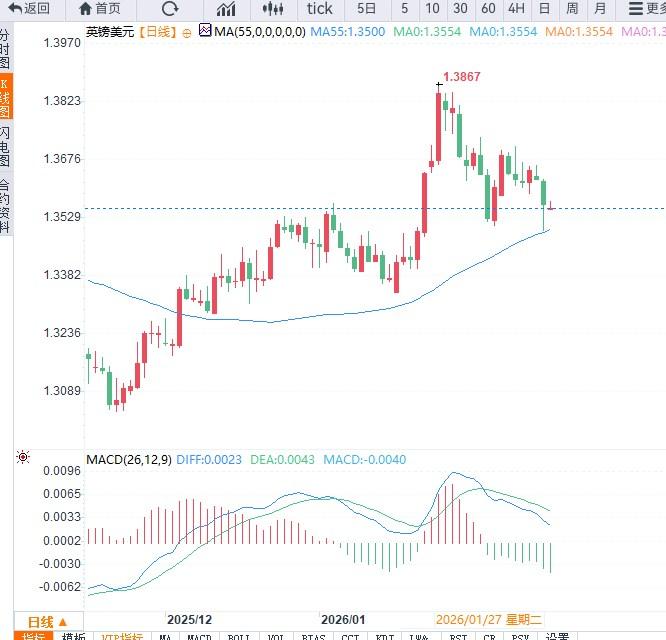
On the daily chart, GBP/USD has entered a consolidation phase after falling from its previous high, with the price gradually approaching the medium-term upward trend line. The overall trend has not yet fully reversed, but short-term momentum has clearly weakened.
The daily RSI has fallen back into the neutral-to-weak zone, indicating a decline in bullish momentum. A break below 1.3450 would increase the risk of a further pullback to the 1.3350 area; conversely, a rebound above 1.3550 could resume the upward trend.
The short-term structure is bearish, with sellers gaining the upper hand after breaking below key moving averages on the 4-hour chart. The daily trend is not yet completely broken, but is in a correction phase. Key resistance lies at the 200-period SMA and the 1.3550 area, while key support is at 1.3450.
Editor's Note:
The current movement of GBP/USD is more influenced by the weakening UK fundamentals. Weak employment data has strengthened expectations of a Bank of England rate cut, putting pressure on the pound.
The US dollar remained relatively stable ahead of policy uncertainty. Ahead of the release of UK inflation data and the FOMC minutes, the exchange rate is likely to continue its cautious fluctuations.
If UK inflation falls more than expected and the Federal Reserve adopts a hawkish tone, the downside risk for GBP/USD will increase; conversely, if the US releases dovish signals, it may alleviate short-selling pressure.
The exchange rate is currently trading around 1.3550, with an overall weak structure. In the UK, the latest employment data fell short of expectations, indicating signs of a cooling labor market.
This further solidifies market bets that the Bank of England may cut interest rates in March. Current weak economic growth momentum in the UK, slowing corporate hiring, and easing inflationary pressures give policymakers more room for easing.
Rising expectations of interest rate cuts have diminished the appeal of the pound, which is one of the main reasons for the recent downward pressure on the exchange rate. Meanwhile, the US dollar has remained relatively strong ahead of key events.
Although the market still expects the Federal Reserve to enter a rate-cutting cycle in the future, investors tend to reduce directional bets ahead of the release of the FOMC meeting minutes. If the minutes release a dovish signal, the dollar may fall in the short term, thus providing some support for the pound.
Conversely, a more cautious wording could exacerbate downward pressure on GBP/USD. Therefore, the current market exhibits a pattern of "a weaker pound and a more stable dollar."
UK inflation data will be a key short-term variable. If inflation falls more than expected, it may further strengthen expectations of interest rate cuts; if inflation remains stubborn, it may temporarily alleviate pressure on the pound.
Observing the 4-hour chart, GBP/USD breaking below the 200-period simple moving average (SMA) is considered a significant short-term bearish signal. The current price remains under dynamic resistance from this moving average, indicating a bearish short-term trend.
The MACD indicator shows that the momentum bars are in negative territory but are gradually narrowing, indicating that the bearish momentum is still dominant but has weakened. The RSI is around 39, which is in a bearish zone, but has rebounded from the oversold zone, suggesting that the downside may be limited for the time being.
If the exchange rate continues to be resisted below the 200-period moving average, the bears will still be in control, and the support areas to watch are 1.3450 and 1.3400. If the price breaks through and holds above this moving average, it may trigger a technical rebound and alleviate short-term downward pressure.
On the daily chart, GBP/USD has entered a consolidation phase after falling from its previous high, with the price gradually approaching the medium-term upward trend line. The overall trend has not yet fully reversed, but short-term momentum has clearly weakened.
The daily RSI has fallen back into the neutral-to-weak zone, indicating a decline in bullish momentum. A break below 1.3450 would increase the risk of a further pullback to the 1.3350 area; conversely, a rebound above 1.3550 could resume the upward trend.
The short-term structure is bearish, with sellers gaining the upper hand after breaking below key moving averages on the 4-hour chart. The daily trend is not yet completely broken, but is in a correction phase. Key resistance lies at the 200-period SMA and the 1.3550 area, while key support is at 1.3450.
Editor's Note:
The current movement of GBP/USD is more influenced by the weakening UK fundamentals. Weak employment data has strengthened expectations of a Bank of England rate cut, putting pressure on the pound.
The US dollar remained relatively stable ahead of policy uncertainty. Ahead of the release of UK inflation data and the FOMC minutes, the exchange rate is likely to continue its cautious fluctuations.
If UK inflation falls more than expected and the Federal Reserve adopts a hawkish tone, the downside risk for GBP/USD will increase; conversely, if the US releases dovish signals, it may alleviate short-selling pressure.
- Risk Warning and Disclaimer
- The market involves risk, and trading may not be suitable for all investors. This article is for reference only and does not constitute personal investment advice, nor does it take into account certain users’ specific investment objectives, financial situation, or other needs. Any investment decisions made based on this information are at your own risk.