













The USD/CAD pair retreated slightly near a resistance level, awaiting a directional move.
2026-02-19 10:34:10
The USD/CAD pair fell during the Asian session, primarily influenced by a rebound in international oil prices. Crude oil prices were supported by escalating tensions between the US and Iran.
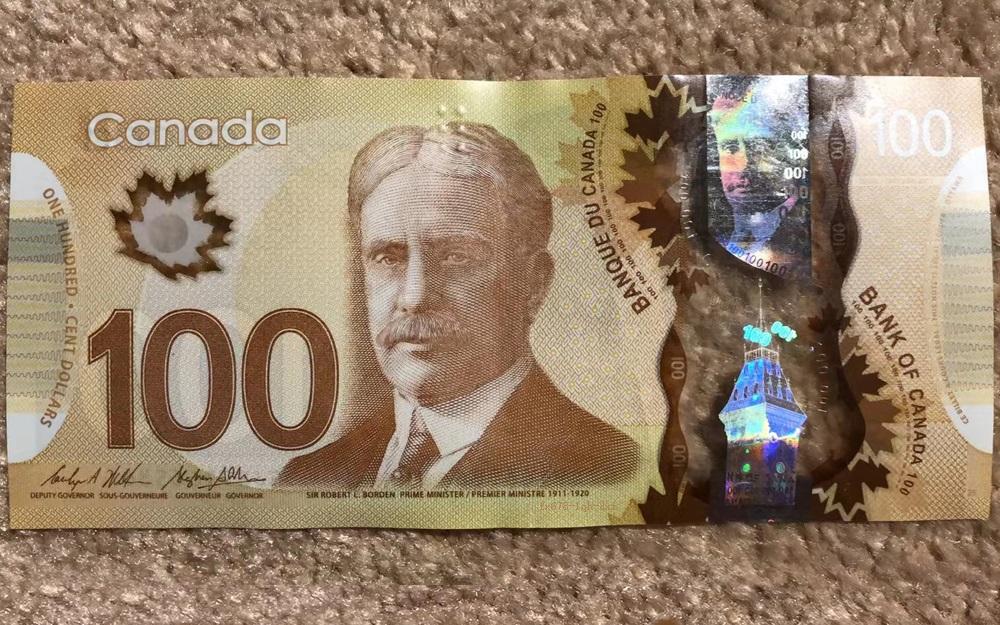
As one of the world's major energy exporters, Canada is typically favored by rising oil prices, which in turn puts downward pressure on the exchange rate. Data shows that Canada's CPI rose 2.3% year-on-year in January, lower than the previous month's 2.4% and market expectations.
This data reinforces market expectations that the Bank of Canada may restart its easing policy. If the Bank of Canada continues to cut interest rates, it will weaken the Canadian dollar's interest rate advantage, providing support for USD/CAD.
On the other hand, the minutes of the Federal Reserve's January meeting were hawkish, with some officials indicating that another rate hike could not be ruled out if inflation remained high. This boosted the dollar to some extent and limited the downside potential of USD/CAD.
This Friday, the market will see the release of the preliminary US Q4 GDP figures, the PCE price index, and the S&P Global PMI data. These key economic indicators may provide further directional guidance for the dollar's movement.
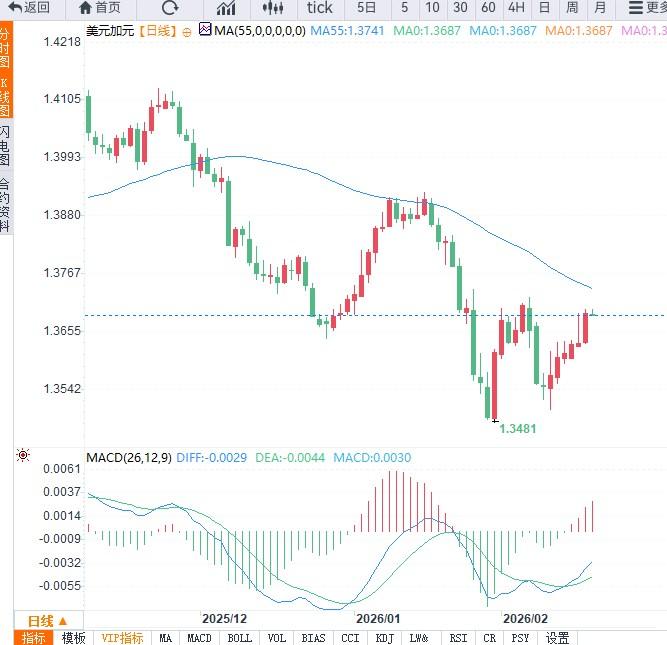
From the daily chart, USD/CAD has maintained a range-bound trading pattern recently, generally fluctuating within the 1.3600–1.3800 range. The current price has fallen back to near the 20-day moving average, which is flattening out, indicating a neutral short-term trend.
The RSI indicator has fallen back to around 50, reflecting weakening momentum but not yet entering oversold territory. The 4-hour chart shows that the exchange rate has fallen back after being resisted at the 1.3750 level, forming a small downward channel in the short term.
The MACD has fallen below the zero line, indicating increased bearish momentum. If it breaks below the 1.3680 support level, the next target may be the 1.3620 area; if it regains its footing above 1.3730, it may retest the 1.3800 psychological level.
From an overall perspective, the short-term trend is weak and volatile, but no clear trend breakout has been formed.
Editor's Note:
The current USD/CAD exchange rate is influenced by the interplay between oil prices and monetary policy expectations. In the short term, rising oil prices are supporting the Canadian dollar, but declining Canadian inflation opens up room for further interest rate cuts, limiting the Canadian dollar's continued strength.
Meanwhile, the Federal Reserve's hawkish stance provides a floor for the dollar. The exchange rate is likely to remain in a consolidation phase ahead of key US economic data releases.
If the US PCE data is strong, the US dollar is expected to regain its advantage; conversely, if the data is weak, USD/CAD may further test the lower support area.
As one of the world's major energy exporters, Canada is typically favored by rising oil prices, which in turn puts downward pressure on the exchange rate. Data shows that Canada's CPI rose 2.3% year-on-year in January, lower than the previous month's 2.4% and market expectations.
This data reinforces market expectations that the Bank of Canada may restart its easing policy. If the Bank of Canada continues to cut interest rates, it will weaken the Canadian dollar's interest rate advantage, providing support for USD/CAD.
On the other hand, the minutes of the Federal Reserve's January meeting were hawkish, with some officials indicating that another rate hike could not be ruled out if inflation remained high. This boosted the dollar to some extent and limited the downside potential of USD/CAD.
This Friday, the market will see the release of the preliminary US Q4 GDP figures, the PCE price index, and the S&P Global PMI data. These key economic indicators may provide further directional guidance for the dollar's movement.
From the daily chart, USD/CAD has maintained a range-bound trading pattern recently, generally fluctuating within the 1.3600–1.3800 range. The current price has fallen back to near the 20-day moving average, which is flattening out, indicating a neutral short-term trend.
The RSI indicator has fallen back to around 50, reflecting weakening momentum but not yet entering oversold territory. The 4-hour chart shows that the exchange rate has fallen back after being resisted at the 1.3750 level, forming a small downward channel in the short term.
The MACD has fallen below the zero line, indicating increased bearish momentum. If it breaks below the 1.3680 support level, the next target may be the 1.3620 area; if it regains its footing above 1.3730, it may retest the 1.3800 psychological level.
From an overall perspective, the short-term trend is weak and volatile, but no clear trend breakout has been formed.
Editor's Note:
The current USD/CAD exchange rate is influenced by the interplay between oil prices and monetary policy expectations. In the short term, rising oil prices are supporting the Canadian dollar, but declining Canadian inflation opens up room for further interest rate cuts, limiting the Canadian dollar's continued strength.
Meanwhile, the Federal Reserve's hawkish stance provides a floor for the dollar. The exchange rate is likely to remain in a consolidation phase ahead of key US economic data releases.
If the US PCE data is strong, the US dollar is expected to regain its advantage; conversely, if the data is weak, USD/CAD may further test the lower support area.
- Risk Warning and Disclaimer
- The market involves risk, and trading may not be suitable for all investors. This article is for reference only and does not constitute personal investment advice, nor does it take into account certain users’ specific investment objectives, financial situation, or other needs. Any investment decisions made based on this information are at your own risk.

