The EU reveals its "tariff trump card," and the fate of the euro hangs in the balance tonight.
2026-02-23 21:38:28
On Monday (February 23), during the European session, the euro experienced a sharp rise and fall against the US dollar. Although it fell back, the euro has clearly stopped falling recently and there is a chance for it to rebound in the future. It is currently trading around 1.1792.
Following the U.S. Supreme Court's overturning of several broad tariff measures by President Donald Trump, the EU's executive body responded swiftly, formally demanding a "fully clear statement of position" from the United States and urging this core trading partner to strictly adhere to previously reached trade commitments.
In response to the court ruling, Trump launched a fierce attack and further escalated tariff policies on Saturday, announcing plans to raise global tariffs from the previously proposed 10% to 15%, adding further uncertainty to the already tense transatlantic trade relationship.

The European Commission has made it clear that the current situation is seriously detrimental to the implementation of the “fair, balanced and mutually beneficial” transatlantic trade and investment framework established in the EU-EU Joint Statement in August 2025, which is of key importance to stabilizing the global trade landscape.
It is understood that the trade agreement signed by officials from both the EU and the US last year stipulates that a 15% import tax will be levied on 70% of EU goods imported into the US. As the unified competent authority for trade affairs of the 27 EU member states, the European Commission is responsible for the implementation and coordination of the agreement.
This policy upheaval has triggered a strong reaction within the EU. Bernd Lange, a senior EU member of parliament and chairman of the European Parliament's Committee on International Trade, announced on Sunday that he would propose to the European Parliament's negotiating team to suspend the ratification process for the agreement.
Lange posted on social media criticizing the U.S. government’s tariff policy as “pure disorder, which global trading partners cannot understand the logic behind it. The EU and other U.S. trading partners are left with only unresolved policy questions and escalating market uncertainty, which will directly impact cross-border capital flows and exchange rate stability.”
Eurostat data shows that in 2024, the total trade volume of goods and services between the US and Europe reached 1.7 trillion euros (approximately 2 trillion US dollars), with an average daily trade volume of 4.6 billion euros. Such a huge trade volume makes it one of the core influencing variables in the global exchange rate market.
The European Commission emphasized that "the agreement is a legally binding commitment, and as the United States' largest trading partner, the EU demands that the United States strictly adhere to the provisions of the Joint Declaration—the EU itself has always firmly fulfilled its commitments."
EU products exported to the US must continue to enjoy most-favored-nation treatment, and tariff levels must not exceed the previously agreed-upon, clear, and comprehensive ceilings. This is the foundation for maintaining the transatlantic trade order and exchange rate stability.
In response to the EU's concerns, Trump's chief trade negotiator Jamison Greer said in an interview with CBS News on Sunday morning that the United States would uphold the trade agreements it had signed and that it expected its trading partners to fulfill their reciprocal obligations.
Greer revealed that he had communicated with his counterpart in the European trade negotiations over the weekend and had not yet received any formal notification of the termination of the agreement.
Greer stated, "The entry into force of these trade agreements does not depend on the outcome of emergency tariff litigation. Currently, no party has proposed terminating the agreements, and all parties are watching how things develop. The policy uncertainty in this process will continue to affect global trade finance and foreign exchange market sentiment."
From a trade structure perspective, the EU's core exports to the US include pharmaceuticals, automobiles, aircraft, chemical products, medical devices, and wine and spirits. Changes in tariffs on these goods directly affect the exchange rates for cross-border settlements in related industries.
The main exports of the United States to the European Union cover professional scientific services such as payment systems and cloud infrastructure, as well as oil and gas, pharmaceuticals, medical equipment, aerospace products and automobiles. The trade flow of these categories has a significant guiding effect on the fluctuation of the US dollar to euro exchange rate.
The European Commission further stated: "The unpredictable application of tariff policies is inherently market disruptive, not only eroding global market confidence and financial stability, but also exacerbating risk aversion in international supply chains, thereby triggering abnormal fluctuations in exchange rates for cross-border trade settlements."
As the world’s most influential regional trade bloc, the EU wields a powerful trade retaliatory tool – the Anti-Coercion Instrument (ACI).
This tool includes a comprehensive set of precise trade and investment restrictions, specifically targeting countries that exert undue economic pressure on EU member states or businesses. Its activation and implementation will directly affect the cross-border trade financing costs and exchange rate trends of the relevant countries.
Specifically, the countermeasures include restricting the two-way import and export of goods and services, prohibiting relevant countries or companies from participating in EU public procurement projects, and strictly controlling foreign direct investment. In extreme cases, this tool could effectively close access to the EU's 450 million consumer market.
The trajectory of this tariff dispute has become a key variable in the fluctuation of the euro exchange rate.
If the United States insists on violating the agreement and raising tariffs, the EU will retaliate by initiating anti-coercion tools, which will cause sharp fluctuations in the exchange rate of the US dollar against the euro. The loss of EU markets by US companies will weaken the credibility of the US dollar, while EU trade protection measures may strengthen the demand for the euro as a safe haven.
Conversely, if both sides return to the framework of the agreement, the stability of transatlantic trade will provide support for the euro exchange rate and alleviate current market concerns about the eurozone's economic recovery.
Goldman Sachs strategists point out that regardless of which direction tariffs change significantly, policy uncertainty itself will affect the euro's trajectory through capital flows. Every step in this trade game is reshaping the euro's valuation logic.
From a technical perspective, the euro exchange rate has continued its downward channel consolidation as expected, and is currently showing signs of stabilizing. Support and resistance levels remain around the downward channel, with 1.1857 being a key resistance level.
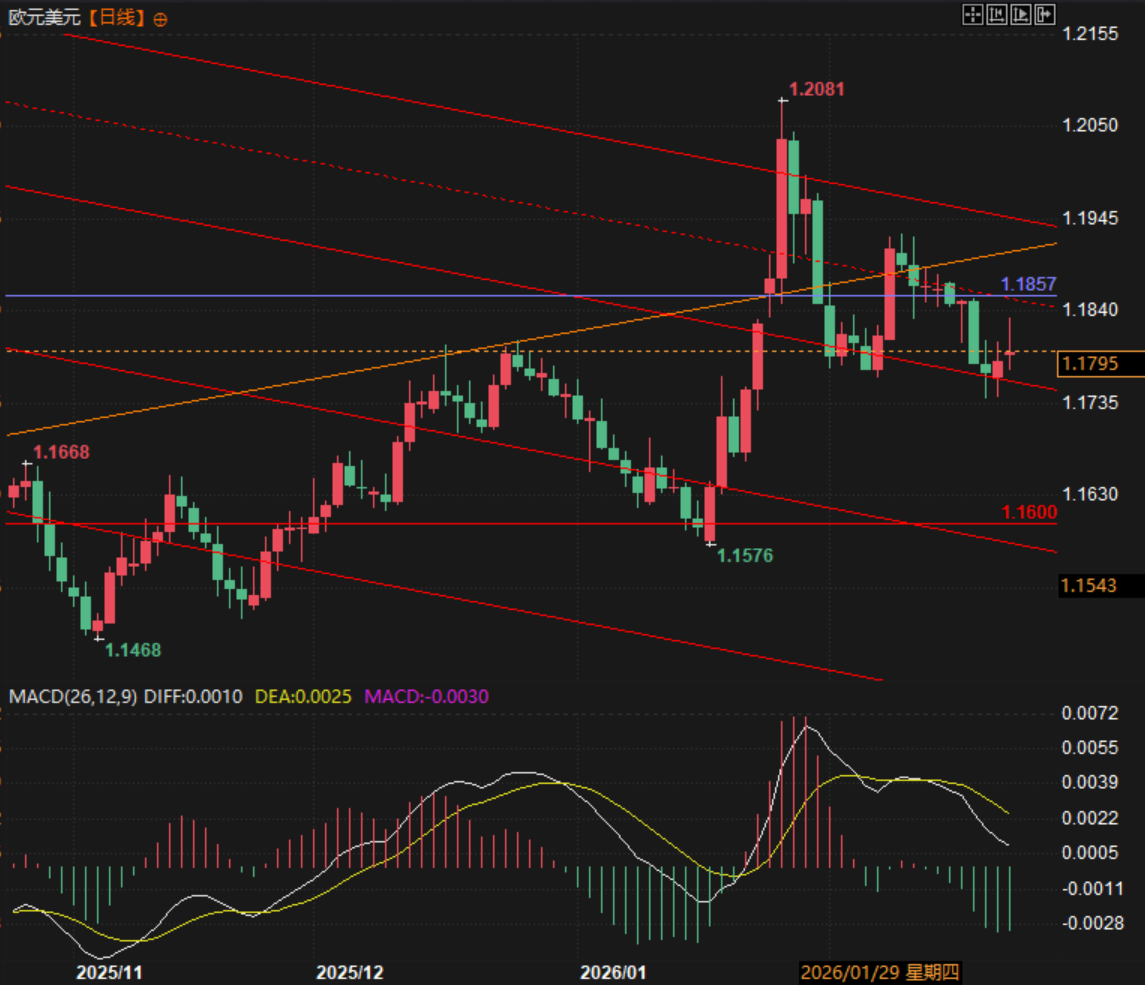
(Euro/USD daily chart, source: FX678)
At 21:37 Beijing time, the euro was trading at 1.1795/96 against the US dollar.
Following the U.S. Supreme Court's overturning of several broad tariff measures by President Donald Trump, the EU's executive body responded swiftly, formally demanding a "fully clear statement of position" from the United States and urging this core trading partner to strictly adhere to previously reached trade commitments.
In response to the court ruling, Trump launched a fierce attack and further escalated tariff policies on Saturday, announcing plans to raise global tariffs from the previously proposed 10% to 15%, adding further uncertainty to the already tense transatlantic trade relationship.
The EU has made its position clear: it will adhere to the framework of the joint statement and safeguard the effectiveness of trade agreements.
The European Commission has made it clear that the current situation is seriously detrimental to the implementation of the “fair, balanced and mutually beneficial” transatlantic trade and investment framework established in the EU-EU Joint Statement in August 2025, which is of key importance to stabilizing the global trade landscape.
It is understood that the trade agreement signed by officials from both the EU and the US last year stipulates that a 15% import tax will be levied on 70% of EU goods imported into the US. As the unified competent authority for trade affairs of the 27 EU member states, the European Commission is responsible for the implementation and coordination of the agreement.
The EU has responded strongly, proposing to suspend the ratification of the agreement and criticizing the US policy as disorderly.
This policy upheaval has triggered a strong reaction within the EU. Bernd Lange, a senior EU member of parliament and chairman of the European Parliament's Committee on International Trade, announced on Sunday that he would propose to the European Parliament's negotiating team to suspend the ratification process for the agreement.
Lange posted on social media criticizing the U.S. government’s tariff policy as “pure disorder, which global trading partners cannot understand the logic behind it. The EU and other U.S. trading partners are left with only unresolved policy questions and escalating market uncertainty, which will directly impact cross-border capital flows and exchange rate stability.”
The sheer volume of trade highlights its importance, with the EU emphasizing that "an agreement is a commitment."
Eurostat data shows that in 2024, the total trade volume of goods and services between the US and Europe reached 1.7 trillion euros (approximately 2 trillion US dollars), with an average daily trade volume of 4.6 billion euros. Such a huge trade volume makes it one of the core influencing variables in the global exchange rate market.
The European Commission emphasized that "the agreement is a legally binding commitment, and as the United States' largest trading partner, the EU demands that the United States strictly adhere to the provisions of the Joint Declaration—the EU itself has always firmly fulfilled its commitments."
EU products exported to the US must continue to enjoy most-favored-nation treatment, and tariff levels must not exceed the previously agreed-upon, clear, and comprehensive ceilings. This is the foundation for maintaining the transatlantic trade order and exchange rate stability.
The US response left room for maneuver: stating it would adhere to the agreement, while all parties watched how the situation developed.
In response to the EU's concerns, Trump's chief trade negotiator Jamison Greer said in an interview with CBS News on Sunday morning that the United States would uphold the trade agreements it had signed and that it expected its trading partners to fulfill their reciprocal obligations.
Greer revealed that he had communicated with his counterpart in the European trade negotiations over the weekend and had not yet received any formal notification of the termination of the agreement.
Greer stated, "The entry into force of these trade agreements does not depend on the outcome of emergency tariff litigation. Currently, no party has proposed terminating the agreements, and all parties are watching how things develop. The policy uncertainty in this process will continue to affect global trade finance and foreign exchange market sentiment."
Trade structure linked to exchange rates: Tariff changes in core product categories become key influencing factors
From a trade structure perspective, the EU's core exports to the US include pharmaceuticals, automobiles, aircraft, chemical products, medical devices, and wine and spirits. Changes in tariffs on these goods directly affect the exchange rates for cross-border settlements in related industries.
The main exports of the United States to the European Union cover professional scientific services such as payment systems and cloud infrastructure, as well as oil and gas, pharmaceuticals, medical equipment, aerospace products and automobiles. The trade flow of these categories has a significant guiding effect on the fluctuation of the US dollar to euro exchange rate.
The European Commission further stated: "The unpredictable application of tariff policies is inherently market disruptive, not only eroding global market confidence and financial stability, but also exacerbating risk aversion in international supply chains, thereby triggering abnormal fluctuations in exchange rates for cross-border trade settlements."
The EU's trump card: the powerful deterrent of anti-coercion tools (ACI).
As the world’s most influential regional trade bloc, the EU wields a powerful trade retaliatory tool – the Anti-Coercion Instrument (ACI).
This tool includes a comprehensive set of precise trade and investment restrictions, specifically targeting countries that exert undue economic pressure on EU member states or businesses. Its activation and implementation will directly affect the cross-border trade financing costs and exchange rate trends of the relevant countries.
Specifically, the countermeasures include restricting the two-way import and export of goods and services, prohibiting relevant countries or companies from participating in EU public procurement projects, and strictly controlling foreign direct investment. In extreme cases, this tool could effectively close access to the EU's 450 million consumer market.
Summary and Technical Analysis:
The trajectory of this tariff dispute has become a key variable in the fluctuation of the euro exchange rate.
If the United States insists on violating the agreement and raising tariffs, the EU will retaliate by initiating anti-coercion tools, which will cause sharp fluctuations in the exchange rate of the US dollar against the euro. The loss of EU markets by US companies will weaken the credibility of the US dollar, while EU trade protection measures may strengthen the demand for the euro as a safe haven.
Conversely, if both sides return to the framework of the agreement, the stability of transatlantic trade will provide support for the euro exchange rate and alleviate current market concerns about the eurozone's economic recovery.
Goldman Sachs strategists point out that regardless of which direction tariffs change significantly, policy uncertainty itself will affect the euro's trajectory through capital flows. Every step in this trade game is reshaping the euro's valuation logic.
From a technical perspective, the euro exchange rate has continued its downward channel consolidation as expected, and is currently showing signs of stabilizing. Support and resistance levels remain around the downward channel, with 1.1857 being a key resistance level.
(Euro/USD daily chart, source: FX678)
At 21:37 Beijing time, the euro was trading at 1.1795/96 against the US dollar.
- Risk Warning and Disclaimer
- The market involves risk, and trading may not be suitable for all investors. This article is for reference only and does not constitute personal investment advice, nor does it take into account certain users’ specific investment objectives, financial situation, or other needs. Any investment decisions made based on this information are at your own risk.