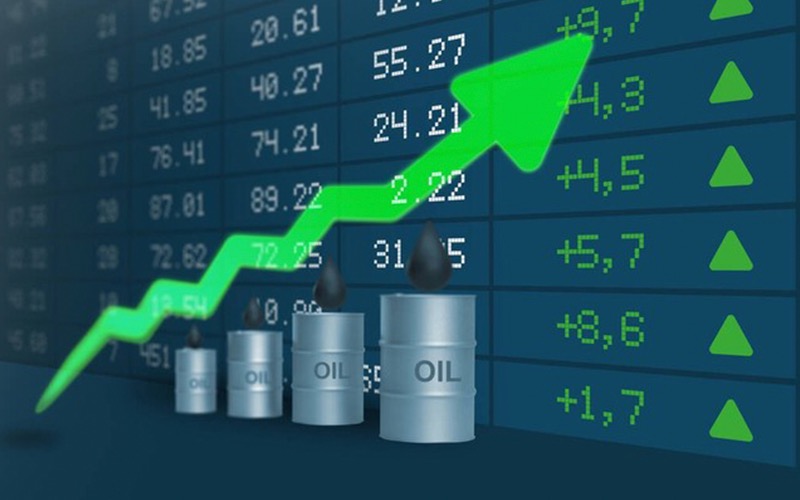
Inflation risk repricing triggers market turmoil: Gold plunges over $100, Brent crude surges 9% to $85.
2026-03-03 19:33:07
Spot gold, Brent crude oil, inflation risk, Middle East conflict, Commerzbank
Gold prices fluctuated wildly
Crude oil prices surge
Inflation risk triggers repricing
A stronger dollar and changing expectations of interest rate cuts
Market Impact and Future Outlook
According to APP reports, the international commodity market has recently seen significant divergence due to escalating geopolitical tensions. Spot gold prices briefly plunged nearly $105, hitting a low of $5160.60 per ounce, before recovering some of the losses, currently down 2.50% on the day. Meanwhile, Brent crude oil prices rebounded strongly, reaching $85 per barrel for the first time since July 2024, with a daily increase of over 9%. This sharp fluctuation stems from a market reassessment of inflation risks, with investors beginning to weigh the balance between safe-haven demand and adjustments in interest rate expectations.
##
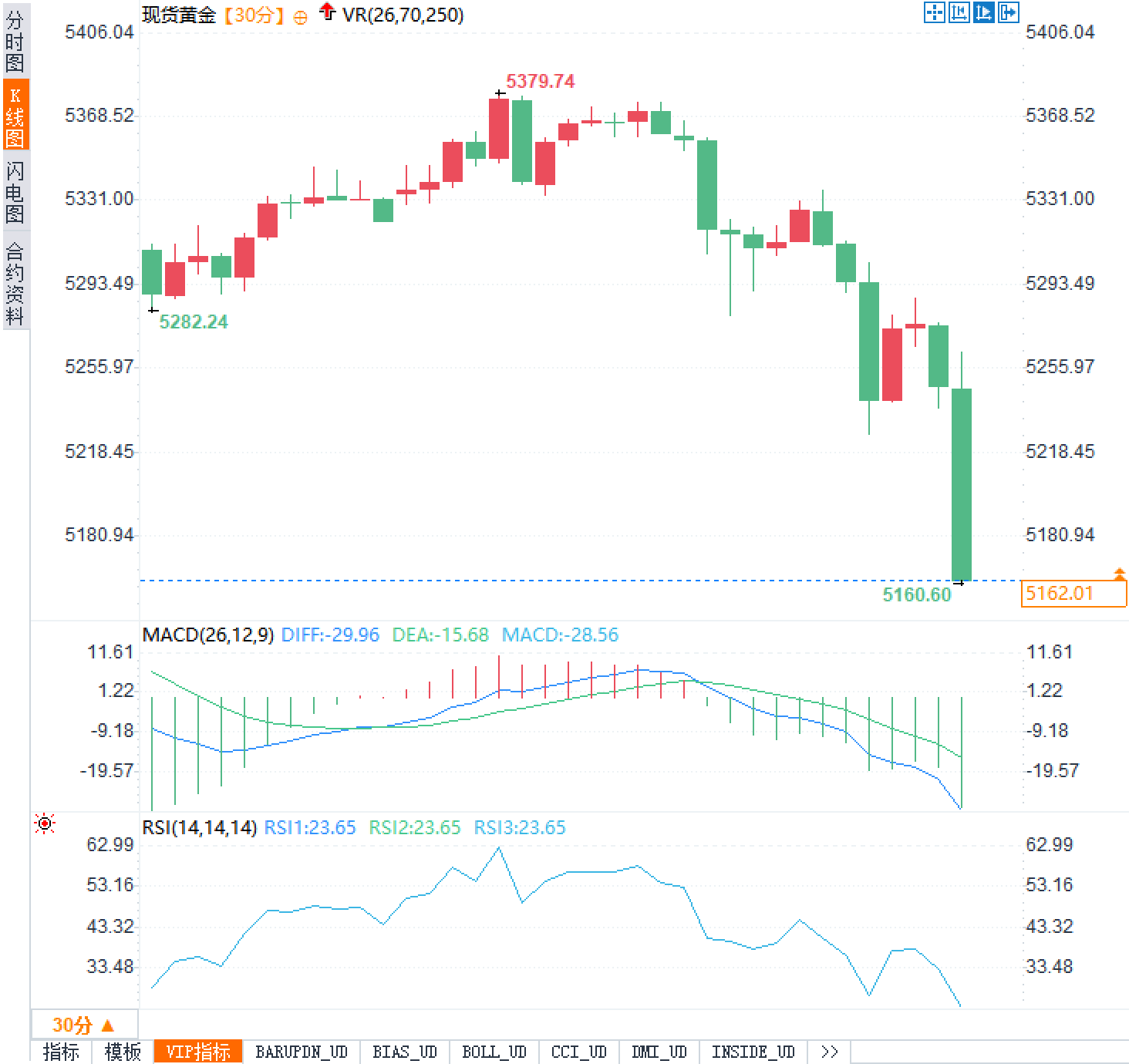
As a traditional safe-haven asset, spot gold should have found support amid geopolitical tensions, but this time the market has seen a significant decline. Prices fell rapidly by over $100 from recent highs, reaching a low of $5160.60 per ounce, a daily drop of approximately 2.50%. This performance is not due to a lack of safe-haven demand, but rather to market participants repricing the subsequent economic impact. The volatility in gold prices far exceeded normal levels, reflecting investors' rapid short-term position adjustments in response to potential monetary policy changes. Data shows that although gold initially rose due to safe-haven buying, subsequent selling pressure quickly dominated the market, demonstrating a rapid shift in the balance of power between bulls and bears.
##
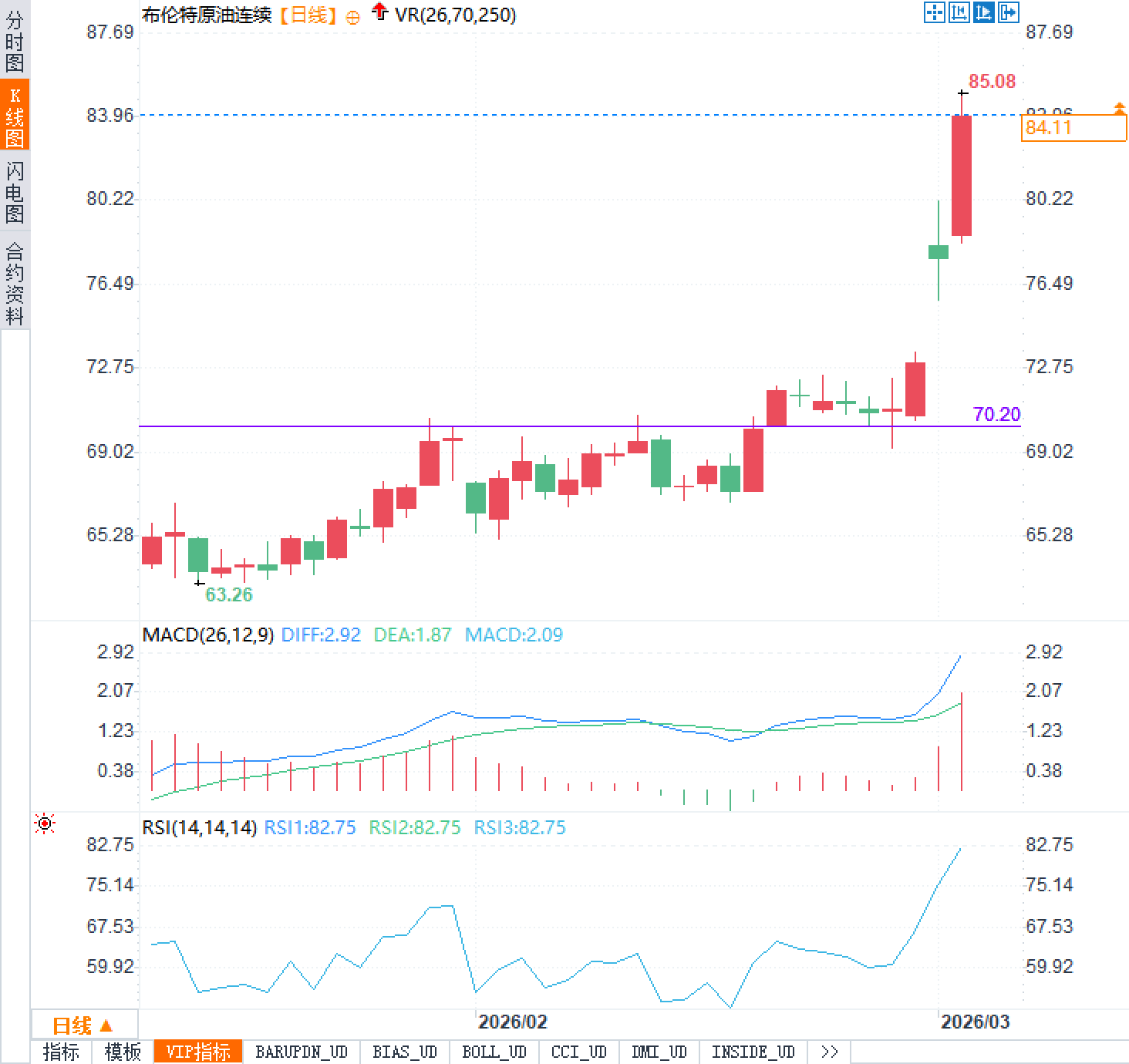
Brent crude oil prices performed strongly, surging over 9% intraday and successfully breaking through the $85/barrel mark, reaching a new high since July 2024. This rise was mainly driven by supply-side concerns, with market expectations of potential disruptions to energy transportation routes significantly increasing. As a core commodity in the global economy, the surge in crude oil prices directly impacts downstream industries, pushing up transportation and production costs. Investors have noted increased trading activity in crude oil futures contracts, indicating that funds are rapidly flowing into the energy sector to hedge against risks.
##
The escalating conflict in the Middle East has directly amplified global inflationary pressures, and the surge in oil prices has further amplified this effect. Rising energy costs will gradually be passed on to the consumer price index, prompting the market to reassess the long-term inflation path. Previously loose monetary policy expectations are thus facing revision, with investors worried that persistently high inflation will limit central bank flexibility. This repricing process has led to a divergence within the commodity market: oil benefits from supply concerns, while gold is pressured due to its interest rate sensitivity. Overall, inflation risk has become the core variable in current market pricing.
##
The simultaneous strengthening of the US dollar index reflects market expectations of a shift in the Federal Reserve's policy path. A recent analysis by Commerzbank on this topic suggests that the recent price pullback is likely due to the market's increased focus on inflationary risks stemming from the Middle East conflict, thus reducing expectations for interest rate cuts. This also explains the continued strength of the dollar. A stronger dollar directly increases the cost of holding dollar-denominated gold, further suppressing gold prices. Simultaneously, imported inflationary pressures from rising oil prices have led to a reassessment of how long major economies will maintain high interest rates.
##
This market shift will have a ripple effect on global asset allocation. Businesses face higher energy costs, while consumers may feel upward pressure on prices. Investors need to closely monitor energy market dynamics and central bank statements, adjusting their positions in a timely manner to cope with uncertainty. If the conflict continues, the risk of oil supply may further amplify, while stable inflation expectations will be a key factor in stabilizing gold prices.
Overall, this market volatility highlights the complex interaction between geopolitical factors and macroeconomic policy expectations, and the divergent trends in commodity prices provide investors with a new perspective on risk management.
Frequently Asked Questions
Table of Contents
According to APP reports, the international commodity market has recently seen significant divergence due to escalating geopolitical tensions. Spot gold prices briefly plunged nearly $105, hitting a low of $5160.60 per ounce, before recovering some of the losses, currently down 2.50% on the day. Meanwhile, Brent crude oil prices rebounded strongly, reaching $85 per barrel for the first time since July 2024, with a daily increase of over 9%. This sharp fluctuation stems from a market reassessment of inflation risks, with investors beginning to weigh the balance between safe-haven demand and adjustments in interest rate expectations.
##
Gold prices fluctuated wildly
As a traditional safe-haven asset, spot gold should have found support amid geopolitical tensions, but this time the market has seen a significant decline. Prices fell rapidly by over $100 from recent highs, reaching a low of $5160.60 per ounce, a daily drop of approximately 2.50%. This performance is not due to a lack of safe-haven demand, but rather to market participants repricing the subsequent economic impact. The volatility in gold prices far exceeded normal levels, reflecting investors' rapid short-term position adjustments in response to potential monetary policy changes. Data shows that although gold initially rose due to safe-haven buying, subsequent selling pressure quickly dominated the market, demonstrating a rapid shift in the balance of power between bulls and bears.
##
Crude oil prices surge
Brent crude oil prices performed strongly, surging over 9% intraday and successfully breaking through the $85/barrel mark, reaching a new high since July 2024. This rise was mainly driven by supply-side concerns, with market expectations of potential disruptions to energy transportation routes significantly increasing. As a core commodity in the global economy, the surge in crude oil prices directly impacts downstream industries, pushing up transportation and production costs. Investors have noted increased trading activity in crude oil futures contracts, indicating that funds are rapidly flowing into the energy sector to hedge against risks.
##
Inflation risk triggers repricing
The escalating conflict in the Middle East has directly amplified global inflationary pressures, and the surge in oil prices has further amplified this effect. Rising energy costs will gradually be passed on to the consumer price index, prompting the market to reassess the long-term inflation path. Previously loose monetary policy expectations are thus facing revision, with investors worried that persistently high inflation will limit central bank flexibility. This repricing process has led to a divergence within the commodity market: oil benefits from supply concerns, while gold is pressured due to its interest rate sensitivity. Overall, inflation risk has become the core variable in current market pricing.
##
A stronger dollar and changing expectations of interest rate cuts
The simultaneous strengthening of the US dollar index reflects market expectations of a shift in the Federal Reserve's policy path. A recent analysis by Commerzbank on this topic suggests that the recent price pullback is likely due to the market's increased focus on inflationary risks stemming from the Middle East conflict, thus reducing expectations for interest rate cuts. This also explains the continued strength of the dollar. A stronger dollar directly increases the cost of holding dollar-denominated gold, further suppressing gold prices. Simultaneously, imported inflationary pressures from rising oil prices have led to a reassessment of how long major economies will maintain high interest rates.
##
Market Impact and Future Outlook
This market shift will have a ripple effect on global asset allocation. Businesses face higher energy costs, while consumers may feel upward pressure on prices. Investors need to closely monitor energy market dynamics and central bank statements, adjusting their positions in a timely manner to cope with uncertainty. If the conflict continues, the risk of oil supply may further amplify, while stable inflation expectations will be a key factor in stabilizing gold prices.
Overall, this market volatility highlights the complex interaction between geopolitical factors and macroeconomic policy expectations, and the divergent trends in commodity prices provide investors with a new perspective on risk management.
Frequently Asked Questions
Q: Why did spot gold prices plummet despite safe-haven demand?
A: While Middle East conflicts typically boost safe-haven assets, inflation concerns triggered by soaring oil prices have dominated market sentiment. Investors worry that rising inflation will delay major central banks' interest rate cuts, leading to a stronger dollar and increased gold holding costs, thus triggering a short-term sell-off. This dynamic illustrates that the interplay between safe-haven demand and interest rate expectations is becoming the core logic influencing gold prices.
Q: Why did Brent crude oil rise so quickly by 9% and reach $85?
A: Escalating conflict directly impacts expectations for energy transportation security, and market concerns about supply disruptions are pushing up oil prices. Brent crude has rebounded rapidly from its previous lows, rising more than 9% to reach its highest level since July 2024. This trend reflects investors' reassessment of the global energy balance and has also amplified cost pressures on downstream industries.
Q: How exactly does the repricing of inflation risk affect the commodity market?
A: The surge in crude oil prices will gradually transmit to the overall price level, leading the market to raise its long-term inflation expectations. This change results in an adjustment in the interest rate path, compressing the previously loose monetary policy space. Gold, as a non-interest-bearing asset, is affected, while crude oil directly benefits, creating a clear asset divergence.
Q: What role did the strengthening of the US dollar play in this market trend?
A: The rise in the US dollar index, driven by inflation expectations, has directly increased the attractiveness of dollar-denominated goods. Commerzbank analysis points out that the market is placing greater emphasis on inflation risks stemming from conflict, thus explaining the continued strength of the dollar. This factor has become a significant variable suppressing gold prices.
Q: How should investors respond to the current market volatility?
A: We recommend focusing on energy price trends and subsequent statements from central banks, while diversifying your portfolio across safe-haven and growth assets. In the short term, oil-related sectors may remain strong, while gold will need to wait for inflation expectations to stabilize before it can stabilize. Overall, maintaining a flexible position and closely monitoring geopolitical developments will help effectively manage the uncertainties brought about by this event.
- Risk Warning and Disclaimer
- The market involves risk, and trading may not be suitable for all investors. This article is for reference only and does not constitute personal investment advice, nor does it take into account certain users’ specific investment objectives, financial situation, or other needs. Any investment decisions made based on this information are at your own risk.