IEA releases a record 400 million barrels of oil, with many countries following suit; market concerns remain that the release is insufficient.
2026-03-12 02:10:20
Table of Contents
- IEA releases record amount of oil reserves
- Many countries are actively following suit and releasing their reserves.
- Trump's latest tough statement
- Market concerns were not fully addressed.
- Comparison with the release of the Ukraine crisis
The International Energy Agency (IEA) agreed on Wednesday to release 400 million barrels of oil, the largest such move in the agency's history, in an effort to curb soaring crude oil prices caused by supply shocks triggered by the war between the United States, Israel, and Iran.
IEA releases record amount of oil reserves
The International Energy Agency (IEA) stated that the release was unanimously supported by its 32 member countries, marking the sixth such action taken by the agency since its founding in the 1970s. This move aims to prevent further increases in oil prices, as markets are concerned that Iranian attacks will continue to disrupt Middle Eastern oil exports.
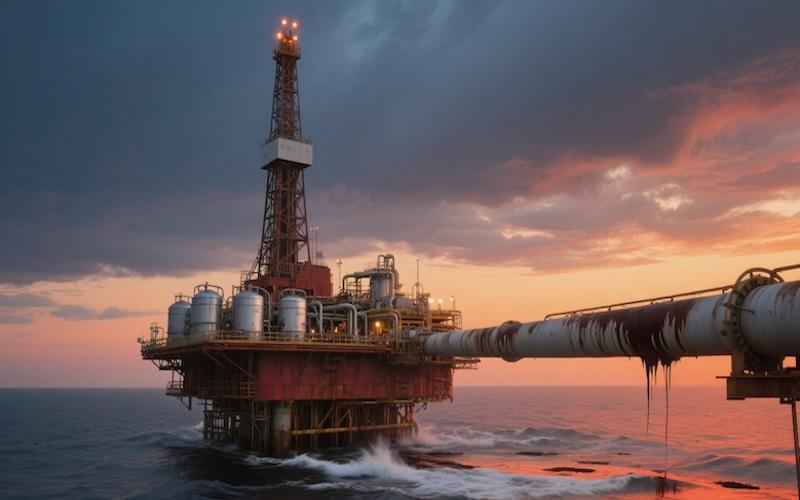
"The challenges facing the oil market are unprecedented in scale, and I am pleased that IEA member countries have responded with an unprecedented collective emergency action," said IEA Executive Director Fatih Birol. The Paris-based International Energy Agency issued the statement as French President Macron chaired a G7 leaders' meeting to discuss the issue. The IEA statement said, "The contingency reserves will be released to the market within a timeframe appropriate to each member country's circumstances," adding that "some countries will also take additional contingency measures to supplement them." At the end of the video conference of the G7 chaired by Macron, US President Trump said, "I think we are having a huge impact on the world." This record release is not only a breakthrough in quantity but also demonstrates the coordination and determination of the world's major oil-consuming countries in the face of a geopolitical crisis. The Strait of Hormuz, a vital choke point for global oil transportation, would directly impact 20% of global crude oil trade if disrupted. The IEA's move, through collective action by multiple countries, sends a strong signal of stability to the market, preventing a chain reaction of economic crises caused by runaway oil prices.
Many countries are actively following suit and releasing their reserves.
In addition to existing plans, more IEA member countries have announced specific release actions. Japan plans to release approximately 80 million barrels of oil from its private and national oil reserves, with Prime Minister Sanae Takaichi stating that the process could begin as early as the 16th of this month. South Korea's Ministry of Trade, Industry and Energy announced on Wednesday that it will release 22.46 million barrels of oil from its strategic reserves, accounting for 5.6% of the total IEA-coordinated releases.
The UK announced a contribution of 13.5 million barrels of oil reserves, Germany plans to release approximately 19.7 million barrels (about 2.64 million tons), and Austria will also release some of its emergency oil reserves and extend related natural gas inventories. Other EU member states, such as France and Italy, have pledged additional support. The US White House and Interior Secretary Doug Burgum stated that releasing the Strategic Petroleum Reserve (SPR) is under consideration, with the specific amount yet to be determined, but it will serve as a key supplement to address transportation disruptions. International Energy Agency (IEA ) member countries hold over 1.2 billion barrels of emergency reserves, in addition to an additional 600 million barrels held by the industry at government request. In-depth analysis: The rapid follow-up by multiple countries demonstrates that energy security has become a core consensus among G7 and IEA member countries. Japan, as Asia's largest oil importer, took the lead, highlighting its strategic considerations regarding its dependence on imports; the potential release of the US SPR further strengthens the supply security capabilities of the Western camp. This decentralized release not only alleviates short-term pressure but also avoids excessive depletion of reserves by any single country, buying time for subsequent diplomatic and military solutions to transportation problems.
Trump's latest tough statement
Trump's latest tough statement
In addition to publicly supporting IEA initiatives, Trump recently issued a stern warning regarding new threats from Iran in Truth Social and related statements. He stated that if Iran takes any action to block oil flows through the Strait of Hormuz , "they will be hit by the United States of America Twenty Times Harder than they have been hit thus far." Trump demanded that Iran immediately clear any potential mines it may have laid, or it would face "unprecedented military consequences," adding that "Death, fire, and fury will reign upon them."
Trump also predicted that the war against Iran was "far ahead of schedule" and would end "very soon." He stated that the US Navy would immediately escort oil tankers to resume transport and considered temporarily lifting some sanctions against oil-producing countries to stabilize global supply. He emphasized that the oil price increase was merely a "temporary transportation problem" and a "short-term cost of eliminating the Iranian nuclear threat," reiterating that "the United States has the capability and will solve this problem." In-depth analysis: Trump's 20-fold threat warning, combining military deterrence with diplomatic signals, aims to both deter Iran from permanently blocking the Strait of Hormuz and convey to global markets the US's firm stance of fully protecting oil transport security. This tough stance helps stabilize investor confidence and paves the way for US naval escort operations and potential sanctions adjustments, characterizing the oil price increase as a "temporary" issue.
Market concerns were not fully addressed.
Oil prices rose nearly 4% on Wednesday as attacks on ships in the Strait of Hormuz and potential mine-laying incidents exacerbated market concerns about supply disruptions. Analysts pointed out that although the total release volume was record and many countries followed suit, the daily release rate (approximately 3.3 million barrels per day if 100 million barrels are released within a month) is still far below the current supply disruption scale of approximately 20 million barrels per day, making it difficult to completely alleviate concerns.
In-depth analysis: The core of market concerns lies in the "large volume but slow speed." The root cause of the current crisis is the substantial blockage of transportation routes rather than a simple decline in production. While the release of reserves can fill some of the gap, if the conflict continues, the speed of daily releases will become a key variable determining oil price trends, making it difficult to completely eliminate supply anxiety in the short term.
Comparison with the release of the Ukraine crisis
When Russia launched its full-scale invasion of Ukraine in 2022, IEA member countries released 182.7 million barrels of oil and petroleum products in two phases, setting a new record in IEA history.
"The pressure mainly comes from the US government, which wants to release reserves," an EU diplomat said before the IEA statement was released. US Interior Secretary Bergen added in an interview with Fox News that the current predicament is being resolved through military and diplomatic means. Japanese Prime Minister Sanae Takaichi stated that Japan will not wait for formal coordination and will take the lead. In-depth analysis: This release of 400 million barrels is more than double that of the 2022 Ukraine crisis, reflecting that the current Middle East crisis is having a far greater impact on the global oil supply chain than it did then. This crisis directly chokes the world's most important transportation bottlenecks, rather than relying on regional sanctions, testing the international community's new capabilities to deal with "transportation disruption" crises.
Frequently Asked Questions
Q1: Why did the IEA decide to release a record 400 million barrels of oil this time?
A1: Due to the near-disruption of shipping through the Strait of Hormuz caused by the conflict between the US, Israel, and Iran, the global daily oil supply is short by approximately 20 million barrels, leading to a surge in oil prices. To prevent the energy crisis from worsening, the International Energy Agency , in an unprecedented move, coordinated the release of reserves by its 32 member countries to stabilize market expectations.Q2: What exactly does Trump's "20-fold strike" warning refer to?
A2: Trump stated explicitly on Truth Social that if Iran continues to block oil flows through the Strait of Hormuz or lay mines, the United States will launch a military strike against Iran with an intensity far exceeding the current level, even mentioning "Death, fire, and fury will reign upon them," demonstrating his tough stance.Q3: Can the release of reserves by multiple countries resolve the current crisis?
A3: Although Japan, South Korea, the UK, Germany, and other countries have announced specific release volumes, and the US is considering using SPR (Special Purpose Release), analysts believe the release speed remains crucial. If the average daily release is far below the scale of the disruption, it will be difficult to completely curb rising oil prices in the short term.Q4: How does this operation differ from the one during the 2022 Ukraine crisis?
A4: This release of 400 million barrels is more than double the 182.7 million barrels released in 2022, an unprecedented scale, reflecting the severity of the current supply disruptions in the Middle East, which far exceeds the Russian crisis at that time.Q5: What impact will this crisis have on ordinary consumers and the global economy?
A5: Persistently high oil prices will push up gasoline, transportation, and manufacturing costs, leading to increased global inflationary pressures. In the short term, consumer travel and living costs will rise, while in the long term, the outcome depends on the speed of the war's end and whether navigation through the strait resumes.
- Risk Warning and Disclaimer
- The market involves risk, and trading may not be suitable for all investors. This article is for reference only and does not constitute personal investment advice, nor does it take into account certain users’ specific investment objectives, financial situation, or other needs. Any investment decisions made based on this information are at your own risk.