The war in Iran is engulfing the global economy; who will bear the heaviest cost?
2026-03-23 09:37:11
The escalating conflict with Iran has triggered an unprecedented energy supply crisis. The Strait of Hormuz has been effectively closed, disrupting approximately one-fifth of global crude oil and liquefied natural gas transport, causing Brent crude prices to surge far above pre-conflict levels. This energy shock has rapidly spread to every corner of the globe, driving up inflation, slowing economic growth, and even raising the risk of stagflation.
Different economies are affected to varying degrees due to differences in energy dependence, geographical location, and coping capabilities. Some developed economies face soaring energy costs and inflationary pressures, while emerging markets and developing countries may experience more severe depletion of foreign exchange reserves, currency devaluation, and livelihood shocks. The following analysis examines the specific impacts of this crisis on major economies from multiple perspectives.
The G7 economies are bearing the brunt of the impact, once again facing the severe test of volatile energy prices. This conflict has evoked painful memories of the energy crisis during the Russia-Ukraine conflict, when heavy reliance on imported energy led to inflation soaring to double digits. Now, a new wave of shocks is once again exposing the vulnerabilities of these economies.
Among European countries, Germany, as a major manufacturing nation, has suffered particularly significantly from rising energy costs. While its manufacturing activity has recently ended a period of continuous contraction, its export-oriented economy is highly vulnerable to a decline in global demand. The stimulus package launched by the German government last year can mitigate the impact to some extent; however, budget shortfalls in the coming years limit the scope for further large-scale support.
Italy also has a large manufacturing sector, and oil and natural gas account for one of the highest proportions of its primary energy consumption in Europe. High energy prices will directly drive up production costs and living expenses.
UK electricity production is heavily reliant on gas-fired power generation, and natural gas prices tend to rise faster than oil prices, directly influencing electricity price trends. While an energy price cap mechanism could alleviate short-term inflationary pressures, it may force the central bank to maintain higher interest rates. Against the backdrop of rising unemployment, the UK may face its longest period of high borrowing costs among the G7 countries. Budgetary constraints and bond market pressures further limit the scope for aid to businesses and households.
Japan imports approximately 95% of its oil from the Middle East, with nearly 90% of that transported through the Strait of Hormuz. A weak yen coupled with reliance on imported raw materials will amplify upward pressure on food and consumer goods prices, further exacerbating domestic inflation.
As the epicenter of the conflict, the Gulf states inevitably face the most direct economic blows.
The closure of the Strait of Hormuz means that oil and gas products from countries like Kuwait, Qatar, and Bahrain will be difficult to transport to international markets. Even a surge in oil and gas prices will not be enough to offset the revenue losses caused by the export disruption. Multiple institutions predict that the region's economy may contract this year, completely reversing pre-war expectations of robust growth.
Furthermore, the conflict has also impacted remittance income. Foreign workers send hundreds of billions of dollars back to their home countries each year, injecting the local economy with these funds. If supply chains and employment are disrupted, this crucial source of funding will decrease significantly, further amplifying downward economic pressure.
As a major global importer of crude oil, India relies on imports for approximately 90% of its crude oil and nearly half of its liquefied petroleum gas (LPG), most of which must pass through the Strait of Hormuz. Economists have lowered their forecasts for India's economic growth, and the rupee has fallen to a historic low. With soaring gas prices and informal rationing in some areas, the supply of hot food and drinks in restaurants and home kitchens is limited, and the impact on people's livelihoods is rapidly becoming apparent.
Turkey, bordering Iran, is preparing for a potential influx of refugees and geopolitical uncertainty. Economically, the Turkish central bank has been forced to pause its interest rate cut cycle for the second time in a year and has sold hundreds of billions of dollars in foreign exchange reserves to support its currency, creating a strong sense of an impending inflation crisis.
A few countries, having recently experienced or nearly fallen into a full-blown economic crisis, are extremely vulnerable to shocks and are in the most difficult situation.
Sri Lanka has designated every Wednesday as a public holiday for public sector employees in an effort to control energy costs. Schools, universities, and public institutions are closed, non-essential public transport is suspended, and drivers are required to register for a "National Fuel Pass" to restrict fuel purchases.
Pakistan, which teetered on the brink of crisis two years ago, has now drastically increased gasoline prices, closed schools for two weeks, halved fuel subsidies for government departments, banned the purchase of new air conditioners and furniture, and ordered some official vehicles to be taken off the road.
In addition to soaring fuel and food prices, Egypt faces the significant risk of a sharp decline in Suez Canal revenue and tourism income. The latter brought in nearly $20 billion last year. Since the outbreak of the conflict, the local currency has depreciated by nearly 9%, and the pressure to repay its massive dollar-denominated debt has increased dramatically.
The energy crisis triggered by the conflict in Iran is impacting the global economy with unprecedented speed and breadth. Persistently high energy prices will amplify inflationary pressures, suppress consumption and investment, and could potentially trigger a wider economic recession. Developed economies need to weigh fiscal support against debt risks, while emerging markets and developing countries face the dual challenges of foreign exchange depletion and deteriorating livelihoods.
The future of the conflict remains uncertain, but its profound impact on the global economy cannot be ignored. Who will suffer the most? The answer is obvious: those economies most dependent on energy and with the least buffer will pay the heaviest price.
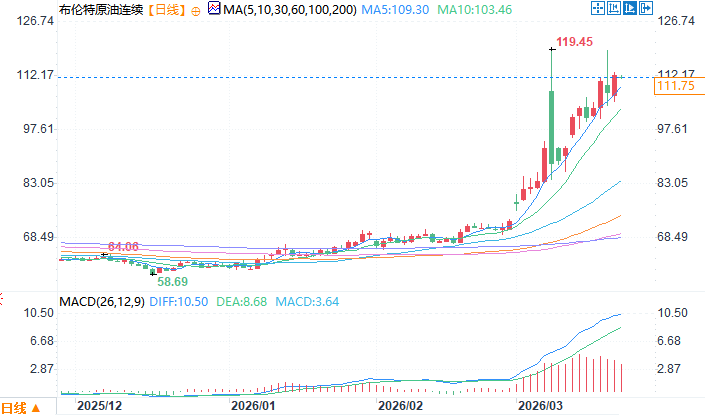
Brent crude oil daily chart source: EasyForex
At 9:36 AM Beijing time on March 23, Brent crude oil futures were trading at $111.60 per barrel.
Different economies are affected to varying degrees due to differences in energy dependence, geographical location, and coping capabilities. Some developed economies face soaring energy costs and inflationary pressures, while emerging markets and developing countries may experience more severe depletion of foreign exchange reserves, currency devaluation, and livelihood shocks. The following analysis examines the specific impacts of this crisis on major economies from multiple perspectives.
Developed economies: Energy shock reignites inflation concerns
The G7 economies are bearing the brunt of the impact, once again facing the severe test of volatile energy prices. This conflict has evoked painful memories of the energy crisis during the Russia-Ukraine conflict, when heavy reliance on imported energy led to inflation soaring to double digits. Now, a new wave of shocks is once again exposing the vulnerabilities of these economies.
Among European countries, Germany, as a major manufacturing nation, has suffered particularly significantly from rising energy costs. While its manufacturing activity has recently ended a period of continuous contraction, its export-oriented economy is highly vulnerable to a decline in global demand. The stimulus package launched by the German government last year can mitigate the impact to some extent; however, budget shortfalls in the coming years limit the scope for further large-scale support.
Italy also has a large manufacturing sector, and oil and natural gas account for one of the highest proportions of its primary energy consumption in Europe. High energy prices will directly drive up production costs and living expenses.
UK electricity production is heavily reliant on gas-fired power generation, and natural gas prices tend to rise faster than oil prices, directly influencing electricity price trends. While an energy price cap mechanism could alleviate short-term inflationary pressures, it may force the central bank to maintain higher interest rates. Against the backdrop of rising unemployment, the UK may face its longest period of high borrowing costs among the G7 countries. Budgetary constraints and bond market pressures further limit the scope for aid to businesses and households.
Japan imports approximately 95% of its oil from the Middle East, with nearly 90% of that transported through the Strait of Hormuz. A weak yen coupled with reliance on imported raw materials will amplify upward pressure on food and consumer goods prices, further exacerbating domestic inflation.
The Gulf region: directly devastated by the war, its economic prospects have plummeted.
As the epicenter of the conflict, the Gulf states inevitably face the most direct economic blows.
The closure of the Strait of Hormuz means that oil and gas products from countries like Kuwait, Qatar, and Bahrain will be difficult to transport to international markets. Even a surge in oil and gas prices will not be enough to offset the revenue losses caused by the export disruption. Multiple institutions predict that the region's economy may contract this year, completely reversing pre-war expectations of robust growth.
Furthermore, the conflict has also impacted remittance income. Foreign workers send hundreds of billions of dollars back to their home countries each year, injecting the local economy with these funds. If supply chains and employment are disrupted, this crucial source of funding will decrease significantly, further amplifying downward economic pressure.
Major emerging economies: Soaring oil prices coupled with multiple external shocks
As a major global importer of crude oil, India relies on imports for approximately 90% of its crude oil and nearly half of its liquefied petroleum gas (LPG), most of which must pass through the Strait of Hormuz. Economists have lowered their forecasts for India's economic growth, and the rupee has fallen to a historic low. With soaring gas prices and informal rationing in some areas, the supply of hot food and drinks in restaurants and home kitchens is limited, and the impact on people's livelihoods is rapidly becoming apparent.
Turkey, bordering Iran, is preparing for a potential influx of refugees and geopolitical uncertainty. Economically, the Turkish central bank has been forced to pause its interest rate cut cycle for the second time in a year and has sold hundreds of billions of dollars in foreign exchange reserves to support its currency, creating a strong sense of an impending inflation crisis.
Most vulnerable countries: Just recovered from the brink of crisis, now plunged into an energy abyss.
A few countries, having recently experienced or nearly fallen into a full-blown economic crisis, are extremely vulnerable to shocks and are in the most difficult situation.
Sri Lanka has designated every Wednesday as a public holiday for public sector employees in an effort to control energy costs. Schools, universities, and public institutions are closed, non-essential public transport is suspended, and drivers are required to register for a "National Fuel Pass" to restrict fuel purchases.
Pakistan, which teetered on the brink of crisis two years ago, has now drastically increased gasoline prices, closed schools for two weeks, halved fuel subsidies for government departments, banned the purchase of new air conditioners and furniture, and ordered some official vehicles to be taken off the road.
In addition to soaring fuel and food prices, Egypt faces the significant risk of a sharp decline in Suez Canal revenue and tourism income. The latter brought in nearly $20 billion last year. Since the outbreak of the conflict, the local currency has depreciated by nearly 9%, and the pressure to repay its massive dollar-denominated debt has increased dramatically.
The energy crisis triggered by the conflict in Iran is impacting the global economy with unprecedented speed and breadth. Persistently high energy prices will amplify inflationary pressures, suppress consumption and investment, and could potentially trigger a wider economic recession. Developed economies need to weigh fiscal support against debt risks, while emerging markets and developing countries face the dual challenges of foreign exchange depletion and deteriorating livelihoods.
The future of the conflict remains uncertain, but its profound impact on the global economy cannot be ignored. Who will suffer the most? The answer is obvious: those economies most dependent on energy and with the least buffer will pay the heaviest price.
Brent crude oil daily chart source: EasyForex
At 9:36 AM Beijing time on March 23, Brent crude oil futures were trading at $111.60 per barrel.
- Risk Warning and Disclaimer
- The market involves risk, and trading may not be suitable for all investors. This article is for reference only and does not constitute personal investment advice, nor does it take into account certain users’ specific investment objectives, financial situation, or other needs. Any investment decisions made based on this information are at your own risk.