Trump issues 48-hour ultimatum; Iran threatens to destroy Gulf oil fields; energy lifeline hangs in the balance.
2026-03-23 09:40:10
On Saturday evening (March 21), US President Trump issued a shocking ultimatum on social media, demanding that Iran fully and non-threateningly reopen the Strait of Hormuz within 48 hours, or the US would "completely destroy" Iran's largest power plant, starting with the Damavand power plant (2,868 megawatts) near Tehran.
Trump emphasized that this move was in response to Iran's continued "hostile actions" of restricting navigation in the Strait of Hormuz, and aimed to force Iran to immediately restore normal access to global energy routes. This ultimatum came at a time when the US-Israel war against Iran had lasted three weeks, global oil prices were fluctuating at high levels, and maritime inventories were dwindling, and was seen as the latest trigger for escalating conflict.
On Monday (March 23) during Asian trading hours, US crude oil prices fluctuated upwards, currently trading around $98.32 per barrel, with a daily increase of approximately 0.11%. Earlier in the session, prices jumped as much as 3% to $101.50 per barrel, a new high since March 16.
On March 22, Iranian Parliament Speaker Mohammad Bagher Ghalibaf responded swiftly and strongly, stating that if Iranian power plants and other infrastructure become targets, all energy and oil infrastructure in the Middle East would be considered "legitimate targets" and subjected to "irreversible destruction."
Kalibaf warned that this move would lead to a "long-term rise" in oil prices, causing a devastating impact on the global economy. The Iranian parliament speaker's statement essentially escalates the conflict into a "full-scale energy war": the US and Israel's attacks on Iranian energy infrastructure will trigger a full-scale Iranian retaliation against facilities in Gulf oil-producing countries such as Saudi Arabia, the UAE, and Qatar, completely disrupting the regional energy balance.
The Damavand Power Plant, located northeast of Tehran, is Iran's largest gas-fired combined cycle power plant, with an installed capacity of 2,868 megawatts, supplying approximately 30% of the electricity to Tehran and the surrounding area.
Trump specifically named it as the initial target, aiming to precisely cripple the power system in the Iranian capital region, creating public panic and internal pressure on the regime. Iran's electricity is heavily reliant on natural gas power generation; an attack on such large power plants would result in long repair times and limited backup capacity, triggering widespread blackouts, industrial shutdowns, and social unrest, further amplifying domestic instability in Iran.
The "irreversible destruction" warning from Qalibaf directly targets the Middle East's energy lifeline: Saudi Aramco's main oil fields, UAE offshore oil fields, Qatar's northern gas fields, Kuwait's oil refineries, and Bahrain's ports could all become targets of Iranian retaliation.
The previous conflict has already caused severe damage to Qatar’s Ras Lafan LNG facility (affecting one-fifth of global production capacity) and attacks on Saudi Arabia’s Red Sea ports. If it escalates into a full-scale mutual destruction of energy facilities, it will lead to a long-term structural shortage of global oil and gas supply.
As a vital passage, the Strait of Hormuz's navigation is highly restricted by Iran's "conditional opening" rules. If the facilities are destroyed, the repairs will take years, and oil prices will enter an extremely high range for an extended period.
Kalibav's warning of a "long-term rise in oil prices" is not unfounded: current floating oil inventories have fallen to 78 million barrels, evaporating by 1.8 million barrels per day. If energy facilities are destroyed, OPEC+ spare capacity will be difficult to fill in the short term, and the global supply gap will expand to millions of barrels per day.
Goldman Sachs previously assessed that if the Strait of Hormuz remains blocked for an extended period, oil prices could surpass the historical peak of $147 in 2008. This ultimatum and escalating countermeasures will further strengthen market expectations for an "oil shock 2.0," dramatically increasing the probability of oil prices remaining high for an extended period or even challenging new highs, and simultaneously amplifying global inflationary pressures and the risk of economic recession.
On the evening of the 21st, Trump issued a 48-hour ultimatum, specifically naming Iran's largest power plant for destruction. On the 22nd, Kalibaf responded strongly, stating that all energy facilities in the Middle East would be considered legitimate targets, marking the official entry of the conflict into the "mutual destruction of energy" phase.
The Damavand power plant, as the initial target, will directly paralyze the power supply to the Iranian capital, while Iranian retaliation will affect key oil-producing facilities in Saudi Arabia, Qatar, and other countries. The passage through the Strait of Hormuz has become highly politicized.
A sustained rise in global oil prices appears to be a consensus among institutions. The sharp decline in offshore inventories, coupled with the risk of mutual destruction of facilities, is causing the energy crisis to evolve from regional conflict into a global structural supply shortage. The window for diplomatic maneuvering is shrinking dramatically, and the 48-hour countdown will be a crucial juncture determining the energy landscape of the Middle East and even the world.
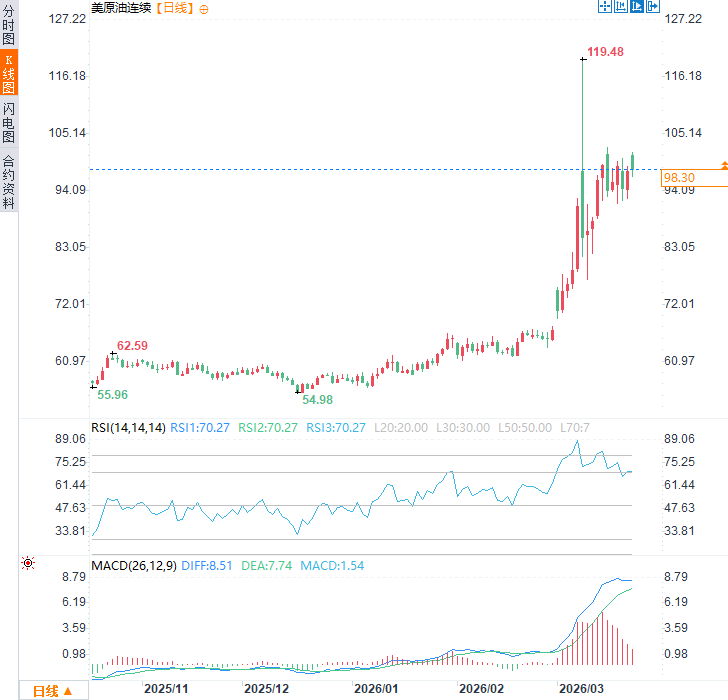
(US crude oil daily chart, source: FX678)
At 9:39 AM Beijing time, US crude oil futures were trading at $98.32 per barrel.
Trump emphasized that this move was in response to Iran's continued "hostile actions" of restricting navigation in the Strait of Hormuz, and aimed to force Iran to immediately restore normal access to global energy routes. This ultimatum came at a time when the US-Israel war against Iran had lasted three weeks, global oil prices were fluctuating at high levels, and maritime inventories were dwindling, and was seen as the latest trigger for escalating conflict.
On Monday (March 23) during Asian trading hours, US crude oil prices fluctuated upwards, currently trading around $98.32 per barrel, with a daily increase of approximately 0.11%. Earlier in the session, prices jumped as much as 3% to $101.50 per barrel, a new high since March 16.
Iranian Parliament Speaker Ghalibaf responded directly with a warning of countermeasures.
On March 22, Iranian Parliament Speaker Mohammad Bagher Ghalibaf responded swiftly and strongly, stating that if Iranian power plants and other infrastructure become targets, all energy and oil infrastructure in the Middle East would be considered "legitimate targets" and subjected to "irreversible destruction."
Kalibaf warned that this move would lead to a "long-term rise" in oil prices, causing a devastating impact on the global economy. The Iranian parliament speaker's statement essentially escalates the conflict into a "full-scale energy war": the US and Israel's attacks on Iranian energy infrastructure will trigger a full-scale Iranian retaliation against facilities in Gulf oil-producing countries such as Saudi Arabia, the UAE, and Qatar, completely disrupting the regional energy balance.
Analysis of the Damavand power plant as a primary target
The Damavand Power Plant, located northeast of Tehran, is Iran's largest gas-fired combined cycle power plant, with an installed capacity of 2,868 megawatts, supplying approximately 30% of the electricity to Tehran and the surrounding area.
Trump specifically named it as the initial target, aiming to precisely cripple the power system in the Iranian capital region, creating public panic and internal pressure on the regime. Iran's electricity is heavily reliant on natural gas power generation; an attack on such large power plants would result in long repair times and limited backup capacity, triggering widespread blackouts, industrial shutdowns, and social unrest, further amplifying domestic instability in Iran.
Middle Eastern energy and oil facilities face the risk of irreversible destruction.
The "irreversible destruction" warning from Qalibaf directly targets the Middle East's energy lifeline: Saudi Aramco's main oil fields, UAE offshore oil fields, Qatar's northern gas fields, Kuwait's oil refineries, and Bahrain's ports could all become targets of Iranian retaliation.
The previous conflict has already caused severe damage to Qatar’s Ras Lafan LNG facility (affecting one-fifth of global production capacity) and attacks on Saudi Arabia’s Red Sea ports. If it escalates into a full-scale mutual destruction of energy facilities, it will lead to a long-term structural shortage of global oil and gas supply.
As a vital passage, the Strait of Hormuz's navigation is highly restricted by Iran's "conditional opening" rules. If the facilities are destroyed, the repairs will take years, and oil prices will enter an extremely high range for an extended period.
Probability of Long-Term Oil Price Increases and Potential Market Shocks
Kalibav's warning of a "long-term rise in oil prices" is not unfounded: current floating oil inventories have fallen to 78 million barrels, evaporating by 1.8 million barrels per day. If energy facilities are destroyed, OPEC+ spare capacity will be difficult to fill in the short term, and the global supply gap will expand to millions of barrels per day.
Goldman Sachs previously assessed that if the Strait of Hormuz remains blocked for an extended period, oil prices could surpass the historical peak of $147 in 2008. This ultimatum and escalating countermeasures will further strengthen market expectations for an "oil shock 2.0," dramatically increasing the probability of oil prices remaining high for an extended period or even challenging new highs, and simultaneously amplifying global inflationary pressures and the risk of economic recession.
Editor's Summary
On the evening of the 21st, Trump issued a 48-hour ultimatum, specifically naming Iran's largest power plant for destruction. On the 22nd, Kalibaf responded strongly, stating that all energy facilities in the Middle East would be considered legitimate targets, marking the official entry of the conflict into the "mutual destruction of energy" phase.
The Damavand power plant, as the initial target, will directly paralyze the power supply to the Iranian capital, while Iranian retaliation will affect key oil-producing facilities in Saudi Arabia, Qatar, and other countries. The passage through the Strait of Hormuz has become highly politicized.
A sustained rise in global oil prices appears to be a consensus among institutions. The sharp decline in offshore inventories, coupled with the risk of mutual destruction of facilities, is causing the energy crisis to evolve from regional conflict into a global structural supply shortage. The window for diplomatic maneuvering is shrinking dramatically, and the 48-hour countdown will be a crucial juncture determining the energy landscape of the Middle East and even the world.
(US crude oil daily chart, source: FX678)
At 9:39 AM Beijing time, US crude oil futures were trading at $98.32 per barrel.
- Risk Warning and Disclaimer
- The market involves risk, and trading may not be suitable for all investors. This article is for reference only and does not constitute personal investment advice, nor does it take into account certain users’ specific investment objectives, financial situation, or other needs. Any investment decisions made based on this information are at your own risk.