March 25th Financial Breakfast: The US intends to propose a one-month ceasefire plan; gold prices rebound above $4500; oil prices plunge nearly 4%.
2026-03-25 07:28:29
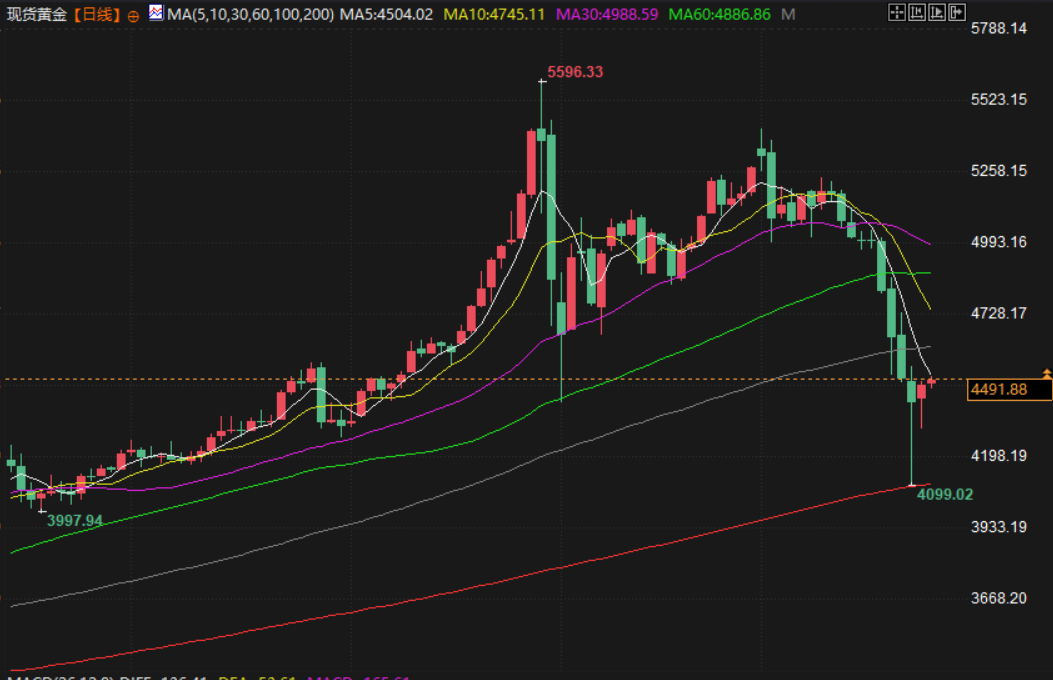
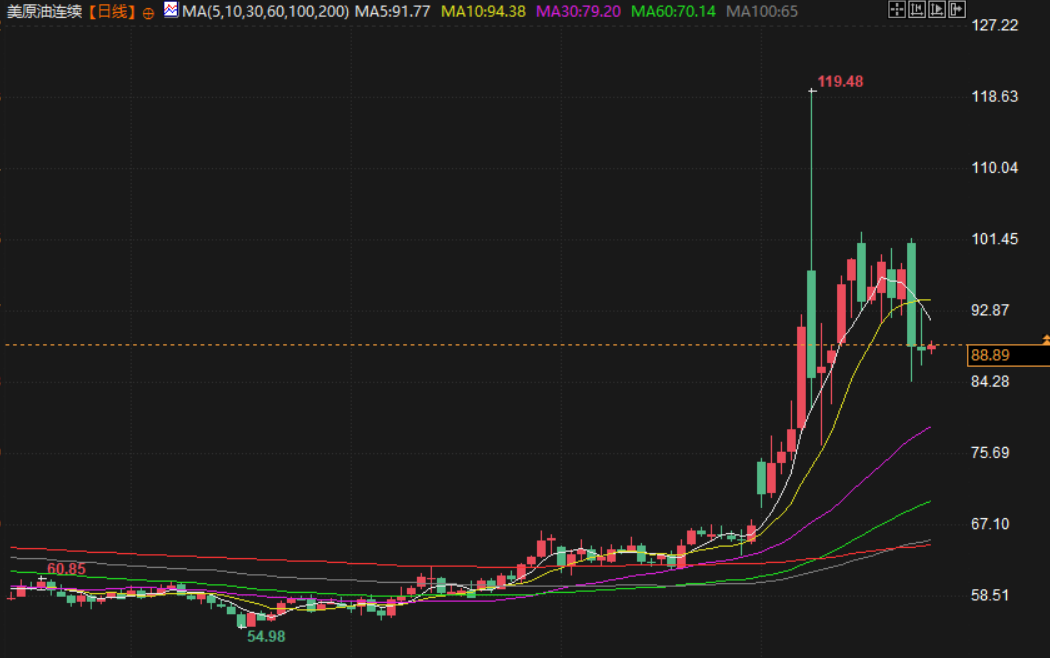
On Wednesday (March 25, Beijing time) in early Asian trading, spot gold rose above $4,500 per ounce again, as mediators from Turkey, Egypt, and Pakistan pushed for a meeting between US and Iranian officials within the next 48 hours; US crude oil fell nearly 4%, trading around $88.80 per barrel, as the US intends to propose a one-month ceasefire in order to discuss a 15-point agreement with Iran aimed at ending the war.

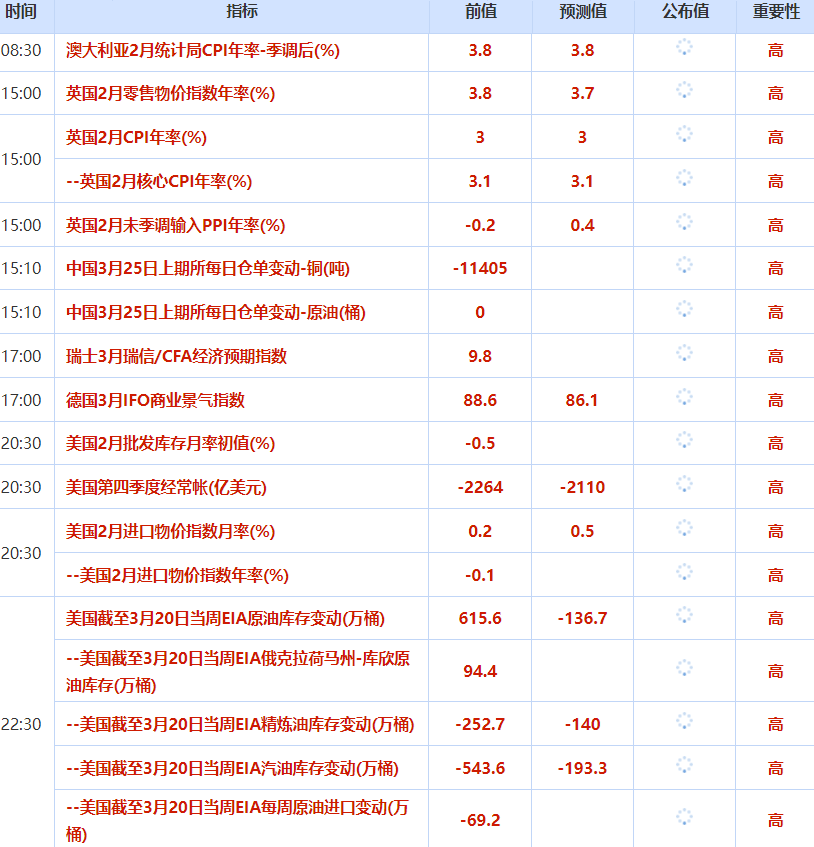
U.S. stocks closed lower in volatile trading on Tuesday, as investors oscillated between pressure from rising oil prices and expectations of a potential easing of geopolitical tensions. Major indexes initially recovered some ground after President Trump claimed progress in negotiations with Iran, but subsequent reports of increased U.S. troop deployments to the Middle East reignited concerns about a protracted conflict, coupled with a weak two-year Treasury auction pushing up yields, putting downward pressure on the market.
The Dow Jones Industrial Average fell 0.18%, the S&P 500 fell 0.37%, and the Nasdaq Composite fell 0.84%. Only four of the eleven sectors in the S&P 500 closed higher, with the energy sector leading the gains at 2.05% due to a more than 4% rise in crude oil futures. Communication services and technology sectors, however, fell 2.50% and 0.76%, respectively.
Market strategists point out that the simultaneous rise in oil prices and interest rates has created a "double whammy" for the stock market, exacerbating concerns about stagflation, while a survey shows that U.S. business activity slowed to an 11-month low in March.
Regarding the interest rate outlook, traders have completely ruled out expectations of a rate cut this year, and even anticipate a greater than 30% probability of a rate hike before the end of the year. In addition, redemption pressures in the private equity lending sector have drawn attention, with some related management companies experiencing mixed stock price movements.
Among individual stocks, Estée Lauder plunged 9.8% on news of merger and acquisition talks, while Jefferies rose 2.5% on acquisition rumors. Despite relatively light trading, Barclays raised its year-end target for the S&P 500 based on earnings forecasts.
Gold prices rose more than 1.5% on Tuesday as mediators from Turkey, Egypt, and Pakistan pushed for a meeting between U.S. and Iranian officials within the next 48 hours. However, the two sides remain far apart on the issue. Iranian officials initially expressed openness to talks but have not yet formally approved a meeting in Islamabad.
Federal Reserve Governor Barr stated that given inflation is above target, interest rates may need to remain unchanged "for some time." He added that further rate cuts will only occur after evidence of a sustained decline in inflation is seen, provided the labor market remains stable. He emphasized that a clear signal of falling inflation is needed before any rate cuts can be implemented.
TD Securities strategists point out that if the war continues and energy prices rise, it will put pressure on gold in the short term. Although gold has safe-haven properties, its appeal diminishes in a high-interest-rate environment.
Oil prices edged lower on Tuesday as mediators pushed for a meeting between U.S. and Iranian officials within the next 48 hours. The Pakistani prime minister expressed his willingness to chair the U.S.-Iran talks, but sources said Iran's negotiating stance was hardening and that it would demand significant concessions from the U.S. if the mediation proceeded to formal talks.
Iran has begun charging tolls to some merchant ships passing through the Strait of Hormuz, further demonstrating Tehran's control over this most important global maritime energy route. Sources indicate the fees are collected on a temporary, per-ship basis, with a maximum of $2 million per voyage, effectively establishing an informal "passage fee" on the waterway.
Macquarie warned that if the lockdown continues until the end of April, Brent crude oil prices could break through the record high of $150 per barrel.
The dollar strengthened on Tuesday, reversing some of the losses from the previous session fueled by optimism. Despite the Trump administration's pursuit of dialogue with Iran, news of the Pentagon's plans to send additional airborne divisions to the Middle East exacerbated market concerns about the ongoing conflict.
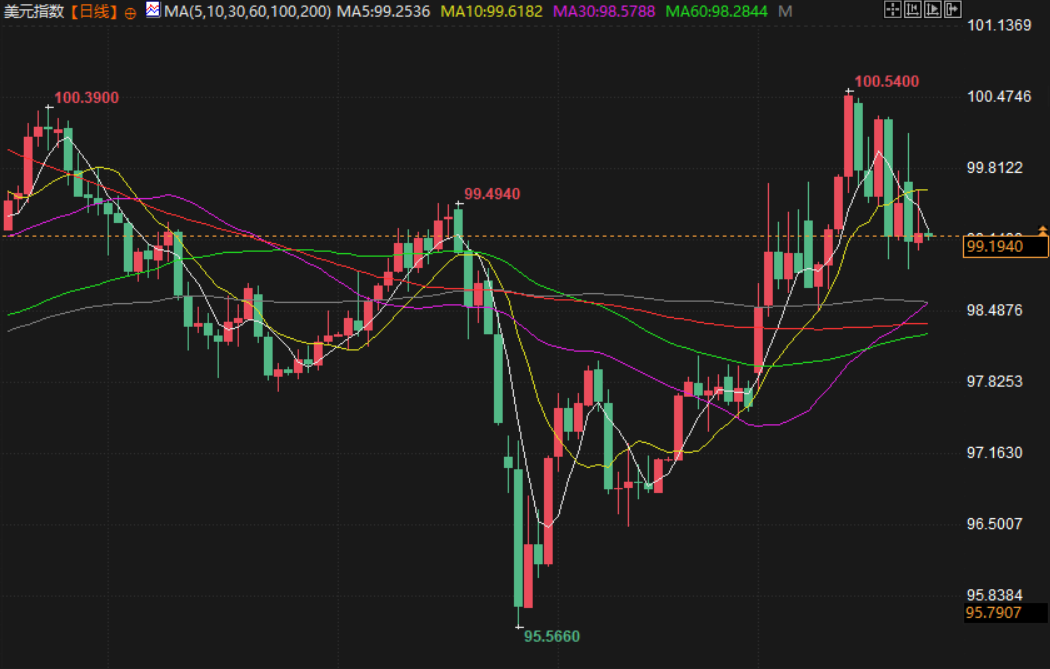
The dollar index has risen 1.8% so far this month, on track for its biggest monthly gain since October last year. The dollar rose 0.3% against the yen to 158.98 yen, while the euro fell 0.3% against the dollar to $1.1584.
Markets are highly sensitive to geopolitical signals, and investors reacted mutedly to data showing that U.S. business activity slowed to an 11-month low in March. Meanwhile, markets further lowered their expectations for a Federal Reserve rate cut this year.
Israeli media: The US intends to implement a one-month ceasefire in order to discuss a 15-point agreement with Iran.
According to a report by Israel's Channel 12 television on the 24th, the United States intends to propose a one-month ceasefire in order to discuss a 15-point agreement with Iran aimed at ending the war. (Xinhua)
Saudi Aramco increases crude oil exports from Yanbu port to compensate for the closure of the Strait of Hormuz.
Shipping data shows that crude oil exports from Saudi Arabia's Red Sea port of Yanbu rose to nearly 4 million barrels per day last week, a significant increase from pre-war export levels. This surge indicates that Saudi Aramco, the world's largest oil exporter, is moving forward with its plans to transport crude oil to Yanbu via the East-West Pipeline to maintain supply flow and mitigate the impact of the de facto closure of the Strait of Hormuz due to the conflict. The company stated on March 10 that Aramco could transport up to 7 million barrels per day of crude oil to Yanbu via the pipeline, of which approximately 5 million barrels per day would be available for export, with the remainder supplying local refineries. Kpler data shows that crude oil exports through Yanbu have averaged approximately 2.9 million barrels per day so far in March, largely consistent with data provided by the London Stock Exchange Group. This represents a significant increase from the average export volume of 770,000 barrels per day in January and February. According to data from Kpler, the London Stock Exchange Group, and shipping brokerage Clarkson, exports surged to nearly 4 million barrels per day in the week beginning March 16 and are expected to increase further. Kpler analyst Johannes Laubar said, "We expect this upward trend to continue, with exports potentially reaching around 5 million barrels per day by the end of the month, which would be close to Yanbu's maximum loading capacity."
Trump claims Iran has been "completely defeated".
On March 24, local time, US President Trump stated at the White House that the US had "won" in its actions against Iran, that Iran had been "completely defeated," and that the current situation was not a "balanced conflict," but rather that Iran had been "militarily and thoroughly weakened." Trump stated that Iran "has no navy, no air force, and lacks effective defense capabilities," and that the US held an absolute advantage in the operation, criticizing some media outlets for describing the situation as a "stalemate," calling it "inaccurate." He also pointed out that the US has the capability to further strike key Iranian infrastructure, but emphasized his hope to end the conflict through negotiations to avoid further losses. Trump stated, "This conflict can end," but did not make a definitive judgment on the final agreement. On the nuclear issue, Trump reiterated that Iran "will not possess nuclear weapons," and stated that previous US military actions had "destroyed its nuclear capabilities." He also mentioned that if he had not withdrawn from the Iran nuclear deal, Iran might "have already acquired nuclear weapons." He further mentioned that Iran launched missiles at the UAE, Kuwait, Bahrain, and other locations in the early stages of the conflict, actions that were "unexpected." Trump concluded by saying he hoped to end the current "military operation" through diplomatic means, stating that the goal was to "save millions of lives." (CCTV News)
Trump said Iran "wants a deal."
On March 24 local time, US President Trump stated that the US is communicating with "the right people" and that Iran "wants a deal." He also claimed that Iran "has no leadership" and that the US has achieved "great success" on the Iran issue. (CCTV News)
The US Treasury Department eased restrictions on transactions involving Venezuelan institutions in the US.
On March 24, local time, according to documents from the U.S. Treasury Department, the Office of Foreign Assets Control (OFAC) issued General License No. 53, allowing the provision of goods and services to Venezuelan government agencies in the United States under certain conditions. This license authorizes transactions related to Venezuelan representative offices in the U.S. and international organizations, including the provision of goods and services for their official business or personal personnel, and allows U.S. financial institutions to provide account, credit, and fund transfer services to relevant agencies and personnel, but prohibits real estate transactions or other legally prohibited activities. (CCTV News)
The United States plans to hold high-level talks with Iran as early as Thursday.
The US and regional mediators are exploring high-level peace talks with Iran as early as Thursday, but are awaiting a response from Tehran. Trump wants to end the war, despite the ongoing tensions. Israel fears Trump might reach an agreement that fails to achieve his objectives and limits his military options.
Iran is charging some merchant ships passage fees in the Strait of Hormuz and plans to include the fees in postwar arrangements.
Iran has begun charging tolls to some merchant ships transiting the Strait of Hormuz, further demonstrating Tehran's control over this vital global maritime energy route. Sources indicate the fees are being collected on a temporary, on-the-spot basis, with individual voyages potentially reaching $2 million, effectively establishing an informal "passage fee" on the waterway. Some ships have already paid, but specific payment mechanisms, including the currency used, remain unclear, and the practice does not appear to be systematic. Payments have been processed discreetly. This lack of transparency, coupled with uncertainty about who might be next to be charged, has added new friction to the shipping route. Since the outbreak of the war, very few ships have traversed the waterway, many of which have ties to Iran. A few other vessels appear to be following similar routes, sailing close to the Iranian coast.
British media: Iran prefers negotiations with Vance, accusing Kushner and Witkov of "betrayal".
According to the UK's Daily Telegraph, Iran has refused to negotiate with US Middle East envoy Witkov and Trump's son-in-law Jared Kushner, accusing them of "betrayal." Gulf sources indicated that Iran will not sit down with Witkov and Kushner because Tehran was attacked just hours after their February talks. US Vice President Vance has remained largely silent on the conflict, but is considered the frontrunner for chief negotiator should talks resume later this week in Islamabad, Pakistan. "Vance is the preferred choice," a Gulf source said of Iran's stance. "They don't want to work with Kushner and Witkov because they are treacherous." The source said Iran believes Vance will keep his promises, and his involvement is seen as the appropriate level for negotiations with Iranian Parliament Speaker Ghalibaf. The vice president's potential appointment as the new head of the US negotiating team suggests the White House's intention to avoid further economic damage and de-escalate tensions, although the strategy for ending the war remains unclear.
Poll: Trump's approval rating drops to its lowest point since returning to the White House
A poll shows U.S. President Donald Trump's approval rating has fallen to 36% from 40% last week, his lowest level since returning to the White House. The four-day poll concluded on the 23rd. Reuters reports that the main reasons for Trump's declining approval rating are soaring fuel prices and widespread public dissatisfaction with his military action against Iran. According to the poll results, since the U.S.-Israel military action against Iran in late February, gasoline prices have risen significantly, and Americans' approval of Trump's handling of the cost of living has worsened considerably, with only 25% of respondents approving of his handling of the issue. Regarding the military action against Iran, the proportion of respondents who disapprove of the U.S. strike rose to 61%, up from 59% last week. The nationwide online survey reportedly collected feedback from 1,272 American adults, with a margin of error of 3 percentage points. (Xinhua)
Minister Wang Wentao met with a delegation of member companies of the US-China Business Council.
On March 23, Minister of Commerce Wang Wentao met with a delegation of member companies led by Sir Steve Reis, Chairman of the Board of Directors of the US-China Business Council, and President Sen Tan. The two sides exchanged views on US-China economic and trade relations and the development of US-funded enterprises in China. Li Chenggang, Vice Minister of Commerce and China's International Trade Representative, also attended the meeting. Wang Wentao stated that President Xi Jinping pointed out that economic and trade relations should continue to be the ballast and engine of US-China relations, not a stumbling block or point of conflict. Some differences and frictions are inevitable in US-China economic and trade cooperation; the key is to respect each other's core interests and major concerns and properly resolve differences through equal dialogue. He hoped that the US would work with China to jointly maintain the stable, healthy, and sustainable development of US-China economic and trade relations. Wang Wentao emphasized that China's economic development provides stability and certainty to the turbulent world situation. China will focus on promoting high-quality development, unswervingly advance high-level opening-up, and continue to optimize the business environment. China's 15th Five-Year Plan is not only a "new blueprint" for China's development but also a "new opportunity" for global development. He welcomed US companies to continue to deepen their presence in the Chinese market and develop and progress together with China. Representatives from the US business community at the meeting stated that continued and pragmatic communication between the Chinese and US governments is crucial, providing businesses with stable expectations. They believe that Sino-US economic and trade relations will achieve even better development, and the US business community is willing to play a bridging role in this regard. US companies view China as an irreplaceable strategic market and long-term partner, and will actively align with China's development plans, continue to deepen cooperation with China, and achieve mutual benefit and win-win results. (Ministry of Commerce)
Ministry of Industry and Information Technology: my country will conduct pilot projects for the construction of high-quality industry datasets.
At a press conference held today by the State Council Information Office, an official from the Ministry of Industry and Information Technology stated that pilot projects will be launched to build high-quality industry datasets empowered by artificial intelligence. Wang Yanqing, Director of the Information Technology Development Department of the Ministry of Industry and Information Technology, said: "By the end of 2025, the CNC rate of key processes in major industry enterprises will reach 68.6%. A number of industrial 5G dedicated chips, modules, and terminal products have been developed. Previously 'dumb' equipment in industrial settings has been transformed into intelligent sensors. All of this has laid a solid foundation for the aggregation and application of massive amounts of industrial data. Therefore, the Industrial Data Infrastructure Building Action launched this year aims to conduct pilot projects for the construction of high-quality industry datasets." (CCTV News)
Key Focus Today
stock market
U.S. stocks closed lower in volatile trading on Tuesday, as investors oscillated between pressure from rising oil prices and expectations of a potential easing of geopolitical tensions. Major indexes initially recovered some ground after President Trump claimed progress in negotiations with Iran, but subsequent reports of increased U.S. troop deployments to the Middle East reignited concerns about a protracted conflict, coupled with a weak two-year Treasury auction pushing up yields, putting downward pressure on the market.
The Dow Jones Industrial Average fell 0.18%, the S&P 500 fell 0.37%, and the Nasdaq Composite fell 0.84%. Only four of the eleven sectors in the S&P 500 closed higher, with the energy sector leading the gains at 2.05% due to a more than 4% rise in crude oil futures. Communication services and technology sectors, however, fell 2.50% and 0.76%, respectively.
Market strategists point out that the simultaneous rise in oil prices and interest rates has created a "double whammy" for the stock market, exacerbating concerns about stagflation, while a survey shows that U.S. business activity slowed to an 11-month low in March.
Regarding the interest rate outlook, traders have completely ruled out expectations of a rate cut this year, and even anticipate a greater than 30% probability of a rate hike before the end of the year. In addition, redemption pressures in the private equity lending sector have drawn attention, with some related management companies experiencing mixed stock price movements.
Among individual stocks, Estée Lauder plunged 9.8% on news of merger and acquisition talks, while Jefferies rose 2.5% on acquisition rumors. Despite relatively light trading, Barclays raised its year-end target for the S&P 500 based on earnings forecasts.
Gold Market
Gold prices rose more than 1.5% on Tuesday as mediators from Turkey, Egypt, and Pakistan pushed for a meeting between U.S. and Iranian officials within the next 48 hours. However, the two sides remain far apart on the issue. Iranian officials initially expressed openness to talks but have not yet formally approved a meeting in Islamabad.
Federal Reserve Governor Barr stated that given inflation is above target, interest rates may need to remain unchanged "for some time." He added that further rate cuts will only occur after evidence of a sustained decline in inflation is seen, provided the labor market remains stable. He emphasized that a clear signal of falling inflation is needed before any rate cuts can be implemented.
TD Securities strategists point out that if the war continues and energy prices rise, it will put pressure on gold in the short term. Although gold has safe-haven properties, its appeal diminishes in a high-interest-rate environment.
oil market
Oil prices edged lower on Tuesday as mediators pushed for a meeting between U.S. and Iranian officials within the next 48 hours. The Pakistani prime minister expressed his willingness to chair the U.S.-Iran talks, but sources said Iran's negotiating stance was hardening and that it would demand significant concessions from the U.S. if the mediation proceeded to formal talks.
Iran has begun charging tolls to some merchant ships passing through the Strait of Hormuz, further demonstrating Tehran's control over this most important global maritime energy route. Sources indicate the fees are collected on a temporary, per-ship basis, with a maximum of $2 million per voyage, effectively establishing an informal "passage fee" on the waterway.
Macquarie warned that if the lockdown continues until the end of April, Brent crude oil prices could break through the record high of $150 per barrel.
Foreign exchange market
The dollar strengthened on Tuesday, reversing some of the losses from the previous session fueled by optimism. Despite the Trump administration's pursuit of dialogue with Iran, news of the Pentagon's plans to send additional airborne divisions to the Middle East exacerbated market concerns about the ongoing conflict.
The dollar index has risen 1.8% so far this month, on track for its biggest monthly gain since October last year. The dollar rose 0.3% against the yen to 158.98 yen, while the euro fell 0.3% against the dollar to $1.1584.
Markets are highly sensitive to geopolitical signals, and investors reacted mutedly to data showing that U.S. business activity slowed to an 11-month low in March. Meanwhile, markets further lowered their expectations for a Federal Reserve rate cut this year.
International News
Israeli media: The US intends to implement a one-month ceasefire in order to discuss a 15-point agreement with Iran.
According to a report by Israel's Channel 12 television on the 24th, the United States intends to propose a one-month ceasefire in order to discuss a 15-point agreement with Iran aimed at ending the war. (Xinhua)
Saudi Aramco increases crude oil exports from Yanbu port to compensate for the closure of the Strait of Hormuz.
Shipping data shows that crude oil exports from Saudi Arabia's Red Sea port of Yanbu rose to nearly 4 million barrels per day last week, a significant increase from pre-war export levels. This surge indicates that Saudi Aramco, the world's largest oil exporter, is moving forward with its plans to transport crude oil to Yanbu via the East-West Pipeline to maintain supply flow and mitigate the impact of the de facto closure of the Strait of Hormuz due to the conflict. The company stated on March 10 that Aramco could transport up to 7 million barrels per day of crude oil to Yanbu via the pipeline, of which approximately 5 million barrels per day would be available for export, with the remainder supplying local refineries. Kpler data shows that crude oil exports through Yanbu have averaged approximately 2.9 million barrels per day so far in March, largely consistent with data provided by the London Stock Exchange Group. This represents a significant increase from the average export volume of 770,000 barrels per day in January and February. According to data from Kpler, the London Stock Exchange Group, and shipping brokerage Clarkson, exports surged to nearly 4 million barrels per day in the week beginning March 16 and are expected to increase further. Kpler analyst Johannes Laubar said, "We expect this upward trend to continue, with exports potentially reaching around 5 million barrels per day by the end of the month, which would be close to Yanbu's maximum loading capacity."
Trump claims Iran has been "completely defeated".
On March 24, local time, US President Trump stated at the White House that the US had "won" in its actions against Iran, that Iran had been "completely defeated," and that the current situation was not a "balanced conflict," but rather that Iran had been "militarily and thoroughly weakened." Trump stated that Iran "has no navy, no air force, and lacks effective defense capabilities," and that the US held an absolute advantage in the operation, criticizing some media outlets for describing the situation as a "stalemate," calling it "inaccurate." He also pointed out that the US has the capability to further strike key Iranian infrastructure, but emphasized his hope to end the conflict through negotiations to avoid further losses. Trump stated, "This conflict can end," but did not make a definitive judgment on the final agreement. On the nuclear issue, Trump reiterated that Iran "will not possess nuclear weapons," and stated that previous US military actions had "destroyed its nuclear capabilities." He also mentioned that if he had not withdrawn from the Iran nuclear deal, Iran might "have already acquired nuclear weapons." He further mentioned that Iran launched missiles at the UAE, Kuwait, Bahrain, and other locations in the early stages of the conflict, actions that were "unexpected." Trump concluded by saying he hoped to end the current "military operation" through diplomatic means, stating that the goal was to "save millions of lives." (CCTV News)
Trump said Iran "wants a deal."
On March 24 local time, US President Trump stated that the US is communicating with "the right people" and that Iran "wants a deal." He also claimed that Iran "has no leadership" and that the US has achieved "great success" on the Iran issue. (CCTV News)
The US Treasury Department eased restrictions on transactions involving Venezuelan institutions in the US.
On March 24, local time, according to documents from the U.S. Treasury Department, the Office of Foreign Assets Control (OFAC) issued General License No. 53, allowing the provision of goods and services to Venezuelan government agencies in the United States under certain conditions. This license authorizes transactions related to Venezuelan representative offices in the U.S. and international organizations, including the provision of goods and services for their official business or personal personnel, and allows U.S. financial institutions to provide account, credit, and fund transfer services to relevant agencies and personnel, but prohibits real estate transactions or other legally prohibited activities. (CCTV News)
The United States plans to hold high-level talks with Iran as early as Thursday.
The US and regional mediators are exploring high-level peace talks with Iran as early as Thursday, but are awaiting a response from Tehran. Trump wants to end the war, despite the ongoing tensions. Israel fears Trump might reach an agreement that fails to achieve his objectives and limits his military options.
Iran is charging some merchant ships passage fees in the Strait of Hormuz and plans to include the fees in postwar arrangements.
Iran has begun charging tolls to some merchant ships transiting the Strait of Hormuz, further demonstrating Tehran's control over this vital global maritime energy route. Sources indicate the fees are being collected on a temporary, on-the-spot basis, with individual voyages potentially reaching $2 million, effectively establishing an informal "passage fee" on the waterway. Some ships have already paid, but specific payment mechanisms, including the currency used, remain unclear, and the practice does not appear to be systematic. Payments have been processed discreetly. This lack of transparency, coupled with uncertainty about who might be next to be charged, has added new friction to the shipping route. Since the outbreak of the war, very few ships have traversed the waterway, many of which have ties to Iran. A few other vessels appear to be following similar routes, sailing close to the Iranian coast.
British media: Iran prefers negotiations with Vance, accusing Kushner and Witkov of "betrayal".
According to the UK's Daily Telegraph, Iran has refused to negotiate with US Middle East envoy Witkov and Trump's son-in-law Jared Kushner, accusing them of "betrayal." Gulf sources indicated that Iran will not sit down with Witkov and Kushner because Tehran was attacked just hours after their February talks. US Vice President Vance has remained largely silent on the conflict, but is considered the frontrunner for chief negotiator should talks resume later this week in Islamabad, Pakistan. "Vance is the preferred choice," a Gulf source said of Iran's stance. "They don't want to work with Kushner and Witkov because they are treacherous." The source said Iran believes Vance will keep his promises, and his involvement is seen as the appropriate level for negotiations with Iranian Parliament Speaker Ghalibaf. The vice president's potential appointment as the new head of the US negotiating team suggests the White House's intention to avoid further economic damage and de-escalate tensions, although the strategy for ending the war remains unclear.
Poll: Trump's approval rating drops to its lowest point since returning to the White House
A poll shows U.S. President Donald Trump's approval rating has fallen to 36% from 40% last week, his lowest level since returning to the White House. The four-day poll concluded on the 23rd. Reuters reports that the main reasons for Trump's declining approval rating are soaring fuel prices and widespread public dissatisfaction with his military action against Iran. According to the poll results, since the U.S.-Israel military action against Iran in late February, gasoline prices have risen significantly, and Americans' approval of Trump's handling of the cost of living has worsened considerably, with only 25% of respondents approving of his handling of the issue. Regarding the military action against Iran, the proportion of respondents who disapprove of the U.S. strike rose to 61%, up from 59% last week. The nationwide online survey reportedly collected feedback from 1,272 American adults, with a margin of error of 3 percentage points. (Xinhua)
Domestic News
Minister Wang Wentao met with a delegation of member companies of the US-China Business Council.
On March 23, Minister of Commerce Wang Wentao met with a delegation of member companies led by Sir Steve Reis, Chairman of the Board of Directors of the US-China Business Council, and President Sen Tan. The two sides exchanged views on US-China economic and trade relations and the development of US-funded enterprises in China. Li Chenggang, Vice Minister of Commerce and China's International Trade Representative, also attended the meeting. Wang Wentao stated that President Xi Jinping pointed out that economic and trade relations should continue to be the ballast and engine of US-China relations, not a stumbling block or point of conflict. Some differences and frictions are inevitable in US-China economic and trade cooperation; the key is to respect each other's core interests and major concerns and properly resolve differences through equal dialogue. He hoped that the US would work with China to jointly maintain the stable, healthy, and sustainable development of US-China economic and trade relations. Wang Wentao emphasized that China's economic development provides stability and certainty to the turbulent world situation. China will focus on promoting high-quality development, unswervingly advance high-level opening-up, and continue to optimize the business environment. China's 15th Five-Year Plan is not only a "new blueprint" for China's development but also a "new opportunity" for global development. He welcomed US companies to continue to deepen their presence in the Chinese market and develop and progress together with China. Representatives from the US business community at the meeting stated that continued and pragmatic communication between the Chinese and US governments is crucial, providing businesses with stable expectations. They believe that Sino-US economic and trade relations will achieve even better development, and the US business community is willing to play a bridging role in this regard. US companies view China as an irreplaceable strategic market and long-term partner, and will actively align with China's development plans, continue to deepen cooperation with China, and achieve mutual benefit and win-win results. (Ministry of Commerce)
Ministry of Industry and Information Technology: my country will conduct pilot projects for the construction of high-quality industry datasets.
At a press conference held today by the State Council Information Office, an official from the Ministry of Industry and Information Technology stated that pilot projects will be launched to build high-quality industry datasets empowered by artificial intelligence. Wang Yanqing, Director of the Information Technology Development Department of the Ministry of Industry and Information Technology, said: "By the end of 2025, the CNC rate of key processes in major industry enterprises will reach 68.6%. A number of industrial 5G dedicated chips, modules, and terminal products have been developed. Previously 'dumb' equipment in industrial settings has been transformed into intelligent sensors. All of this has laid a solid foundation for the aggregation and application of massive amounts of industrial data. Therefore, the Industrial Data Infrastructure Building Action launched this year aims to conduct pilot projects for the construction of high-quality industry datasets." (CCTV News)
- Risk Warning and Disclaimer
- The market involves risk, and trading may not be suitable for all investors. This article is for reference only and does not constitute personal investment advice, nor does it take into account certain users’ specific investment objectives, financial situation, or other needs. Any investment decisions made based on this information are at your own risk.