Short-term pressure does not change the long-term logic; institutions say gold prices still have medium- to long-term support.
2026-03-25 11:33:26
Despite the recent struggles in gold prices, TD Securities in Canada believes that the short-term pressure on gold mainly stems from rising inflation concerns and the suppression of investor sentiment by a stronger US dollar. However, from a medium- to long-term macroeconomic perspective, gold still has a solid foundation for support.
Bart Melek, head of commodity strategy at TD Securities, said that while geopolitical tensions are usually a boon for gold, the market is currently dominated by rising bond yields and expectations that central banks may maintain restrictive monetary policies for an extended period.
He said, "Ultimately, it all comes down to interest rates."
He pointed out that the failure of gold to see a meaningful rise amid escalating geopolitical crises once again highlights the high sensitivity of gold prices to real yields.
While investors often view gold as an inflation hedge, Melek emphasizes that inflation alone is not enough to drive up gold prices; what truly matters is the relative relationship between inflation and interest rates.
He stated, "Gold investors always emphasize inflation, which is indeed important, but inflation alone is not enough. The key lies in the relative value of other assets, especially U.S. Treasury bonds."
Currently, the core variable shaping this relationship is oil.
Melek points out that the escalating conflict in the Middle East has driven a sharp rise in oil prices, further exacerbating inflationary pressures and complicating the Federal Reserve's policy outlook. TD Securities estimates that for every 10% increase in oil prices, the inflation rate rises by approximately 0.2 percentage points.
With oil prices having risen by about 60% so far, Melek warned that if high oil prices persist for an extended period, inflationary pressures will increase significantly.
He said, "If this situation continues for a year... it could add an extra 100 basis points to inflation."
This dynamic is crucial for gold. Rising inflation driven by energy costs does not automatically translate into higher gold prices. Instead, it may force central banks to maintain or even tighten monetary policy, thereby pushing up bond yields and strengthening the dollar, both of which are typically significantly bearish for gold.
Melek stated that if the conflict drags on and energy prices remain high, the Federal Reserve will be reluctant to cut interest rates easily, as policymakers need to ensure that inflation does not become entrenched.
He stated, "If inflation moves in the opposite direction, it will be difficult for the central bank to implement easing policies."
Higher interest rates will also tighten financial conditions overall, reduce market liquidity, and force leveraged investors to reduce their positions in the commodities market. Melek points out that capital flows are already significantly constrained, not only in the energy market, but the entire commodities sector is facing similar pressure.
However, despite the bleak short-term outlook, Melek still believes the current oil shock will be temporary.
He added that if the geopolitical situation stabilizes and supply disruptions are brought under control, crude oil prices could fall back to the $90-95 per barrel range, thereby easing inflationary pressures.
In this environment, central banks will have greater policy flexibility to shift towards easing, which is expected to reactivate the so-called "currency devaluation trade," providing support for gold through lower real interest rates and a weaker dollar.
He said, "If we do see an interest rate cut and the dollar starts to weaken, then the whole devaluation trade logic will come back."
TD Securities maintains its current gold price forecast. The bank expects the average gold price for the full year of 2026 to be approximately $4,831 per ounce . Specifically, gold prices are expected to reach a temporary high of around $5,000 per ounce in the second quarter, before gradually declining to approximately $4,650 per ounce by the end of the year.
Melek's analysis clearly outlines the current dilemma in the gold market: in the short term, oil-driven inflation and the Federal Reserve's cautious attitude are suppressing gold prices; but in the medium to long term, once geopolitical conflicts ease, energy prices fall, and central bank easing policies resume, gold's appeal as a hedge against inflation and currency devaluation will reappear.
For investors, patience is key. On the one hand, they should be wary of short-term volatility risks, especially selling pressure from rising real yields and a strong dollar; on the other hand, they should recognize that the long-term bullish logic for gold, including de-dollarization, central bank gold purchases, and potential monetary system adjustments, remains intact.
The key to future gold price trends will still depend on the duration of the Middle East conflict, the ultimate direction of oil prices, and the timing and magnitude of the Federal Reserve's monetary policy shift.
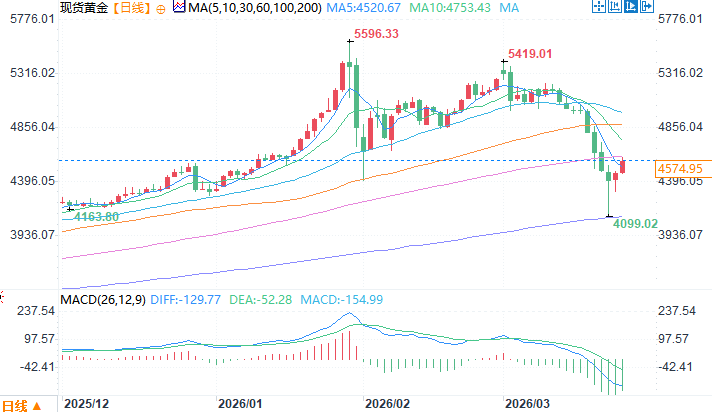
Spot gold daily chart source: EasyForex
At 11:33 AM Beijing time on March 25, spot gold was trading at $4572.95 per ounce.
Melek's core argument: Interest rates are the key factor determining gold prices.
Bart Melek, head of commodity strategy at TD Securities, said that while geopolitical tensions are usually a boon for gold, the market is currently dominated by rising bond yields and expectations that central banks may maintain restrictive monetary policies for an extended period.
He said, "Ultimately, it all comes down to interest rates."
He pointed out that the failure of gold to see a meaningful rise amid escalating geopolitical crises once again highlights the high sensitivity of gold prices to real yields.
Inflation is not a panacea: the key lies in the relative relationship between inflation and interest rates.
While investors often view gold as an inflation hedge, Melek emphasizes that inflation alone is not enough to drive up gold prices; what truly matters is the relative relationship between inflation and interest rates.
He stated, "Gold investors always emphasize inflation, which is indeed important, but inflation alone is not enough. The key lies in the relative value of other assets, especially U.S. Treasury bonds."
Oil prices have become the biggest variable at present.
Currently, the core variable shaping this relationship is oil.
Melek points out that the escalating conflict in the Middle East has driven a sharp rise in oil prices, further exacerbating inflationary pressures and complicating the Federal Reserve's policy outlook. TD Securities estimates that for every 10% increase in oil prices, the inflation rate rises by approximately 0.2 percentage points.
With oil prices having risen by about 60% so far, Melek warned that if high oil prices persist for an extended period, inflationary pressures will increase significantly.
He said, "If this situation continues for a year... it could add an extra 100 basis points to inflation."
How high oil prices are dragging down gold prices
This dynamic is crucial for gold. Rising inflation driven by energy costs does not automatically translate into higher gold prices. Instead, it may force central banks to maintain or even tighten monetary policy, thereby pushing up bond yields and strengthening the dollar, both of which are typically significantly bearish for gold.
Melek stated that if the conflict drags on and energy prices remain high, the Federal Reserve will be reluctant to cut interest rates easily, as policymakers need to ensure that inflation does not become entrenched.
He stated, "If inflation moves in the opposite direction, it will be difficult for the central bank to implement easing policies."
Higher interest rates will also tighten financial conditions overall, reduce market liquidity, and force leveraged investors to reduce their positions in the commodities market. Melek points out that capital flows are already significantly constrained, not only in the energy market, but the entire commodities sector is facing similar pressure.
Melek is optimistic: the oil price shock may be temporary.
However, despite the bleak short-term outlook, Melek still believes the current oil shock will be temporary.
He added that if the geopolitical situation stabilizes and supply disruptions are brought under control, crude oil prices could fall back to the $90-95 per barrel range, thereby easing inflationary pressures.
In this environment, central banks will have greater policy flexibility to shift towards easing, which is expected to reactivate the so-called "currency devaluation trade," providing support for gold through lower real interest rates and a weaker dollar.
He said, "If we do see an interest rate cut and the dollar starts to weaken, then the whole devaluation trade logic will come back."
TD Securities maintains its 2026 gold price forecast.
TD Securities maintains its current gold price forecast. The bank expects the average gold price for the full year of 2026 to be approximately $4,831 per ounce . Specifically, gold prices are expected to reach a temporary high of around $5,000 per ounce in the second quarter, before gradually declining to approximately $4,650 per ounce by the end of the year.
Overall Outlook
Melek's analysis clearly outlines the current dilemma in the gold market: in the short term, oil-driven inflation and the Federal Reserve's cautious attitude are suppressing gold prices; but in the medium to long term, once geopolitical conflicts ease, energy prices fall, and central bank easing policies resume, gold's appeal as a hedge against inflation and currency devaluation will reappear.
For investors, patience is key. On the one hand, they should be wary of short-term volatility risks, especially selling pressure from rising real yields and a strong dollar; on the other hand, they should recognize that the long-term bullish logic for gold, including de-dollarization, central bank gold purchases, and potential monetary system adjustments, remains intact.
The key to future gold price trends will still depend on the duration of the Middle East conflict, the ultimate direction of oil prices, and the timing and magnitude of the Federal Reserve's monetary policy shift.
Spot gold daily chart source: EasyForex
At 11:33 AM Beijing time on March 25, spot gold was trading at $4572.95 per ounce.
- Risk Warning and Disclaimer
- The market involves risk, and trading may not be suitable for all investors. This article is for reference only and does not constitute personal investment advice, nor does it take into account certain users’ specific investment objectives, financial situation, or other needs. Any investment decisions made based on this information are at your own risk.