The US submitted 15 reconciliation proposals to Iran; is a ceasefire on the horizon? Oil prices once fell by more than 6%.
2026-03-25 08:57:45
On Tuesday (March 24), U.S. time, the Trump administration, through Pakistan, submitted a 15-condition proposal to Iran out of the conflict, covering core areas such as nuclear programs, missile capabilities, and regional security. This proposal marks the Trump administration's formal shift towards seeking a diplomatic solution after nearly a month of military action.
Following the proposal, international oil prices fluctuated sharply, with US oil prices experiencing a significant decline, reflecting the market's sensitive expectations regarding the ceasefire prospects. On the same day, Israel confirmed that the United States intended to push for a one-month ceasefire to allow both sides to engage in detailed negotiations on 15 key points.
On Wednesday morning in Asian trading, US crude oil prices fluctuated downwards, continuing the decline from the previous night, and are currently trading around $87.50 per barrel, down about 5.2% on the day, after falling as much as 6.22% to $86.76 per barrel earlier.

The main demands put forward by the US are extremely stringent, focusing on the complete elimination of the Iranian nuclear threat and proxy activities in the region. Specifically, these include:
1. A permanent commitment not to develop nuclear weapons – Iran must make a written commitment that it will never pursue nuclear weapons.
2. Completely dismantle existing nuclear capabilities – dismantle all nuclear-related infrastructure.
3. Prohibition of domestic uranium enrichment activities – Prohibition of any form of uranium enrichment within Iran.
4. Transfer of highly enriched uranium stockpile – Transfer approximately 60% of the highly enriched uranium stockpile to the International Atomic Energy Agency (IAEA).
5. Dismantle the Natanz nuclear facilities – Completely dismantle the main Natanz nuclear facilities.
6. Dismantle the Isfahan nuclear facilities – Dismantle the nuclear-related facilities in Isfahan.
7. Dismantle the Fordow nuclear facility – dismantle the Fordow underground nuclear facility.
8. Allow IAEA to conduct full and unrestricted audits – IAEA can conduct surprise inspections and long-term monitoring at any time.
9. Cease support for regional proxy militias – Immediately cease providing financial, command, and weapons support to Hezbollah, Hamas, Houthi rebels, and other similar groups.
10. Cut off logistics and intelligence ties with proxies – Completely sever all logistics and intelligence ties with regional allies.
11. Limit ballistic missile programs – Significantly limit the size and range of ballistic missiles, allowing them only for defensive purposes.
12. Ensure the Strait of Hormuz is fully open – guarantee free navigation through the strait and do not interfere with international shipping.
13. Acceptance of security safeguards mechanisms – Agree to establish regional security safeguards arrangements under international supervision.
14. Accept a one-month ceasefire framework – during which substantive negotiations will take place on all terms.
15. Implementation and Supervision Mechanism – Establish a multi-party joint supervision mechanism to ensure the full implementation of the provisions.
These conditions are aimed at fundamentally weakening Iran's nuclear and missile capabilities and cutting off its network of support for proxy forces in the Middle East.
In return for Iran's acceptance of the above conditions, the US offered several substantial concessions, including:
Completely lift international sanctions against Iran;
The United States supports Iran's development of civilian nuclear energy programs;
Cancel the "snapback" mechanism;
Provide regional security to prevent future attacks.
These terms of exchange were designed to provide Iran with economic breathing room and to open a legal path for its civilian nuclear energy development in exchange for long-term strategic concessions.
The 15-point plan was spearheaded by Trump's senior advisor Jared Kushner and special envoy Steve Witkov. The two had previously engaged with Iran through intermediary channels including Egypt, Pakistan, and Turkey.
The US is actively considering pushing for a one-month ceasefire agreement to allow for substantive negotiations on 15 conditions during the ceasefire period. Israeli media reports that the US has informed Israel of the plan, but Israel is concerned that a short-term ceasefire could be exploited by Iran to restore its strength.
In the short term, there remains significant uncertainty as to whether the proposal will be accepted by Iran. Iranian officials have repeatedly denied engaging in direct negotiations with the United States and have emphasized their hardline stance. Trump himself claimed that the two sides had reached a consensus on key points such as "never possessing nuclear weapons," but Iran quickly denied this.
If Iran accepts a one-month ceasefire and enters into negotiations, regional tensions are expected to gradually ease, and oil prices will face downward pressure. Conversely, if negotiations break down or Iran proposes countermeasures, the military conflict may be prolonged, and the risk of shipping disruptions in the Strait of Hormuz will continue to push up global energy prices.
Investors need to pay close attention to feedback from intermediary channels such as Pakistan, subsequent statements from Trump, and Israel's reaction.
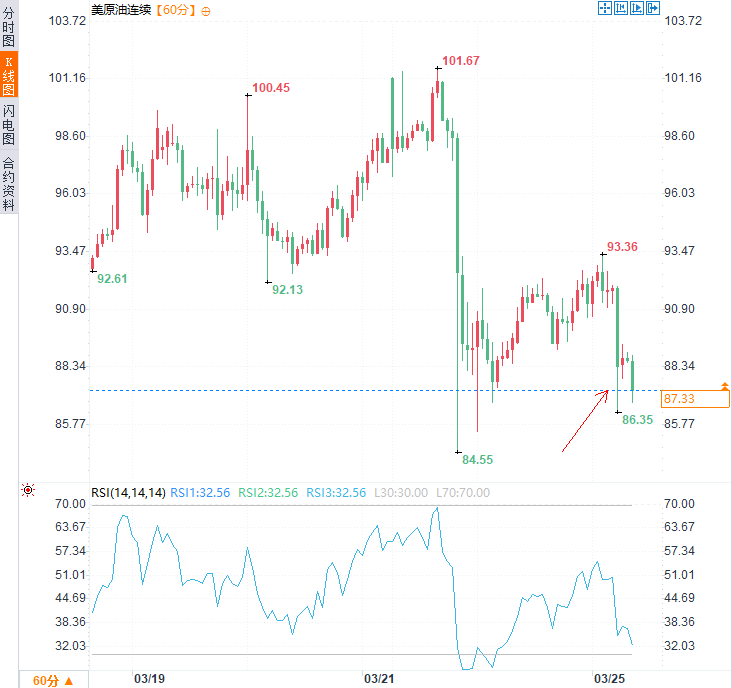
(US crude oil hourly chart, source: FX678)
The United States, through Pakistan, presented Iran with a peace proposal containing 15 stringent conditions. The core of the proposal was to completely eliminate Iran's nuclear and missile threats and sever its regional proxy support network, in exchange for the complete lifting of sanctions and support for civilian nuclear programs.
The proposal, spearheaded by Kushner and Witkov and accompanied by a one-month ceasefire, demonstrates the Trump administration's search for a swift diplomatic solution after military pressure. Significant differences remain between the US and Iran on their core disagreements, and the final outcome will profoundly impact the Middle East geopolitical landscape and global energy market stability.
At 8:56 AM Beijing time, US crude oil futures were trading at $87.55 per barrel.
Following the proposal, international oil prices fluctuated sharply, with US oil prices experiencing a significant decline, reflecting the market's sensitive expectations regarding the ceasefire prospects. On the same day, Israel confirmed that the United States intended to push for a one-month ceasefire to allow both sides to engage in detailed negotiations on 15 key points.
On Wednesday morning in Asian trading, US crude oil prices fluctuated downwards, continuing the decline from the previous night, and are currently trading around $87.50 per barrel, down about 5.2% on the day, after falling as much as 6.22% to $86.76 per barrel earlier.
Main contents of the 15 conditions
The main demands put forward by the US are extremely stringent, focusing on the complete elimination of the Iranian nuclear threat and proxy activities in the region. Specifically, these include:
1. A permanent commitment not to develop nuclear weapons – Iran must make a written commitment that it will never pursue nuclear weapons.
2. Completely dismantle existing nuclear capabilities – dismantle all nuclear-related infrastructure.
3. Prohibition of domestic uranium enrichment activities – Prohibition of any form of uranium enrichment within Iran.
4. Transfer of highly enriched uranium stockpile – Transfer approximately 60% of the highly enriched uranium stockpile to the International Atomic Energy Agency (IAEA).
5. Dismantle the Natanz nuclear facilities – Completely dismantle the main Natanz nuclear facilities.
6. Dismantle the Isfahan nuclear facilities – Dismantle the nuclear-related facilities in Isfahan.
7. Dismantle the Fordow nuclear facility – dismantle the Fordow underground nuclear facility.
8. Allow IAEA to conduct full and unrestricted audits – IAEA can conduct surprise inspections and long-term monitoring at any time.
9. Cease support for regional proxy militias – Immediately cease providing financial, command, and weapons support to Hezbollah, Hamas, Houthi rebels, and other similar groups.
10. Cut off logistics and intelligence ties with proxies – Completely sever all logistics and intelligence ties with regional allies.
11. Limit ballistic missile programs – Significantly limit the size and range of ballistic missiles, allowing them only for defensive purposes.
12. Ensure the Strait of Hormuz is fully open – guarantee free navigation through the strait and do not interfere with international shipping.
13. Acceptance of security safeguards mechanisms – Agree to establish regional security safeguards arrangements under international supervision.
14. Accept a one-month ceasefire framework – during which substantive negotiations will take place on all terms.
15. Implementation and Supervision Mechanism – Establish a multi-party joint supervision mechanism to ensure the full implementation of the provisions.
These conditions are aimed at fundamentally weakening Iran's nuclear and missile capabilities and cutting off its network of support for proxy forces in the Middle East.
US exchange conditions
In return for Iran's acceptance of the above conditions, the US offered several substantial concessions, including:
Completely lift international sanctions against Iran;
The United States supports Iran's development of civilian nuclear energy programs;
Cancel the "snapback" mechanism;
Provide regional security to prevent future attacks.
These terms of exchange were designed to provide Iran with economic breathing room and to open a legal path for its civilian nuclear energy development in exchange for long-term strategic concessions.
Proponents of the plan and ceasefire proposals
The 15-point plan was spearheaded by Trump's senior advisor Jared Kushner and special envoy Steve Witkov. The two had previously engaged with Iran through intermediary channels including Egypt, Pakistan, and Turkey.
The US is actively considering pushing for a one-month ceasefire agreement to allow for substantive negotiations on 15 conditions during the ceasefire period. Israeli media reports that the US has informed Israel of the plan, but Israel is concerned that a short-term ceasefire could be exploited by Iran to restore its strength.
Market Outlook and Risks
In the short term, there remains significant uncertainty as to whether the proposal will be accepted by Iran. Iranian officials have repeatedly denied engaging in direct negotiations with the United States and have emphasized their hardline stance. Trump himself claimed that the two sides had reached a consensus on key points such as "never possessing nuclear weapons," but Iran quickly denied this.
If Iran accepts a one-month ceasefire and enters into negotiations, regional tensions are expected to gradually ease, and oil prices will face downward pressure. Conversely, if negotiations break down or Iran proposes countermeasures, the military conflict may be prolonged, and the risk of shipping disruptions in the Strait of Hormuz will continue to push up global energy prices.
Investors need to pay close attention to feedback from intermediary channels such as Pakistan, subsequent statements from Trump, and Israel's reaction.
(US crude oil hourly chart, source: FX678)
Editor's Summary
The United States, through Pakistan, presented Iran with a peace proposal containing 15 stringent conditions. The core of the proposal was to completely eliminate Iran's nuclear and missile threats and sever its regional proxy support network, in exchange for the complete lifting of sanctions and support for civilian nuclear programs.
The proposal, spearheaded by Kushner and Witkov and accompanied by a one-month ceasefire, demonstrates the Trump administration's search for a swift diplomatic solution after military pressure. Significant differences remain between the US and Iran on their core disagreements, and the final outcome will profoundly impact the Middle East geopolitical landscape and global energy market stability.
At 8:56 AM Beijing time, US crude oil futures were trading at $87.55 per barrel.
- Risk Warning and Disclaimer
- The market involves risk, and trading may not be suitable for all investors. This article is for reference only and does not constitute personal investment advice, nor does it take into account certain users’ specific investment objectives, financial situation, or other needs. Any investment decisions made based on this information are at your own risk.