The shadow of war looms! The US dollar is high, the euro is fluctuating at low levels, and the 1.15 level is in jeopardy.
2026-03-30 14:20:15
On Monday (March 30), during the Asian and European sessions, the euro traded in a narrow range against the US dollar around 1.1510, exhibiting a short-term consolidation pattern. Escalating geopolitical risks provided support for the safe-haven US dollar, which remained at relatively high levels, becoming the main factor suppressing the euro's upward movement against the dollar.
The Pentagon is preparing for a ground operation that could last for weeks in Iran, and the Houthi rebels in Yemen launched their first missile strike on Israel, further escalating the risk of conflict in the Middle East. These events continue to suppress market risk appetite, and investors are inclined to increase their holdings of dollar assets. On Monday, during the Asian and European sessions, the dollar index fluctuated narrowly around 100.05.
The war with Iran has entered its fifth week, leading to severe disruptions to energy supplies and posing new threats to global trade. The de facto blockade of the Strait of Hormuz and the potential risks of the Bab el-Mandeb Strait have exacerbated market concerns about supply chains and inflation.
Brent crude oil prices have risen by more than 50% since the outbreak of the war. Rising energy costs have not only pushed up global inflation expectations but also strengthened market expectations that the Federal Reserve will maintain high interest rates.
The Federal Reserve's hawkish stance further solidified the dollar's strength, limiting the euro's upside potential against the dollar. Europe, as a major energy importer, faced greater pressure from oil price shocks than the United States, indirectly weakening the euro's performance.
From a technical perspective, the short-term bias is mildly bearish. The hourly chart shows that the euro/dollar pair is currently trading below the gradually declining 200-hour exponential moving average (EMA, 1.1546), with upward attempts continuing to be limited.
The MACD indicator is fluctuating narrowly around the signal line and the zero axis, with weak histogram momentum indicating a lack of strong directional momentum. The Relative Strength Index (RSI) is below the 50 midline, suggesting that sellers still have some advantage, although strong downward momentum has not yet emerged.
On the upside, the first resistance level is at 1.1535. A break above this level would test the 200-hour EMA. If the price can hold above this dynamic resistance level, it would alleviate bearish pressure and open up further upside potential to 1.1580.
On the downside, initial support is at 1.1490, and a break below that level would target 1.1475. A decisive break below 1.1475 would strengthen the bearish bias, with the next target around 1.1450.
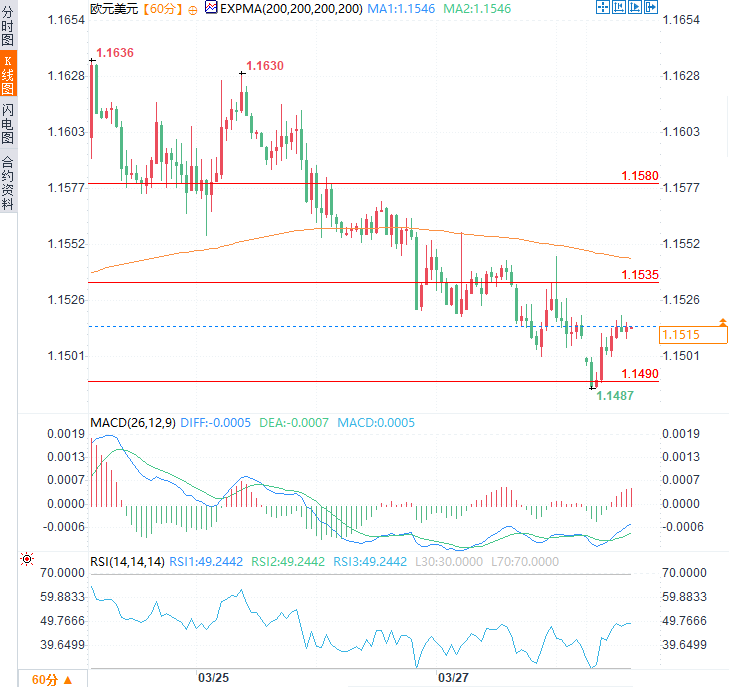
(Euro/USD hourly chart, source: FX678)
In the short term, the euro/dollar exchange rate is easily driven by geopolitical news. If the conflict in the Middle East escalates further or there are reports of ground operations, safe-haven buying of the dollar may intensify, putting continued pressure on the exchange rate. Conversely, if there is substantial diplomatic progress or signs of downgrading, the euro may experience a brief rebound.
This week's economic data is relatively light, and investors will focus on changes in risk sentiment ahead of the weekend. Overall, the upside potential for the euro against the dollar remains limited until geopolitical uncertainties are significantly alleviated.
At 14:20 Beijing time, the euro was trading at 1.1514/15 against the US dollar.
Geopolitical tensions support the dollar
The Pentagon is preparing for a ground operation that could last for weeks in Iran, and the Houthi rebels in Yemen launched their first missile strike on Israel, further escalating the risk of conflict in the Middle East. These events continue to suppress market risk appetite, and investors are inclined to increase their holdings of dollar assets. On Monday, during the Asian and European sessions, the dollar index fluctuated narrowly around 100.05.
The war with Iran has entered its fifth week, leading to severe disruptions to energy supplies and posing new threats to global trade. The de facto blockade of the Strait of Hormuz and the potential risks of the Bab el-Mandeb Strait have exacerbated market concerns about supply chains and inflation.
Energy prices boost expectations of a hawkish stance from the Federal Reserve.
Brent crude oil prices have risen by more than 50% since the outbreak of the war. Rising energy costs have not only pushed up global inflation expectations but also strengthened market expectations that the Federal Reserve will maintain high interest rates.
The Federal Reserve's hawkish stance further solidified the dollar's strength, limiting the euro's upside potential against the dollar. Europe, as a major energy importer, faced greater pressure from oil price shocks than the United States, indirectly weakening the euro's performance.
Technical indicators suggest a mildly bearish outlook.
From a technical perspective, the short-term bias is mildly bearish. The hourly chart shows that the euro/dollar pair is currently trading below the gradually declining 200-hour exponential moving average (EMA, 1.1546), with upward attempts continuing to be limited.
The MACD indicator is fluctuating narrowly around the signal line and the zero axis, with weak histogram momentum indicating a lack of strong directional momentum. The Relative Strength Index (RSI) is below the 50 midline, suggesting that sellers still have some advantage, although strong downward momentum has not yet emerged.
On the upside, the first resistance level is at 1.1535. A break above this level would test the 200-hour EMA. If the price can hold above this dynamic resistance level, it would alleviate bearish pressure and open up further upside potential to 1.1580.
On the downside, initial support is at 1.1490, and a break below that level would target 1.1475. A decisive break below 1.1475 would strengthen the bearish bias, with the next target around 1.1450.
(Euro/USD hourly chart, source: FX678)
Short-term risk outlook
In the short term, the euro/dollar exchange rate is easily driven by geopolitical news. If the conflict in the Middle East escalates further or there are reports of ground operations, safe-haven buying of the dollar may intensify, putting continued pressure on the exchange rate. Conversely, if there is substantial diplomatic progress or signs of downgrading, the euro may experience a brief rebound.
This week's economic data is relatively light, and investors will focus on changes in risk sentiment ahead of the weekend. Overall, the upside potential for the euro against the dollar remains limited until geopolitical uncertainties are significantly alleviated.
At 14:20 Beijing time, the euro was trading at 1.1514/15 against the US dollar.
- Risk Warning and Disclaimer
- The market involves risk, and trading may not be suitable for all investors. This article is for reference only and does not constitute personal investment advice, nor does it take into account certain users’ specific investment objectives, financial situation, or other needs. Any investment decisions made based on this information are at your own risk.