Energy shocks fuel inflationary pressures, coupled with the risk of weakening demand, have heightened stagflation expectations in the Eurozone, limiting the path of interest rate hikes.
2026-03-30 16:03:08
Recently, the macroeconomic environment facing the Eurozone economy has become increasingly complex. The impact of rising energy prices is reshaping the inflation structure and exacerbating market concerns about the risk of stagflation. Against this backdrop, market expectations for the future policy path of the European Central Bank have begun to diverge, and interest rate pricing faces pressure to be readjusted.
From a fundamental perspective, rising energy prices are directly pushing up overall inflation in the Eurozone. Increased fuel costs are putting upward pressure on CPI data, but unlike previous cycles, this round of inflation is more driven by the supply side than by demand expansion. Market surveys indicate that the International Energy Agency has warned EU finance officials that while the energy market as a whole possesses a certain degree of resilience, in some specific sectors, supply issues may be more critical than prices themselves. This suggests that future inflation may exhibit structural differentiation.

From the perspective of inflation structure, the current trend of core inflation has become a key variable. Over the past two years, core inflation in the Eurozone has consistently exceeded overall inflation. However, during the energy shock cycle of 2022-2023, overall inflation dominated the upward trend, ultimately driving up core inflation. However, this cycle differs significantly from previous ones: the current global demand recovery momentum is weak, and household income growth and bargaining power are not at previous levels. This means that rising energy prices may not effectively transmit to core inflation.
BNY analyst Bob Savage said, "If residents cut back on spending due to rising costs, core inflation may not rise significantly, thus reducing the need for central banks to continue raising interest rates."
From a policy perspective, the European Central Bank (ECB) faces a complex decision-making environment. On the one hand, rising energy prices are pushing up overall inflation, making it difficult for the central bank to shift to easing prematurely; on the other hand, the risk of weakening demand limits the scope for further tightening. Market surveys indicate that some policymakers have signaled a hawkish stance, suggesting that the central bank may act even before a "second-round effect" is fully observed. However, given the current lack of sufficient information, this position may struggle to gain widespread support.
European Central Bank Governing Council member Müller said: "Central banks may not need to wait for a fully confirmed double-inflation effect before taking action."
Market reactions indicate a shift in investor expectations regarding the European Central Bank's policy path. Previously, the market had priced in relatively aggressive rate hikes, but given the rising risks of stagflation, these expectations may be gradually revised. Particularly in the UK and Eurozone front-end interest rate markets, the over-priced rate hike path may see a pullback, but this adjustment process is expected to be accompanied by high volatility.
Furthermore, wage data will be a crucial basis for future policy decisions. Since inflation has already stabilized somewhat, this round of wage negotiations has not shown significant upward pressure, meaning that demand-side inflationary momentum remains limited. Under these circumstances, the European Central Bank may be more inclined to maintain a cautious wait-and-see approach rather than rapidly tightening policy.
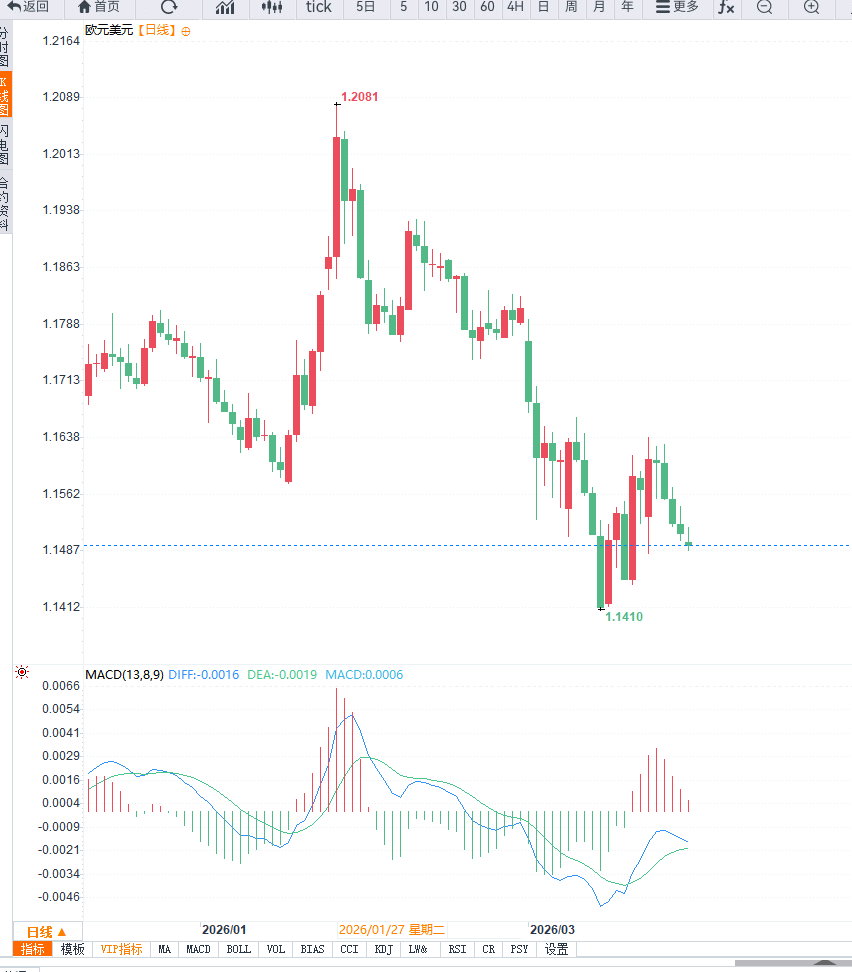
From a technical perspective, the EUR/USD pair maintains a weak and volatile structure on the daily chart, with the price action trending downwards, indicating that market concerns about the Eurozone's fundamental outlook are gradually being reflected in the exchange rate. Resistance levels are concentrated around 1.1550 and 1.1600; failure to break through these levels will limit any upward movement. Support levels are located around 1.1450 and 1.1400; a break below these levels could open up further downside potential. On the 4-hour chart, the pair is exhibiting a downward trend with insufficient short-term rebound momentum. The moving average system is trending bearish, suggesting that the short-term outlook remains weak and consolidating.
Editor's Summary : The Eurozone is currently at a critical juncture, facing both energy-driven inflation and the risk of weakening demand, with the risk of stagflation gradually increasing. Against this backdrop, the European Central Bank's policy space is significantly constrained, making it difficult to raise interest rates sharply or quickly shift to an easing stance. Previously priced-in aggressive interest rate hikes may gradually decline, but this adjustment process will be accompanied by high volatility. Going forward, key attention should be paid to changes in the inflation structure and wage data, as these will be the core basis for determining policy direction.
From a fundamental perspective, rising energy prices are directly pushing up overall inflation in the Eurozone. Increased fuel costs are putting upward pressure on CPI data, but unlike previous cycles, this round of inflation is more driven by the supply side than by demand expansion. Market surveys indicate that the International Energy Agency has warned EU finance officials that while the energy market as a whole possesses a certain degree of resilience, in some specific sectors, supply issues may be more critical than prices themselves. This suggests that future inflation may exhibit structural differentiation.
From the perspective of inflation structure, the current trend of core inflation has become a key variable. Over the past two years, core inflation in the Eurozone has consistently exceeded overall inflation. However, during the energy shock cycle of 2022-2023, overall inflation dominated the upward trend, ultimately driving up core inflation. However, this cycle differs significantly from previous ones: the current global demand recovery momentum is weak, and household income growth and bargaining power are not at previous levels. This means that rising energy prices may not effectively transmit to core inflation.
BNY analyst Bob Savage said, "If residents cut back on spending due to rising costs, core inflation may not rise significantly, thus reducing the need for central banks to continue raising interest rates."
From a policy perspective, the European Central Bank (ECB) faces a complex decision-making environment. On the one hand, rising energy prices are pushing up overall inflation, making it difficult for the central bank to shift to easing prematurely; on the other hand, the risk of weakening demand limits the scope for further tightening. Market surveys indicate that some policymakers have signaled a hawkish stance, suggesting that the central bank may act even before a "second-round effect" is fully observed. However, given the current lack of sufficient information, this position may struggle to gain widespread support.
European Central Bank Governing Council member Müller said: "Central banks may not need to wait for a fully confirmed double-inflation effect before taking action."
Market reactions indicate a shift in investor expectations regarding the European Central Bank's policy path. Previously, the market had priced in relatively aggressive rate hikes, but given the rising risks of stagflation, these expectations may be gradually revised. Particularly in the UK and Eurozone front-end interest rate markets, the over-priced rate hike path may see a pullback, but this adjustment process is expected to be accompanied by high volatility.
Furthermore, wage data will be a crucial basis for future policy decisions. Since inflation has already stabilized somewhat, this round of wage negotiations has not shown significant upward pressure, meaning that demand-side inflationary momentum remains limited. Under these circumstances, the European Central Bank may be more inclined to maintain a cautious wait-and-see approach rather than rapidly tightening policy.
From a technical perspective, the EUR/USD pair maintains a weak and volatile structure on the daily chart, with the price action trending downwards, indicating that market concerns about the Eurozone's fundamental outlook are gradually being reflected in the exchange rate. Resistance levels are concentrated around 1.1550 and 1.1600; failure to break through these levels will limit any upward movement. Support levels are located around 1.1450 and 1.1400; a break below these levels could open up further downside potential. On the 4-hour chart, the pair is exhibiting a downward trend with insufficient short-term rebound momentum. The moving average system is trending bearish, suggesting that the short-term outlook remains weak and consolidating.
Editor's Summary : The Eurozone is currently at a critical juncture, facing both energy-driven inflation and the risk of weakening demand, with the risk of stagflation gradually increasing. Against this backdrop, the European Central Bank's policy space is significantly constrained, making it difficult to raise interest rates sharply or quickly shift to an easing stance. Previously priced-in aggressive interest rate hikes may gradually decline, but this adjustment process will be accompanied by high volatility. Going forward, key attention should be paid to changes in the inflation structure and wage data, as these will be the core basis for determining policy direction.
- Risk Warning and Disclaimer
- The market involves risk, and trading may not be suitable for all investors. This article is for reference only and does not constitute personal investment advice, nor does it take into account certain users’ specific investment objectives, financial situation, or other needs. Any investment decisions made based on this information are at your own risk.