Eight OPEC countries will hold secret talks on Sunday to prepare for increased production, paving the way for an "oil flood" after the Straits reopens.
2026-04-03 11:06:34
According to two OPEC+ sources, OPEC+ may consider further increasing oil production when the eight member countries meet on Sunday (April 5). This move aims to prepare major oil-producing countries to immediately increase production once the Strait of Hormuz reopens. The strait, currently closed due to the war between the US, Israel, and Iran, is the world's most important oil shipping route.
Sources indicate that while there are currently no signs of the Strait reopening to traffic, OPEC+ may agree to increase production. This move, while not immediately impacting current supply, would demonstrate the organization's readiness to ramp up output once tankers can resume passage through the Strait. One source stated, "We have to react, at least on paper."
At its last meeting on March 1, OPEC+ agreed to increase output slightly by 206,000 barrels per day in April. Previously, the organization had maintained its production levels in the first quarter due to concerns about oversupply, as the war between the US, Israel, and Iran began to disrupt oil supplies from its major Middle Eastern members.
A month later, the war had led to the worst oil supply disruption in history .
With the Strait of Hormuz effectively blocked, major OPEC oil producers Saudi Arabia, Iraq, Kuwait, and the UAE have reduced production. Russian oil production has also been disrupted by drone attacks. More than 20% of global oil shipments pass through the Strait of Hormuz.
Crude oil prices remained volatile at high levels. The market was closed on Friday. On Thursday, Brent crude oil prices rose 8.68% to settle at $109.02 a barrel, as Trump made a tough statement that he would continue to launch a fierce attack on Iran without giving a timetable for ending the conflict.
While Russia, Kazakhstan, Algeria, and Oman, all members of OPEC+, were not affected by the Straits of Hormuz blockade, their capacity to increase production is limited. OPEC+ comprises 22 member countries, including Iran, but in recent years only eight have participated in monthly production decisions.
Another source said, "The market needs all the crude oil that can be produced right now." However, a third source said that given the current export restrictions, a halt to monthly production increases cannot be ruled out.
In addition to the G8 meeting, the Joint Ministerial Monitoring Committee (JMMC) meeting is also scheduled for Sunday.
On Wednesday, Brent crude oil prices briefly fell to around $100 after US President Trump stated that the war would end soon. However, on Thursday, Trump reiterated that the US would continue its attacks on Iran, causing oil prices to rebound sharply. Current market expectations for further production increases from OPEC+ may provide an additional supply buffer when the Straits of Hormuz reopens, but the actual effect of such increases will be limited in the short term.
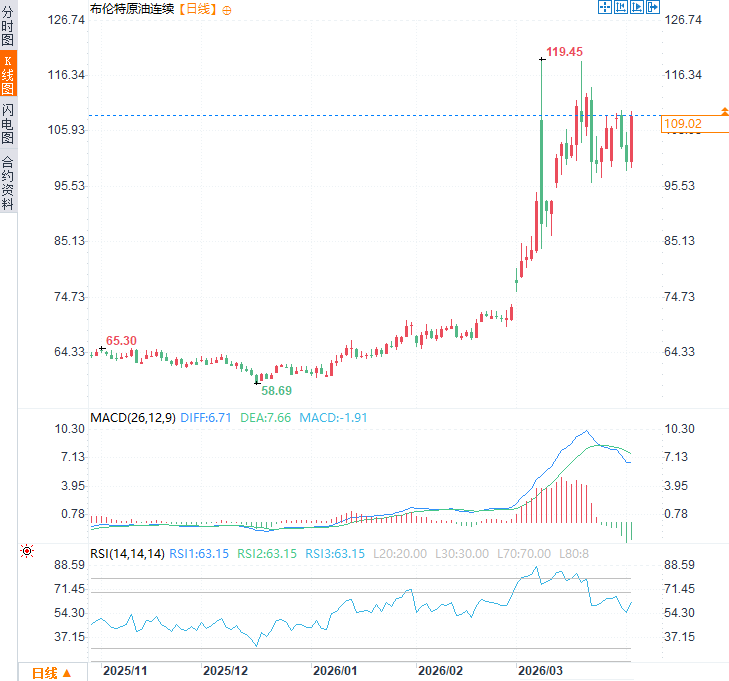
(Brent crude oil daily chart, source: EasyForex)
The eight OPEC+ members will meet on Sunday and may consider further increasing oil production in a swift response should the Strait of Hormuz reopen to navigation. The organization had previously agreed to increase production by 206,000 barrels per day in April, but given the backdrop of the war causing the worst supply disruption in history, the increase is more of a signal than an immediate relief of the shortage.
Saudi Arabia and other core oil-producing countries have reduced production due to the Straits blockade, keeping crude oil prices volatile at high levels. OPEC+'s ability to increase production is limited, and actual supply increases still depend on the restoration of the Straits. Future oil price trends will depend on the progress of the conflict and market expectations for supply recovery.
Sources indicate that while there are currently no signs of the Strait reopening to traffic, OPEC+ may agree to increase production. This move, while not immediately impacting current supply, would demonstrate the organization's readiness to ramp up output once tankers can resume passage through the Strait. One source stated, "We have to react, at least on paper."
Previous decision to increase production
At its last meeting on March 1, OPEC+ agreed to increase output slightly by 206,000 barrels per day in April. Previously, the organization had maintained its production levels in the first quarter due to concerns about oversupply, as the war between the US, Israel, and Iran began to disrupt oil supplies from its major Middle Eastern members.
A month later, the war had led to the worst oil supply disruption in history .
Impact of the Strait of Hormuz interruption
With the Strait of Hormuz effectively blocked, major OPEC oil producers Saudi Arabia, Iraq, Kuwait, and the UAE have reduced production. Russian oil production has also been disrupted by drone attacks. More than 20% of global oil shipments pass through the Strait of Hormuz.
Crude oil prices remained volatile at high levels. The market was closed on Friday. On Thursday, Brent crude oil prices rose 8.68% to settle at $109.02 a barrel, as Trump made a tough statement that he would continue to launch a fierce attack on Iran without giving a timetable for ending the conflict.
Production capacity and limitations
While Russia, Kazakhstan, Algeria, and Oman, all members of OPEC+, were not affected by the Straits of Hormuz blockade, their capacity to increase production is limited. OPEC+ comprises 22 member countries, including Iran, but in recent years only eight have participated in monthly production decisions.
Another source said, "The market needs all the crude oil that can be produced right now." However, a third source said that given the current export restrictions, a halt to monthly production increases cannot be ruled out.
In addition to the G8 meeting, the Joint Ministerial Monitoring Committee (JMMC) meeting is also scheduled for Sunday.
Oil price trends and market reactions
On Wednesday, Brent crude oil prices briefly fell to around $100 after US President Trump stated that the war would end soon. However, on Thursday, Trump reiterated that the US would continue its attacks on Iran, causing oil prices to rebound sharply. Current market expectations for further production increases from OPEC+ may provide an additional supply buffer when the Straits of Hormuz reopens, but the actual effect of such increases will be limited in the short term.
(Brent crude oil daily chart, source: EasyForex)
Editor's Summary
The eight OPEC+ members will meet on Sunday and may consider further increasing oil production in a swift response should the Strait of Hormuz reopen to navigation. The organization had previously agreed to increase production by 206,000 barrels per day in April, but given the backdrop of the war causing the worst supply disruption in history, the increase is more of a signal than an immediate relief of the shortage.
Saudi Arabia and other core oil-producing countries have reduced production due to the Straits blockade, keeping crude oil prices volatile at high levels. OPEC+'s ability to increase production is limited, and actual supply increases still depend on the restoration of the Straits. Future oil price trends will depend on the progress of the conflict and market expectations for supply recovery.
- Risk Warning and Disclaimer
- The market involves risk, and trading may not be suitable for all investors. This article is for reference only and does not constitute personal investment advice, nor does it take into account certain users’ specific investment objectives, financial situation, or other needs. Any investment decisions made based on this information are at your own risk.