Faced with Trump's threats, Iran has mobilized to strengthen its defenses, and the Strait of Hormuz may become the decisive battleground.
2026-04-03 12:28:52
Faced with the threat of a potential US ground war, Iran is comprehensively strengthening its defenses. On the one hand, it is significantly reinforcing its military deployments around its largest oil export port; on the other hand, it is issuing more threats against targets in the Gulf region and launching a massive nationwide conscription campaign, including the recruitment of children. This scenario is reminiscent of the brutal Iran-Iraq War of the 1980s.
These moves come as US President Trump orders the deployment of thousands more Marines and paratroopers to the Middle East. While Trump has not explicitly stated that he will send a large-scale ground troop deployment, these deployments have provided the US with more options for ground attacks or surprise strikes, directly triggering a strong response from Iran and a new round of escalating threats.
Ebrahim Azizi, head of the Iranian parliament's National Security Committee, said this week after inspecting Kharg Island that Iran is significantly strengthening the island's defenses. Kharg Island is Iran's most important oil export hub and could easily become a prime target for US forces in the event of a ground conflict. Iranian officials revealed that the defensive measures include enhancing guided missile systems, laying mines along the coastline, and installing booby traps within key facilities.
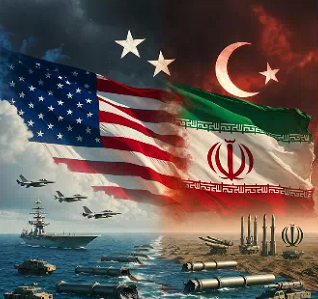
Military analysts point out that Iran has likely dug numerous tunnels on several islands and is preparing to mount a fierce resistance using missiles and other munitions.
In Iraq, Iranian-backed militias have repeatedly demonstrated the combat use of wire-controlled first-person perspective drones, and the Iranian Islamic Revolutionary Guard Corps possesses an even larger number of such drones, posing a significant threat to any U.S. forces that may attempt to land.
The Iranian regime has made it clear that its defensive actions will not be limited to its own territory, but will also include inflicting more pain throughout the region to significantly increase the cost of any offensive action.
Iran has successfully cut off most of the Gulf's oil export routes and launched strikes against oil refining facilities and airports. Iranian and Arab officials revealed that Tehran has warned its neighbors that if Iranian islands are invaded, Iran will expand its targets to include critical infrastructure such as offshore oil platforms, power plants, and desalination plants.
Sanam Vakil, director of the Middle East and North Africa program at the Royal Institute of International Affairs, a London-based think tank, said: “Iran intends to make any U.S. landing operation costly and politically unsustainable. I expect Iran to first launch a swarm attack with drones to cause casualties, and then extend its retaliatory actions to neighboring countries.”
Meanwhile, Iran is mobilizing its people domestically in an attempt to revive the spirit of the Iran-Iraq War of the 1980s.
Iran launched a recruitment campaign on Sunday called "Janfada" (meaning "sacrifice") to recruit volunteers to fight against U.S. forces. The Islamic Revolutionary Guard Corps also stated that it is conducting a broader recruitment drive targeting a wider age group, with applicants as young as 12. These children will primarily be assigned to logistical support roles such as cooking and medical care, as well as guarding checkpoints.
Defa Press, affiliated with the Iranian Ministry of Defense, released a recruitment poster featuring a smiling teenage boy and a veiled girl. The US-based nonprofit "Iranian Human Rights Activists" stated that it has received reports of children dying while stationed at checkpoints.
Rahim Nadali, deputy director of the Cultural and Artistic Department of the Islamic Revolutionary Guard Corps, told Defa Press: “Given the warm welcome from our dear people, we have decided to create an environment where all interested individuals can play a role in defending the homeland based on their expertise and abilities.”
In this conflict, control of the Strait of Hormuz has become a decisive factor. Currently, only a handful of ships are able to pass through the strait each day, compared to well over a hundred before the conflict. Iran has effectively cut off most Gulf oil exports and demands "passage fees" from passing vessels.
Ebrahim Azizi, chairman of the Iranian parliament's National Security Committee, stated that Iran is pushing forward with new legislation requiring passing vessels to pay for passage and banning non-friendly countries from entering the Persian Gulf. He claimed, "Trump has finally realized his dream of regime change, except that he has changed the maritime order in the region. The Strait of Hormuz will certainly reopen, but not to you; it will only be open to countries that abide by Iran's new laws."
Johns Hopkins University professor Vali Nasr points out: "For the Iranians, the Strait of Hormuz is now more important than the nuclear program. The nuclear program is symbolic, but it doesn't provide any real deterrent. The only reason they've been able to hold out in this war until now is because of this strait. The Iranians' thinking is that the strait must ultimately remain under their control because it is their only deterrent and their only source of income."
Gulf states have attempted to mitigate the impact of the Straits of Hormuz closure by diverting oil shipments. Saudi Arabia has diverted some of its oil exports to the Red Sea port of Yanbu, while the UAE is shipping oil to the port of Fujairah in the Gulf of Oman. This port, which suffered a fire during an Iranian drone attack early in the war, continues to operate.
However, European and Asian countries have so far shown little willingness to join the US military operation to reopen the Strait of Hormuz. French President Emmanuel Macron stated on Thursday that a military option in the Strait of Hormuz is unrealistic, and that freedom of navigation in the waterway can only be restored through coordination with Iran.
In summary , in the face of a potential ground war threat, Iran is making comprehensive preparations by strengthening the defense of key facilities, conducting large-scale conscription (including recruiting children), and threatening to expand the scope of its strikes.
Control of the Strait of Hormuz has become a core bargaining chip in this conflict, with Iran attempting to use it to maintain long-term control over global energy transportation. This situation has not only significantly escalated regional tensions but also posed a severe challenge to the energy markets of the Gulf states, Europe, Asia, and even the world.
The future course of the conflict will depend on whether the parties can resolve the crisis through diplomatic means, or whether it will escalate into a more intense direct confrontation.
These moves come as US President Trump orders the deployment of thousands more Marines and paratroopers to the Middle East. While Trump has not explicitly stated that he will send a large-scale ground troop deployment, these deployments have provided the US with more options for ground attacks or surprise strikes, directly triggering a strong response from Iran and a new round of escalating threats.
Iran strengthens defenses of key oil facilities, preparing for fierce ground resistance.
Ebrahim Azizi, head of the Iranian parliament's National Security Committee, said this week after inspecting Kharg Island that Iran is significantly strengthening the island's defenses. Kharg Island is Iran's most important oil export hub and could easily become a prime target for US forces in the event of a ground conflict. Iranian officials revealed that the defensive measures include enhancing guided missile systems, laying mines along the coastline, and installing booby traps within key facilities.
Military analysts point out that Iran has likely dug numerous tunnels on several islands and is preparing to mount a fierce resistance using missiles and other munitions.
In Iraq, Iranian-backed militias have repeatedly demonstrated the combat use of wire-controlled first-person perspective drones, and the Iranian Islamic Revolutionary Guard Corps possesses an even larger number of such drones, posing a significant threat to any U.S. forces that may attempt to land.
Iran threatens to expand the scope of its strikes, attempting to increase the cost of US operations.
The Iranian regime has made it clear that its defensive actions will not be limited to its own territory, but will also include inflicting more pain throughout the region to significantly increase the cost of any offensive action.
Iran has successfully cut off most of the Gulf's oil export routes and launched strikes against oil refining facilities and airports. Iranian and Arab officials revealed that Tehran has warned its neighbors that if Iranian islands are invaded, Iran will expand its targets to include critical infrastructure such as offshore oil platforms, power plants, and desalination plants.
Sanam Vakil, director of the Middle East and North Africa program at the Royal Institute of International Affairs, a London-based think tank, said: “Iran intends to make any U.S. landing operation costly and politically unsustainable. I expect Iran to first launch a swarm attack with drones to cause casualties, and then extend its retaliatory actions to neighboring countries.”
A massive conscription campaign was launched, even recruiting children to fight.
Meanwhile, Iran is mobilizing its people domestically in an attempt to revive the spirit of the Iran-Iraq War of the 1980s.
Iran launched a recruitment campaign on Sunday called "Janfada" (meaning "sacrifice") to recruit volunteers to fight against U.S. forces. The Islamic Revolutionary Guard Corps also stated that it is conducting a broader recruitment drive targeting a wider age group, with applicants as young as 12. These children will primarily be assigned to logistical support roles such as cooking and medical care, as well as guarding checkpoints.
Defa Press, affiliated with the Iranian Ministry of Defense, released a recruitment poster featuring a smiling teenage boy and a veiled girl. The US-based nonprofit "Iranian Human Rights Activists" stated that it has received reports of children dying while stationed at checkpoints.
Rahim Nadali, deputy director of the Cultural and Artistic Department of the Islamic Revolutionary Guard Corps, told Defa Press: “Given the warm welcome from our dear people, we have decided to create an environment where all interested individuals can play a role in defending the homeland based on their expertise and abilities.”
The Strait of Hormuz became a key factor in the outcome of the war, with Iran seeking long-term control.
In this conflict, control of the Strait of Hormuz has become a decisive factor. Currently, only a handful of ships are able to pass through the strait each day, compared to well over a hundred before the conflict. Iran has effectively cut off most Gulf oil exports and demands "passage fees" from passing vessels.
Ebrahim Azizi, chairman of the Iranian parliament's National Security Committee, stated that Iran is pushing forward with new legislation requiring passing vessels to pay for passage and banning non-friendly countries from entering the Persian Gulf. He claimed, "Trump has finally realized his dream of regime change, except that he has changed the maritime order in the region. The Strait of Hormuz will certainly reopen, but not to you; it will only be open to countries that abide by Iran's new laws."
Johns Hopkins University professor Vali Nasr points out: "For the Iranians, the Strait of Hormuz is now more important than the nuclear program. The nuclear program is symbolic, but it doesn't provide any real deterrent. The only reason they've been able to hold out in this war until now is because of this strait. The Iranians' thinking is that the strait must ultimately remain under their control because it is their only deterrent and their only source of income."
The Gulf states and the international community face severe challenges.
Gulf states have attempted to mitigate the impact of the Straits of Hormuz closure by diverting oil shipments. Saudi Arabia has diverted some of its oil exports to the Red Sea port of Yanbu, while the UAE is shipping oil to the port of Fujairah in the Gulf of Oman. This port, which suffered a fire during an Iranian drone attack early in the war, continues to operate.
However, European and Asian countries have so far shown little willingness to join the US military operation to reopen the Strait of Hormuz. French President Emmanuel Macron stated on Thursday that a military option in the Strait of Hormuz is unrealistic, and that freedom of navigation in the waterway can only be restored through coordination with Iran.
In summary , in the face of a potential ground war threat, Iran is making comprehensive preparations by strengthening the defense of key facilities, conducting large-scale conscription (including recruiting children), and threatening to expand the scope of its strikes.
Control of the Strait of Hormuz has become a core bargaining chip in this conflict, with Iran attempting to use it to maintain long-term control over global energy transportation. This situation has not only significantly escalated regional tensions but also posed a severe challenge to the energy markets of the Gulf states, Europe, Asia, and even the world.
The future course of the conflict will depend on whether the parties can resolve the crisis through diplomatic means, or whether it will escalate into a more intense direct confrontation.
- Risk Warning and Disclaimer
- The market involves risk, and trading may not be suitable for all investors. This article is for reference only and does not constitute personal investment advice, nor does it take into account certain users’ specific investment objectives, financial situation, or other needs. Any investment decisions made based on this information are at your own risk.