April 6th Financial Breakfast: Unexpectedly strong non-farm payrolls reverse expectations, reducing bets on rate cuts; gold prices test the $4600 mark; escalating tensions with Iran cause oil prices to surge nearly 3%.
2026-04-06 06:50:57
On Monday (April 6, Beijing time) in early Asian trading, spot gold fell nearly 1%, trading around $4,620 per ounce. It opened as low as $4,614.03 per ounce and may test the $4,600 per ounce level during the day, as the unexpectedly strong US March non-farm payroll data led to a continued reduction in market bets on a Federal Reserve rate cut. US crude oil rose nearly 3%, trading around $114.42 per barrel, after US President Trump again threatened to destroy Iranian power plants, while Tehran showed little sign of accepting US demands to end the war.

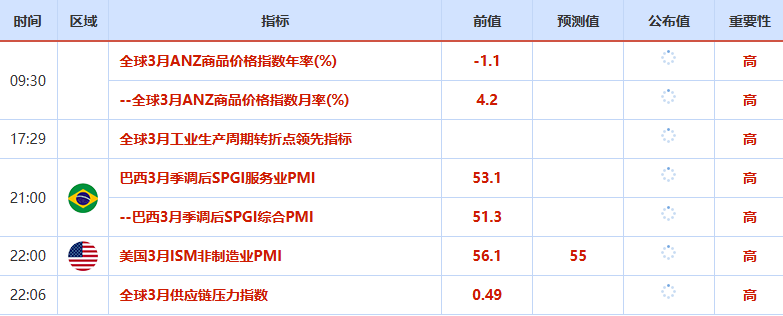
Germany, Australia, France, Spain, New Zealand, Italy, and the United Kingdom will be closed today for Easter; the Shanghai Stock Exchange, Shenzhen Stock Exchange, Beijing Stock Exchange, domestic futures exchanges, and Hong Kong Stock Exchange will be closed for the Qingming Festival holiday.
U.S. stocks closed mixed on Thursday, with the Dow Jones Industrial Average down 0.13%, the S&P 500 up 0.11%, and the Nasdaq Composite up 0.18%. However, the three major indexes still recorded their best weekly performance in four months, rising 2.96%, 3.36%, and 4.44% respectively, marking their first weekly gain in six weeks.
Oil prices surged in early trading after US President Trump threatened tougher action against Iran ahead of Good Friday. However, diplomatic signals such as Iran and Oman drafting a protocol for passage through the Strait of Hormuz and the UK stating that multiple countries were discussing solutions calmed investor sentiment. The October crude oil futures price of around $82 per barrel indicated that the market expected the supply disruption to be temporary.
In terms of sectors, utilities and real estate stocks rose 0.6% and 1.5% respectively, as investors sought stable returns; while the consumer discretionary sector fell 1.5%, mainly dragged down by a 5.4% drop in Tesla's stock price after the company reported its weakest quarterly deliveries in a year.
In addition, Blue Owl's setting redemption caps on two of its retail funds triggered tension in the private lending market, causing its stock price to fall. The Wall Street fear gauge VIX dropped to 23.87. The market is also focused on SpaceX's secret IPO filing (valued at approximately $1.75 trillion) and the upcoming non-farm payroll data.
Gold prices fell 2.2% on Thursday, pressured by a stronger dollar and rising expectations of interest rate hikes. Spot gold was quoted at $4,651.35 per ounce, after hitting a two-week high during the session. U.S. gold futures closed down 2.8% at $4,679.70.
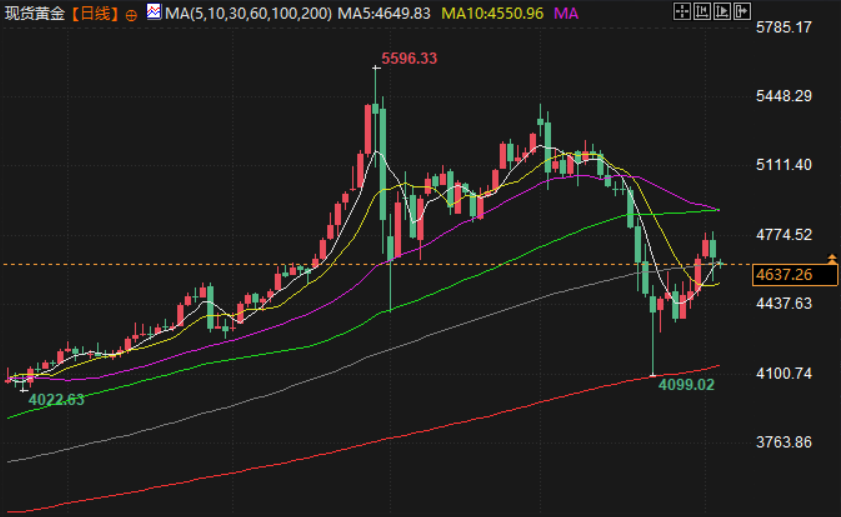
US President Trump said he would continue to attack Iran, vowing to bomb Iran back to the "Stone Age," but did not give a timetable for ending the war. This triggered a surge in oil prices, pushed up inflation expectations, and reduced the room for central banks to cut interest rates.
In addition, Turkey's central bank sharply reduced its gold reserves by over 118 tons in two weeks, decreasing by 69.1 tons to 702.5 tons last week, in an effort to mitigate the impact of the war on the market. On the demand side, boosted by weaker gold prices, Indian gold trading saw its first premium in two months.
In other precious metals, spot silver fell 3.7% to $72.38, platinum rose 0.9%, and palladium rose 1.9%.
Oil prices surged on Thursday, with U.S. crude futures rising 11.41% to settle at $111.54 a barrel, marking the largest single-day gain since 2020; Brent crude futures rose 7.78% to settle at $109.03 a barrel. This surge was driven by U.S. President Trump's vow to continue strikes against Iran, the lack of a clear timetable for ending hostilities, and uncertainty surrounding the reopening of the Strait of Hormuz.
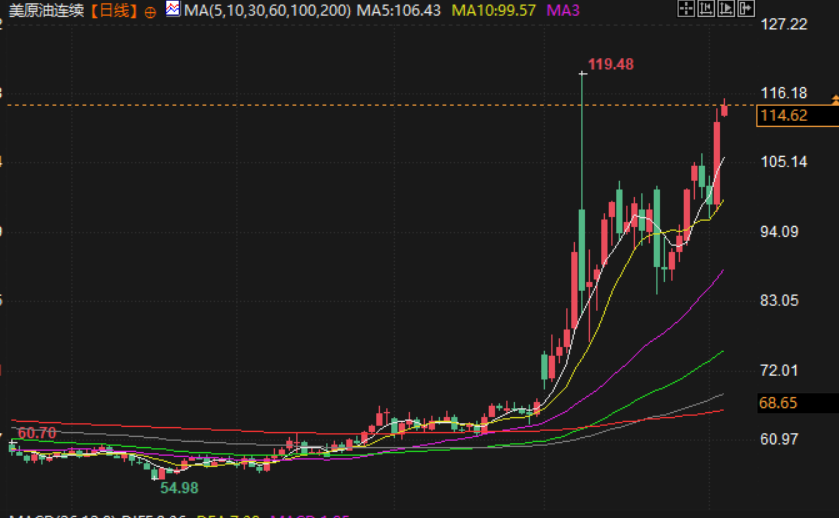
Trump said he would escalate military action, saying he would "push them back to the Stone Age," and traders worried that Iran's oil infrastructure might be at risk, further delaying the resumption of oil flows.
Despite Iran and Oman drafting a protocol to monitor ship traffic in the Strait of Hormuz, markets remain highly volatile. Near-month U.S. crude oil contracts are trading at record premiums over next-month and seventh-month contracts, and U.S. crude prices are nearly $3 higher than Brent crude, the highest in a year.
Dallas Fed President Logan stated that if the war is resolved quickly, the economic impact could be relatively mild, but the outlook remains uncertain. Citigroup predicts a baseline average Brent crude oil price of $95 per barrel for the second half of the year, potentially reaching $130 in an optimistic scenario; JPMorgan Chase suggests that short-term oil prices could rise to $120-$130, and could exceed $150 if the Strait of Hormuz remains closed until mid-May.
The US dollar maintained its safe-haven appeal amid ongoing Middle East conflict and Trump's vow to launch a major strike against Iran, putting pressure on other currencies. On Friday in Asian trading, the US dollar index was around 100.042, up about 2.4% in March. The euro edged down to $1.1532, down 2.21% in March, its biggest quarterly drop since the third quarter of 2024; the pound was at $1.3220, down 1.94% in March; and the yen was flat at 159.62 against the dollar, up 1.7% in March.
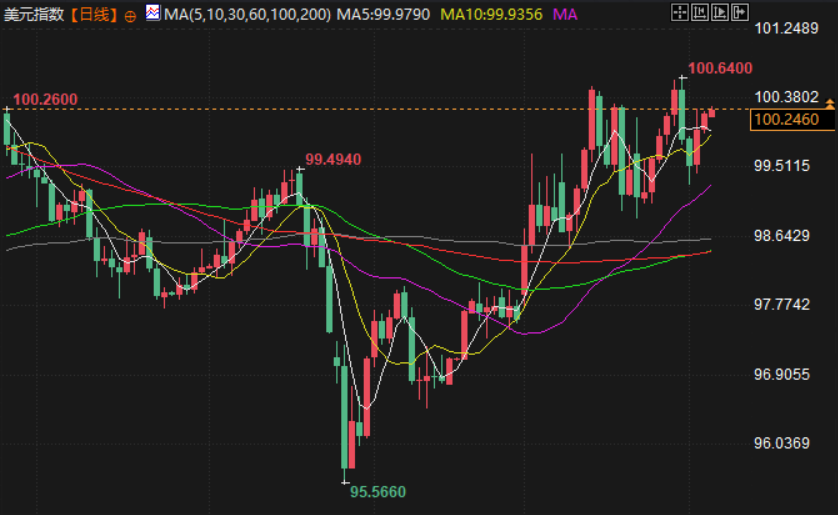
Despite recent support for the dollar, surveys show that foreign exchange strategists still expect the dollar to weaken in the long term, with the euro expected to rise to $1.18 in the next six months and $1.20 in a year as risk aversion subsides.
Standard Chartered analysts pointed out that once the situation normalizes and oil prices fall below $90, the euro will quickly rise above 1.18 against the dollar.
Meanwhile, confidence in Asian currencies reliant on oil imports fell to a six-month low. The Indonesian rupiah hit a record low of 17,026, the Philippine peso hovered around 60.814, the South Korean won briefly touched a low since 2009 at 1,536.9, and the Indian rupee rebounded after touching 95.21 due to central bank intervention. Most major central banks kept interest rates unchanged in March. This week, the central banks of New Zealand, India, and South Korea will announce their interest rate decisions. The market widely expects the Reserve Bank of India to maintain its rate at 5.25% and the Reserve Bank of New Zealand to maintain its rate at 2.25%, but rising energy prices due to war may bring forward the timing of a rate hike.
The non-farm payroll report released last Friday showed that the U.S. added 178,000 jobs in March, seasonally adjusted, compared to market expectations of only 65,000. The previous month's figure (February) was further revised downward from an initial decrease of 92,000 to a decrease of 133,000. This report represented a complete reversal from negative growth to far exceeding expectations. The unemployment rate fell to 4.3%, better than the expected 4.4%. Average hourly earnings rose 0.2% month-on-month, lower than the expected 0.3%, indicating that wage pressures have eased, and market bets on a Fed rate cut in 2026 have subsequently decreased.
According to CME's "FedWatch": The probability of the Fed raising interest rates by 25 basis points in April is 1.6%, and the probability of keeping rates unchanged is 98.4%. The probability of the Fed cutting rates by a cumulative 25 basis points by June is 1.8%, the probability of keeping rates unchanged is 96.6%, and the probability of a cumulative 25 basis point rate hike is 1.5%. The probability of the Fed cutting rates by a cumulative 25 basis points by December is 11.9% (39% last Friday), the probability of keeping rates unchanged is 78.3%, and the probability of a cumulative 25 basis point rate hike is 9.7%.
Trump hints at another delay in destroying Iranian energy facilities
On April 5th local time, US President Trump did not provide a timetable for ending the war against Iran during an interview. Trump stated that if Iran failed to open the Strait of Hormuz by the evening of April 7th, the US would target Iranian power plants. Subsequently, Trump briefly posted on social media: "Tuesday (April 7th) 8 PM ET!" This is widely seen as another extension of the so-called "deadline" he set for Iran. Trump announced on March 26th that the "destruction" of Iranian energy facilities would be postponed by 10 days, until 8 PM ET on April 6th. This is the second time he has postponed this deadline. (CCTV News)
Iran's Permanent Mission to the United Nations: Trump is attempting to drag the Middle East into an endless war.
According to a report by the Islamic Republic News Agency (IRNA) on the 5th, in response to US President Trump's threats to destroy Iranian infrastructure such as power plants and bridges, the Iranian mission to the United Nations stated that Trump is attempting to drag the Middle East into an endless war. The Iranian mission stated that the UN should not remain silent regarding Trump's blatant threats to attack civilian infrastructure. The mission said that Trump's remarks are a direct and open provocation against the Iranian people and clear evidence of his intention to commit war crimes. (Xinhua)
Eight oil-producing countries have decided to increase their daily crude oil production by 206,000 barrels starting in May.
On April 5th local time, eight member countries of OPEC+ (the group comprising OPEC and non-OPEC oil-producing nations) held a meeting and decided to increase daily crude oil production by 206,000 barrels starting in May 2026, continuing the previous arrangement to gradually withdraw from voluntary production cuts. Participating countries included Saudi Arabia, Russia, the United Arab Emirates, Iraq, Kuwait, Kazakhstan, Algeria, and Oman. The meeting did not make any other adjustments to the existing production policy.
Iranian Parliament deliberates on Strait of Hormuz management plan
On April 5 local time, the Iranian Islamic Parliament began deliberations on a plan to manage the Strait of Hormuz. The meeting decided to establish a committee composed of relevant parliamentary members and professionals to further review the text of the plan, aiming to develop a final legal framework that would provide a basis for Iran's jurisdiction over the Strait of Hormuz. On March 30, the Iranian Islamic Parliament's National Security Committee approved the Strait of Hormuz management plan, establishing the controlling role of the Iranian armed forces and explicitly prohibiting vessels from the United States, Israel, and countries imposing unilateral sanctions on Iran from passing through the strait. (CCTV News)
Iran: Strait of Hormuz to reopen after receiving war reparations through toll collection.
The Iranian president's deputy for communications and information affairs stated on social media that Iran will only reopen the Strait of Hormuz after it has fully compensated for the losses caused by the war imposed on it through a portion of the transit fee revenue under a new legal framework.
The Japanese government is considering releasing additional national oil reserves in May.
Japanese media reported on May 5th that Japan's crude oil imports have plummeted due to the situation in the Middle East, sparking widespread concern. The Japanese government is considering releasing additional national oil reserves in May, equivalent to approximately 20 days of Japan's needs. According to data from Japan's Ministry of Economy, Trade and Industry, by the end of 2025, Japan's total domestic oil reserves are equivalent to 254 days of its needs. Due to obstructed passage through the Strait of Hormuz, the Japanese government released approximately 80 million barrels of oil reserves starting March 16th, equivalent to 45 days of Japan's oil supply, the largest release since the establishment of Japan's national oil reserve system in 1978. However, this release has not alleviated the anxiety of related industries regarding insufficient oil supply. Oil industry groups are urging the Japanese government to release more reserves, and the medical industry is urging the assurance of naphtha supply. Naphtha, processed from crude oil, is a key raw material for dialysis-related supplies, medical gloves, syringes, and other medical supplies. Industry insiders point out that if the current situation continues, Japan will face a "naphtha crisis" in June, endangering the health of a large number of patients. Japanese media, citing sources, reported that the Japanese government is seeking alternative routes to transport crude oil, bypassing the Strait of Hormuz, and is sourcing oil from regions outside the Middle East. It is projected that crude oil imports in May will reach approximately 60% of the same period last year. The shortfall will be made up by releasing national oil reserves. The relevant plans are still under discussion. (Xinhua)
Aviation fuel prices have doubled; a strait is choking the global aviation industry.
In recent weeks, aviation fuel prices have surged from $85-90 per barrel to $150-200 per barrel, posing a significant challenge to the global aviation industry, with many airlines adjusting their operating strategies. On April 4th local time, Manix Fortmar, Chairman of the Representative Committee of KLM Royal Dutch Airlines, warned that if shipping through the Strait of Hormuz remains disrupted, airlines could face pressure to cancel flights within six weeks. Benjamin Smith, CEO of Air France-KLM Group, stated that the company is preparing for potential fuel shortages. Michael O'Leary, CEO of Ryanair, Europe's largest low-cost carrier, said on April 1st that the airline may face a fuel supply shortfall of up to 25% in May and June, with overall European aviation fuel supplies expected to tighten in May. O'Leary also said that there is a possibility of a significant increase in airfares from April to June. (CCTV Finance)
Five EU member states call for a windfall profits tax on energy companies; European gas prices surge by over 70%.
On March 4th local time, the finance ministers of Germany, Italy, Spain, Portugal, and Austria sent a letter to the European Commission, calling for a windfall profits tax on energy companies due to rising oil prices caused by the situation in Iran. They stated that such a tax could provide financial support for temporary consumer relief measures. It is reported that Europe is highly dependent on imported fuel, and since the outbreak of the conflict between the US, Israel, and Iran on February 28th, European natural gas prices have increased by more than 70%. (CCTV Finance)
International Energy Agency Executive Director: Continued closure of the Strait of Hormuz will double losses on crude oil and refined products in April.
International Energy Agency Executive Director Fatih Birol warned that if the Strait of Hormuz does not reopen to shipping, the amount of crude oil and refined products lost in April would be double the amount lost in March. Even after the conflict ends, it will take a long time to return to normal. “We are monitoring all critical energy assets in the region hourly on a daily basis,” he said, referring to oil and gas fields, pipelines, refineries, and liquefied natural gas terminals. “Currently, 72 energy assets have been damaged, and one-third of them are severely or very severely damaged,” he added.
Gallup poll: Global approval rating for China surpasses that for the United States
A global poll released on March 3 by the U.S. polling agency Gallup showed that China will surpass the United States in global approval ratings by 2025, with a median approval rating of 36%, leading the U.S. by 5 percentage points. The Gallup report stated that this is the largest lead China has recorded over the U.S. in global approval ratings in nearly 20 years. (CCTV News)
Domestic flight fuel surcharges will be adjusted starting today; flights over 800 kilometers will be charged 120 yuan.
Recently, several airlines, including Air China, Xiamen Airlines, and China United Airlines, issued announcements adjusting the fuel surcharge standards for domestic routes. For tickets sold from April 5, 2026 (inclusive), the fuel surcharge standards for domestic routes will be adjusted as follows: RMB 60 per passenger for routes of 800 kilometers (inclusive) or less; RMB 120 per passenger for routes over 800 kilometers. Infants who are entitled to a 10% discount on domestic airfares are exempt from the fuel surcharge. Children (including unaccompanied minors), disabled veterans, and disabled police officers who purchase domestic airfares at 50% of the adult fare will be subject to the following fuel surcharge standards: RMB 30 per passenger for routes of 800 kilometers (inclusive) or less; RMB 60 per passenger for routes over 800 kilometers. The fuel surcharge will be levied starting from the original ticket date. For domestic tickets sold before April 5, 2026, if the travel date is changed to April 5, 2026 (inclusive) or later, the fuel surcharge already collected will not be refunded or supplemented. (Xinhua News Agency)
Key Focus Today
Germany, Australia, France, Spain, New Zealand, Italy, and the United Kingdom will be closed today for Easter; the Shanghai Stock Exchange, Shenzhen Stock Exchange, Beijing Stock Exchange, domestic futures exchanges, and Hong Kong Stock Exchange will be closed for the Qingming Festival holiday.
stock market
U.S. stocks closed mixed on Thursday, with the Dow Jones Industrial Average down 0.13%, the S&P 500 up 0.11%, and the Nasdaq Composite up 0.18%. However, the three major indexes still recorded their best weekly performance in four months, rising 2.96%, 3.36%, and 4.44% respectively, marking their first weekly gain in six weeks.
Oil prices surged in early trading after US President Trump threatened tougher action against Iran ahead of Good Friday. However, diplomatic signals such as Iran and Oman drafting a protocol for passage through the Strait of Hormuz and the UK stating that multiple countries were discussing solutions calmed investor sentiment. The October crude oil futures price of around $82 per barrel indicated that the market expected the supply disruption to be temporary.
In terms of sectors, utilities and real estate stocks rose 0.6% and 1.5% respectively, as investors sought stable returns; while the consumer discretionary sector fell 1.5%, mainly dragged down by a 5.4% drop in Tesla's stock price after the company reported its weakest quarterly deliveries in a year.
In addition, Blue Owl's setting redemption caps on two of its retail funds triggered tension in the private lending market, causing its stock price to fall. The Wall Street fear gauge VIX dropped to 23.87. The market is also focused on SpaceX's secret IPO filing (valued at approximately $1.75 trillion) and the upcoming non-farm payroll data.
Gold Market
Gold prices fell 2.2% on Thursday, pressured by a stronger dollar and rising expectations of interest rate hikes. Spot gold was quoted at $4,651.35 per ounce, after hitting a two-week high during the session. U.S. gold futures closed down 2.8% at $4,679.70.
US President Trump said he would continue to attack Iran, vowing to bomb Iran back to the "Stone Age," but did not give a timetable for ending the war. This triggered a surge in oil prices, pushed up inflation expectations, and reduced the room for central banks to cut interest rates.
In addition, Turkey's central bank sharply reduced its gold reserves by over 118 tons in two weeks, decreasing by 69.1 tons to 702.5 tons last week, in an effort to mitigate the impact of the war on the market. On the demand side, boosted by weaker gold prices, Indian gold trading saw its first premium in two months.
In other precious metals, spot silver fell 3.7% to $72.38, platinum rose 0.9%, and palladium rose 1.9%.
oil market
Oil prices surged on Thursday, with U.S. crude futures rising 11.41% to settle at $111.54 a barrel, marking the largest single-day gain since 2020; Brent crude futures rose 7.78% to settle at $109.03 a barrel. This surge was driven by U.S. President Trump's vow to continue strikes against Iran, the lack of a clear timetable for ending hostilities, and uncertainty surrounding the reopening of the Strait of Hormuz.
Trump said he would escalate military action, saying he would "push them back to the Stone Age," and traders worried that Iran's oil infrastructure might be at risk, further delaying the resumption of oil flows.
Despite Iran and Oman drafting a protocol to monitor ship traffic in the Strait of Hormuz, markets remain highly volatile. Near-month U.S. crude oil contracts are trading at record premiums over next-month and seventh-month contracts, and U.S. crude prices are nearly $3 higher than Brent crude, the highest in a year.
Dallas Fed President Logan stated that if the war is resolved quickly, the economic impact could be relatively mild, but the outlook remains uncertain. Citigroup predicts a baseline average Brent crude oil price of $95 per barrel for the second half of the year, potentially reaching $130 in an optimistic scenario; JPMorgan Chase suggests that short-term oil prices could rise to $120-$130, and could exceed $150 if the Strait of Hormuz remains closed until mid-May.
Foreign exchange market
The US dollar maintained its safe-haven appeal amid ongoing Middle East conflict and Trump's vow to launch a major strike against Iran, putting pressure on other currencies. On Friday in Asian trading, the US dollar index was around 100.042, up about 2.4% in March. The euro edged down to $1.1532, down 2.21% in March, its biggest quarterly drop since the third quarter of 2024; the pound was at $1.3220, down 1.94% in March; and the yen was flat at 159.62 against the dollar, up 1.7% in March.
Despite recent support for the dollar, surveys show that foreign exchange strategists still expect the dollar to weaken in the long term, with the euro expected to rise to $1.18 in the next six months and $1.20 in a year as risk aversion subsides.
Standard Chartered analysts pointed out that once the situation normalizes and oil prices fall below $90, the euro will quickly rise above 1.18 against the dollar.
Meanwhile, confidence in Asian currencies reliant on oil imports fell to a six-month low. The Indonesian rupiah hit a record low of 17,026, the Philippine peso hovered around 60.814, the South Korean won briefly touched a low since 2009 at 1,536.9, and the Indian rupee rebounded after touching 95.21 due to central bank intervention. Most major central banks kept interest rates unchanged in March. This week, the central banks of New Zealand, India, and South Korea will announce their interest rate decisions. The market widely expects the Reserve Bank of India to maintain its rate at 5.25% and the Reserve Bank of New Zealand to maintain its rate at 2.25%, but rising energy prices due to war may bring forward the timing of a rate hike.
The non-farm payroll report released last Friday showed that the U.S. added 178,000 jobs in March, seasonally adjusted, compared to market expectations of only 65,000. The previous month's figure (February) was further revised downward from an initial decrease of 92,000 to a decrease of 133,000. This report represented a complete reversal from negative growth to far exceeding expectations. The unemployment rate fell to 4.3%, better than the expected 4.4%. Average hourly earnings rose 0.2% month-on-month, lower than the expected 0.3%, indicating that wage pressures have eased, and market bets on a Fed rate cut in 2026 have subsequently decreased.
According to CME's "FedWatch": The probability of the Fed raising interest rates by 25 basis points in April is 1.6%, and the probability of keeping rates unchanged is 98.4%. The probability of the Fed cutting rates by a cumulative 25 basis points by June is 1.8%, the probability of keeping rates unchanged is 96.6%, and the probability of a cumulative 25 basis point rate hike is 1.5%. The probability of the Fed cutting rates by a cumulative 25 basis points by December is 11.9% (39% last Friday), the probability of keeping rates unchanged is 78.3%, and the probability of a cumulative 25 basis point rate hike is 9.7%.
International News
Trump hints at another delay in destroying Iranian energy facilities
On April 5th local time, US President Trump did not provide a timetable for ending the war against Iran during an interview. Trump stated that if Iran failed to open the Strait of Hormuz by the evening of April 7th, the US would target Iranian power plants. Subsequently, Trump briefly posted on social media: "Tuesday (April 7th) 8 PM ET!" This is widely seen as another extension of the so-called "deadline" he set for Iran. Trump announced on March 26th that the "destruction" of Iranian energy facilities would be postponed by 10 days, until 8 PM ET on April 6th. This is the second time he has postponed this deadline. (CCTV News)
Iran's Permanent Mission to the United Nations: Trump is attempting to drag the Middle East into an endless war.
According to a report by the Islamic Republic News Agency (IRNA) on the 5th, in response to US President Trump's threats to destroy Iranian infrastructure such as power plants and bridges, the Iranian mission to the United Nations stated that Trump is attempting to drag the Middle East into an endless war. The Iranian mission stated that the UN should not remain silent regarding Trump's blatant threats to attack civilian infrastructure. The mission said that Trump's remarks are a direct and open provocation against the Iranian people and clear evidence of his intention to commit war crimes. (Xinhua)
Eight oil-producing countries have decided to increase their daily crude oil production by 206,000 barrels starting in May.
On April 5th local time, eight member countries of OPEC+ (the group comprising OPEC and non-OPEC oil-producing nations) held a meeting and decided to increase daily crude oil production by 206,000 barrels starting in May 2026, continuing the previous arrangement to gradually withdraw from voluntary production cuts. Participating countries included Saudi Arabia, Russia, the United Arab Emirates, Iraq, Kuwait, Kazakhstan, Algeria, and Oman. The meeting did not make any other adjustments to the existing production policy.
Iranian Parliament deliberates on Strait of Hormuz management plan
On April 5 local time, the Iranian Islamic Parliament began deliberations on a plan to manage the Strait of Hormuz. The meeting decided to establish a committee composed of relevant parliamentary members and professionals to further review the text of the plan, aiming to develop a final legal framework that would provide a basis for Iran's jurisdiction over the Strait of Hormuz. On March 30, the Iranian Islamic Parliament's National Security Committee approved the Strait of Hormuz management plan, establishing the controlling role of the Iranian armed forces and explicitly prohibiting vessels from the United States, Israel, and countries imposing unilateral sanctions on Iran from passing through the strait. (CCTV News)
Iran: Strait of Hormuz to reopen after receiving war reparations through toll collection.
The Iranian president's deputy for communications and information affairs stated on social media that Iran will only reopen the Strait of Hormuz after it has fully compensated for the losses caused by the war imposed on it through a portion of the transit fee revenue under a new legal framework.
The Japanese government is considering releasing additional national oil reserves in May.
Japanese media reported on May 5th that Japan's crude oil imports have plummeted due to the situation in the Middle East, sparking widespread concern. The Japanese government is considering releasing additional national oil reserves in May, equivalent to approximately 20 days of Japan's needs. According to data from Japan's Ministry of Economy, Trade and Industry, by the end of 2025, Japan's total domestic oil reserves are equivalent to 254 days of its needs. Due to obstructed passage through the Strait of Hormuz, the Japanese government released approximately 80 million barrels of oil reserves starting March 16th, equivalent to 45 days of Japan's oil supply, the largest release since the establishment of Japan's national oil reserve system in 1978. However, this release has not alleviated the anxiety of related industries regarding insufficient oil supply. Oil industry groups are urging the Japanese government to release more reserves, and the medical industry is urging the assurance of naphtha supply. Naphtha, processed from crude oil, is a key raw material for dialysis-related supplies, medical gloves, syringes, and other medical supplies. Industry insiders point out that if the current situation continues, Japan will face a "naphtha crisis" in June, endangering the health of a large number of patients. Japanese media, citing sources, reported that the Japanese government is seeking alternative routes to transport crude oil, bypassing the Strait of Hormuz, and is sourcing oil from regions outside the Middle East. It is projected that crude oil imports in May will reach approximately 60% of the same period last year. The shortfall will be made up by releasing national oil reserves. The relevant plans are still under discussion. (Xinhua)
Aviation fuel prices have doubled; a strait is choking the global aviation industry.
In recent weeks, aviation fuel prices have surged from $85-90 per barrel to $150-200 per barrel, posing a significant challenge to the global aviation industry, with many airlines adjusting their operating strategies. On April 4th local time, Manix Fortmar, Chairman of the Representative Committee of KLM Royal Dutch Airlines, warned that if shipping through the Strait of Hormuz remains disrupted, airlines could face pressure to cancel flights within six weeks. Benjamin Smith, CEO of Air France-KLM Group, stated that the company is preparing for potential fuel shortages. Michael O'Leary, CEO of Ryanair, Europe's largest low-cost carrier, said on April 1st that the airline may face a fuel supply shortfall of up to 25% in May and June, with overall European aviation fuel supplies expected to tighten in May. O'Leary also said that there is a possibility of a significant increase in airfares from April to June. (CCTV Finance)
Five EU member states call for a windfall profits tax on energy companies; European gas prices surge by over 70%.
On March 4th local time, the finance ministers of Germany, Italy, Spain, Portugal, and Austria sent a letter to the European Commission, calling for a windfall profits tax on energy companies due to rising oil prices caused by the situation in Iran. They stated that such a tax could provide financial support for temporary consumer relief measures. It is reported that Europe is highly dependent on imported fuel, and since the outbreak of the conflict between the US, Israel, and Iran on February 28th, European natural gas prices have increased by more than 70%. (CCTV Finance)
International Energy Agency Executive Director: Continued closure of the Strait of Hormuz will double losses on crude oil and refined products in April.
International Energy Agency Executive Director Fatih Birol warned that if the Strait of Hormuz does not reopen to shipping, the amount of crude oil and refined products lost in April would be double the amount lost in March. Even after the conflict ends, it will take a long time to return to normal. “We are monitoring all critical energy assets in the region hourly on a daily basis,” he said, referring to oil and gas fields, pipelines, refineries, and liquefied natural gas terminals. “Currently, 72 energy assets have been damaged, and one-third of them are severely or very severely damaged,” he added.
Domestic News
Gallup poll: Global approval rating for China surpasses that for the United States
A global poll released on March 3 by the U.S. polling agency Gallup showed that China will surpass the United States in global approval ratings by 2025, with a median approval rating of 36%, leading the U.S. by 5 percentage points. The Gallup report stated that this is the largest lead China has recorded over the U.S. in global approval ratings in nearly 20 years. (CCTV News)
Domestic flight fuel surcharges will be adjusted starting today; flights over 800 kilometers will be charged 120 yuan.
Recently, several airlines, including Air China, Xiamen Airlines, and China United Airlines, issued announcements adjusting the fuel surcharge standards for domestic routes. For tickets sold from April 5, 2026 (inclusive), the fuel surcharge standards for domestic routes will be adjusted as follows: RMB 60 per passenger for routes of 800 kilometers (inclusive) or less; RMB 120 per passenger for routes over 800 kilometers. Infants who are entitled to a 10% discount on domestic airfares are exempt from the fuel surcharge. Children (including unaccompanied minors), disabled veterans, and disabled police officers who purchase domestic airfares at 50% of the adult fare will be subject to the following fuel surcharge standards: RMB 30 per passenger for routes of 800 kilometers (inclusive) or less; RMB 60 per passenger for routes over 800 kilometers. The fuel surcharge will be levied starting from the original ticket date. For domestic tickets sold before April 5, 2026, if the travel date is changed to April 5, 2026 (inclusive) or later, the fuel surcharge already collected will not be refunded or supplemented. (Xinhua News Agency)
- Risk Warning and Disclaimer
- The market involves risk, and trading may not be suitable for all investors. This article is for reference only and does not constitute personal investment advice, nor does it take into account certain users’ specific investment objectives, financial situation, or other needs. Any investment decisions made based on this information are at your own risk.