The final 24-hour talks between the US and Iran could ignite a larger conflict over uranium-rich mines.
2026-04-06 18:12:17
On Monday (April 6), international oil prices rebounded rapidly after rising and falling throughout the day during the Asian and European sessions. An Iranian Foreign Ministry spokesperson said that the US military operation in southern Isfahan may be aimed at seizing Iran's rich uranium mines, suggesting that the conflict may escalate further, since Iran had previously claimed that its enriched uranium was very safe.
It should be noted that although the price trended downwards throughout the day, oil prices remained high, and market bets on continued conflict have not eased significantly. Since the US and Israel launched their joint attack on Iran on February 28, this conflict, which has lasted for more than five weeks, has completely disrupted the situation in the Middle East.
The crash of a U.S. F-15E fighter jet in Iran, with the pilot successfully rescued, has directly escalated tensions. U.S. President Trump issued a strong threat on Sunday, ordering Iran to open the Strait of Hormuz by Tuesday, April 7, or else he would launch precision strikes on Iran's core infrastructure, including power plants and bridges, and even threatened that Iran would "go to hell."
Iran's retaliation was equally forceful: it not only attacked key energy infrastructure in the Gulf Arab states, but also announced a major development—it would block the Bab el-Mandeb Strait, another of the world's busiest waterways, putting two major energy chokepoints in jeopardy at the same time.
At the same time, the military confrontation between the two sides continued to escalate:
Iran shot down another U.S. A-10 attack aircraft on Friday and released images on Sunday of the wreckage (including transport planes and helicopters) from the rescue operation.
The U.S. military admitted that two transport planes were destroyed due to technical malfunctions, while two Black Hawk helicopters barely escaped after being shot down.
The airstrikes spread to Iranian territory, targeting residential areas, universities, and natural gas distribution stations in Tehran, Qom, and other cities, resulting in the deaths of at least 18 civilians.
Iranian drones and missiles severely damaged petrochemical plants and power plants in the UAE, Kuwait, and Bahrain, paralyzing regional energy production.
To date, the conflict has resulted in casualties on multiple sides: over 1,900 people have died in Iran, 19 people have been killed and 11 Israeli soldiers have been killed, 13 U.S. military personnel have been killed, and over 1,500 people have died and millions have been displaced in the Gulf countries and Lebanon.
The war has triggered global market turmoil, with international fuel prices rising by more than 57% compared to pre-war levels, and the energy supply chain on the verge of collapse.
Behind the military conflict, diplomatic negotiations have stalled.
Regarding the 15-point ceasefire plan previously proposed by the United States, the spokesperson for the Iranian Foreign Ministry directly refuted it as "extremely ambitious and illogical," and strongly criticized the United States' two-faced behavior:
"In less than nine months, the United States destroyed diplomatic channels in the worst way, and its words and actions were completely inconsistent."
"The terrorist acts committed by the United States in Iran have essentially removed diplomatic issues from the agenda."
The spokesperson made it clear that while Iran will continue to fulfill its diplomatic responsibilities, it will never accept "unequal negotiations."
On April 6, Iran further signaled that it was prepared to respond to the mediators and would provide timely updates if necessary.
However, Iran's bottom line in negotiations is clear—it refuses to accept a "temporary ceasefire in exchange for the opening of the Strait," demanding that the US first meet core conditions such as a permanent ceasefire, war reparations, and recognition of sovereignty over the Strait. Its stance is tough and there is no room for compromise.
On the other hand, Israel's position has become even more uncertain.
The Israeli Defense Minister's public declaration that he "will continue to hunt down senior Iranian leaders" has further escalated regional tensions and cast a shadow over negotiations.
Just as the confrontation between the US and Iran was escalating, Pakistan's two-track approach to de-escalation became the only viable mediation path at present.
The plan requires the US and Iran to reach an agreement by April 6 (today) through Pakistan's only electronic communication channel, and is divided into two phases:
Phase 1: An immediate ceasefire, while simultaneously reopening the Strait of Hormuz, which is vital to global oil production.
Phase Two: Negotiations will conclude within 15-20 days to reach the "Islamabad Agreement." Iran will be required to commit to limiting its nuclear program and not developing nuclear weapons. In exchange, Iran will receive sanctions relief, the unfreezing of its frozen assets, and a broader regional framework for the security of the Strait of Hormuz.
Currently, international diplomatic mediation is also underway:
Oman: Iran and Oman's deputy foreign ministers and experts held a special meeting focusing on "smooth navigation" in the Strait of Hormuz;
Egypt: The foreign minister communicated with the foreign ministers of the United States, Iran, Turkey, and Pakistan to de-escalate the situation;
Russia: Iranian and Russian foreign ministers spoke by phone to exchange views on the regional situation;
Bahrain: Urges the UN Security Council to pass a resolution authorizing member states to take defensive measures to ensure navigation through the Strait.
However, Iran's resistance to the "temporary ceasefire," the US's demanding requirements, and Israel's tough stance still make the implementation of the plan uncertain.
April 7th at 8:00 AM is the deadline set by Trump, a crucial window for observing the oil market: whether the Pakistan proposal can be implemented, whether Iran makes concessions, and whether the US and Israel suspend military operations will directly determine the trend of crude oil prices.
Investors need to pay close attention to official responses from Iran, navigation data in the Strait of Hormuz, and the progress of airstrikes, as any slight disturbance could trigger sharp fluctuations in the oil market.
At the same time, we should pay attention to the US-Iran dispute over enriched uranium and related market information. This may be the most important hard physical constraint that will determine the outcome of the war. The war will be difficult to end before the nuclear issue is resolved.
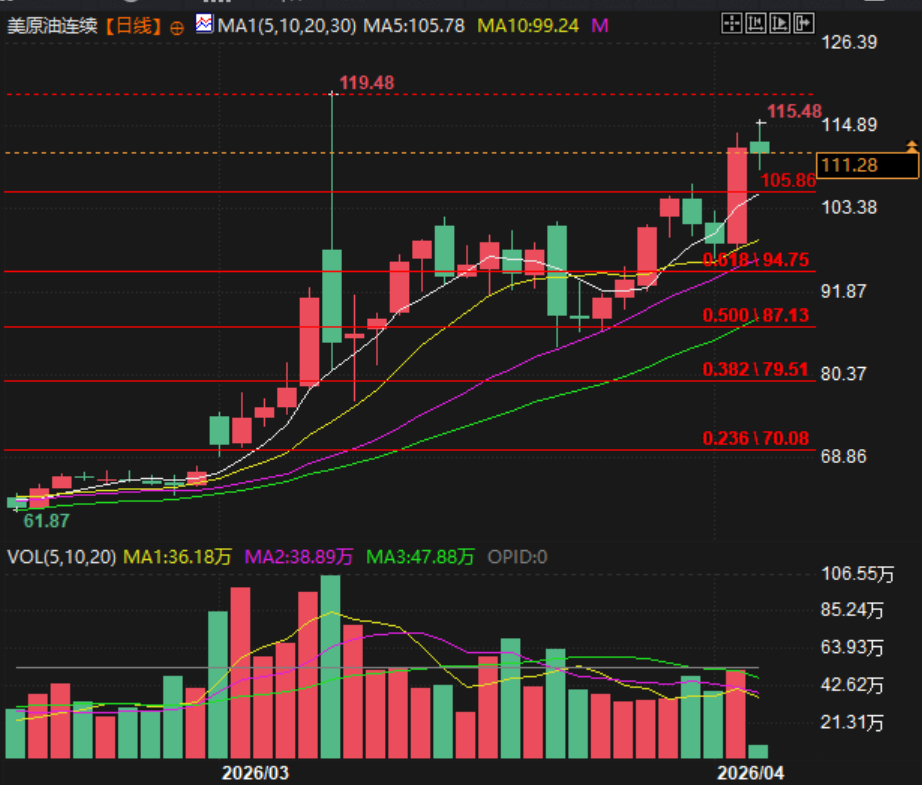
(WTI crude oil futures daily chart, source: EasyForex)
At 18:10 Beijing time, WTI crude oil futures were trading at $110.23 per barrel.
It should be noted that although the price trended downwards throughout the day, oil prices remained high, and market bets on continued conflict have not eased significantly. Since the US and Israel launched their joint attack on Iran on February 28, this conflict, which has lasted for more than five weeks, has completely disrupted the situation in the Middle East.
The crash of a U.S. F-15E fighter jet in Iran, with the pilot successfully rescued, has directly escalated tensions. U.S. President Trump issued a strong threat on Sunday, ordering Iran to open the Strait of Hormuz by Tuesday, April 7, or else he would launch precision strikes on Iran's core infrastructure, including power plants and bridges, and even threatened that Iran would "go to hell."
Iran's retaliation was equally forceful: it not only attacked key energy infrastructure in the Gulf Arab states, but also announced a major development—it would block the Bab el-Mandeb Strait, another of the world's busiest waterways, putting two major energy chokepoints in jeopardy at the same time.
At the same time, the military confrontation between the two sides continued to escalate:
Iran shot down another U.S. A-10 attack aircraft on Friday and released images on Sunday of the wreckage (including transport planes and helicopters) from the rescue operation.
The U.S. military admitted that two transport planes were destroyed due to technical malfunctions, while two Black Hawk helicopters barely escaped after being shot down.
The airstrikes spread to Iranian territory, targeting residential areas, universities, and natural gas distribution stations in Tehran, Qom, and other cities, resulting in the deaths of at least 18 civilians.
Iranian drones and missiles severely damaged petrochemical plants and power plants in the UAE, Kuwait, and Bahrain, paralyzing regional energy production.
To date, the conflict has resulted in casualties on multiple sides: over 1,900 people have died in Iran, 19 people have been killed and 11 Israeli soldiers have been killed, 13 U.S. military personnel have been killed, and over 1,500 people have died and millions have been displaced in the Gulf countries and Lebanon.
The war has triggered global market turmoil, with international fuel prices rising by more than 57% compared to pre-war levels, and the energy supply chain on the verge of collapse.
Negotiations stalled: Iran firmly refuses to talk, US plan criticized as "illogical".
Behind the military conflict, diplomatic negotiations have stalled.
Regarding the 15-point ceasefire plan previously proposed by the United States, the spokesperson for the Iranian Foreign Ministry directly refuted it as "extremely ambitious and illogical," and strongly criticized the United States' two-faced behavior:
"In less than nine months, the United States destroyed diplomatic channels in the worst way, and its words and actions were completely inconsistent."
"The terrorist acts committed by the United States in Iran have essentially removed diplomatic issues from the agenda."
The spokesperson made it clear that while Iran will continue to fulfill its diplomatic responsibilities, it will never accept "unequal negotiations."
On April 6, Iran further signaled that it was prepared to respond to the mediators and would provide timely updates if necessary.
However, Iran's bottom line in negotiations is clear—it refuses to accept a "temporary ceasefire in exchange for the opening of the Strait," demanding that the US first meet core conditions such as a permanent ceasefire, war reparations, and recognition of sovereignty over the Strait. Its stance is tough and there is no room for compromise.
On the other hand, Israel's position has become even more uncertain.
The Israeli Defense Minister's public declaration that he "will continue to hunt down senior Iranian leaders" has further escalated regional tensions and cast a shadow over negotiations.
A turning point has emerged? Pakistan's dual-track approach becomes the only viable path.
Just as the confrontation between the US and Iran was escalating, Pakistan's two-track approach to de-escalation became the only viable mediation path at present.
The plan requires the US and Iran to reach an agreement by April 6 (today) through Pakistan's only electronic communication channel, and is divided into two phases:
Phase 1: An immediate ceasefire, while simultaneously reopening the Strait of Hormuz, which is vital to global oil production.
Phase Two: Negotiations will conclude within 15-20 days to reach the "Islamabad Agreement." Iran will be required to commit to limiting its nuclear program and not developing nuclear weapons. In exchange, Iran will receive sanctions relief, the unfreezing of its frozen assets, and a broader regional framework for the security of the Strait of Hormuz.
Currently, international diplomatic mediation is also underway:
Oman: Iran and Oman's deputy foreign ministers and experts held a special meeting focusing on "smooth navigation" in the Strait of Hormuz;
Egypt: The foreign minister communicated with the foreign ministers of the United States, Iran, Turkey, and Pakistan to de-escalate the situation;
Russia: Iranian and Russian foreign ministers spoke by phone to exchange views on the regional situation;
Bahrain: Urges the UN Security Council to pass a resolution authorizing member states to take defensive measures to ensure navigation through the Strait.
However, Iran's resistance to the "temporary ceasefire," the US's demanding requirements, and Israel's tough stance still make the implementation of the plan uncertain.
Key reminder: Determine direction within 24 hours.
April 7th at 8:00 AM is the deadline set by Trump, a crucial window for observing the oil market: whether the Pakistan proposal can be implemented, whether Iran makes concessions, and whether the US and Israel suspend military operations will directly determine the trend of crude oil prices.
Investors need to pay close attention to official responses from Iran, navigation data in the Strait of Hormuz, and the progress of airstrikes, as any slight disturbance could trigger sharp fluctuations in the oil market.
At the same time, we should pay attention to the US-Iran dispute over enriched uranium and related market information. This may be the most important hard physical constraint that will determine the outcome of the war. The war will be difficult to end before the nuclear issue is resolved.
(WTI crude oil futures daily chart, source: EasyForex)
At 18:10 Beijing time, WTI crude oil futures were trading at $110.23 per barrel.
- Risk Warning and Disclaimer
- The market involves risk, and trading may not be suitable for all investors. This article is for reference only and does not constitute personal investment advice, nor does it take into account certain users’ specific investment objectives, financial situation, or other needs. Any investment decisions made based on this information are at your own risk.