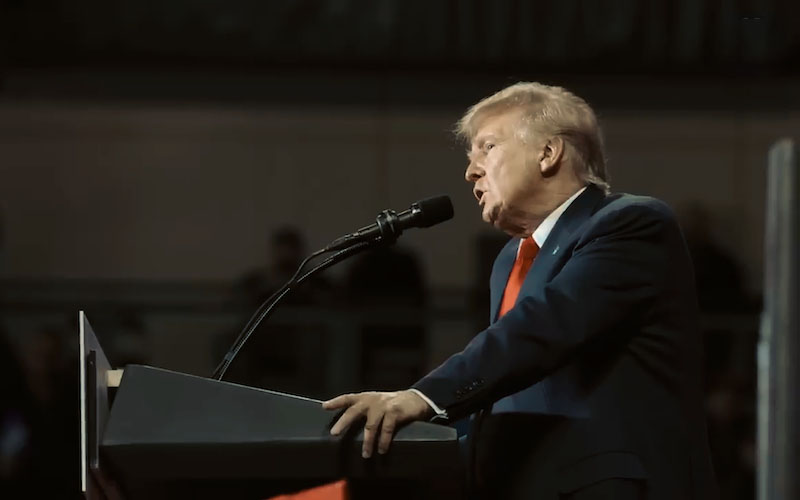
April 8th Financial Breakfast: The US and Iran reached a two-week ceasefire agreement, restarting negotiations to ease tensions; gold prices rebounded above $4810, while oil prices plummeted by over 19%.
2026-04-08 07:29:12
On Wednesday (April 8, Beijing time) in early Asian trading, spot gold rose more than 2.5%, trading around $4,823 per ounce. Trump announced a two-week ceasefire with Iran, which Iran accepted. US-Iran negotiations will begin on the 10th in Islamabad. Meanwhile, the market awaits the Federal Reserve meeting minutes and data. US crude oil plunged more than 19%, trading around $91.27 per barrel, and may test the $90 per barrel mark during the day.

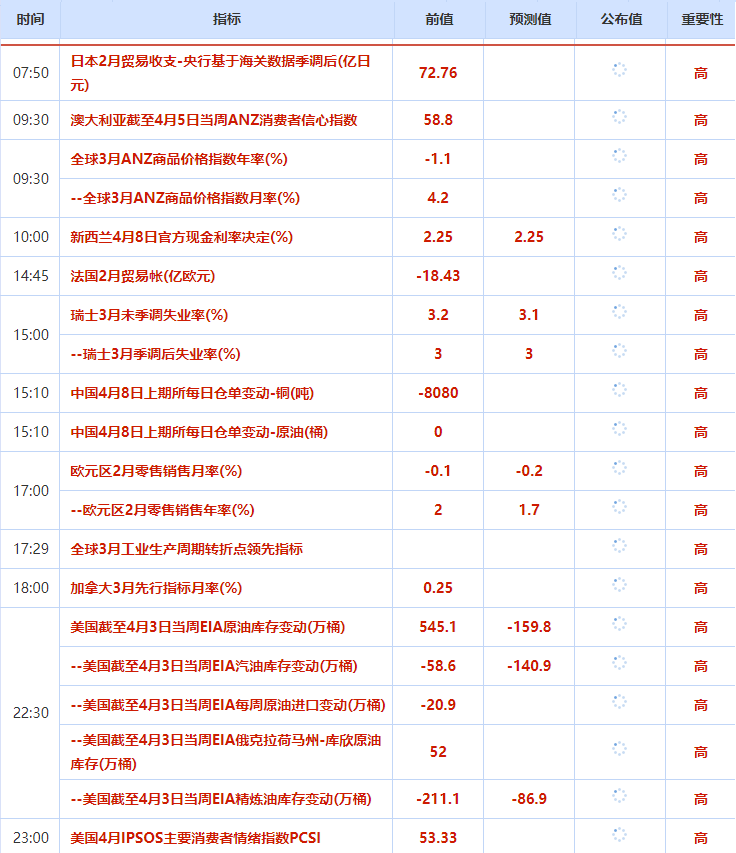
U.S. stocks closed mixed on Tuesday, with the Dow Jones Industrial Average down 0.18%, the S&P 500 up 0.08%, and the Nasdaq Composite up 0.10%.
As President Trump's deadline for Iran to open the Strait of Hormuz approaches, signs of progress have emerged in negotiations. The Pakistani Prime Minister urged both sides to take goodwill measures. Iran's Supreme National Security Council issued a statement early on the 8th local time, saying that, based on the advice of the Supreme Leader and the approval of the Supreme National Security Council, it accepted Pakistan's ceasefire proposal.
The three major stock indexes rebounded from a sharp intraday decline in the final trading session, with the S&P 500 and Nasdaq achieving their fifth consecutive day of gains. On the economic data front, new durable goods orders in February fell more than expected, while Chicago Fed President Goolsby expressed concerns that war could trigger stagflation.
In terms of individual stocks, UnitedHealth Group surged 9.4% after the US increased the payment limit for the Medicare Advantage plan, while Humana and CVS Health rose 7.9% and 6.7% respectively; Apple fell 2.1% due to setbacks with its foldable phone; Broadcom rose 6.2% after reaching an AI chip development agreement with Google; and Intel rose 4.2% after joining Musk's Terafab AI chip project.
Gold prices rose slightly on Tuesday, with market focus on President Trump's deadline for Iran to reopen the Strait of Hormuz. President Trump posted on the Truth Social Network that, based on communications with the Pakistani Prime Minister and Army Chief of Staff—who requested a postponement of tonight's devastating strike against Iran, provided the Islamic Republic of Iran agrees to a full, immediate, and secure opening of the Strait of Hormuz—he agreed to a two-week suspension of bombing and military strikes against Iran. This will be a bilateral ceasefire! The reason for this decision is that we have achieved and exceeded all military objectives and made significant progress in concluding a long-term peace agreement with Iran and achieving peace in the Middle East. We received Iran's ten-point proposal, which we consider a viable basis for negotiations. The US and Iran have reached agreement on almost all previously contentious points, and the two weeks will be used to finalize and formally sign the agreement.
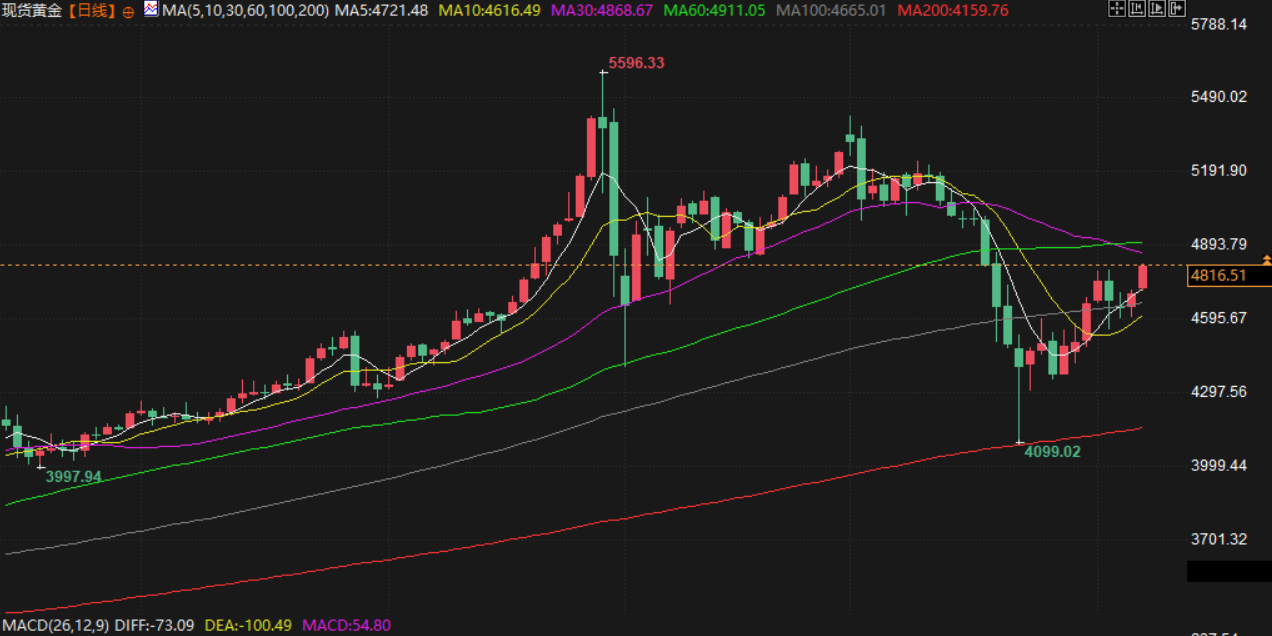
Analysts say traders are awaiting developments while also focusing on central bank interest rate policies—spot gold prices have fallen by about 11% since the start of the conflict in Iran, as soaring oil prices have pushed up inflation, limiting the room for interest rate cuts in major economies and thus weakening gold's safe-haven appeal. The market awaits the release of the Federal Reserve's March meeting minutes on Wednesday, followed by PCE and CPI data.
In addition, China's central bank's gold reserves increased to 74.38 million ounces at the end of March, marking the 17th consecutive month of increases. Spot silver fell 1% to $72.03, while platinum and palladium fell 2% to $1,939.15 and $1,455.63, respectively.
Brent crude futures fell 0.5% to $109.27 a barrel on Tuesday, weighed down by concerns that high energy prices could drag down economic growth; while U.S. crude futures rose 0.5% to $112.95 a barrel, a new high since 2022, as the market tended to believe that supply disruptions would be prolonged, and the premium of the U.S. crude near-month contract over the next-month contract hit a record high for the second consecutive day, indicating tight supply in the spot market.
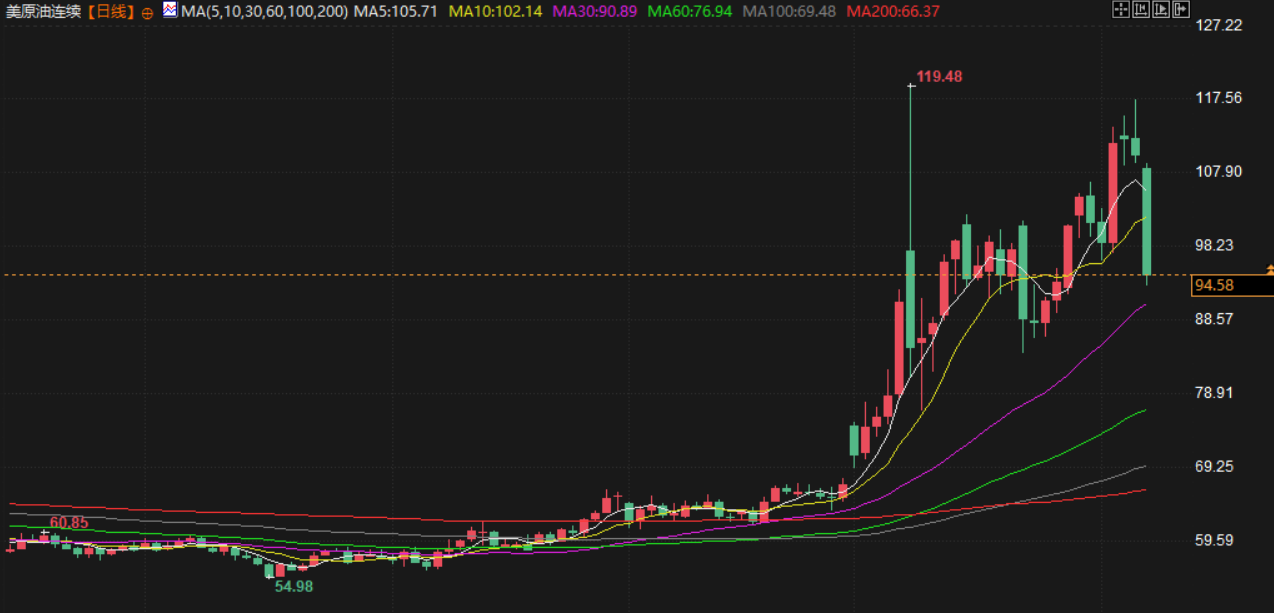
Normally, US oil prices are lower than Brent crude, but this is currently reversed due to different delivery dates. As the US-Israeli war against Iran squeezes global supply, European and Asian refiners are buying certain crude oil varieties at record high prices approaching $150 per barrel.
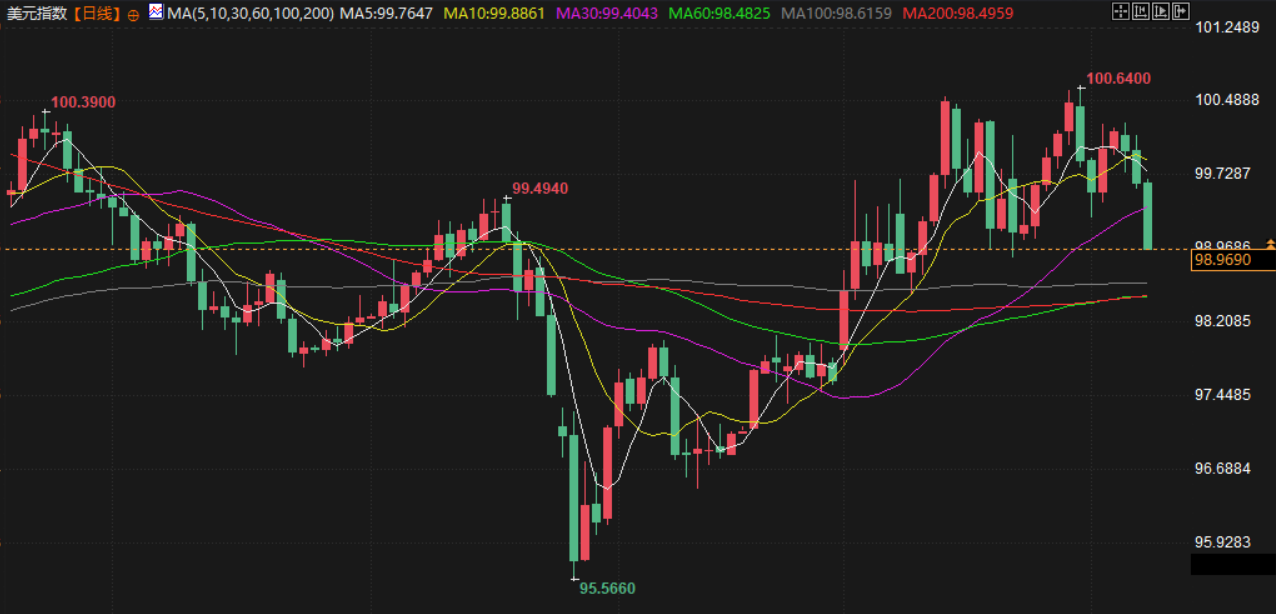
The dollar index held firm on Tuesday, hovering near its highest level in nearly 11 months, as investors remained cautious ahead of Trump's deadline for Iran to open the Strait of Hormuz. With Iran showing no signs of agreement, the Middle East conflict and the strait blockade pushing up energy prices, the dollar was favored as the most effective safe-haven asset. ING expects the dollar to remain in demand unless a ceasefire or a significant delay in the deadline occurs. The dollar index stood at 99.852, having touched a new high since May 2025 at 100.64 last week.
The yen fell to 159.835 against the dollar, having touched 160 earlier in the session, not far from multi-decade lows and the 2024 intervention level. Markets are also focused on US economic data: key capital goods orders rose more than expected in February, PCE inflation data will be released on Thursday, and the Federal Reserve will release the minutes of its March FOMC meeting on Wednesday. The euro closed at $1.1575, with traders already pricing in expectations of three ECB rate hikes this year; the Australian dollar and New Zealand dollar were at $0.695 and $0.57 respectively.
Iran says US-Iran talks will begin on April 10 in Islamabad . Iran's Mehr News Agency, citing a statement from the Secretariat of Iran's Supreme National Security Council, reported early on April 8 that talks with the United States will begin on April 10 in Islamabad, the capital of Pakistan, and last for two weeks. (Xinhua)
Trump announces two-week ceasefire with Iran
US President Trump posted on the social media platform "Truth Social," stating that, based on communications with the Prime Minister of Pakistan and the Chief of the Army General Staff—who requested a postponement of tonight's devastating strike against Iran, provided that the Islamic Republic of Iran agrees to a full, immediate, and secure opening of the Strait of Hormuz—he agreed to a two-week suspension of bombing and military strikes against Iran. This will be a bilateral ceasefire! The reason for this decision is that we have achieved and exceeded all military objectives and made significant progress in concluding a long-term peace agreement with Iran and achieving peace in the Middle East. We received Iran's ten-point proposal, which we consider a viable basis for negotiations. The US and Iran have reached agreement on almost all previously contentious points, and the two weeks will be used to finalize and formally sign the agreement. As President of the United States of America, and on behalf of the Middle East, I am honored that this long-standing issue is about to be resolved. Thank you for your attention!
Iran accepts Pakistan's ceasefire proposal
Iran's Supreme National Security Council issued a statement early on the 8th local time, saying that, based on the advice of the Supreme Leader and with the approval of the Supreme National Security Council, it accepted Pakistan's ceasefire proposal. (CCTV)
Multiple petrochemical and aluminum plants in Iran attacked . On August 8th, local time, it was learned from Iranian sources that the Amir Kabir petrochemical company plant, located in the Mahshahr petrochemical special zone, was attacked. Preliminary investigations indicate that the attack damaged some facilities at the Amir Kabir, Fajar, and Bandar Imam petrochemical plants. Separate reports indicate that the Arak aluminum plant in Iran was also attacked. (CCTV News)
Iranian media: Acceptance of ceasefire is conditional; ten-point plan must be finalized . Iranian media stated that the war will only end after all details are finalized according to Iran's proposed ten-point plan. Negotiations with the United States do not signify the end of the war, indicating Tehran's cautious attitude towards a ceasefire. According to Iranian media, the core contents of the ten-point plan include: achieving control over the Strait of Hormuz in coordination with the Iranian armed forces; ceasing the war against Iran and its allies; and the withdrawal of US troops from all regional bases. Previously, Trump announced a two-week ceasefire with Iran, contingent on Iran agreeing to open the Strait of Hormuz. However, Iran's latest statement indicates that the two sides still have differences on the specific terms of the final agreement, and the prospects for a ceasefire remain uncertain.
The Iranian Foreign Minister stated that, with Iran's coordination, the Strait of Hormuz will be safe for passage in the next two weeks.
Iranian Foreign Minister Araqchi stated that if attacks on Iran cease, Iran's powerful armed forces will cease defensive operations. He added that, with coordination with the Iranian armed forces and full consideration of technical limitations, safe passage through the Strait of Hormuz will be possible within the next two weeks.
The UN Security Council failed to pass a resolution to maintain navigation in the Strait of Hormuz.
The UN Security Council failed to pass a resolution that "strongly encourages States intending to use the Strait of Hormuz commercial shipping routes to coordinate actions appropriate to the situation and for defensive purposes to help ensure the safety and security of navigation in the Strait of Hormuz." The resolution suggested that such actions could include "escorting merchant and commercial vessels" and also supported efforts to "prevent any attempt to close, obstruct, or otherwise interfere with international navigation through the Strait of Hormuz."
Survey: OPEC oil production saw its biggest drop in decades in March.
According to a media survey, OPEC crude oil production in March saw its largest drop in at least four decades, as the Middle East conflict suppressed exports from major member countries. The survey showed that OPEC's daily output plummeted by 7.56 million barrels (approximately 25%) to 22 million barrels. This March's drop represents the largest single-month decline since 1989, according to data compiled by the agency. This decline (in barrels) also exceeds that of the 1973 Arab oil embargo. According to Daniel Yergin's book, *The Great Oil Game*, the market experienced a total loss of 5 million barrels per day between October and December of that year, although that shock occurred in a much smaller global market. The survey showed that Iraq, the OPEC member most reliant on the Strait of Hormuz, saw the largest drop in production, decreasing by 2.76 million barrels per day to 1.63 million barrels. Saudi Arabia and the UAE suffered the next largest losses, benefiting from the ability to partially divert exports through alternative pipelines. Saudi Arabia's daily production fell by 2.07 million barrels to 8.36 million barrels, while the UAE's daily production fell by 1.44 million barrels to 2.16 million barrels. Although Saudi Arabia is able to export via the Red Sea, tanker tracking shows that Saudi exports fell by about 50% in March.
The National Development and Reform Commission (NDRC) announced that on April 7, 2026, the government will continue to implement regulatory measures, and the price of refined oil products will be adjusted appropriately.
Since the domestic refined oil price adjustment on March 23, international crude oil prices have fluctuated significantly. To mitigate the impact of rising international oil prices on the domestic market, the government continues to implement control measures on refined oil prices. According to the refined oil pricing mechanism, starting from 24:00 on April 7, the prices of gasoline and diesel (standard grades) in China should have increased by 800 yuan and 770 yuan per ton respectively. After the adjustment, the actual increase was 420 yuan and 400 yuan respectively.
my country's advertising industry revenue will exceed 2 trillion yuan by 2025.
On April 7, the State Administration for Market Regulation released data showing that in 2025, the advertising revenue of public institutions and large-scale enterprises nationwide exceeded 2 trillion yuan for the first time, reaching 2.05021 trillion yuan, doubling the revenue of 2020, with an average annual growth rate of 16.8%. In 2025, market regulators earnestly implemented the decisions and deployments of the CPC Central Committee and the State Council, focusing on optimizing the market environment, and the advertising industry achieved a new leap forward, showing three major highlights. Digital advertising adds momentum to industrial development. Digital technology has become the core engine of industrial growth. Internet advertising revenue reached 1.35743 trillion yuan, an increase of 34.6% over the previous year, accounting for 66.2% of total advertising revenue. From the perspective of advertising placement, internet advertising revenue reached 1.25184 trillion yuan, accounting for 89.1% of the total advertising revenue of all media. The scale and efficiency of operating entities improved simultaneously. More than 1,400 operating entities had advertising revenue exceeding 100 million yuan, and their total profits and taxes steadily increased. The advertising revenue growth rate of leading internet platforms exceeded 36.1%, becoming an important force driving industry development. The development of the eastern, central, and western regions has become more balanced. Advertising revenue in all 19 provinces across the country exceeded 10 billion yuan; among them, Beijing, Shanghai, Guangdong, and Zhejiang accounted for a combined 1.40418 trillion yuan, representing 68.5% of the national total, a decrease of 5.5 percentage points compared to the end of the 13th Five-Year Plan period, indicating a more balanced regional development. The rapid development of my country's advertising industry reflects positive business expectations and consumer confidence, providing professional support for building a modern industrial system. (Xinhua News Agency)
Key Focus Today
stock market
U.S. stocks closed mixed on Tuesday, with the Dow Jones Industrial Average down 0.18%, the S&P 500 up 0.08%, and the Nasdaq Composite up 0.10%.
As President Trump's deadline for Iran to open the Strait of Hormuz approaches, signs of progress have emerged in negotiations. The Pakistani Prime Minister urged both sides to take goodwill measures. Iran's Supreme National Security Council issued a statement early on the 8th local time, saying that, based on the advice of the Supreme Leader and the approval of the Supreme National Security Council, it accepted Pakistan's ceasefire proposal.
The three major stock indexes rebounded from a sharp intraday decline in the final trading session, with the S&P 500 and Nasdaq achieving their fifth consecutive day of gains. On the economic data front, new durable goods orders in February fell more than expected, while Chicago Fed President Goolsby expressed concerns that war could trigger stagflation.
In terms of individual stocks, UnitedHealth Group surged 9.4% after the US increased the payment limit for the Medicare Advantage plan, while Humana and CVS Health rose 7.9% and 6.7% respectively; Apple fell 2.1% due to setbacks with its foldable phone; Broadcom rose 6.2% after reaching an AI chip development agreement with Google; and Intel rose 4.2% after joining Musk's Terafab AI chip project.
Gold Market
Gold prices rose slightly on Tuesday, with market focus on President Trump's deadline for Iran to reopen the Strait of Hormuz. President Trump posted on the Truth Social Network that, based on communications with the Pakistani Prime Minister and Army Chief of Staff—who requested a postponement of tonight's devastating strike against Iran, provided the Islamic Republic of Iran agrees to a full, immediate, and secure opening of the Strait of Hormuz—he agreed to a two-week suspension of bombing and military strikes against Iran. This will be a bilateral ceasefire! The reason for this decision is that we have achieved and exceeded all military objectives and made significant progress in concluding a long-term peace agreement with Iran and achieving peace in the Middle East. We received Iran's ten-point proposal, which we consider a viable basis for negotiations. The US and Iran have reached agreement on almost all previously contentious points, and the two weeks will be used to finalize and formally sign the agreement.
Analysts say traders are awaiting developments while also focusing on central bank interest rate policies—spot gold prices have fallen by about 11% since the start of the conflict in Iran, as soaring oil prices have pushed up inflation, limiting the room for interest rate cuts in major economies and thus weakening gold's safe-haven appeal. The market awaits the release of the Federal Reserve's March meeting minutes on Wednesday, followed by PCE and CPI data.
In addition, China's central bank's gold reserves increased to 74.38 million ounces at the end of March, marking the 17th consecutive month of increases. Spot silver fell 1% to $72.03, while platinum and palladium fell 2% to $1,939.15 and $1,455.63, respectively.
oil market
Brent crude futures fell 0.5% to $109.27 a barrel on Tuesday, weighed down by concerns that high energy prices could drag down economic growth; while U.S. crude futures rose 0.5% to $112.95 a barrel, a new high since 2022, as the market tended to believe that supply disruptions would be prolonged, and the premium of the U.S. crude near-month contract over the next-month contract hit a record high for the second consecutive day, indicating tight supply in the spot market.
Normally, US oil prices are lower than Brent crude, but this is currently reversed due to different delivery dates. As the US-Israeli war against Iran squeezes global supply, European and Asian refiners are buying certain crude oil varieties at record high prices approaching $150 per barrel.
Foreign exchange market
The dollar index held firm on Tuesday, hovering near its highest level in nearly 11 months, as investors remained cautious ahead of Trump's deadline for Iran to open the Strait of Hormuz. With Iran showing no signs of agreement, the Middle East conflict and the strait blockade pushing up energy prices, the dollar was favored as the most effective safe-haven asset. ING expects the dollar to remain in demand unless a ceasefire or a significant delay in the deadline occurs. The dollar index stood at 99.852, having touched a new high since May 2025 at 100.64 last week.
The yen fell to 159.835 against the dollar, having touched 160 earlier in the session, not far from multi-decade lows and the 2024 intervention level. Markets are also focused on US economic data: key capital goods orders rose more than expected in February, PCE inflation data will be released on Thursday, and the Federal Reserve will release the minutes of its March FOMC meeting on Wednesday. The euro closed at $1.1575, with traders already pricing in expectations of three ECB rate hikes this year; the Australian dollar and New Zealand dollar were at $0.695 and $0.57 respectively.
International News
Iran says US-Iran talks will begin on April 10 in Islamabad . Iran's Mehr News Agency, citing a statement from the Secretariat of Iran's Supreme National Security Council, reported early on April 8 that talks with the United States will begin on April 10 in Islamabad, the capital of Pakistan, and last for two weeks. (Xinhua)
Trump announces two-week ceasefire with Iran
US President Trump posted on the social media platform "Truth Social," stating that, based on communications with the Prime Minister of Pakistan and the Chief of the Army General Staff—who requested a postponement of tonight's devastating strike against Iran, provided that the Islamic Republic of Iran agrees to a full, immediate, and secure opening of the Strait of Hormuz—he agreed to a two-week suspension of bombing and military strikes against Iran. This will be a bilateral ceasefire! The reason for this decision is that we have achieved and exceeded all military objectives and made significant progress in concluding a long-term peace agreement with Iran and achieving peace in the Middle East. We received Iran's ten-point proposal, which we consider a viable basis for negotiations. The US and Iran have reached agreement on almost all previously contentious points, and the two weeks will be used to finalize and formally sign the agreement. As President of the United States of America, and on behalf of the Middle East, I am honored that this long-standing issue is about to be resolved. Thank you for your attention!
Iran accepts Pakistan's ceasefire proposal
Iran's Supreme National Security Council issued a statement early on the 8th local time, saying that, based on the advice of the Supreme Leader and with the approval of the Supreme National Security Council, it accepted Pakistan's ceasefire proposal. (CCTV)
Multiple petrochemical and aluminum plants in Iran attacked . On August 8th, local time, it was learned from Iranian sources that the Amir Kabir petrochemical company plant, located in the Mahshahr petrochemical special zone, was attacked. Preliminary investigations indicate that the attack damaged some facilities at the Amir Kabir, Fajar, and Bandar Imam petrochemical plants. Separate reports indicate that the Arak aluminum plant in Iran was also attacked. (CCTV News)
Iranian media: Acceptance of ceasefire is conditional; ten-point plan must be finalized . Iranian media stated that the war will only end after all details are finalized according to Iran's proposed ten-point plan. Negotiations with the United States do not signify the end of the war, indicating Tehran's cautious attitude towards a ceasefire. According to Iranian media, the core contents of the ten-point plan include: achieving control over the Strait of Hormuz in coordination with the Iranian armed forces; ceasing the war against Iran and its allies; and the withdrawal of US troops from all regional bases. Previously, Trump announced a two-week ceasefire with Iran, contingent on Iran agreeing to open the Strait of Hormuz. However, Iran's latest statement indicates that the two sides still have differences on the specific terms of the final agreement, and the prospects for a ceasefire remain uncertain.
The Iranian Foreign Minister stated that, with Iran's coordination, the Strait of Hormuz will be safe for passage in the next two weeks.
Iranian Foreign Minister Araqchi stated that if attacks on Iran cease, Iran's powerful armed forces will cease defensive operations. He added that, with coordination with the Iranian armed forces and full consideration of technical limitations, safe passage through the Strait of Hormuz will be possible within the next two weeks.
The UN Security Council failed to pass a resolution to maintain navigation in the Strait of Hormuz.
The UN Security Council failed to pass a resolution that "strongly encourages States intending to use the Strait of Hormuz commercial shipping routes to coordinate actions appropriate to the situation and for defensive purposes to help ensure the safety and security of navigation in the Strait of Hormuz." The resolution suggested that such actions could include "escorting merchant and commercial vessels" and also supported efforts to "prevent any attempt to close, obstruct, or otherwise interfere with international navigation through the Strait of Hormuz."
Survey: OPEC oil production saw its biggest drop in decades in March.
According to a media survey, OPEC crude oil production in March saw its largest drop in at least four decades, as the Middle East conflict suppressed exports from major member countries. The survey showed that OPEC's daily output plummeted by 7.56 million barrels (approximately 25%) to 22 million barrels. This March's drop represents the largest single-month decline since 1989, according to data compiled by the agency. This decline (in barrels) also exceeds that of the 1973 Arab oil embargo. According to Daniel Yergin's book, *The Great Oil Game*, the market experienced a total loss of 5 million barrels per day between October and December of that year, although that shock occurred in a much smaller global market. The survey showed that Iraq, the OPEC member most reliant on the Strait of Hormuz, saw the largest drop in production, decreasing by 2.76 million barrels per day to 1.63 million barrels. Saudi Arabia and the UAE suffered the next largest losses, benefiting from the ability to partially divert exports through alternative pipelines. Saudi Arabia's daily production fell by 2.07 million barrels to 8.36 million barrels, while the UAE's daily production fell by 1.44 million barrels to 2.16 million barrels. Although Saudi Arabia is able to export via the Red Sea, tanker tracking shows that Saudi exports fell by about 50% in March.
Domestic News
The National Development and Reform Commission (NDRC) announced that on April 7, 2026, the government will continue to implement regulatory measures, and the price of refined oil products will be adjusted appropriately.
Since the domestic refined oil price adjustment on March 23, international crude oil prices have fluctuated significantly. To mitigate the impact of rising international oil prices on the domestic market, the government continues to implement control measures on refined oil prices. According to the refined oil pricing mechanism, starting from 24:00 on April 7, the prices of gasoline and diesel (standard grades) in China should have increased by 800 yuan and 770 yuan per ton respectively. After the adjustment, the actual increase was 420 yuan and 400 yuan respectively.
my country's advertising industry revenue will exceed 2 trillion yuan by 2025.
On April 7, the State Administration for Market Regulation released data showing that in 2025, the advertising revenue of public institutions and large-scale enterprises nationwide exceeded 2 trillion yuan for the first time, reaching 2.05021 trillion yuan, doubling the revenue of 2020, with an average annual growth rate of 16.8%. In 2025, market regulators earnestly implemented the decisions and deployments of the CPC Central Committee and the State Council, focusing on optimizing the market environment, and the advertising industry achieved a new leap forward, showing three major highlights. Digital advertising adds momentum to industrial development. Digital technology has become the core engine of industrial growth. Internet advertising revenue reached 1.35743 trillion yuan, an increase of 34.6% over the previous year, accounting for 66.2% of total advertising revenue. From the perspective of advertising placement, internet advertising revenue reached 1.25184 trillion yuan, accounting for 89.1% of the total advertising revenue of all media. The scale and efficiency of operating entities improved simultaneously. More than 1,400 operating entities had advertising revenue exceeding 100 million yuan, and their total profits and taxes steadily increased. The advertising revenue growth rate of leading internet platforms exceeded 36.1%, becoming an important force driving industry development. The development of the eastern, central, and western regions has become more balanced. Advertising revenue in all 19 provinces across the country exceeded 10 billion yuan; among them, Beijing, Shanghai, Guangdong, and Zhejiang accounted for a combined 1.40418 trillion yuan, representing 68.5% of the national total, a decrease of 5.5 percentage points compared to the end of the 13th Five-Year Plan period, indicating a more balanced regional development. The rapid development of my country's advertising industry reflects positive business expectations and consumer confidence, providing professional support for building a modern industrial system. (Xinhua News Agency)
- Risk Warning and Disclaimer
- The market involves risk, and trading may not be suitable for all investors. This article is for reference only and does not constitute personal investment advice, nor does it take into account certain users’ specific investment objectives, financial situation, or other needs. Any investment decisions made based on this information are at your own risk.