With negotiations between the US, Iran, and Israel progressing simultaneously, and CPI data providing a boost, gold is experiencing multiple positive factors.
2026-04-10 20:59:42
On Friday (April 10), during the European and American trading sessions, spot gold rebounded slightly after dipping, currently trading around 4773, up 0.16%. The US-Iran negotiations are still progressing smoothly, market risk appetite continues to recover, and the CPI falling short of expectations, along with the Fed's latest message to the market that it is not worried about a single inflation event, have increased market bets on a rate cut this year, and gold is expected to regain its upward momentum.
Pakistani media confirmed that an Iranian delegation has arrived for negotiations, with key talks between Iran and the United States scheduled for tomorrow.
Meanwhile, on April 10, Qasim delivered a public speech at 8 p.m. Beijing time, declaring that "we will continue to resist until the last moment of our lives and called on officials to stop making pointless concessions."
Israeli soldiers were defeated on the ground and were unable to launch a ground invasion.
They were caught off guard by the way Hezbollah militants resisted, their flexibility, defensive capabilities, and legendary courage.
Qassem stated that they would unite to defend the country, restore national sovereignty, and expel the occupiers. "Israel's threats and weapons cannot intimidate us, because we are the rightful owners of this land."
It is worth noting that Al Jazeera’s previous report on the death of leader Naeem Qasim was a misreport; the victim was actually his nephew and private secretary. Al Jazeera subsequently deleted the report.
Meanwhile, a new arrangement has emerged in the Middle East diplomatic process. According to Arab media AsharqNews, ceasefire negotiations between Israel and Lebanon will begin before the US-Iran talks. The two sides held a preparatory teleconference on the same day, with participants including Israeli Ambassador to Washington Nada Hamad Muawad and Yeshir Light, US Ambassador to Lebanon Michelle Issa, and US State Department Director of Policy Planning Mike Needham. A face-to-face meeting between Lebanon and Israel is scheduled for Tuesday, chaired by the Lebanese ambassador. The negotiations are led by US Secretary of State Rubio and are completely independent of the upcoming US-Iran talks in Islamabad.
The United States is pushing forward with the US-Iran negotiations, and Trump has explicitly asked Israeli Prime Minister Netanyahu to reduce the intensity of military strikes against Lebanon in order to clear obstacles for the negotiations.
Trump expressed optimism about reaching a peace agreement between the US and Iran, while warning Iran of serious consequences if it refuses to do so.
To ensure the safety of shipping in the Strait of Hormuz, Trump demanded that NATO allies clarify their commitment to supporting related military operations within days. Sources revealed that Israel's decision to seek direct negotiations with Lebanon was made at Trump's request.
On April 9 local time, British Prime Minister Starmer spoke with Trump, focusing on the swift resumption of shipping through the Straits. Trump stated that oil flows would resume soon, regardless of Iran's cooperation, and reiterated that Iran would never possess nuclear weapons.
Furthermore, according to US financial media Semafor, the Trump administration will continue to ease sanctions on Russian oil, and the Greenlandic prime minister also stated that Trump's intention to take over or control Greenland has not been abandoned.
The conflict on the Israeli-Lebanese border continues, although the intensity of the fighting decreased on Friday, but the Israeli military has not ceased its operations.
Previously, Israel launched its largest airstrike to date against Lebanon, killing at least 300 people and injuring 1,150. Although Netanyahu announced that he had instructed his cabinet to start ceasefire negotiations between Lebanon and Israel as soon as possible, he also emphasized that the Israeli army would continue to fight Hezbollah. The Israeli Chief of Staff also stated that the military could resume operations at any time.
Lebanese Prime Minister Aoun welcomed the negotiation proposal, but Beirut insisted that it would not negotiate under attack and demanded a comprehensive ceasefire as a prerequisite for negotiations. Hezbollah, which holds seats in the Lebanese parliament, has made it clear that it will not negotiate with Israel, making the basis for negotiations extremely fragile.
Lebanon has become a key point of contention in the US-Iran negotiations. In its 10-point proposal, Iran explicitly demanded that the US and Israel cease their attacks on all Iranian allies, including Hezbollah, in order to maintain the ceasefire and advance the negotiations.
Israel's continued bombing of Lebanon has been deemed a serious violation of the US-Iran agreement by Iran, which has threatened a strong response, bringing the temporary ceasefire between the two countries to the brink of collapse.
The US and Iran have significant differences regarding whether Lebanon should be included in the ceasefire agreement. Both Iran and Pakistan have stated that the ceasefire covers Lebanon, but the US has repeatedly denied this, and its inconsistent stance has exacerbated the chaos in the region.
The U.S. core annual inflation rate (excluding food and energy) rose to 2.6% in March from 2.5% in the previous two months, but was slightly below the market expectation of 2.7%. The service sector inflation rate, excluding energy services, was 3%, with housing inflation at 3%, transportation services at 4.1%, and healthcare services at 3.7%.
Meanwhile, commodity inflation excluding food and energy was 2.6%, with clothing prices rising 3.4% to offset the 3.2% drop in used car and truck prices. Combined with Daly's statement that the high CPI inflation in March was not surprising, rising oil prices have somewhat squeezed out consumption, and the market has begun to bet again on an interest rate cut this year.
As the US-Iran negotiations proceed in an orderly manner and the separate ceasefire talks between Lebanon and Israel begin, the market impact of the Middle East geopolitical conflict continues to slow down, and short-term safe-haven buying of gold is gradually receding, but the medium- to long-term upward trend is accelerating its return.
The trend of a weak dollar has already emerged. Although the global de-dollarization process has been temporarily halted due to the war, the long-term pattern of the dollar's continued decline in the proportion of reserves and the erosion of its credit status remains unchanged, providing basic support for gold prices.
Although the probability of a short-term rate cut by the Federal Reserve is low, the unexpectedly lower-than-expected CPI results have kept market expectations for medium- to long-term policy easing. Coupled with the background of slowing US economic growth, the room for real interest rates to decline will gradually open up.
Central banks continue to increase their gold purchases, with China's gold reserves rising by 160,000 ounces month-on-month at the end of March. Many countries globally are also continuously increasing their gold reserves to optimize their structure, creating a solid support level. With multiple fundamental factors converging, gold is expected to break free from short-term fluctuations and restart a new round of rebound.
From a technical perspective, spot gold prices are above three major support levels: the 5-day moving average, the upward trend line, and the 0.618 Fibonacci retracement level. It is expected to continue its rebound based on these three technical levels.
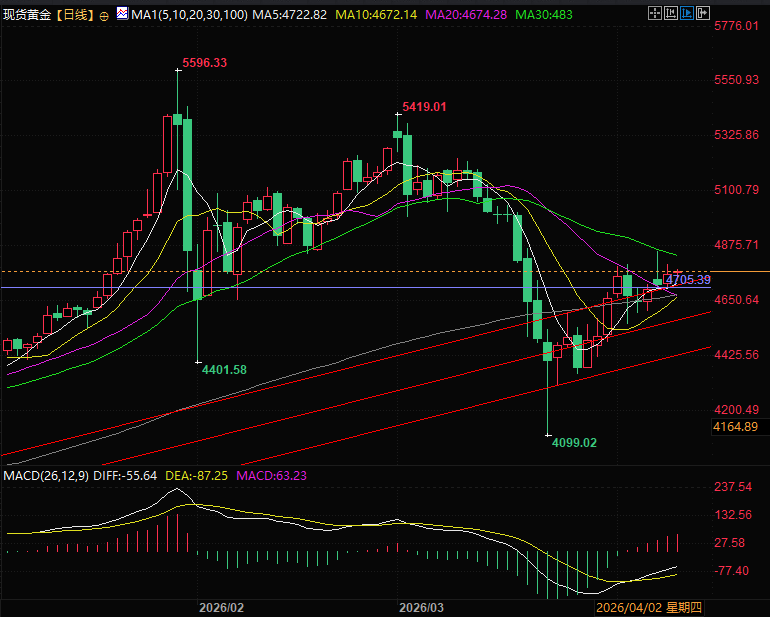
(Spot gold daily chart, source: subsidiary EasyForex)
At 20:56 Beijing time, spot gold was trading at $4771.31 per ounce.
Pakistani media confirmed that an Iranian delegation has arrived for negotiations, with key talks between Iran and the United States scheduled for tomorrow.
Meanwhile, on April 10, Qasim delivered a public speech at 8 p.m. Beijing time, declaring that "we will continue to resist until the last moment of our lives and called on officials to stop making pointless concessions."
Israeli soldiers were defeated on the ground and were unable to launch a ground invasion.
They were caught off guard by the way Hezbollah militants resisted, their flexibility, defensive capabilities, and legendary courage.
Qassem stated that they would unite to defend the country, restore national sovereignty, and expel the occupiers. "Israel's threats and weapons cannot intimidate us, because we are the rightful owners of this land."
It is worth noting that Al Jazeera’s previous report on the death of leader Naeem Qasim was a misreport; the victim was actually his nephew and private secretary. Al Jazeera subsequently deleted the report.
Meanwhile, a new arrangement has emerged in the Middle East diplomatic process. According to Arab media AsharqNews, ceasefire negotiations between Israel and Lebanon will begin before the US-Iran talks. The two sides held a preparatory teleconference on the same day, with participants including Israeli Ambassador to Washington Nada Hamad Muawad and Yeshir Light, US Ambassador to Lebanon Michelle Issa, and US State Department Director of Policy Planning Mike Needham. A face-to-face meeting between Lebanon and Israel is scheduled for Tuesday, chaired by the Lebanese ambassador. The negotiations are led by US Secretary of State Rubio and are completely independent of the upcoming US-Iran talks in Islamabad.
The United States is pushing a multi-pronged agenda: pressuring Israel, coordinating with allies, and easing sanctions.
The United States is pushing forward with the US-Iran negotiations, and Trump has explicitly asked Israeli Prime Minister Netanyahu to reduce the intensity of military strikes against Lebanon in order to clear obstacles for the negotiations.
Trump expressed optimism about reaching a peace agreement between the US and Iran, while warning Iran of serious consequences if it refuses to do so.
To ensure the safety of shipping in the Strait of Hormuz, Trump demanded that NATO allies clarify their commitment to supporting related military operations within days. Sources revealed that Israel's decision to seek direct negotiations with Lebanon was made at Trump's request.
On April 9 local time, British Prime Minister Starmer spoke with Trump, focusing on the swift resumption of shipping through the Straits. Trump stated that oil flows would resume soon, regardless of Iran's cooperation, and reiterated that Iran would never possess nuclear weapons.
Furthermore, according to US financial media Semafor, the Trump administration will continue to ease sanctions on Russian oil, and the Greenlandic prime minister also stated that Trump's intention to take over or control Greenland has not been abandoned.
The conflict between Lebanon and Israel continues: the willingness to negotiate and military action proceed in parallel.
The conflict on the Israeli-Lebanese border continues, although the intensity of the fighting decreased on Friday, but the Israeli military has not ceased its operations.
Previously, Israel launched its largest airstrike to date against Lebanon, killing at least 300 people and injuring 1,150. Although Netanyahu announced that he had instructed his cabinet to start ceasefire negotiations between Lebanon and Israel as soon as possible, he also emphasized that the Israeli army would continue to fight Hezbollah. The Israeli Chief of Staff also stated that the military could resume operations at any time.
Lebanese Prime Minister Aoun welcomed the negotiation proposal, but Beirut insisted that it would not negotiate under attack and demanded a comprehensive ceasefire as a prerequisite for negotiations. Hezbollah, which holds seats in the Lebanese parliament, has made it clear that it will not negotiate with Israel, making the basis for negotiations extremely fragile.
Lebanon has become a key point of contention in the US-Iran negotiations. In its 10-point proposal, Iran explicitly demanded that the US and Israel cease their attacks on all Iranian allies, including Hezbollah, in order to maintain the ceasefire and advance the negotiations.
Israel's continued bombing of Lebanon has been deemed a serious violation of the US-Iran agreement by Iran, which has threatened a strong response, bringing the temporary ceasefire between the two countries to the brink of collapse.
The US and Iran have significant differences regarding whether Lebanon should be included in the ceasefire agreement. Both Iran and Pakistan have stated that the ceasefire covers Lebanon, but the US has repeatedly denied this, and its inconsistent stance has exacerbated the chaos in the region.
CPI fell short of expectations, and consumption contracted significantly.
The U.S. core annual inflation rate (excluding food and energy) rose to 2.6% in March from 2.5% in the previous two months, but was slightly below the market expectation of 2.7%. The service sector inflation rate, excluding energy services, was 3%, with housing inflation at 3%, transportation services at 4.1%, and healthcare services at 3.7%.
Meanwhile, commodity inflation excluding food and energy was 2.6%, with clothing prices rising 3.4% to offset the 3.2% drop in used car and truck prices. Combined with Daly's statement that the high CPI inflation in March was not surprising, rising oil prices have somewhat squeezed out consumption, and the market has begun to bet again on an interest rate cut this year.
Gold's logic shifts: After the retreat of geopolitical safe-haven demand, three core drivers support a rebound.
As the US-Iran negotiations proceed in an orderly manner and the separate ceasefire talks between Lebanon and Israel begin, the market impact of the Middle East geopolitical conflict continues to slow down, and short-term safe-haven buying of gold is gradually receding, but the medium- to long-term upward trend is accelerating its return.
The trend of a weak dollar has already emerged. Although the global de-dollarization process has been temporarily halted due to the war, the long-term pattern of the dollar's continued decline in the proportion of reserves and the erosion of its credit status remains unchanged, providing basic support for gold prices.
Although the probability of a short-term rate cut by the Federal Reserve is low, the unexpectedly lower-than-expected CPI results have kept market expectations for medium- to long-term policy easing. Coupled with the background of slowing US economic growth, the room for real interest rates to decline will gradually open up.
Central banks continue to increase their gold purchases, with China's gold reserves rising by 160,000 ounces month-on-month at the end of March. Many countries globally are also continuously increasing their gold reserves to optimize their structure, creating a solid support level. With multiple fundamental factors converging, gold is expected to break free from short-term fluctuations and restart a new round of rebound.
From a technical perspective, spot gold prices are above three major support levels: the 5-day moving average, the upward trend line, and the 0.618 Fibonacci retracement level. It is expected to continue its rebound based on these three technical levels.
(Spot gold daily chart, source: subsidiary EasyForex)
At 20:56 Beijing time, spot gold was trading at $4771.31 per ounce.
- Risk Warning and Disclaimer
- The market involves risk, and trading may not be suitable for all investors. This article is for reference only and does not constitute personal investment advice, nor does it take into account certain users’ specific investment objectives, financial situation, or other needs. Any investment decisions made based on this information are at your own risk.