Trump's team calculated the economic costs of the war, with inflation and a widening trade deficit, leading to Trump contradicting himself.
2026-04-13 11:12:37
Throughout the military action against Iran and the subsequent ceasefire, US President Trump and his key advisors have been privately consulting with the US Treasury Secretary, the Director of the National Economic Council, and business leaders, focusing on assessing the potential impact on the US economy and financial markets if the war drags on.
White House National Economic Council Director Hassett provided Trump with detailed advice, emphasizing the potential short-term economic disruptions that war could cause. A White House spokesperson made it clear that the government is working closely with the business community to mitigate the impact, and that Trump himself is fully aware of the negative economic consequences of war.
Treasury Secretary Bessant and Trump focused their discussions on market reactions and the economic repercussions of the war's duration. If the war continues for 8 to 12 weeks, the Treasury Department needs to prepare contingency plans and assess the direct impact of rising gasoline prices on American consumers. Bessant noted that Asia and Europe would be most vulnerable to soaring energy prices.
In March, Trump's longtime economic advisor, Moore, informed the White House that if the U.S. withdrew from its operations related to Iran within a month and the Strait of Hormuz reopened, oil prices could fall back to around $70 per barrel. Currently, the Strait of Hormuz remains closed, making it unlikely that oil prices will return to that level.
JPMorgan Chase CEO Jamie Dimon warned that if the war continues, oil and commodity prices will suffer a major blow, global supply chains will be reshaped, inflation will become more sticky, and interest rates will rise . Dimon emphasized that financial markets need to be highly vigilant about the long-term consequences.
The CEOs of the three largest U.S. oil companies recently warned the Energy Secretary and the Interior Secretary that a prolonged closure of the Strait of Hormuz could disrupt approximately 20% of global oil and liquefied natural gas supplies, potentially exacerbating the energy crisis . Chevron's CEO specifically pointed out that financial markets have not yet fully grasped the severity of the supply constraints. Some executives privately expressed dissatisfaction with the government's optimistic statements that the Strait issue would be resolved within weeks.
The U.S. Consumer Price Index (CPI) rose 3.3% year-on-year in March, higher than the February figure, mainly driven by energy prices. U.S. crude oil prices jumped at the open on Monday (April 13) and are currently trading around $104.90 per barrel, up about 8.6% on the day. Gasoline prices across the U.S. rose above $4 per gallon. The stock market also saw significant volatility following Trump's comments about the war.
Rising gasoline prices have directly pushed up the energy sub-index, with energy prices rising sharply month-on-month in March, becoming the main driver of the CPI increase.
The president of the American Soybean Association revealed that the Secretary of Agriculture has directly conveyed farmers' concerns about rising fertilizer prices to the president. Approximately half of the world's urea and nearly one-third of its ammonia supply pass through the Strait of Hormuz; a prolonged war would significantly increase agricultural production costs, thereby impacting food prices.
Oil industry executives have repeatedly emphasized the importance of the Strait of Hormuz as a global energy chokepoint. Prolonged obstruction would not only disrupt crude oil exports but also pose serious challenges to the transport of liquefied natural gas and fertilizers, placing dual pressure on U.S. agriculture and the global food supply chain .
The US dollar's overall trend is expected to be "complex in the short term and bearish in the medium to long term." The protracted war is a "net negative factor" for the US economy, weakening the dollar's fundamental support through channels such as increased inflation, widening the trade deficit, and suppressing growth.
The US dollar has found some respite in the short term due to safe-haven demand, but faces systemic depreciation pressure in the medium to long term . During Monday's Asian trading session, the dollar index fluctuated upwards and is currently trading around 99.00, up approximately 0.3% from the previous trading day's closing price. The market will closely watch whether the Strait of Hormuz can reopen quickly—if the strait remains closed, the downside risk for the dollar will accumulate significantly.
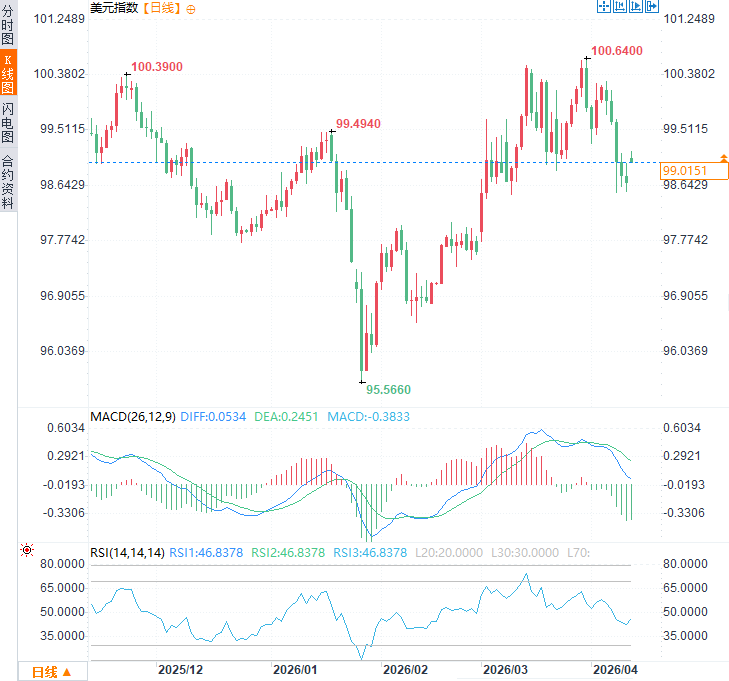
(US Dollar Index Daily Chart, Source: FX678)
Despite the optimistic outlook, some voices are taking a more hardline stance. The president of the National Oil and Gas Workers, Cody, believes that military force should be used to overthrow the Iranian leader, viewing the war-related rise in gasoline prices as a "temporary setback" and advocating for more decisive action.
The Trump team is weighing the short-term political costs against the long-term economic costs. Assessments by the U.S. Treasury Department and the National Economic Council indicate that if the conflict is not resolved quickly, inflationary pressures, supply chain disruptions, and rising interest rates will have a compounding impact on the U.S. economy, especially with the midterm elections approaching.
An internal White House assessment of the economic impact of a war with Iran reveals that the Trump administration is fully aware of the multiple risks that a prolonged conflict could pose, including high oil prices, a risk of long-term dollar depreciation, increased inflation, and rising agricultural costs. Warnings from business leaders highlight the crucial role of the Strait of Hormuz in global energy and supply chains, while differing opinions reflect the complexity of policy decisions. Future economic performance will heavily depend on the speed of conflict resolution and the degree of openness of the strait.
At 11:12 Beijing time, the US dollar index is currently at 99.03.
White House National Economic Council Director Hassett provided Trump with detailed advice, emphasizing the potential short-term economic disruptions that war could cause. A White House spokesperson made it clear that the government is working closely with the business community to mitigate the impact, and that Trump himself is fully aware of the negative economic consequences of war.
Treasury Secretary Bessant and Trump focused their discussions on market reactions and the economic repercussions of the war's duration. If the war continues for 8 to 12 weeks, the Treasury Department needs to prepare contingency plans and assess the direct impact of rising gasoline prices on American consumers. Bessant noted that Asia and Europe would be most vulnerable to soaring energy prices.
Opinions from Trump's team and business leaders
In March, Trump's longtime economic advisor, Moore, informed the White House that if the U.S. withdrew from its operations related to Iran within a month and the Strait of Hormuz reopened, oil prices could fall back to around $70 per barrel. Currently, the Strait of Hormuz remains closed, making it unlikely that oil prices will return to that level.
JPMorgan Chase CEO Jamie Dimon warned that if the war continues, oil and commodity prices will suffer a major blow, global supply chains will be reshaped, inflation will become more sticky, and interest rates will rise . Dimon emphasized that financial markets need to be highly vigilant about the long-term consequences.
The CEOs of the three largest U.S. oil companies recently warned the Energy Secretary and the Interior Secretary that a prolonged closure of the Strait of Hormuz could disrupt approximately 20% of global oil and liquefied natural gas supplies, potentially exacerbating the energy crisis . Chevron's CEO specifically pointed out that financial markets have not yet fully grasped the severity of the supply constraints. Some executives privately expressed dissatisfaction with the government's optimistic statements that the Strait issue would be resolved within weeks.
Economic data and market shocks
The U.S. Consumer Price Index (CPI) rose 3.3% year-on-year in March, higher than the February figure, mainly driven by energy prices. U.S. crude oil prices jumped at the open on Monday (April 13) and are currently trading around $104.90 per barrel, up about 8.6% on the day. Gasoline prices across the U.S. rose above $4 per gallon. The stock market also saw significant volatility following Trump's comments about the war.
Rising gasoline prices have directly pushed up the energy sub-index, with energy prices rising sharply month-on-month in March, becoming the main driver of the CPI increase.
Impact of the Strait of Hormuz on Energy and Agriculture
The president of the American Soybean Association revealed that the Secretary of Agriculture has directly conveyed farmers' concerns about rising fertilizer prices to the president. Approximately half of the world's urea and nearly one-third of its ammonia supply pass through the Strait of Hormuz; a prolonged war would significantly increase agricultural production costs, thereby impacting food prices.
Oil industry executives have repeatedly emphasized the importance of the Strait of Hormuz as a global energy chokepoint. Prolonged obstruction would not only disrupt crude oil exports but also pose serious challenges to the transport of liquefied natural gas and fertilizers, placing dual pressure on U.S. agriculture and the global food supply chain .
Analysis of the impact on the US dollar
The US dollar's overall trend is expected to be "complex in the short term and bearish in the medium to long term." The protracted war is a "net negative factor" for the US economy, weakening the dollar's fundamental support through channels such as increased inflation, widening the trade deficit, and suppressing growth.
The US dollar has found some respite in the short term due to safe-haven demand, but faces systemic depreciation pressure in the medium to long term . During Monday's Asian trading session, the dollar index fluctuated upwards and is currently trading around 99.00, up approximately 0.3% from the previous trading day's closing price. The market will closely watch whether the Strait of Hormuz can reopen quickly—if the strait remains closed, the downside risk for the dollar will accumulate significantly.
(US Dollar Index Daily Chart, Source: FX678)
Potential risks and dissenting voices in the war
Despite the optimistic outlook, some voices are taking a more hardline stance. The president of the National Oil and Gas Workers, Cody, believes that military force should be used to overthrow the Iranian leader, viewing the war-related rise in gasoline prices as a "temporary setback" and advocating for more decisive action.
The Trump team is weighing the short-term political costs against the long-term economic costs. Assessments by the U.S. Treasury Department and the National Economic Council indicate that if the conflict is not resolved quickly, inflationary pressures, supply chain disruptions, and rising interest rates will have a compounding impact on the U.S. economy, especially with the midterm elections approaching.
Editor's Summary
An internal White House assessment of the economic impact of a war with Iran reveals that the Trump administration is fully aware of the multiple risks that a prolonged conflict could pose, including high oil prices, a risk of long-term dollar depreciation, increased inflation, and rising agricultural costs. Warnings from business leaders highlight the crucial role of the Strait of Hormuz in global energy and supply chains, while differing opinions reflect the complexity of policy decisions. Future economic performance will heavily depend on the speed of conflict resolution and the degree of openness of the strait.
At 11:12 Beijing time, the US dollar index is currently at 99.03.
- Risk Warning and Disclaimer
- The market involves risk, and trading may not be suitable for all investors. This article is for reference only and does not constitute personal investment advice, nor does it take into account certain users’ specific investment objectives, financial situation, or other needs. Any investment decisions made based on this information are at your own risk.