April 17th Financial Breakfast: US-Iran peace talks intertwine with "economic fury" actions; Israel-Lebanon ceasefire lasts 10 days; gold prices battle for the $4800 mark; oil prices fall back below $90.
2026-04-17 07:27:17
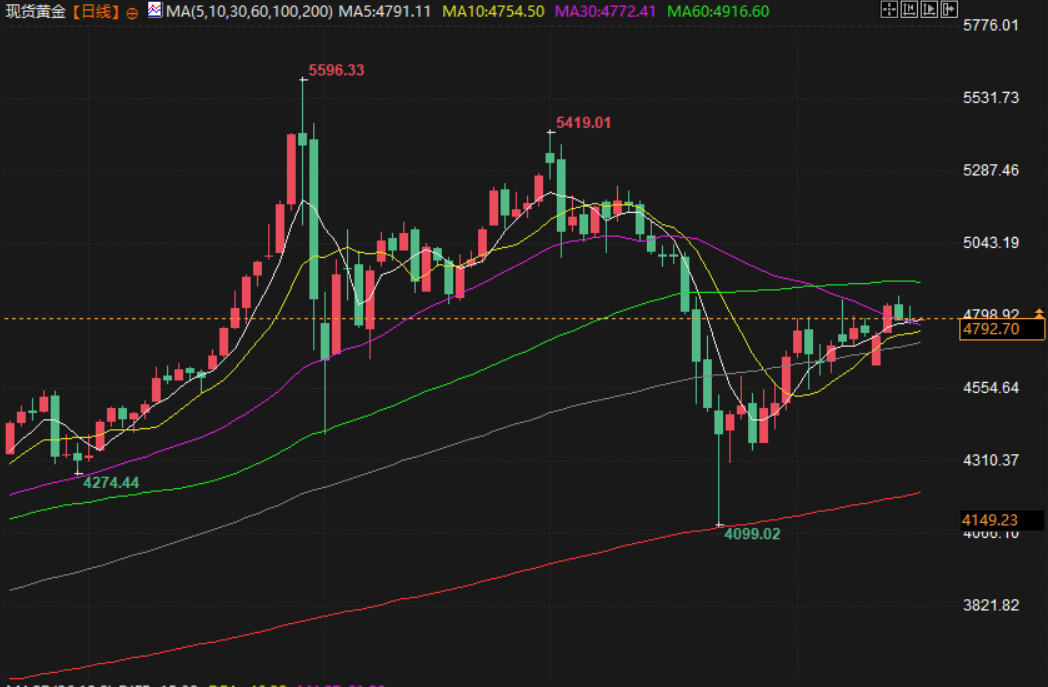
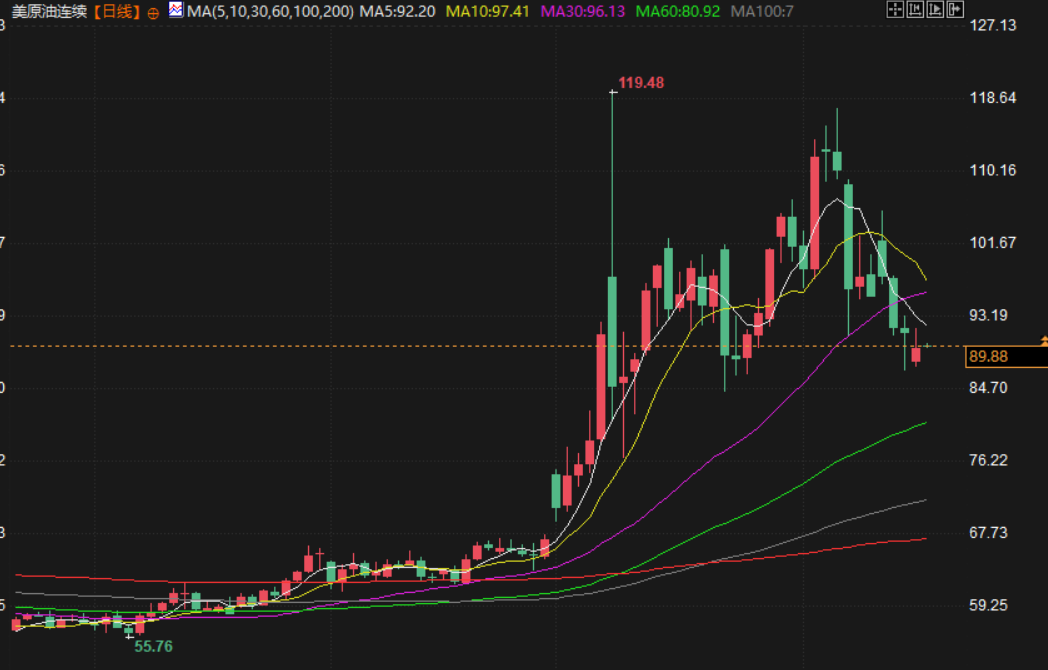
On Friday (April 17, Beijing time) in early Asian trading, spot gold was trading around $4,796 per ounce. A 10-day ceasefire agreement between Israel and Lebanon, and the expected resumption of peace talks between the US and Iran, boosted hopes for ending the war, lowering energy prices, and reducing expectations of rising interest rates, supporting gold prices. However, the US launch of Operation Economic Fury against Iran added uncertainty. US crude oil fell back below $90 per barrel, trading around $89.80 per barrel.


U.S. stocks rose on Thursday, with the S&P 500 and Nasdaq both edged higher, marking their second consecutive day of record closing highs. The S&P 500 rose 0.26%, and the Nasdaq gained 0.36%, marking its 12th consecutive day of gains, its longest winning streak since July 2009. The Dow Jones Industrial Average rose 0.24%.
Market optimism stemmed primarily from the potential easing of tensions in the Middle East, with Israel agreeing to a 10-day temporary ceasefire with Lebanon and US President Trump stating that the US and Iran might meet again over the weekend. However, trading remained volatile due to news events.
The economic data was mixed. The larger-than-expected drop in initial jobless claims indicated a stable labor market, but the war dragged down the economic outlook and made employers cautious in hiring.
Earnings reports became another focus. PepsiCo rose 2.3% due to better-than-expected profits, Abbott plunged 6% after lowering its full-year profit forecast, Charles Schwab fell 7.6% after its earnings report, and Netflix fell 8% in after-hours trading due to maintaining its revenue forecast and news of senior executive departures.
In addition, Myseum, which has rebranded to focus on AI, surged 129%, Allbirds saw a remarkable increase due to its AI transformation, and Voyager Technologies rose 8.8% after securing a NASA contract. Overall, the market is still awaiting clearer signs of peace to sustain its upward momentum, while options positions and momentum suggest that the stock market still has room for further gains.
Spot gold held steady at $4,785.57 an ounce on Thursday, while U.S. gold futures fell 0.3% to $4,808.30. Markets focused on progress in the Iranian peace talks. U.S. President Trump announced that Israeli and Lebanese leaders had agreed to a 10-day ceasefire, and the U.S. and Iran are expected to resume peace negotiations. This boosted hopes for ending the war, lowering energy prices, and reducing expectations of rising interest rates, thus supporting a rebound in gold prices.
The director of metals trading at High Ridge Futures said that if tensions between the US and Iran ease or the war ends, the likelihood of future interest rate cuts by the Federal Reserve will increase, which would benefit the precious metals market.
Traders currently estimate a 32% probability of a US interest rate cut this year. On the economic data front, initial jobless claims in the US fell last week, indicating a stable labor market.
In other precious metals, spot silver fell 1% to $78.29 as the market moves toward a sixth consecutive year of structural supply shortages, having depleted 762 million troy ounces of inventory since 2021, increasing the risk of renewed liquidity tightening; platinum fell 0.6% to $2,096.20 and palladium fell 0.7% to $1,561.50.
Oil prices rose on Thursday, with Brent crude futures closing up 4.7% at $99.39 a barrel and WTI crude futures closing up 3.7% at $94.69 a barrel, mainly due to widespread investor skepticism about whether the upcoming US-Iran peace talks could effectively resolve the disruptions to Middle Eastern energy supplies caused by the current war.
Iran's blockade of the Strait of Hormuz has constituted the largest disruption to global oil and gas supplies to date. The strait typically handles about 20% of the world's oil and liquefied natural gas shipments, and the continued disruption will continue to deplete inventories and exacerbate market tightness.
PVM analysts expressed skepticism about an immediate resolution to the conflict, with two Iranian sources revealing that US and Iranian negotiators had lowered their expectations and were instead seeking a temporary memorandum to prevent a resurgence. In contrast, US President Trump stated that a US-Iran agreement was within reach, but benchmark crude oil prices barely reacted to his remarks. Meanwhile, Trump announced a 10-day ceasefire between Israel and Lebanon starting Thursday, which the oil market also ignored. Supply disruptions are weighing on global oil inventories, particularly jet fuel inventories in Asia and Africa; US crude oil inventories fell by 913,000 barrels last week (compared to an expected increase of 154,000 barrels), while gasoline and distillate inventories also declined due to strong export demand. US and Iranian officials are considering returning to Pakistan as early as this weekend for further negotiations.
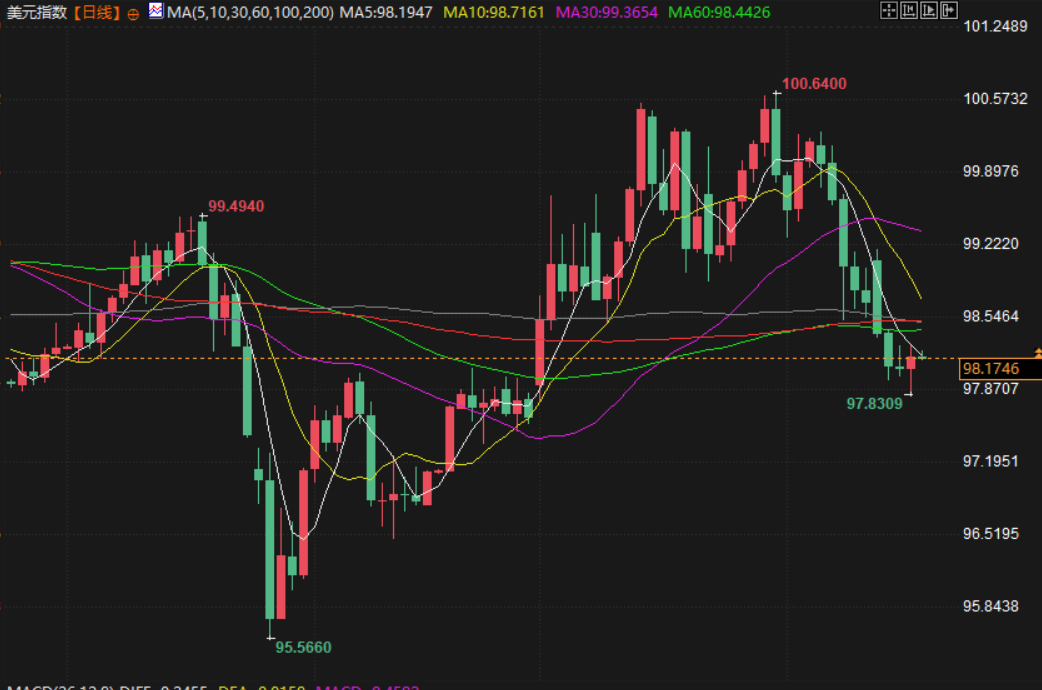
The dollar staged a technical rebound against major currencies on Thursday, with the dollar index rising 0.2% to 98.19, recovering from its lowest level since late February, as investors awaited further news on a possible peace agreement between the US and Iran. Although US President Trump said the war was "close to ending" and optimistic that talks could continue this weekend, an Iranian official pointed out that significant differences remain on issues such as the nuclear program, and market suppression of safe-haven demand may limit the dollar's gains.
The euro retreated from a seven-week high of $1.1823, closing down 0.1% at $1.1782; the dollar rose 0.2% against the yen to 159.21 yen after the Japanese and U.S. finance ministers agreed to strengthen communication on exchange rates.
On the economic data front, initial jobless claims in the US fell to 207,000 last week, lower than expected, reflecting a stable labor market. Among other currencies, the pound fell 0.2% against the dollar to $1.3524, despite the UK economy growing 0.5% month-on-month in February, exceeding expectations.
The Australian dollar fell 0.2% to US$0.7159, retreating after hitting a four-year high earlier, as the market bets on a roughly 70% probability of the Reserve Bank of Australia raising interest rates again in May. Overall, market hopes for progress in US-Iran diplomacy supported a rebound in risk appetite, but the ceasefire agreement remains fragile and the peak of uncertainty has not yet passed.
The US launched Operation Economic Fury against Iran.
On April 16 local time, U.S. Defense Secretary Hergsays said at a press conference that the U.S. Treasury Department was launching an operation codenamed "Economic Fury" to "exert maximum economic pressure on Iran." (CCTV News)
Trump: US and Iran may hold face-to-face talks again this weekend
U.S. President Donald Trump, in an interview with reporters on the South Lawn of the White House on the 16th, said that the United States might hold another round of face-to-face negotiations with Iran this weekend, and that if a peace agreement is reached between the U.S. and Iran, he would consider traveling to Pakistan to sign it. Trump stated that he hopes to reach a permanent peace agreement before the two-week temporary ceasefire with Iran expires, without extending it. Trump said, "We are very close to reaching an agreement," and if the negotiations are ultimately successful, he will announce it soon, saying that the peace agreement will bring the United States "free oil and the Strait of Hormuz." He reiterated that Iran cannot possess nuclear weapons and stated that Iran has agreed to hand over its enriched uranium. Trump also said that if a U.S.-Iran peace agreement is signed in Islamabad, the capital of Pakistan, he might go to Islamabad. Earlier that day, Trump announced via social media that Israel and Lebanon had agreed to a 10-day ceasefire. In the interview, Trump said that Israeli Prime Minister Benjamin Netanyahu and Lebanese President Michel Aoun are likely to meet at the White House "within the next week or two." (Xinhua)
White House discloses process of reaching ceasefire with Lebanon
The White House released a timeline of the progress of the ceasefire between Israel and Lebanon over the past two days on Thursday. According to White House officials, the process began on Tuesday when Secretary of State Marco Rubio met with the Israeli and Lebanese ambassadors to the United States. During the talks, the Lebanese side acknowledged Hezbollah as a "common problem." On Wednesday evening, Trump spoke with Israeli Prime Minister Benjamin Netanyahu, who agreed to a ceasefire, but with "several conditions," the details of which were not disclosed by the White House. Subsequently, Trump instructed Rubio to call Lebanese President Michel Aoun. In a late Wednesday night call, Rubio facilitated a ceasefire agreement from Lebanon. On Thursday morning, Trump spoke with both Aoun and Netanyahu, finalizing the agreement. The White House stated that the State Department collaborated with relevant governments throughout the process, drafting a ceasefire memorandum of understanding. The State Department released a six-point statement that day outlining the ceasefire terms and stating that they had been agreed to by both Israel and Lebanon.
Trump says Iran has agreed not to possess nuclear weapons; Iran has not yet responded.
On March 16 local time, US President Trump stated that the US had received a "very substantial" statement ensuring Iran would not possess nuclear weapons, and that this commitment would be valid for more than 20 years. However, Trump did not disclose the details of the so-called "statement." Trump also claimed that Iran had agreed not to possess nuclear weapons, and that the prospects for an agreement "look very optimistic." He stated, "Iran has agreed to almost all of the demands." Currently, there has been no response from Iran. (CCTV News)
Europe has only enough aviation fuel for six weeks.
International Energy Agency (IEA) Executive Director Fatih Birol stated in a media interview in Paris, France, on April 16 that Europe "may only have enough aviation fuel for about six weeks." He warned that if the US-Israel-Iraq conflict continues to disrupt oil supplies, flight cancellations could occur "very soon." Birol said that due to the disruption of oil, gas, and other vital supplies through the Strait of Hormuz, "we are experiencing one of the biggest energy crises in history," with the consequences being "higher gasoline prices, higher gas prices, and higher electricity prices." Birol emphasized that the continued disruption of this crucial shipping route will have a profound impact on the global economy, and the longer the disruption lasts, the more significant the negative impact on economic growth and inflation will be. (CCTV International News)
The bill limiting Trump's war powers was rejected by the US House of Representatives.
The U.S. House of Representatives narrowly rejected a Democratic-initiated bill on April 16, with 214 votes in favor and 213 against. The bill would have required President Trump to end military action against Iran and to obtain congressional authorization before taking further military action. The bill had already been rejected by the Senate the previous day. Democrats stated they would continue to introduce similar bills until the war with Iran ends or Congress authorizes further military action. Under the U.S. Constitution, only Congress can authorize war. A 1973 law stipulates that the U.S. president can only take limited military action without congressional authorization during a national emergency caused by an attack on or imminent threat against the United States. (CCTV International News)
The probability of the Federal Reserve keeping interest rates unchanged in April is 99.5%, and the probability of a rate cut this year is about 30%.
According to CME's "FedWatch": The probability of the Fed raising interest rates by 25 basis points in April is 0.5%, and the probability of keeping rates unchanged is 99.5%. The probability of the Fed cutting rates by a cumulative 25 basis points by June is 1.4%, the probability of keeping rates unchanged is 98%, and the probability of a cumulative 25 basis point rate hike is 0.5%. The probability of the Fed cutting rates by a cumulative 25 basis points by December is 30.3% (33.7% the previous day), the probability of keeping rates unchanged is 69.3% (64.9% the previous day), and the probability of a cumulative 25 basis point rate hike is 0.4% (1.3% the previous day).
The Securities Industry Association: Mythos poses a risk to the SEC's market tracking database.
The Securities Industry Association (ASA) said Thursday that Anthropic PBC's new artificial intelligence model, Mythos, could pose a risk to traders and the wider financial system through the Securities and Exchange Commission's (SEC) database. The financial industry group warned that malicious actors could use AI tools to attack so-called Consolidated Audit Trail (CAT) systems, committing large-scale identity theft, exposing individual trading portfolios, and amplifying internal risks. The organization has long opposed this controversial market tracking database. ASA President Chris Iacovella wrote in a letter to Treasury Secretary and Chairman of the Financial Stability Oversight Council, Scott Bessant, "CAT was not designed with the threat environment that Mythos presents today in mind."
National Bureau of Statistics: Domestic demand contributed 84.7% to GDP growth in the first quarter, an increase of nearly 30 percentage points year-on-year.
Mao Shengyong, deputy director of the National Bureau of Statistics, stated that domestic demand contributed 84.7% to GDP growth in the first quarter, an increase of nearly 30 percentage points year-on-year. Imports of consumer goods grew by 5.4% in the first quarter, indicating a gradual recovery in domestic market demand and creating conditions for sustained economic growth. In particular, the potential of service consumption is being gradually released, and relevant departments have introduced policies to continuously support and encourage the accelerated development of related industries. (Xinhua News Agency)
National Bureau of Statistics: my country has ample policy space and abundant policy reserves.
Mao Shengyong, deputy director of the National Bureau of Statistics, stated at a press conference held by the State Council Information Office on the 16th that this year marks the start of the 15th Five-Year Plan period. Some of the existing policies introduced earlier have already taken effect, while the effects of others will continue to emerge. A series of major strategic tasks, major reform measures, and major projects will also be implemented successively. "We have ample policy space and abundant policy reserves," he said. (CCTV)
Key Focus Today
stock market
U.S. stocks rose on Thursday, with the S&P 500 and Nasdaq both edged higher, marking their second consecutive day of record closing highs. The S&P 500 rose 0.26%, and the Nasdaq gained 0.36%, marking its 12th consecutive day of gains, its longest winning streak since July 2009. The Dow Jones Industrial Average rose 0.24%.
Market optimism stemmed primarily from the potential easing of tensions in the Middle East, with Israel agreeing to a 10-day temporary ceasefire with Lebanon and US President Trump stating that the US and Iran might meet again over the weekend. However, trading remained volatile due to news events.
The economic data was mixed. The larger-than-expected drop in initial jobless claims indicated a stable labor market, but the war dragged down the economic outlook and made employers cautious in hiring.
Earnings reports became another focus. PepsiCo rose 2.3% due to better-than-expected profits, Abbott plunged 6% after lowering its full-year profit forecast, Charles Schwab fell 7.6% after its earnings report, and Netflix fell 8% in after-hours trading due to maintaining its revenue forecast and news of senior executive departures.
In addition, Myseum, which has rebranded to focus on AI, surged 129%, Allbirds saw a remarkable increase due to its AI transformation, and Voyager Technologies rose 8.8% after securing a NASA contract. Overall, the market is still awaiting clearer signs of peace to sustain its upward momentum, while options positions and momentum suggest that the stock market still has room for further gains.
Gold Market
Spot gold held steady at $4,785.57 an ounce on Thursday, while U.S. gold futures fell 0.3% to $4,808.30. Markets focused on progress in the Iranian peace talks. U.S. President Trump announced that Israeli and Lebanese leaders had agreed to a 10-day ceasefire, and the U.S. and Iran are expected to resume peace negotiations. This boosted hopes for ending the war, lowering energy prices, and reducing expectations of rising interest rates, thus supporting a rebound in gold prices.
The director of metals trading at High Ridge Futures said that if tensions between the US and Iran ease or the war ends, the likelihood of future interest rate cuts by the Federal Reserve will increase, which would benefit the precious metals market.
Traders currently estimate a 32% probability of a US interest rate cut this year. On the economic data front, initial jobless claims in the US fell last week, indicating a stable labor market.
In other precious metals, spot silver fell 1% to $78.29 as the market moves toward a sixth consecutive year of structural supply shortages, having depleted 762 million troy ounces of inventory since 2021, increasing the risk of renewed liquidity tightening; platinum fell 0.6% to $2,096.20 and palladium fell 0.7% to $1,561.50.
oil market
Oil prices rose on Thursday, with Brent crude futures closing up 4.7% at $99.39 a barrel and WTI crude futures closing up 3.7% at $94.69 a barrel, mainly due to widespread investor skepticism about whether the upcoming US-Iran peace talks could effectively resolve the disruptions to Middle Eastern energy supplies caused by the current war.
Iran's blockade of the Strait of Hormuz has constituted the largest disruption to global oil and gas supplies to date. The strait typically handles about 20% of the world's oil and liquefied natural gas shipments, and the continued disruption will continue to deplete inventories and exacerbate market tightness.
PVM analysts expressed skepticism about an immediate resolution to the conflict, with two Iranian sources revealing that US and Iranian negotiators had lowered their expectations and were instead seeking a temporary memorandum to prevent a resurgence. In contrast, US President Trump stated that a US-Iran agreement was within reach, but benchmark crude oil prices barely reacted to his remarks. Meanwhile, Trump announced a 10-day ceasefire between Israel and Lebanon starting Thursday, which the oil market also ignored. Supply disruptions are weighing on global oil inventories, particularly jet fuel inventories in Asia and Africa; US crude oil inventories fell by 913,000 barrels last week (compared to an expected increase of 154,000 barrels), while gasoline and distillate inventories also declined due to strong export demand. US and Iranian officials are considering returning to Pakistan as early as this weekend for further negotiations.
Foreign exchange market
The dollar staged a technical rebound against major currencies on Thursday, with the dollar index rising 0.2% to 98.19, recovering from its lowest level since late February, as investors awaited further news on a possible peace agreement between the US and Iran. Although US President Trump said the war was "close to ending" and optimistic that talks could continue this weekend, an Iranian official pointed out that significant differences remain on issues such as the nuclear program, and market suppression of safe-haven demand may limit the dollar's gains.
The euro retreated from a seven-week high of $1.1823, closing down 0.1% at $1.1782; the dollar rose 0.2% against the yen to 159.21 yen after the Japanese and U.S. finance ministers agreed to strengthen communication on exchange rates.
On the economic data front, initial jobless claims in the US fell to 207,000 last week, lower than expected, reflecting a stable labor market. Among other currencies, the pound fell 0.2% against the dollar to $1.3524, despite the UK economy growing 0.5% month-on-month in February, exceeding expectations.
The Australian dollar fell 0.2% to US$0.7159, retreating after hitting a four-year high earlier, as the market bets on a roughly 70% probability of the Reserve Bank of Australia raising interest rates again in May. Overall, market hopes for progress in US-Iran diplomacy supported a rebound in risk appetite, but the ceasefire agreement remains fragile and the peak of uncertainty has not yet passed.
International News
The US launched Operation Economic Fury against Iran.
On April 16 local time, U.S. Defense Secretary Hergsays said at a press conference that the U.S. Treasury Department was launching an operation codenamed "Economic Fury" to "exert maximum economic pressure on Iran." (CCTV News)
Trump: US and Iran may hold face-to-face talks again this weekend
U.S. President Donald Trump, in an interview with reporters on the South Lawn of the White House on the 16th, said that the United States might hold another round of face-to-face negotiations with Iran this weekend, and that if a peace agreement is reached between the U.S. and Iran, he would consider traveling to Pakistan to sign it. Trump stated that he hopes to reach a permanent peace agreement before the two-week temporary ceasefire with Iran expires, without extending it. Trump said, "We are very close to reaching an agreement," and if the negotiations are ultimately successful, he will announce it soon, saying that the peace agreement will bring the United States "free oil and the Strait of Hormuz." He reiterated that Iran cannot possess nuclear weapons and stated that Iran has agreed to hand over its enriched uranium. Trump also said that if a U.S.-Iran peace agreement is signed in Islamabad, the capital of Pakistan, he might go to Islamabad. Earlier that day, Trump announced via social media that Israel and Lebanon had agreed to a 10-day ceasefire. In the interview, Trump said that Israeli Prime Minister Benjamin Netanyahu and Lebanese President Michel Aoun are likely to meet at the White House "within the next week or two." (Xinhua)
White House discloses process of reaching ceasefire with Lebanon
The White House released a timeline of the progress of the ceasefire between Israel and Lebanon over the past two days on Thursday. According to White House officials, the process began on Tuesday when Secretary of State Marco Rubio met with the Israeli and Lebanese ambassadors to the United States. During the talks, the Lebanese side acknowledged Hezbollah as a "common problem." On Wednesday evening, Trump spoke with Israeli Prime Minister Benjamin Netanyahu, who agreed to a ceasefire, but with "several conditions," the details of which were not disclosed by the White House. Subsequently, Trump instructed Rubio to call Lebanese President Michel Aoun. In a late Wednesday night call, Rubio facilitated a ceasefire agreement from Lebanon. On Thursday morning, Trump spoke with both Aoun and Netanyahu, finalizing the agreement. The White House stated that the State Department collaborated with relevant governments throughout the process, drafting a ceasefire memorandum of understanding. The State Department released a six-point statement that day outlining the ceasefire terms and stating that they had been agreed to by both Israel and Lebanon.
Trump says Iran has agreed not to possess nuclear weapons; Iran has not yet responded.
On March 16 local time, US President Trump stated that the US had received a "very substantial" statement ensuring Iran would not possess nuclear weapons, and that this commitment would be valid for more than 20 years. However, Trump did not disclose the details of the so-called "statement." Trump also claimed that Iran had agreed not to possess nuclear weapons, and that the prospects for an agreement "look very optimistic." He stated, "Iran has agreed to almost all of the demands." Currently, there has been no response from Iran. (CCTV News)
Europe has only enough aviation fuel for six weeks.
International Energy Agency (IEA) Executive Director Fatih Birol stated in a media interview in Paris, France, on April 16 that Europe "may only have enough aviation fuel for about six weeks." He warned that if the US-Israel-Iraq conflict continues to disrupt oil supplies, flight cancellations could occur "very soon." Birol said that due to the disruption of oil, gas, and other vital supplies through the Strait of Hormuz, "we are experiencing one of the biggest energy crises in history," with the consequences being "higher gasoline prices, higher gas prices, and higher electricity prices." Birol emphasized that the continued disruption of this crucial shipping route will have a profound impact on the global economy, and the longer the disruption lasts, the more significant the negative impact on economic growth and inflation will be. (CCTV International News)
The bill limiting Trump's war powers was rejected by the US House of Representatives.
The U.S. House of Representatives narrowly rejected a Democratic-initiated bill on April 16, with 214 votes in favor and 213 against. The bill would have required President Trump to end military action against Iran and to obtain congressional authorization before taking further military action. The bill had already been rejected by the Senate the previous day. Democrats stated they would continue to introduce similar bills until the war with Iran ends or Congress authorizes further military action. Under the U.S. Constitution, only Congress can authorize war. A 1973 law stipulates that the U.S. president can only take limited military action without congressional authorization during a national emergency caused by an attack on or imminent threat against the United States. (CCTV International News)
The probability of the Federal Reserve keeping interest rates unchanged in April is 99.5%, and the probability of a rate cut this year is about 30%.
According to CME's "FedWatch": The probability of the Fed raising interest rates by 25 basis points in April is 0.5%, and the probability of keeping rates unchanged is 99.5%. The probability of the Fed cutting rates by a cumulative 25 basis points by June is 1.4%, the probability of keeping rates unchanged is 98%, and the probability of a cumulative 25 basis point rate hike is 0.5%. The probability of the Fed cutting rates by a cumulative 25 basis points by December is 30.3% (33.7% the previous day), the probability of keeping rates unchanged is 69.3% (64.9% the previous day), and the probability of a cumulative 25 basis point rate hike is 0.4% (1.3% the previous day).
The Securities Industry Association: Mythos poses a risk to the SEC's market tracking database.
The Securities Industry Association (ASA) said Thursday that Anthropic PBC's new artificial intelligence model, Mythos, could pose a risk to traders and the wider financial system through the Securities and Exchange Commission's (SEC) database. The financial industry group warned that malicious actors could use AI tools to attack so-called Consolidated Audit Trail (CAT) systems, committing large-scale identity theft, exposing individual trading portfolios, and amplifying internal risks. The organization has long opposed this controversial market tracking database. ASA President Chris Iacovella wrote in a letter to Treasury Secretary and Chairman of the Financial Stability Oversight Council, Scott Bessant, "CAT was not designed with the threat environment that Mythos presents today in mind."
Domestic News
National Bureau of Statistics: Domestic demand contributed 84.7% to GDP growth in the first quarter, an increase of nearly 30 percentage points year-on-year.
Mao Shengyong, deputy director of the National Bureau of Statistics, stated that domestic demand contributed 84.7% to GDP growth in the first quarter, an increase of nearly 30 percentage points year-on-year. Imports of consumer goods grew by 5.4% in the first quarter, indicating a gradual recovery in domestic market demand and creating conditions for sustained economic growth. In particular, the potential of service consumption is being gradually released, and relevant departments have introduced policies to continuously support and encourage the accelerated development of related industries. (Xinhua News Agency)
National Bureau of Statistics: my country has ample policy space and abundant policy reserves.
Mao Shengyong, deputy director of the National Bureau of Statistics, stated at a press conference held by the State Council Information Office on the 16th that this year marks the start of the 15th Five-Year Plan period. Some of the existing policies introduced earlier have already taken effect, while the effects of others will continue to emerge. A series of major strategic tasks, major reform measures, and major projects will also be implemented successively. "We have ample policy space and abundant policy reserves," he said. (CCTV)
- Risk Warning and Disclaimer
- The market involves risk, and trading may not be suitable for all investors. This article is for reference only and does not constitute personal investment advice, nor does it take into account certain users’ specific investment objectives, financial situation, or other needs. Any investment decisions made based on this information are at your own risk.