Unlike the 2008 crisis, this dollar crisis is more insidious.
2026-04-24 16:36:45
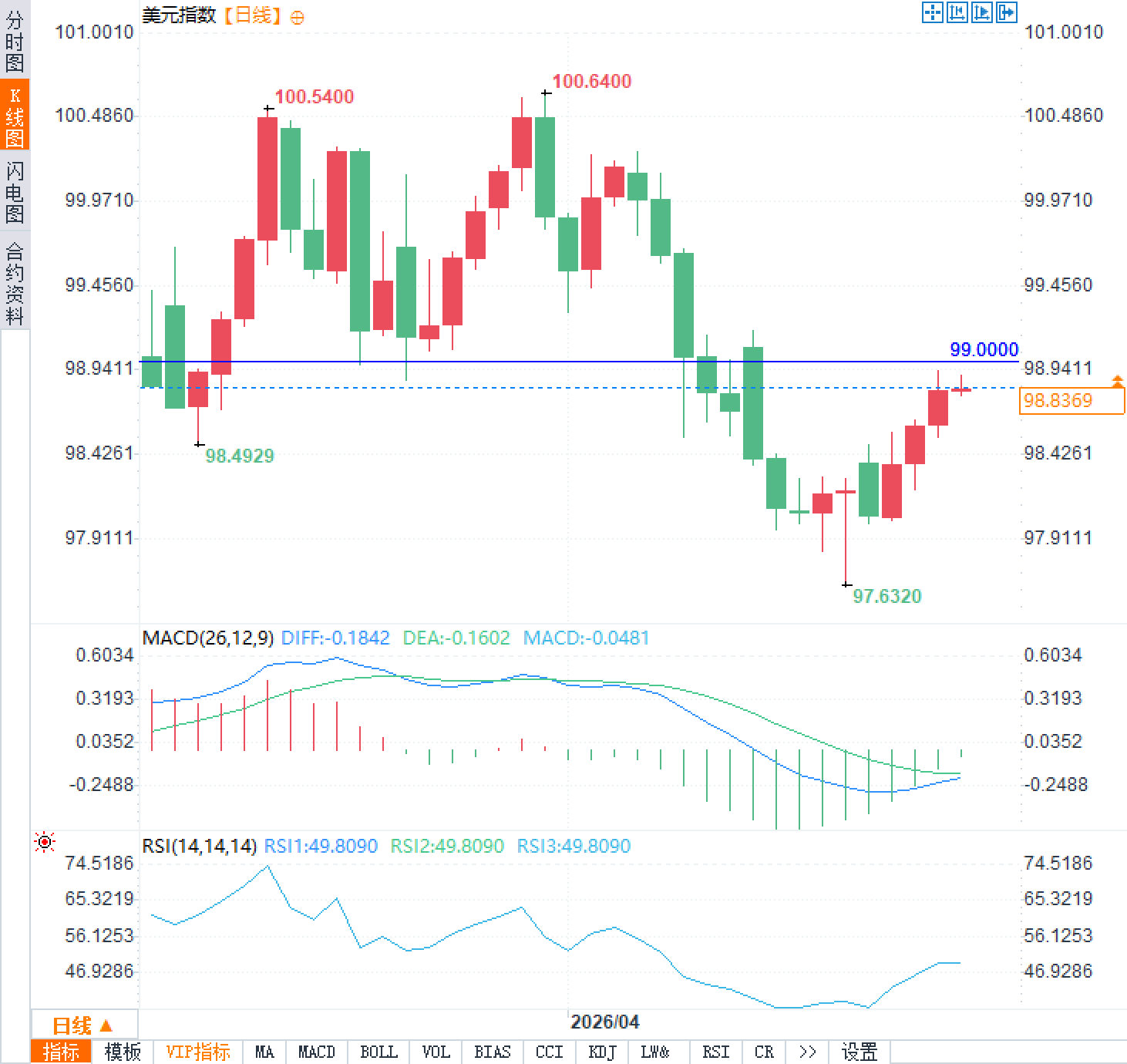
On Friday, April 24, the US dollar index remained stable around 98.80, near its weekly high, but with limited overall volatility. International oil prices were driven by regional tensions, with Brent crude oil prices holding steady at a high of $105 per barrel, while the yield on the 10-year US Treasury bond fluctuated around 4.33%. Against this backdrop, news from US Treasury officials regarding requests for dollar swap lines from Gulf and Asian allies highlighted the potential implicit pressure that geopolitical risks could exert on global dollar liquidity and capital repatriation.
This situation differs from emergency interventions during traditional dollar shortage crises, but it directly addresses the potential cash flow disruption risks in energy-exporting countries and the indirect impact of resulting asset allocation adjustments on the US Treasury market. Traders need to closely observe the liquidity transmission path and avoid underestimating the long-term impact of geopolitical factors on the yield curve and related asset pricing.
U.S. Treasury Secretary Scott Bessant recently stated that several Gulf allies and some Asian partners have requested dollar swap lines, with the UAE's discussions being the most concrete. This development comes at a time when the dollar index has not strengthened significantly and global dollar liquidity appears ample, contrasting with the scenario during the 2008 financial crisis when the Federal Reserve provided approximately $600 billion in swap lines to 14 advanced economies' central banks to alleviate dollar shortages for non-U.S. banks. At that time, the swaps primarily served to support liquidity for commercial banks in OECD countries under the Basel regulatory framework; the current discussions reveal new characteristics in both their target audience and objectives.
If Gulf countries experience a sharp decline in dollar revenue due to disruptions in transportation routes for oil exports, they may resort to selling US Treasury bonds or stocks to replenish short-term liquidity. Such forced asset sales would directly push up US Treasury yields, thereby increasing domestic financing costs in the US and creating a ripple effect on global risk asset pricing. Swap lines can serve as a preventative tool, allowing relevant central banks to act as lenders of last resort to provide support to local institutions without drawing on reserve assets, thus maintaining relative stability in the dollar repatriation channels. Bessant emphasized that such arrangements are beneficial to both sides, with the core objective being to prevent disorderly asset sales from putting pressure on the US Treasury market.
Historical records show that similar arrangements played a crucial role during the Eurozone sovereign debt crisis and the 2020 pandemic, indirectly injecting hundreds of billions of dollars in liquidity into the non-US banking system. Current discussions focus more on preventative measures, aiming to buffer the impact of geopolitical events on the dollar-dominated balance of payments cycle.
Regional conflicts could disrupt oil and gas transport through the Strait of Hormuz in the long term, directly impacting the export revenue and fiscal cash flow of Gulf oil-producing countries. Despite their abundant energy resources, disruptions to transport will reduce dollar-denominated revenue, thereby weakening their ability to repatriate investment to the US Treasury and stock markets. This disruption of liquidity will exert implicit pressure on US capital markets, as Gulf funds have long been a significant support for demand for US Treasury bonds.
Traders observed that while high oil prices are a short-term boon to the energy sector, a prolonged conflict could amplify supply chain vulnerabilities and transmit to the yield curve through inflation expectations. In contrast, U.S. domestic natural gas prices have not been significantly affected by the current crisis, providing a relatively stable cost anchor for electricity generation. Current market pricing assumes the conflict may subside quickly, thus preventing a large-scale shift of capital to alternative energy supply chains.
Dollar swap lines have been part of interbank currency swap agreements since the 1960s, but their role has evolved over time. In the past, they were primarily used to address systemic dollar shortages, while current discussions incorporate more geoeconomic considerations, including their potential role as a long-term incentive to encourage the holding of U.S. debt. Although the early policy blueprints have been partially adjusted, their core logic remains to maintain the dollar's dominant position in the global financial architecture through liquidity facilities, while reducing the pressure on foreign central banks to sell U.S. debt.
For traders, this evolution means that future dollar liquidity management will be more embedded in the geopolitical risk management framework. The yield curve may become more sensitive to expectations of swap lines, and the correlation of related assets will also change accordingly. The short-term goal remains to prevent disorderly selling of US Treasuries or US assets.
This situation differs from emergency interventions during traditional dollar shortage crises, but it directly addresses the potential cash flow disruption risks in energy-exporting countries and the indirect impact of resulting asset allocation adjustments on the US Treasury market. Traders need to closely observe the liquidity transmission path and avoid underestimating the long-term impact of geopolitical factors on the yield curve and related asset pricing.
Allied countries' requests to swap quotas have drawn attention.
U.S. Treasury Secretary Scott Bessant recently stated that several Gulf allies and some Asian partners have requested dollar swap lines, with the UAE's discussions being the most concrete. This development comes at a time when the dollar index has not strengthened significantly and global dollar liquidity appears ample, contrasting with the scenario during the 2008 financial crisis when the Federal Reserve provided approximately $600 billion in swap lines to 14 advanced economies' central banks to alleviate dollar shortages for non-U.S. banks. At that time, the swaps primarily served to support liquidity for commercial banks in OECD countries under the Basel regulatory framework; the current discussions reveal new characteristics in both their target audience and objectives.
If Gulf countries experience a sharp decline in dollar revenue due to disruptions in transportation routes for oil exports, they may resort to selling US Treasury bonds or stocks to replenish short-term liquidity. Such forced asset sales would directly push up US Treasury yields, thereby increasing domestic financing costs in the US and creating a ripple effect on global risk asset pricing. Swap lines can serve as a preventative tool, allowing relevant central banks to act as lenders of last resort to provide support to local institutions without drawing on reserve assets, thus maintaining relative stability in the dollar repatriation channels. Bessant emphasized that such arrangements are beneficial to both sides, with the core objective being to prevent disorderly asset sales from putting pressure on the US Treasury market.
Historical records show that similar arrangements played a crucial role during the Eurozone sovereign debt crisis and the 2020 pandemic, indirectly injecting hundreds of billions of dollars in liquidity into the non-US banking system. Current discussions focus more on preventative measures, aiming to buffer the impact of geopolitical events on the dollar-dominated balance of payments cycle.
Energy Market Dynamics Amidst Strait of Hormuz Risks
Regional conflicts could disrupt oil and gas transport through the Strait of Hormuz in the long term, directly impacting the export revenue and fiscal cash flow of Gulf oil-producing countries. Despite their abundant energy resources, disruptions to transport will reduce dollar-denominated revenue, thereby weakening their ability to repatriate investment to the US Treasury and stock markets. This disruption of liquidity will exert implicit pressure on US capital markets, as Gulf funds have long been a significant support for demand for US Treasury bonds.
Traders observed that while high oil prices are a short-term boon to the energy sector, a prolonged conflict could amplify supply chain vulnerabilities and transmit to the yield curve through inflation expectations. In contrast, U.S. domestic natural gas prices have not been significantly affected by the current crisis, providing a relatively stable cost anchor for electricity generation. Current market pricing assumes the conflict may subside quickly, thus preventing a large-scale shift of capital to alternative energy supply chains.
Evolution of instruments in the international monetary system
Dollar swap lines have been part of interbank currency swap agreements since the 1960s, but their role has evolved over time. In the past, they were primarily used to address systemic dollar shortages, while current discussions incorporate more geoeconomic considerations, including their potential role as a long-term incentive to encourage the holding of U.S. debt. Although the early policy blueprints have been partially adjusted, their core logic remains to maintain the dollar's dominant position in the global financial architecture through liquidity facilities, while reducing the pressure on foreign central banks to sell U.S. debt.
For traders, this evolution means that future dollar liquidity management will be more embedded in the geopolitical risk management framework. The yield curve may become more sensitive to expectations of swap lines, and the correlation of related assets will also change accordingly. The short-term goal remains to prevent disorderly selling of US Treasuries or US assets.
- Risk Warning and Disclaimer
- The market involves risk, and trading may not be suitable for all investors. This article is for reference only and does not constitute personal investment advice, nor does it take into account certain users’ specific investment objectives, financial situation, or other needs. Any investment decisions made based on this information are at your own risk.