Local elections in the UK have shaken up the political landscape, causing the pound to strengthen against the trend of political upheaval.
2026-05-08 20:16:52
Local elections in the UK are elections that determine the allocation of seats in local councils. They are held every four years. Although they do not directly produce the prime minister, they are considered an important indicator of the national political climate.
The local election to be held on May 7, 2026, is a crucial test for the Labour Party since it won the general election in 2024 and has the outcome directly impacting the foundation and policy direction of the Starmer government.
The elections cover local council seats in England, Wales, and other regions, with voters electing local councilors, indirectly reflecting their support for the central government.
The UK has long been dominated by a two-party system, with the Labour Party and the Conservative Party taking turns in power and dominating national policy. After the general election in 2024, Labour leader Starmer became Prime Minister, establishing a basic pattern of Labour in power and the Conservative Party in opposition.
An unexpected development: Preliminary results of the local elections on May 7, 2026, showed that both traditional parties suffered a major setback, while the right-wing Reform UK emerged as the biggest winner with a significant increase in seats.
This outcome breaks the long-standing two-party monopoly in British politics, creating a new "three-way balance" and indicating that the British political landscape is being reshaped.
Key signal: According to data from Polly's market forecast, the probability of Starmer stepping down by the end of June has risen to 50%, and the probability of stepping down by the end of the year is as high as 70%, with doubts about his leadership growing louder within the Labour Party.
The impact of local elections on the pound sterling is primarily determined by market pricing of policy expectations and fiscal discipline.
From a policy perspective, if the Labour Party changes course due to its electoral defeat, it may introduce measures such as tax increases and increased government spending, which would be detrimental to economic growth and market confidence, and the pound sterling and the UK bond market would be under pressure simultaneously.
The dominance of right-wing parties tends to favor fiscal austerity and low-tax policies, which aligns better with global capital's preference for prudent policies and is often seen as a positive factor for the pound.
From the perspective of leadership stability, the rising risk of Starmer's resignation has raised concerns in the market about policy continuity. In particular, if current Chancellor Reeves also steps down, the new governing team may relax fiscal discipline, leading to disorderly growth in debt, which in turn could damage the UK's credit rating and weaken the long-term attractiveness of the pound.
However, the current foreign exchange and fixed income markets are reacting relatively rationally, reflecting that some political risks have already been priced in by the market.
From a fiscal sustainability perspective, the market's core concern is that after the leadership change, the UK may expand its fiscal borrowing, pushing up inflation and government bond yields, which will directly affect the attractiveness of pound sterling assets.
As a currency highly sensitive to fiscal policy, the British pound's performance has always been closely tied to the UK government's debt management capabilities and the strength of its fiscal discipline enforcement.
Despite the Labour Party's significant losses, the pound rose against the trend during the Asian and European trading sessions on May 8. This seemingly contradictory phenomenon is supported by multiple key factors.
Firstly, the risks have already been priced in. The Labour Party's defeat was already within the market's expectations, and with only partial election results disclosed so far, investors generally believe that there is no need to prematurely price in the political risks.
Sam Hill, head of market insights at Lloyds Bank, pointed out that the phased release of election results helped the UK bond market digest the negative news in an orderly manner during Friday's trading session, avoiding large fluctuations caused by a concentrated outpouring of emotions.
Secondly, global risk sentiment is a key factor. Michael Brown of Pepperstone stated that the core driver of the pound's recent rise was not domestic political factors in the UK, but rather improved global risk appetite.
Despite reports of escalating tensions between the US and Iran, the ceasefire agreement remains in effect, and peace negotiations have made some progress, alleviating market concerns about geopolitical risks and providing external support for non-US safe-haven assets such as the British pound.
The market expects the policy to reach a delicate balance. The rise of right-wing parties will check and balance the Labour Party, forcing the Starmer government to maintain fiscal discipline and avoid excessive left-leaning policies that advocate for big government, high welfare, high taxes, and large-scale fiscal spending.
Even if Starmer remains in office, a significant policy shift is not expected in the short term, reducing the downward pressure on the pound due to political uncertainty. Furthermore, the Trump administration's "cool-headed" approach to the US-Iran conflict has stabilized global market sentiment, indirectly benefiting the pound's performance.
Despite the short-term strength of the pound, the market warns that as the election results are gradually finalized today and over the weekend, political risks have not yet been fully released, and the pound's further gains may be limited.
ING analysts cautioned that the pound's fundamentals remain fragile and it is highly susceptible to being dragged down by the subsequent market movements following local elections.
Investors should pay close attention to three key milestones:
The first is the Labour parliamentary group's formal response to the election results, and whether to initiate a motion to remove Starmer from office;
Secondly, whether there are personnel changes such as resignations of cabinet members will directly affect the stability of the government;
Third, if Starmer remains in office, will he adjust fiscal policy to address the election defeat and balance the demands of different factions within the party? Furthermore, the rise of the Reform Party and its influence on future policy-making, particularly its stance on key areas such as fiscal discipline and tax policy, will continue to sway the pound's exchange rate.
Fourth, better-than-expected non-farm payroll data. If the non-farm payroll data exceeds 100,000, it may offset some of the optimistic sentiment regarding the US-Iran conflict, leading to some funds flowing back to the US dollar.
Technical Analysis: The British pound has maintained its bullish trend, and after rising to the 0.618 level recently, it has consistently held this key support. Today, it broke through this level, with support around 1.3539, which is also near the 5-day moving average.
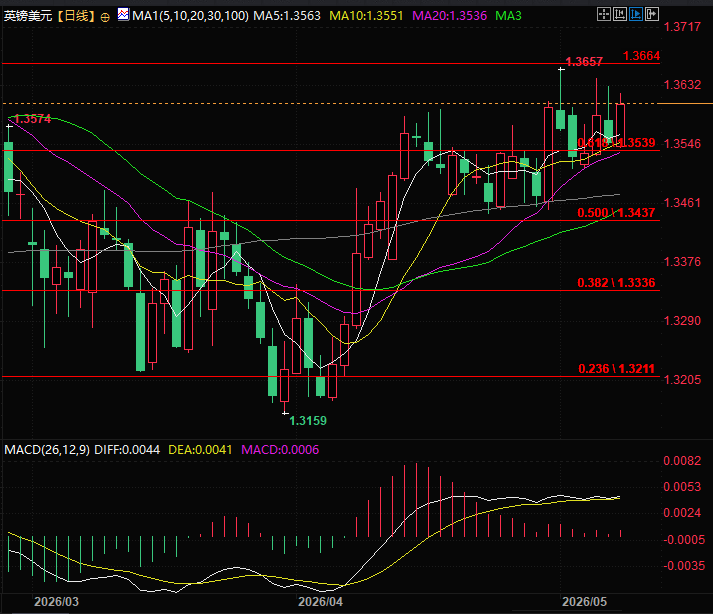
(USD/GBP daily chart, source: EasyForex)
At 20:14 Beijing time, the US dollar is trading at 1.3609/08 against the British pound.
The local election to be held on May 7, 2026, is a crucial test for the Labour Party since it won the general election in 2024 and has the outcome directly impacting the foundation and policy direction of the Starmer government.
The elections cover local council seats in England, Wales, and other regions, with voters electing local councilors, indirectly reflecting their support for the central government.
British Party Landscape: From Two-Party Dominance to a Three-Party Balance
The UK has long been dominated by a two-party system, with the Labour Party and the Conservative Party taking turns in power and dominating national policy. After the general election in 2024, Labour leader Starmer became Prime Minister, establishing a basic pattern of Labour in power and the Conservative Party in opposition.
An unexpected development: Preliminary results of the local elections on May 7, 2026, showed that both traditional parties suffered a major setback, while the right-wing Reform UK emerged as the biggest winner with a significant increase in seats.
This outcome breaks the long-standing two-party monopoly in British politics, creating a new "three-way balance" and indicating that the British political landscape is being reshaped.
Key signal: According to data from Polly's market forecast, the probability of Starmer stepping down by the end of June has risen to 50%, and the probability of stepping down by the end of the year is as high as 70%, with doubts about his leadership growing louder within the Labour Party.
Why the election results affect the pound sterling
The impact of local elections on the pound sterling is primarily determined by market pricing of policy expectations and fiscal discipline.
From a policy perspective, if the Labour Party changes course due to its electoral defeat, it may introduce measures such as tax increases and increased government spending, which would be detrimental to economic growth and market confidence, and the pound sterling and the UK bond market would be under pressure simultaneously.
The dominance of right-wing parties tends to favor fiscal austerity and low-tax policies, which aligns better with global capital's preference for prudent policies and is often seen as a positive factor for the pound.
From the perspective of leadership stability, the rising risk of Starmer's resignation has raised concerns in the market about policy continuity. In particular, if current Chancellor Reeves also steps down, the new governing team may relax fiscal discipline, leading to disorderly growth in debt, which in turn could damage the UK's credit rating and weaken the long-term attractiveness of the pound.
However, the current foreign exchange and fixed income markets are reacting relatively rationally, reflecting that some political risks have already been priced in by the market.
From a fiscal sustainability perspective, the market's core concern is that after the leadership change, the UK may expand its fiscal borrowing, pushing up inflation and government bond yields, which will directly affect the attractiveness of pound sterling assets.
As a currency highly sensitive to fiscal policy, the British pound's performance has always been closely tied to the UK government's debt management capabilities and the strength of its fiscal discipline enforcement.
The pound sterling defied the trend and strengthened: the combined effect of market expectations and external factors.
Despite the Labour Party's significant losses, the pound rose against the trend during the Asian and European trading sessions on May 8. This seemingly contradictory phenomenon is supported by multiple key factors.
Firstly, the risks have already been priced in. The Labour Party's defeat was already within the market's expectations, and with only partial election results disclosed so far, investors generally believe that there is no need to prematurely price in the political risks.
Sam Hill, head of market insights at Lloyds Bank, pointed out that the phased release of election results helped the UK bond market digest the negative news in an orderly manner during Friday's trading session, avoiding large fluctuations caused by a concentrated outpouring of emotions.
Secondly, global risk sentiment is a key factor. Michael Brown of Pepperstone stated that the core driver of the pound's recent rise was not domestic political factors in the UK, but rather improved global risk appetite.
Despite reports of escalating tensions between the US and Iran, the ceasefire agreement remains in effect, and peace negotiations have made some progress, alleviating market concerns about geopolitical risks and providing external support for non-US safe-haven assets such as the British pound.
The market expects the policy to reach a delicate balance. The rise of right-wing parties will check and balance the Labour Party, forcing the Starmer government to maintain fiscal discipline and avoid excessive left-leaning policies that advocate for big government, high welfare, high taxes, and large-scale fiscal spending.
Even if Starmer remains in office, a significant policy shift is not expected in the short term, reducing the downward pressure on the pound due to political uncertainty. Furthermore, the Trump administration's "cool-headed" approach to the US-Iran conflict has stabilized global market sentiment, indirectly benefiting the pound's performance.
Market Outlook: Political risks persist, limiting upside potential for the pound.
Despite the short-term strength of the pound, the market warns that as the election results are gradually finalized today and over the weekend, political risks have not yet been fully released, and the pound's further gains may be limited.
ING analysts cautioned that the pound's fundamentals remain fragile and it is highly susceptible to being dragged down by the subsequent market movements following local elections.
Investors should pay close attention to three key milestones:
The first is the Labour parliamentary group's formal response to the election results, and whether to initiate a motion to remove Starmer from office;
Secondly, whether there are personnel changes such as resignations of cabinet members will directly affect the stability of the government;
Third, if Starmer remains in office, will he adjust fiscal policy to address the election defeat and balance the demands of different factions within the party? Furthermore, the rise of the Reform Party and its influence on future policy-making, particularly its stance on key areas such as fiscal discipline and tax policy, will continue to sway the pound's exchange rate.
Fourth, better-than-expected non-farm payroll data. If the non-farm payroll data exceeds 100,000, it may offset some of the optimistic sentiment regarding the US-Iran conflict, leading to some funds flowing back to the US dollar.
Technical Analysis: The British pound has maintained its bullish trend, and after rising to the 0.618 level recently, it has consistently held this key support. Today, it broke through this level, with support around 1.3539, which is also near the 5-day moving average.
(USD/GBP daily chart, source: EasyForex)
At 20:14 Beijing time, the US dollar is trading at 1.3609/08 against the British pound.
- Risk Warning and Disclaimer
- The market involves risk, and trading may not be suitable for all investors. This article is for reference only and does not constitute personal investment advice, nor does it take into account certain users’ specific investment objectives, financial situation, or other needs. Any investment decisions made based on this information are at your own risk.