Non-farm payrolls increased by 115,000, far exceeding expectations! Unemployment remained stable, but wages softened. Why did the US dollar, gold, and oil prices collectively "turn against each other"?
2026-05-08 20:49:03
On Friday (May 8), the U.S. Bureau of Labor Statistics released its April non-farm payrolls report. Data showed that the U.S. added 115,000 non-farm jobs in April, significantly higher than the market expectation of approximately 55,000-65,000; the March figure was revised upward from the initial 178,000 to 185,000, while the February figure was revised downward. The unemployment rate remained stable at 4.3%, in line with expectations. Average hourly earnings rose 0.2% month-over-month, slightly below expectations.

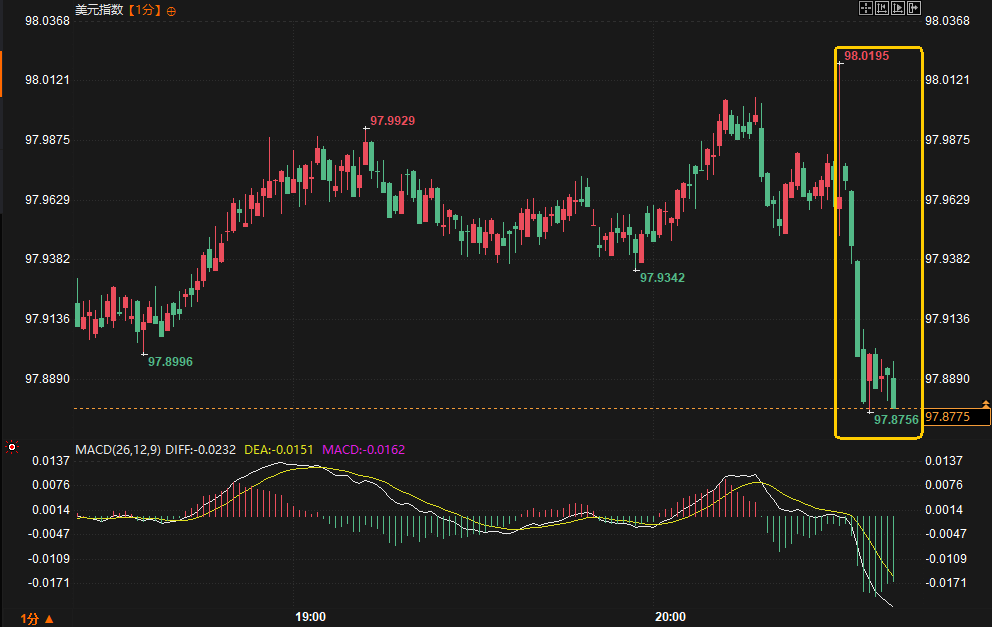
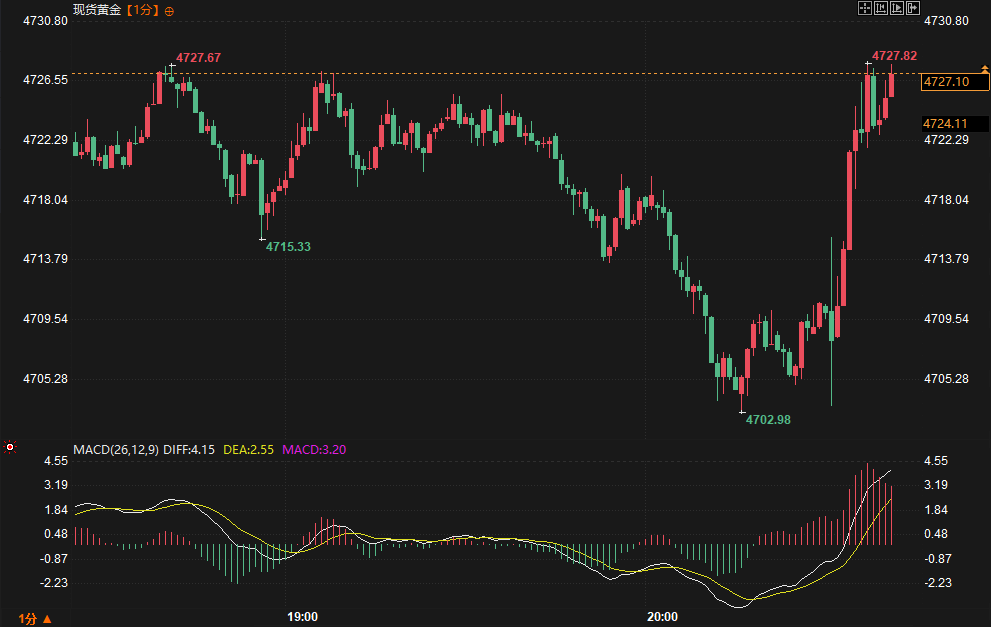
Prior to the data release, market expectations for the employment situation were cautious, with some institutions concerned that energy volatility stemming from the situation in Iran might gradually spill over into the labor market, leading to a slowdown in corporate hiring. Following the data release, the US dollar index initially rose before falling, hitting a low of 97.94; spot gold briefly retreated to around 4710 before rebounding; US crude oil fell by approximately $0.60; the British pound and euro rose against the US dollar in the short term; and the 10-year US Treasury yield narrowed its decline slightly. Overall, the market reaction reflected an acceptance of the data's strength, accompanied by some volatility.
This non-farm payroll report shows that the job market remains resilient. The 115,000 new jobs added far exceeded expectations, with the private sector making a significant contribution. Healthcare, transportation, warehousing, and retail sectors provided major support, while government employment continued to decline slightly. Looking at historical trends, employment data in recent months has shown a volatile pattern: after a strong rebound in March, April continued to exceed the market's "break-even point" (around 50,000 jobs), indicating that the labor market has not shown significant signs of slowing down.
The data was significantly more positive than previously expected by the market. Major institutions maintained a relatively consistent view before and after the data release, believing that the strong employment data reflects continued support for the economic fundamentals. Analysts pointed out that despite external variables such as energy prices, overall corporate hiring intentions remained stable, and consumer demand provided a foundation for employment. Some institutions emphasized that this data weakens the basis for further easing by the Federal Reserve in the short term, putting pressure on the policy shift window in June. Interest rate futures indicate a slight decrease in the probability of a Fed rate hike in 2026, but expectations for rate cuts have been adjusted accordingly.
From an institutional perspective, the focus is on the direct correlation between data and monetary policy. Prior to the release, market expectations were generally weak; after the release, analysts quickly pointed out that the 115,000 figure far exceeded expectations, demonstrating a more resilient labor market than anticipated, making an immediate rate cut difficult to justify. Previous statements by officials such as the Cleveland Fed president also reflected internal concerns about demand-side uncertainty, but overall acknowledged the current stability of the job market.
Retail traders presented a more diverse range of opinions. Some believed the data was "strong," the "labor market showed resilience," and it was a "sounding surprise," emphasizing that the job market could still provide jobs despite historically low unemployment. Others focused on data quality, pointing out that monthly figures included revisions, weather noise, and other factors, and that the breadth of private sector hiring needed further verification. They also mentioned that the slowdown in average hourly wage growth might alleviate some inflationary pressures, but expressed concerns about the impact on real purchasing power and the potential structural changes implied by gig work. Overall, retail traders contrasted their views on the "questionable quality" and the "outstanding resilience," reflecting different interpretations of subsequent data revisions and the sustainability of the trend.
From a fundamental and technical perspective, strong employment supports consumption and business confidence, while the lagged effects of variables in the energy sector have not yet fully materialized. Historically, similar better-than-expected data has often provided temporary support for the US dollar, while precious metals face pressure but are prone to technical rebounds; the stock market has performed relatively steadily amid resilient signals. This report does not change the overall pattern of low unemployment and low-scale layoffs in the labor market, but increased volatility reminds us to pay attention to changes on the demand side. The contrast with weaker employment data from Canada during the same period further highlights the relative resilience of the US market.
Looking ahead, strong employment data is expected to continue supporting the economy. In the short term, market focus will shift to how subsequent economic indicators validate demand. If private sector hiring remains robust, the overall employment trend is likely to remain stable; conversely, if energy price fluctuations gradually impact consumption and the service sector, the pace of hiring may see marginal adjustments.
In terms of exchange rates, the US dollar may show a temporary strengthening trend supported by strong data, but changes in global capital flows and policy expectations need to be observed. Safe-haven assets such as gold may test support levels after the data shock, and the potential for a technical rebound depends on the evolution of risk sentiment. The oil market is affected by both supply and geopolitical variables, and the resilience of employment may indirectly reflect the stability of demand.
In the medium term, the direction of the job market will be mutually validated by business confidence and consumer spending. Historical experience shows that after better-than-expected employment data, the market often enters a digestion and trend confirmation phase, and volatility may remain at a high level until more data provides a clear direction. The overall market logic points to resilience as the main theme, but close monitoring of revised data and changes in sub-indicators is necessary.
Q: What are the main reasons for the much stronger-than-expected non-farm payroll data in April?
A: The report shows that sectors such as healthcare and social assistance continued to contribute jobs, with the private sector adding 123,000 jobs, exceeding expectations. Meanwhile, businesses remained relatively optimistic about consumer demand, and previous data from ADP and other sources indicated a stabilization in hiring, collectively driving the headline data beyond market expectations. While this increase is less than the upward revision in March compared to historical figures, it still reflects the resilience of the labor market.
Q: What does it mean for the market if the unemployment rate remains stable at 4.3%?
A: The unemployment rate, in line with expectations and remaining low, indicates that there are no significant signs of deterioration in the job market. Institutional investors believe this supports the "maximum employment" target, while some retail investors are concerned about potential structural issues, such as the proportion of gig work. Overall, the combination of a stable unemployment rate and new job creation reinforces the market's assessment of a robust economy.
Q: What impact will the slowdown in wage growth have on the Federal Reserve's policy?
A: Average hourly earnings rose 0.2% month-on-month, slightly below expectations, and the annualized growth rate also saw some adjustments. Analysts point out that this may alleviate some inflation concerns and reduce pressure to maintain high interest rates; however, strong overall employment data also weakens the necessity for significant short-term easing. Retail investors are divided, with some viewing it as a signal of cooling inflation, while others caution that actual purchasing power and the sustainability of consumption need to be observed.
Q: Why did assets such as the US dollar and gold fluctuate after the data was released?
A: Strong employment data typically benefits the US dollar, and the dollar index initially strengthened after the data release, but later retreated due to profit-taking. Gold rebounded after short-term pressure, reflecting the market's digestion of better-than-expected data and assessment of policy path. The decline in crude oil prices is related to energy price dynamics and adjustments in demand expectations. Overall, the volatility is consistent with typical reactions to similar historical events.
Q: What are your thoughts on the data revisions and future trends in this report?
A: The upward revision in March and the downward revision in February indicate that the data exhibits typical adjustment characteristics. Future trends depend on the sustainability of private sector hiring and the transmission of external variables. Both institutional and retail investors emphasize the need to pay attention to the continuity of subsequent reports; current resilience is the main factor, but if demand-side pressures emerge, they may gradually affect the hiring pace. The market will use more indicators to verify the overall health of the economy.
Prior to the data release, market expectations for the employment situation were cautious, with some institutions concerned that energy volatility stemming from the situation in Iran might gradually spill over into the labor market, leading to a slowdown in corporate hiring. Following the data release, the US dollar index initially rose before falling, hitting a low of 97.94; spot gold briefly retreated to around 4710 before rebounding; US crude oil fell by approximately $0.60; the British pound and euro rose against the US dollar in the short term; and the 10-year US Treasury yield narrowed its decline slightly. Overall, the market reaction reflected an acceptance of the data's strength, accompanied by some volatility.
Deep interconnect analysis
This non-farm payroll report shows that the job market remains resilient. The 115,000 new jobs added far exceeded expectations, with the private sector making a significant contribution. Healthcare, transportation, warehousing, and retail sectors provided major support, while government employment continued to decline slightly. Looking at historical trends, employment data in recent months has shown a volatile pattern: after a strong rebound in March, April continued to exceed the market's "break-even point" (around 50,000 jobs), indicating that the labor market has not shown significant signs of slowing down.
The data was significantly more positive than previously expected by the market. Major institutions maintained a relatively consistent view before and after the data release, believing that the strong employment data reflects continued support for the economic fundamentals. Analysts pointed out that despite external variables such as energy prices, overall corporate hiring intentions remained stable, and consumer demand provided a foundation for employment. Some institutions emphasized that this data weakens the basis for further easing by the Federal Reserve in the short term, putting pressure on the policy shift window in June. Interest rate futures indicate a slight decrease in the probability of a Fed rate hike in 2026, but expectations for rate cuts have been adjusted accordingly.
Comparison of institutional and retail investor viewpoints
From an institutional perspective, the focus is on the direct correlation between data and monetary policy. Prior to the release, market expectations were generally weak; after the release, analysts quickly pointed out that the 115,000 figure far exceeded expectations, demonstrating a more resilient labor market than anticipated, making an immediate rate cut difficult to justify. Previous statements by officials such as the Cleveland Fed president also reflected internal concerns about demand-side uncertainty, but overall acknowledged the current stability of the job market.
Retail traders presented a more diverse range of opinions. Some believed the data was "strong," the "labor market showed resilience," and it was a "sounding surprise," emphasizing that the job market could still provide jobs despite historically low unemployment. Others focused on data quality, pointing out that monthly figures included revisions, weather noise, and other factors, and that the breadth of private sector hiring needed further verification. They also mentioned that the slowdown in average hourly wage growth might alleviate some inflationary pressures, but expressed concerns about the impact on real purchasing power and the potential structural changes implied by gig work. Overall, retail traders contrasted their views on the "questionable quality" and the "outstanding resilience," reflecting different interpretations of subsequent data revisions and the sustainability of the trend.
From a fundamental and technical perspective, strong employment supports consumption and business confidence, while the lagged effects of variables in the energy sector have not yet fully materialized. Historically, similar better-than-expected data has often provided temporary support for the US dollar, while precious metals face pressure but are prone to technical rebounds; the stock market has performed relatively steadily amid resilient signals. This report does not change the overall pattern of low unemployment and low-scale layoffs in the labor market, but increased volatility reminds us to pay attention to changes on the demand side. The contrast with weaker employment data from Canada during the same period further highlights the relative resilience of the US market.
Trend Outlook
Looking ahead, strong employment data is expected to continue supporting the economy. In the short term, market focus will shift to how subsequent economic indicators validate demand. If private sector hiring remains robust, the overall employment trend is likely to remain stable; conversely, if energy price fluctuations gradually impact consumption and the service sector, the pace of hiring may see marginal adjustments.
In terms of exchange rates, the US dollar may show a temporary strengthening trend supported by strong data, but changes in global capital flows and policy expectations need to be observed. Safe-haven assets such as gold may test support levels after the data shock, and the potential for a technical rebound depends on the evolution of risk sentiment. The oil market is affected by both supply and geopolitical variables, and the resilience of employment may indirectly reflect the stability of demand.
In the medium term, the direction of the job market will be mutually validated by business confidence and consumer spending. Historical experience shows that after better-than-expected employment data, the market often enters a digestion and trend confirmation phase, and volatility may remain at a high level until more data provides a clear direction. The overall market logic points to resilience as the main theme, but close monitoring of revised data and changes in sub-indicators is necessary.
Frequently Asked Questions
Q: What are the main reasons for the much stronger-than-expected non-farm payroll data in April?
A: The report shows that sectors such as healthcare and social assistance continued to contribute jobs, with the private sector adding 123,000 jobs, exceeding expectations. Meanwhile, businesses remained relatively optimistic about consumer demand, and previous data from ADP and other sources indicated a stabilization in hiring, collectively driving the headline data beyond market expectations. While this increase is less than the upward revision in March compared to historical figures, it still reflects the resilience of the labor market.
Q: What does it mean for the market if the unemployment rate remains stable at 4.3%?
A: The unemployment rate, in line with expectations and remaining low, indicates that there are no significant signs of deterioration in the job market. Institutional investors believe this supports the "maximum employment" target, while some retail investors are concerned about potential structural issues, such as the proportion of gig work. Overall, the combination of a stable unemployment rate and new job creation reinforces the market's assessment of a robust economy.
Q: What impact will the slowdown in wage growth have on the Federal Reserve's policy?
A: Average hourly earnings rose 0.2% month-on-month, slightly below expectations, and the annualized growth rate also saw some adjustments. Analysts point out that this may alleviate some inflation concerns and reduce pressure to maintain high interest rates; however, strong overall employment data also weakens the necessity for significant short-term easing. Retail investors are divided, with some viewing it as a signal of cooling inflation, while others caution that actual purchasing power and the sustainability of consumption need to be observed.
Q: Why did assets such as the US dollar and gold fluctuate after the data was released?
A: Strong employment data typically benefits the US dollar, and the dollar index initially strengthened after the data release, but later retreated due to profit-taking. Gold rebounded after short-term pressure, reflecting the market's digestion of better-than-expected data and assessment of policy path. The decline in crude oil prices is related to energy price dynamics and adjustments in demand expectations. Overall, the volatility is consistent with typical reactions to similar historical events.
Q: What are your thoughts on the data revisions and future trends in this report?
A: The upward revision in March and the downward revision in February indicate that the data exhibits typical adjustment characteristics. Future trends depend on the sustainability of private sector hiring and the transmission of external variables. Both institutional and retail investors emphasize the need to pay attention to the continuity of subsequent reports; current resilience is the main factor, but if demand-side pressures emerge, they may gradually affect the hiring pace. The market will use more indicators to verify the overall health of the economy.
- Risk Warning and Disclaimer
- The market involves risk, and trading may not be suitable for all investors. This article is for reference only and does not constitute personal investment advice, nor does it take into account certain users’ specific investment objectives, financial situation, or other needs. Any investment decisions made based on this information are at your own risk.