Escalating tensions in the Middle East have driven inflows of safe-haven funds, keeping the USD/CAD pair trading at high levels.
2026-05-12 10:55:45
The US dollar strengthened against the Canadian dollar (USD/CAD) in Asian trading on Tuesday, rising to around 1.3690 after being largely unchanged in the previous session. As tensions in the Middle East deteriorated again, safe-haven demand increased significantly, supporting the US dollar with capital inflows, while the Canadian dollar showed some resilience against the backdrop of rising oil prices.

Recently, risk sentiment in global financial markets has weakened significantly, with investors beginning to reallocate to safe-haven assets. Market concerns are growing that the deteriorating diplomatic situation in the Middle East could lead to a renewed large-scale military conflict, potentially impacting global energy supply stability. US President Trump is increasingly dissatisfied with the progress of Middle East negotiations, and the White House is seriously discussing the possibility of resuming military operations. Meanwhile, Iranian Parliament Speaker Mohammad Bagher Ghalibaf stated that the Iranian military is prepared to respond to any future attacks.
The biggest concerns in the market remain the risks to shipping through the Strait of Hormuz and the potential for further restrictions on Middle Eastern oil exports. As the stability of the regional ceasefire agreement declines, global market risk appetite has rapidly decreased, and the US dollar, as the global reserve currency, has regained support from safe-haven buying.
Driven by safe-haven flows, the US dollar index remained relatively strong, leading to a short-term rise in the USD/CAD exchange rate. However, the Canadian dollar did not experience a significant decline, primarily due to the continued rise in international oil prices. As one of the largest exporters of crude oil to the United States, Canada's currency has long been strongly correlated with international oil prices. As Trump's comments about the fragility of the Middle East ceasefire fueled market concerns, international oil prices continued to climb, with Brent crude remaining near $104. Market concerns exist that further escalation of conflict in the Middle East could severely impact the global oil supply chain. Rising international oil prices typically improve Canadian export revenue and provide natural support for the Canadian dollar.
Therefore, although the US dollar strengthened due to safe-haven demand, rising oil prices also helped the Canadian dollar mitigate some of its losses, keeping the USD/CAD pair in a high-level consolidation pattern rather than experiencing a rapid, one-sided rise.
Meanwhile, high energy prices have reignited concerns about inflation in Canada. March inflation data showed the annual rate had risen to 2.4%, a near one-year high, with energy price volatility being a significant driver of this increase. The market is now reassessing the Bank of Canada's future policy direction. Previously, the Bank of Canada kept interest rates unchanged, believing that energy-driven inflation might not have a long-term impact, but if oil prices remain high, it could force the central bank to reconsider its policy stance.
For the Canadian dollar, high oil prices are generally a positive factor, but if inflation rises further, Canadian economic growth may be hampered by high cost pressures, which makes the market remain cautious about the Canadian economic outlook.
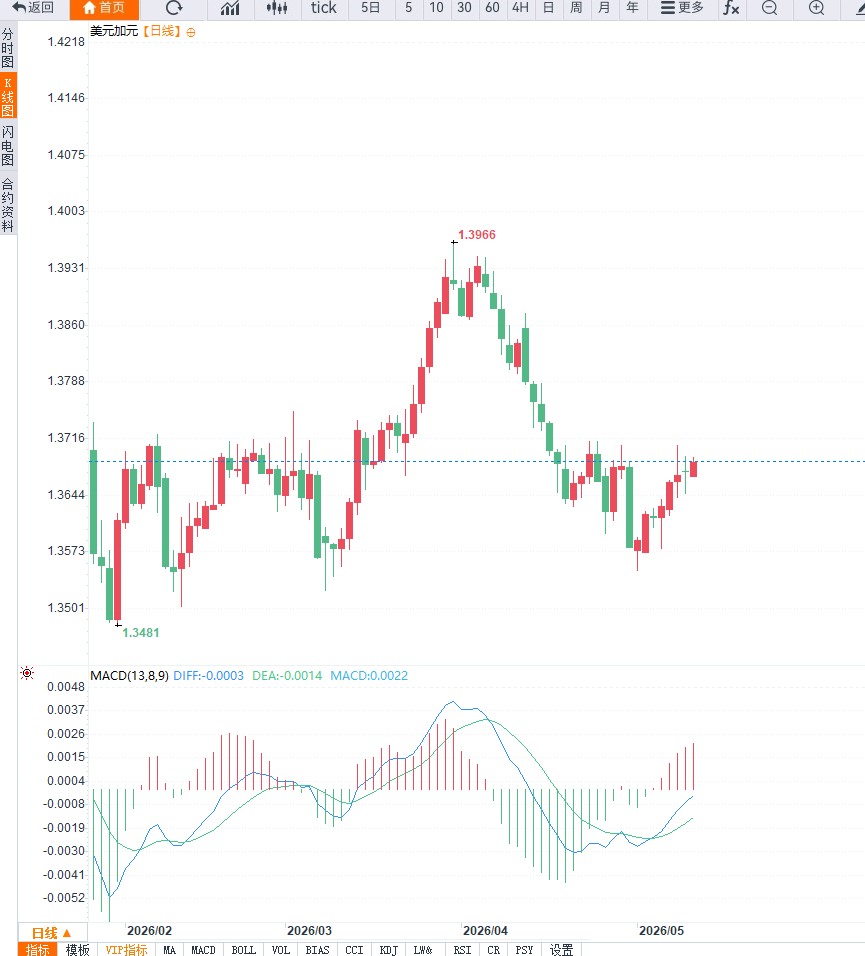
From a technical perspective, the USD/CAD pair maintains a slightly bullish trend on the daily chart, currently trading above its medium-term moving average. The MACD indicator continues to operate above the zero line, indicating that the overall bullish structure has not yet fully ended. However, on the 4-hour chart, a clear short-term resistance zone has formed around 1.3700, and the RSI indicator is gradually approaching high levels, suggesting a need for some short-term consolidation. If the USD/CAD pair effectively breaks through the 1.3720 area, it may further test the 1.3780 area; however, if it falls below the 1.3620 support, it may retreat back to the 1.3550 area.
Furthermore, market focus is gradually shifting to the upcoming US Consumer Price Index (CPI) data. If US inflation continues to exceed market expectations, the Federal Reserve may extend its high interest rate policy, thus supporting a continued strengthening of the US dollar. However, if oil prices continue to rise and drive improvements in Canadian exports, it could continue to limit the upside potential of the US dollar against the Canadian dollar. Therefore, future market movements will likely continue to be a back-and-forth between the "US dollar as a safe haven" logic and the "oil price support for the Canadian dollar" logic.
Overall, the current USD/CAD exchange rate is clearly driven by both geopolitical risks and energy prices. In the future, the situation in the Middle East, international oil prices, and expectations for monetary policies in the US and Canada will continue to dominate the direction of the exchange rate market.
Editor's Summary : The current USD/CAD market exhibits a typical pattern of coexistence between "safe-haven dollar" and "commodity currency support." Escalating tensions in the Middle East are driving global capital back to dollar assets, but rising international oil prices are providing significant support for the Canadian dollar, keeping the exchange rate generally volatile at high levels. The biggest variables in the future market remain changes in the Middle East situation and global energy supply risks. If the Strait of Hormuz shipping problem continues to worsen, international oil prices may rise further, thus further strengthening the Canadian dollar's support. At the same time, US inflation data and the Federal Reserve's policy path are equally crucial. If US inflation rebounds and the Fed maintains high interest rates for an extended period, the dollar may continue to receive support. Overall, short-term volatility in the USD/CAD exchange rate is expected to remain high.
Recently, risk sentiment in global financial markets has weakened significantly, with investors beginning to reallocate to safe-haven assets. Market concerns are growing that the deteriorating diplomatic situation in the Middle East could lead to a renewed large-scale military conflict, potentially impacting global energy supply stability. US President Trump is increasingly dissatisfied with the progress of Middle East negotiations, and the White House is seriously discussing the possibility of resuming military operations. Meanwhile, Iranian Parliament Speaker Mohammad Bagher Ghalibaf stated that the Iranian military is prepared to respond to any future attacks.
The biggest concerns in the market remain the risks to shipping through the Strait of Hormuz and the potential for further restrictions on Middle Eastern oil exports. As the stability of the regional ceasefire agreement declines, global market risk appetite has rapidly decreased, and the US dollar, as the global reserve currency, has regained support from safe-haven buying.
Driven by safe-haven flows, the US dollar index remained relatively strong, leading to a short-term rise in the USD/CAD exchange rate. However, the Canadian dollar did not experience a significant decline, primarily due to the continued rise in international oil prices. As one of the largest exporters of crude oil to the United States, Canada's currency has long been strongly correlated with international oil prices. As Trump's comments about the fragility of the Middle East ceasefire fueled market concerns, international oil prices continued to climb, with Brent crude remaining near $104. Market concerns exist that further escalation of conflict in the Middle East could severely impact the global oil supply chain. Rising international oil prices typically improve Canadian export revenue and provide natural support for the Canadian dollar.
Therefore, although the US dollar strengthened due to safe-haven demand, rising oil prices also helped the Canadian dollar mitigate some of its losses, keeping the USD/CAD pair in a high-level consolidation pattern rather than experiencing a rapid, one-sided rise.
Meanwhile, high energy prices have reignited concerns about inflation in Canada. March inflation data showed the annual rate had risen to 2.4%, a near one-year high, with energy price volatility being a significant driver of this increase. The market is now reassessing the Bank of Canada's future policy direction. Previously, the Bank of Canada kept interest rates unchanged, believing that energy-driven inflation might not have a long-term impact, but if oil prices remain high, it could force the central bank to reconsider its policy stance.
For the Canadian dollar, high oil prices are generally a positive factor, but if inflation rises further, Canadian economic growth may be hampered by high cost pressures, which makes the market remain cautious about the Canadian economic outlook.
From a technical perspective, the USD/CAD pair maintains a slightly bullish trend on the daily chart, currently trading above its medium-term moving average. The MACD indicator continues to operate above the zero line, indicating that the overall bullish structure has not yet fully ended. However, on the 4-hour chart, a clear short-term resistance zone has formed around 1.3700, and the RSI indicator is gradually approaching high levels, suggesting a need for some short-term consolidation. If the USD/CAD pair effectively breaks through the 1.3720 area, it may further test the 1.3780 area; however, if it falls below the 1.3620 support, it may retreat back to the 1.3550 area.
Furthermore, market focus is gradually shifting to the upcoming US Consumer Price Index (CPI) data. If US inflation continues to exceed market expectations, the Federal Reserve may extend its high interest rate policy, thus supporting a continued strengthening of the US dollar. However, if oil prices continue to rise and drive improvements in Canadian exports, it could continue to limit the upside potential of the US dollar against the Canadian dollar. Therefore, future market movements will likely continue to be a back-and-forth between the "US dollar as a safe haven" logic and the "oil price support for the Canadian dollar" logic.
Overall, the current USD/CAD exchange rate is clearly driven by both geopolitical risks and energy prices. In the future, the situation in the Middle East, international oil prices, and expectations for monetary policies in the US and Canada will continue to dominate the direction of the exchange rate market.
Editor's Summary : The current USD/CAD market exhibits a typical pattern of coexistence between "safe-haven dollar" and "commodity currency support." Escalating tensions in the Middle East are driving global capital back to dollar assets, but rising international oil prices are providing significant support for the Canadian dollar, keeping the exchange rate generally volatile at high levels. The biggest variables in the future market remain changes in the Middle East situation and global energy supply risks. If the Strait of Hormuz shipping problem continues to worsen, international oil prices may rise further, thus further strengthening the Canadian dollar's support. At the same time, US inflation data and the Federal Reserve's policy path are equally crucial. If US inflation rebounds and the Fed maintains high interest rates for an extended period, the dollar may continue to receive support. Overall, short-term volatility in the USD/CAD exchange rate is expected to remain high.
- Risk Warning and Disclaimer
- The market involves risk, and trading may not be suitable for all investors. This article is for reference only and does not constitute personal investment advice, nor does it take into account certain users’ specific investment objectives, financial situation, or other needs. Any investment decisions made based on this information are at your own risk.